2017 Ford Escape Transmission: Problems & Repair Costs
📌 Quick Summary The 2017 Ford Escape utilizes the 6F35 6-speed automatic transmission, which is frequently cited for shuddering, delayed shifting, and…
The 2017 Ford Escape utilizes the 6F35 6-speed automatic transmission, which is frequently cited for shuddering, delayed shifting, and torque converter issues. Proactive maintenance using Mercon LV fluid every 30,000 to 60,000 miles is essential to prevent premature mechanical failure and costly replacements.
🎯 Key Takeaways
- Watch for shuddering or slipping as early signs of 6F35 failure.
- Use only Mercon LV fluid to maintain hydraulic system integrity.
- Check for PCM software updates before committing to mechanical repairs.
- Replacement costs typically range between $3,500 and $5,000 total.
- The internal filter is non-serviceable, making fluid cleanliness critical.
The 2017 Ford Escape frequently suffers from transmission issues that manifest as harsh shifting, shuddering, or complete mechanical failure. Most models are equipped with the 6F35 six-speed automatic transmission, which has a documented history of premature wear in the torque converter and internal case bushings. If you are experiencing hesitations or “shift flares” between gears, you are likely facing a repair bill ranging from $3,000 to $5,000 for a full rebuild or replacement.
Understanding these failure points is critical because the 2017 model year is particularly susceptible to these mechanical flaws as the vehicle ages. Catching the symptoms early can sometimes save you from a total transmission swap by allowing for targeted solenoid or valve body repairs. This guide focuses on the specific technical failures of the 6F35 unit and the strict maintenance requirements necessary to keep your Escape on the road.
Common Reliability Issues and Failure Symptoms
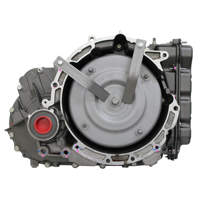
The 6F35 transmission in the 2017 Ford Escape is notorious for several specific mechanical failures that often occur shortly after the powertrain warranty expires. Unlike some modern vehicles that suffer from software glitches, the Escape’s problems are usually rooted in the physical hardware. The most frequent complaints involve the torque converter clutch and the internal case bushings.
Torque Converter and Case Bushing Failures
A primary failure point is the torque converter clutch (TCC). When the TCC solenoid fails to regulate hydraulic pressure correctly, the clutch within the torque converter slips. This creates a distinct shudder, often described by drivers as the sensation of driving over “rumble strips” on a flat highway. Additionally, the 6F35 often suffers from premature wear on the left-hand axle bushing. This wear allows the axle shaft to vibrate excessively, which eventually destroys the seal and causes transmission fluid to leak. If you notice red fluid on your driveway near the driver-side wheel, the bushing has likely failed.
- Shift Flares: You will notice the engine RPMs spike momentarily between gears, usually during the 2-3 or 3-4 shift. This indicates the internal clutches are not engaging fast enough.
- Harsh Engagement: A violent “clunk” when shifting from Park to Drive or Reverse is a sign of high line pressure or a failing valve body.
- Loss of Reverse: This is often caused by a broken sun gear or a failed solenoid preventing the reverse gear circuit from pressurizing.
- Fluid Contamination: Internal components wear down and shed metal shavings into the fluid, which then clogs the non-serviceable internal filter.
Identifying the “Rumble Strip” Shudder
If your Escape feels like it is vibrating at speeds between 30 and 50 MPH, the torque converter is likely slipping. This isn’t just a minor annoyance; it generates immense heat that rapidly degrades your transmission fluid. Once the fluid loses its lubricating properties, the internal clutch packs begin to burn, leading to a total loss of drive. Many owners mistake this for a tire balance issue. However, if the vibration disappears the moment you take your foot off the accelerator, the transmission is almost certainly the culprit.
Master Your 2017 Ford Escape Transmission in 8 Simple Steps
The 2017 Ford Escape typically utilizes the 6F35 6-speed automatic transmission. Maintaining this specific component is vital because, unlike older models, the 6F35 does not have a user-serviceable filter without completely dismantling the transmission case. This makes regular “drain and fill” procedures the single most important maintenance task you can perform to prevent premature wear, overheating, and erratic shifting. This guide provides a comprehensive walkthrough of the fluid exchange process, ensuring your vehicle remains reliable for years to come.
Step 1: Preparation and Temperature Optimization
What you need: An OBD-II scanner (optional but recommended), wheel chocks, jack and jack stands (or car ramps), and a pair of nitrile gloves.
Instructions: Before you begin, the transmission fluid needs to be at operating temperature to ensure all contaminants are suspended in the fluid and it flows freely. Drive the vehicle for about 15 minutes or until the transmission fluid temperature reaches approximately 180°F to 200°F. Once warmed up, park the vehicle on a completely level surface. Engaging the parking brake is mandatory for safety. Lift the front of the vehicle using a hydraulic jack and secure it firmly on jack stands, or drive it onto ramps. Ensure there is enough clearance for you to slide comfortably under the engine bay while keeping the vehicle as level as possible to ensure an accurate fluid reading later.
Pro Tip: Avoid performing this service on a cold engine. Cold transmission fluid is thick and will not drain completely, leaving behind a higher concentration of old, degraded fluid and metallic debris.
Step 2: Removing the Underbody Splash Shield
What you need: A T-30 Torx bit driver, a flathead screwdriver, and a small container to hold fasteners.
Instructions: The 2017 Ford Escape features an aerodynamic “felt” splash shield that covers the entire underside of the engine and transmission. Using your T-30 Torx bit, remove the roughly 7 to 9 screws holding the shield in place. There are also usually two plastic push-pins located near the wheel wells that can be popped out using a flathead screwdriver or a trim removal tool. Carefully slide the shield toward the rear of the car to unhook it from the front bumper lip and set it aside. This is a great time to inspect the shield for any signs of existing leaks, such as oil or coolant stains, which might indicate other issues requiring attention.
Pro Tip: These Torx screws are notorious for rusting. Apply a small amount of penetrating oil to them five minutes before removal to prevent stripping the heads or snapping the clips.
Step 3: Draining the Old Transmission Fluid
What you need: A 11mm or 19mm socket (depending on your specific bolt head size), a large drain pan (at least 7-quart capacity), and a graduated measuring container.
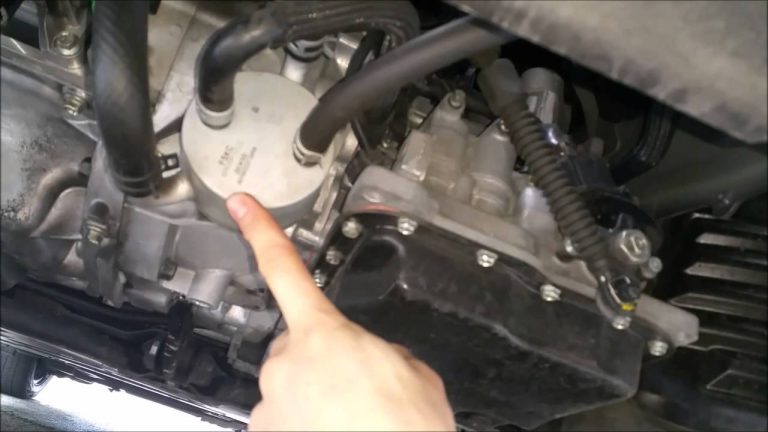
Instructions: Locate the drain plug on the bottom of the transmission case. It is positioned near the driver’s side, facing downward. Position your drain pan directly underneath. Slowly loosen the plug. As it reaches the last few threads, hold the plug firmly against the hole and then pull it away quickly to minimize splashing. Allow the fluid to drain for at least 10 to 15 minutes until it slows to a very thin drip. Once finished, clean the drain plug thoroughly with a lint-free cloth. Inspect the magnetic tip of the plug for excessive metal shavings; fine “sludge” is normal, but large chunks indicate internal mechanical failure. Reinstall the plug and tighten it to 10-12 lb-ft (14 Nm).
Pro Tip: Pour the old fluid into a graduated measuring container. This tells you exactly how much fluid you removed, giving you a baseline for how much new Mercon LV fluid you need to add back in.
Step 4: Locating the Fill Port and Adding New Fluid
What you need: 5 quarts of Motorcraft Mercon LV fluid, a long-neck funnel, and a 10mm socket.
Instructions: In the 2017 Escape, the fill port is somewhat hidden. It is located on the top of the transmission case, usually underneath the air intake ducting or near the battery box. Look for a black rubber or plastic cap labeled with a transmission icon or simply a vent cap. Remove the cap by pulling upward. Insert your long-neck funnel into this port. Begin pouring in your new Mercon LV fluid. It is critical that you use ONLY Mercon LV; using Mercon V or universal fluids will cause shift shudder and internal damage. Add approximately 4 to 4.5 quarts, or the exact amount you measured during the drainage step. Do not overfill at this stage, as it is easier to add more later than to remove excess.
Pro Tip: If the fill cap is difficult to reach, you may need to loosen the 10mm bolts on the air cleaner box and move it slightly to the side to gain better arm clearance.
Step 5: Accessing the Fluid Level Check Plug
What you need: A 14mm or 17mm socket and a torque wrench.
Instructions: The 2017 Escape does not have a traditional dipstick. To check the level, you must use the “level check plug” located on the side of the transmission case, near the driver-side CV axle. With the vehicle still level and the engine running (this is vital), carefully remove this side plug. Because the engine is running, the fluid is being pumped through the system. If the fluid is at the correct level, a very thin stream or a steady drip should come out of this hole. If no fluid comes out, you are low. If a heavy stream gushes out, it was overfilled. Continue adding fluid through the top fill port in 4-ounce increments until a steady drip is observed from this side hole.
Pro Tip: Always perform this check while the engine is idling in “Park.” If you check it with the engine off, the fluid will gush out because the torque converter is not holding any volume, leading to an underfilled transmission.
Step 6: Cycling the Gears
What you need: No tools required; just the vehicle’s ignition key.
Instructions: While the vehicle is still on jack stands (and ensuring no one is near the wheels), sit in the driver’s seat. With your foot firmly on the brake, slowly cycle the gear selector through every position: P, R, N, D, S, and back. Hold the shifter in each position for approximately 5 to 10 seconds. This allows the new fluid to move through the valve body, the clutch packs, and the torque converter, purging any trapped air bubbles. After cycling the gears twice, return the vehicle to Park and leave the engine running. Go back under the car to the level check plug one last time to ensure that the level hasn’t dropped after the gear cycling process. Adjust if necessary.
Pro Tip: If you hear a whining sound during this process, it usually indicates air in the pump because the fluid level is too low. Immediately check the level at the side plug.
Step 7: Final Reassembly and Torque Check
What you need: Torque wrench, T-30 Torx bit, and a clean rag.
Instructions: Once the fluid level is confirmed by a steady drip from the side plug, reinstall the side plug and torque it to 7-10 lb-ft. Be careful not to over-tighten, as these threads are in an aluminum casing and can strip easily. Wipe down all surfaces of the transmission case with a rag and some brake cleaner to remove any spilled fluid. This ensures that if a leak develops later, you will be able to see it clearly. Reinstall the felt splash shield, starting with the front lip hooks and then securing the T-30 Torx screws. Ensure all plastic push-pins are snapped back into place to prevent the shield from sagging or flapping at highway speeds.
Pro Tip: Take a moment to inspect your CV boot on the driver’s side while you are near the level plug; these are prone to tearing and are much easier to fix if caught early.
Step 8: Test Drive and Re-Verification
What you need: A clear stretch of road and your OBD-II scanner (optional).
Instructions: Lower the vehicle to the ground. Take the Escape for a 10-minute test drive. Focus on how the transmission shifts during “light throttle” versus “heavy throttle.” Shifts should be crisp and should not “hunt” for gears. Once you return, park on a level surface and, while the engine is still running, do a visual check under the car (without removing the shield) for any drips. If you have an OBD-II scanner, check for any “Pending” codes related to the transmission (P0700 series). If everything is clear, your transmission service is complete. You have successfully refreshed the lifeblood of your vehicle’s drivetrain.
Pro Tip: Note the mileage of this service in your vehicle logbook. For the 6F35 transmission, repeating this drain-and-fill every 30,000 to 50,000 miles is the best way to avoid the common “hard shift” issues associated with this model.
✅ Final Checklist
- Confirm that exactly Motorcraft Mercon LV fluid was used.
- Verify the drain plug and the side level plug are torqued to specification.
- Ensure the fluid level was checked while the engine was idling and the fluid was warm.
- Check that the underbody splash shield is securely fastened with all screws and pins.
- Verify there are no active dashboard warning lights or transmission fault codes.
Important Notes:
- Safety Warning: Transmission fluid can reach temperatures over 200°F. Always wear eye protection and gloves to avoid thermal burns.
- When to Seek Help: If the fluid drained was black and smelled burnt, or if you found large metal chunks on the magnet, a simple fluid change may not fix the problem. Seek a professional transmission shop for a diagnostic.
- Estimated Time: 1.5 to 2.5 hours.
- Cost Range: $60 – $90 (DIY) vs. $180 – $350 (Dealership).
Technical Specifications and Maintenance Requirements
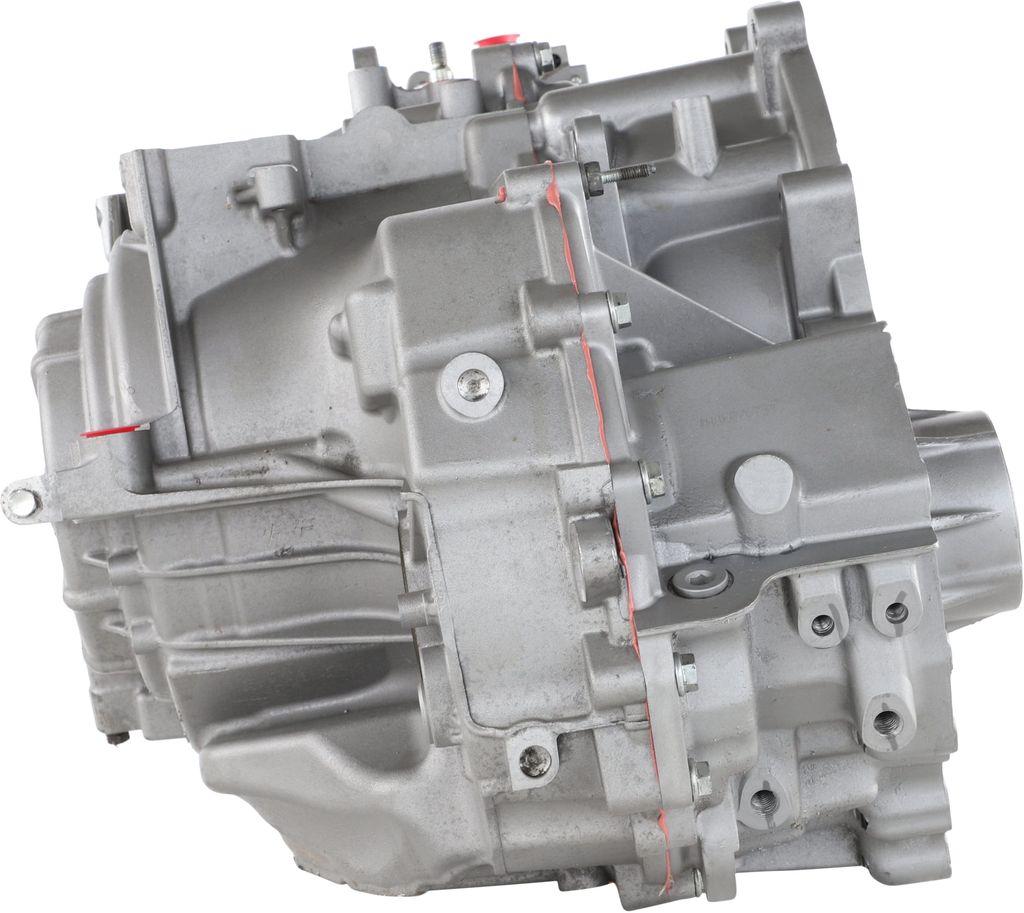
The 2017 Ford Escape utilizes the 6F35 transmission, a joint-venture design between Ford and General Motors. While the hardware is standardized across many platforms, Ford’s specific tuning and cooling configurations impact how the unit handles heat and heavy loads. Knowing the exact specs is vital for ensuring your mechanic uses the correct parts and fluids during service.
Technical Specifications and Fluid Compatibility
The 6F35 is a six-speed transverse automatic transmission designed for front-wheel drive and all-wheel drive configurations. It is intended to be a “fill-for-life” unit according to some Ford marketing materials, but real-world data suggests this is a dangerous assumption for owners. It requires a specific low-viscosity fluid to function correctly under high-pressure conditions.
- Transmission Model: Ford 6F35 (6-speed SelectShift)
- Fluid Specification: Motorcraft Mercon LV (Low Viscosity)
- Total Capacity: Approximately 8.5 to 9.0 quarts (varies by cooler size)
- Filter Type: Internal (Requires full transmission disassembly to replace)
The Critical Maintenance Schedule
Ford’s official service manual may suggest long intervals for transmission service, sometimes up to 150,000 miles. For the 2017 Escape, following this advice is a recipe for premature failure. Because the 6F35 runs exceptionally hot and uses an internal filter that cannot be changed during a standard drain-and-fill, keeping the fluid clean is your only defense against debris buildup.
You should perform a fluid exchange every 30,000 to 50,000 miles. Do not use generic “all-vehicle” fluids; you must use Mercon LV to maintain the correct friction coefficients for the clutches. Regular fluid changes help flush out the metallic shavings produced by the wearing bushings before they can clog the delicate solenoids in the valve body. If your fluid smells burnt or looks black rather than bright red, change it immediately to prevent further internal damage.
Understanding Repair Costs and Replacement Options
When you start noticing the tell-tale signs of a struggling transmission, your first question is inevitably: “How much is this going to cost me?” For the 2017 Ford Escape, the answer depends heavily on whether you are dealing with a localized electronic failure or a total mechanical breakdown. Because the 6F35 transmission used in this model is complex, labor costs often make up a significant portion of the final bill.
The Cost Spectrum: Minor Fixes vs. Major Overhauls
If you catch a problem early, you might escape with a relatively small bill. However, if the internal clutches or the torque converter have failed, the price jumps significantly. Here is a general breakdown of what you can expect to pay at an independent shop versus a dealership:
- Transmission Fluid Flush: Expect to pay between $150 and $300. This is often the first step in diagnosing shifting issues and can sometimes resolve minor hesitations.
- Solenoid Replacement: If a specific shift solenoid has failed, repairs typically range from $400 to $800, depending on accessibility.
- Full Transmission Replacement: For a complete unit swap, costs generally land between $3,500 and $5,000. This includes the cost of a remanufactured unit and roughly 10–12 hours of labor.
Rebuilding vs. Replacing with a Remanufactured Unit
When a total failure occurs, you have a choice: have a local shop rebuild your existing transmission or buy a “reman” unit. While a rebuild might seem cheaper upfront, it relies entirely on the skill of the specific technician doing the work. In contrast, remanufactured transmissions are rebuilt in a factory setting to original specifications and often come with a 3-year/100,000-mile warranty that is honored nationwide. For most 2017 Escape owners, the peace of mind offered by a remanufactured unit is worth the slight price premium.
Relevant Technical Service Bulletins and Recalls
Before you commit to a major out-of-pocket expense, it is vital to check if your vehicle is covered by any manufacturer-led programs. Ford has issued several Technical Service Bulletins (TSBs) and recalls that specifically target the transmission and shifting components of the 2017 Escape. These documents are instructions provided to dealership technicians to solve known, recurring problems.
The Shifter Cable Bushing Recall
One of the most significant safety issues for the 2017 model year was the Recall 22S43. This involved a degraded shifter cable bushing that could prevent the transmission from actually shifting into the gear the driver selected. For example, you might move the lever to “Park,” but the transmission remains in “Drive.” If your vehicle is included in this recall, Ford dealerships will perform the repair free of charge. Always run your VIN through the NHTSA website to see if this repair is still pending for your vehicle.
Common TSBs for Shifting Issues
Ford has also released several TSBs regarding “harsh shifts” or “engagement delays.” These are not recalls, so they aren’t free unless you are under warranty, but they provide a roadmap for a faster (and cheaper) diagnosis. Key highlights include:
- Software Updates: Many shifting hesitations in the 2017 Escape can be solved by a PCM (Powertrain Control Module) update. This recalibrates how the computer communicates with the transmission solenoids.
- Torque Converter Issues: Certain bulletins point to specific debris buildup in the valve body that mimics a failing transmission but may only require a specialized cleaning or valve body replacement.
- Adaptive Learning Reset: Sometimes, the transmission “learns” bad habits. A technician can perform an adaptive learning reset to return the shift points to factory defaults.
Conclusion
The 2017 Ford Escape transmission can be a point of frustration, but understanding your options helps take the sting out of the repair process. Whether you are dealing with a simple software glitch or require a full unit replacement, being informed ensures you won’t overpay for unnecessary work. While the 6F35 transmission has its quirks, many owners find that staying proactive with fluid changes and addressing TSBs early can extend the life of the vehicle significantly.
Your next steps: First, check your VIN for any open recalls related to the shifter cable. Second, if you are experiencing rough shifts, ask your mechanic to check for PCM updates before committing to a mechanical teardown. Don’t wait for a small shudder to turn into a total breakdown—get an inspection at the first sign of trouble to keep your Escape on the road for years to come!
💬 Quick Questions & Answers
What transmission is in a 2017 Ford Escape?
The 2017 Ford Escape is equipped with the 6F35 6-speed automatic transmission.
What fluid does a 2017 Ford Escape transmission take?
It requires Mercon LV (Low Viscosity) automatic transmission fluid exclusively.
Is there a recall on the 2017 Ford Escape transmission?
There are no major internal mechanical recalls, but there is a recall for the shifter cable bushing.
How much fluid does the 6F35 transmission hold?
The total capacity is approximately 9 quarts, but a standard drain and fill uses about 4 to 5 quarts.
What are the common signs of transmission failure?
Common symptoms include hard shifting, hesitation when engaging Drive/Reverse, and slipping between gears.
❓ Frequently Asked Questions
Why is my 2017 Ford Escape shuddering during acceleration?
Shuddering is often caused by torque converter clutch chatter or degraded fluid. This is a known issue in the 6F35 unit and can sometimes be resolved with a fresh drain and fill of Mercon LV fluid.
How often should I change the transmission fluid in my 2017 Escape?
While the manual may suggest longer intervals, most technicians recommend a drain and fill every 30,000 to 50,000 miles. This is because the internal filter cannot be changed without disassembling the transmission.
What is the average cost to replace a 2017 Ford Escape transmission?
A full replacement with a remanufactured unit typically costs between $3,500 and $4,800 including labor. The price varies based on your location and whether you choose a new, used, or rebuilt unit.
Are there software updates available for the 2017 Escape transmission?
Yes, Ford has issued several Power Control Module (PCM) updates to address shift logic and harsh engagement. It is recommended to have a dealer check for updates before performing mechanical repairs.
Does the 2017 Ford Escape have a transmission dipstick?
Yes, but it is located low in the engine bay and is often hidden under the air intake duct. It is a short dipstick that requires a hot engine and level ground for an accurate reading.
Is the 6F35 transmission considered reliable for long-term use?
It is considered moderately reliable but sensitive to heat and fluid contamination. With diligent maintenance and the addition of an external cooler for towing, many owners see these units last well beyond 150,000 miles.