
10 Best Electric Air Pump for Car Tires for Road Trips: Top Portable Picks

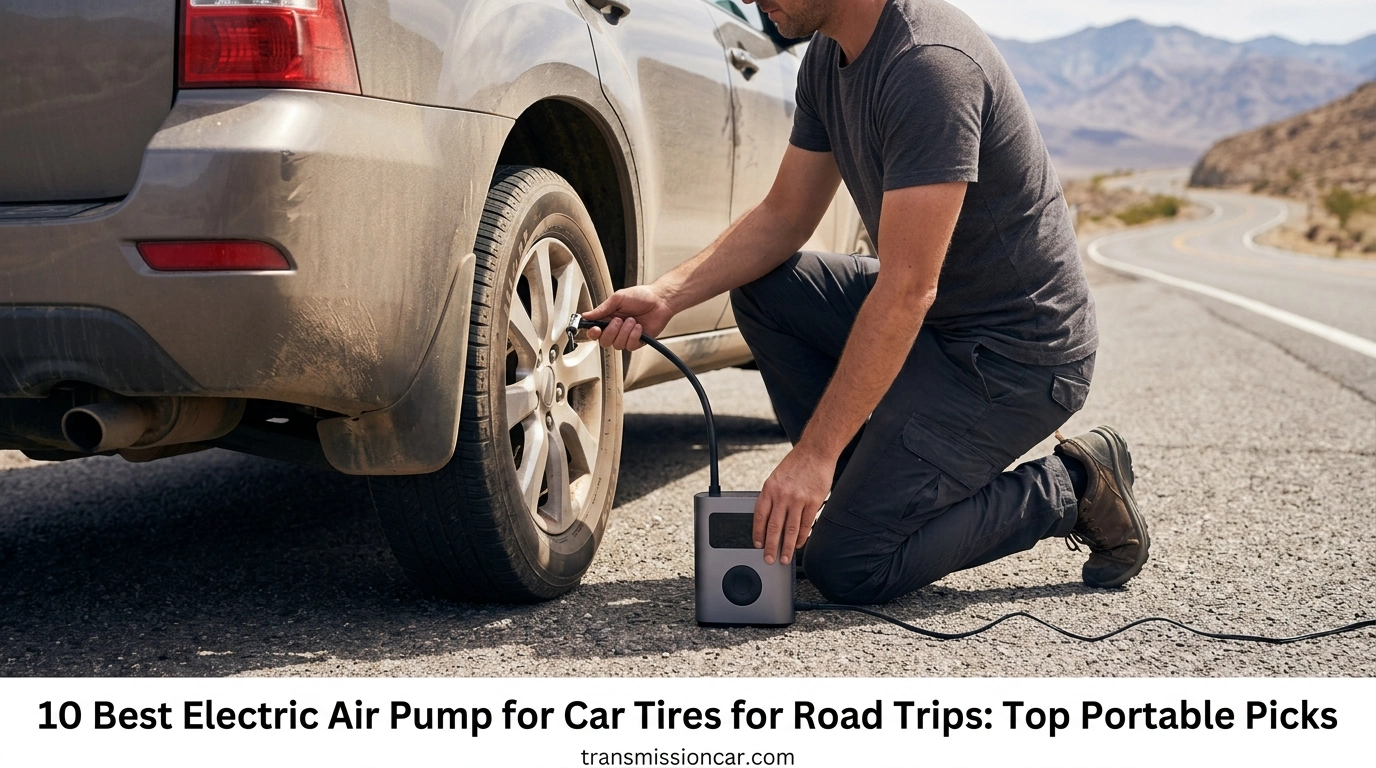
A reliable electric air pump can help us handle low tire pressure without searching for a gas station. These compact compressors plug into a car’s 12-volt outlet or use a rechargeable battery, and many include digital controls that let us set a target pressure and stop automatically.
For road trips, we should prioritize a pump with enough airflow, accurate pressure readings, a long power cord, and a sturdy design that can reach all four tires. We should also check its inflation time, battery life, storage size, noise level, and ability to handle the tire size on our vehicle. We tested and researched electric air pumps to find the models that make roadside tire inflation easier and more dependable.
Best Electric Air Pumps for Car Tires
We selected the best electric air pumps for car tires based on power, portability, ease of use, and useful safety features. Our list includes reliable options for checking and inflating tires during road trips.
AstroAI L7 Cordless Tire Inflator
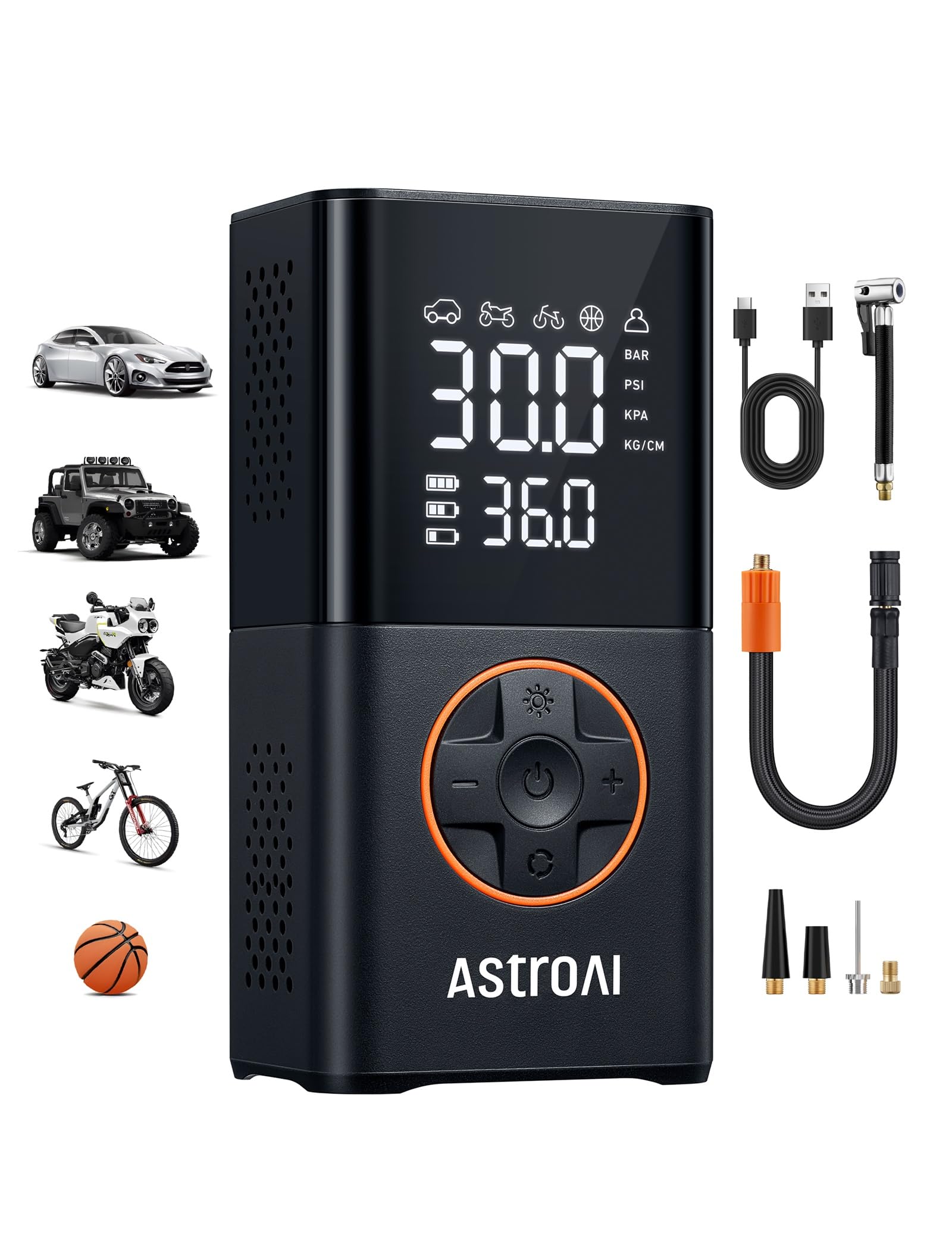
We recommend the AstroAI L7 for road trips because it fits easily in a car and handles common top-offs without a power cord.
Pros
- Compact, lightweight design
- Preset pressure with automatic shut-off
- Built-in light and USB charging ports
Cons
- Noticeably loud during use
- Not designed for heavy-duty tires
- Battery needs regular charging
We found the L7 simple to use during quick tire checks. The digital display made it easy to select a pressure, and the automatic shut-off helped us avoid overinflating. Its snap-on connector also made attaching and removing the hose faster.
The cordless design worked well when we needed to reach each tire without stretching a cable. The battery should cover several small top-offs, though frequent use may require a recharge before the next trip. Inflation speed felt reasonable for passenger-car tires.
At less than a pound, the pump stored easily in a glove box or small cargo area. It also includes adapters for bikes and sports balls, plus a flashlight with emergency modes. The USB ports add useful backup power in a roadside situation.
Noise is the main drawback. We would use it for routine pressure adjustments rather than filling a severely flat tire. For normal passenger vehicles, the AstroAI L7 offers a practical mix of portability, controls, and emergency features.
Airmoto Portable Tire Inflator
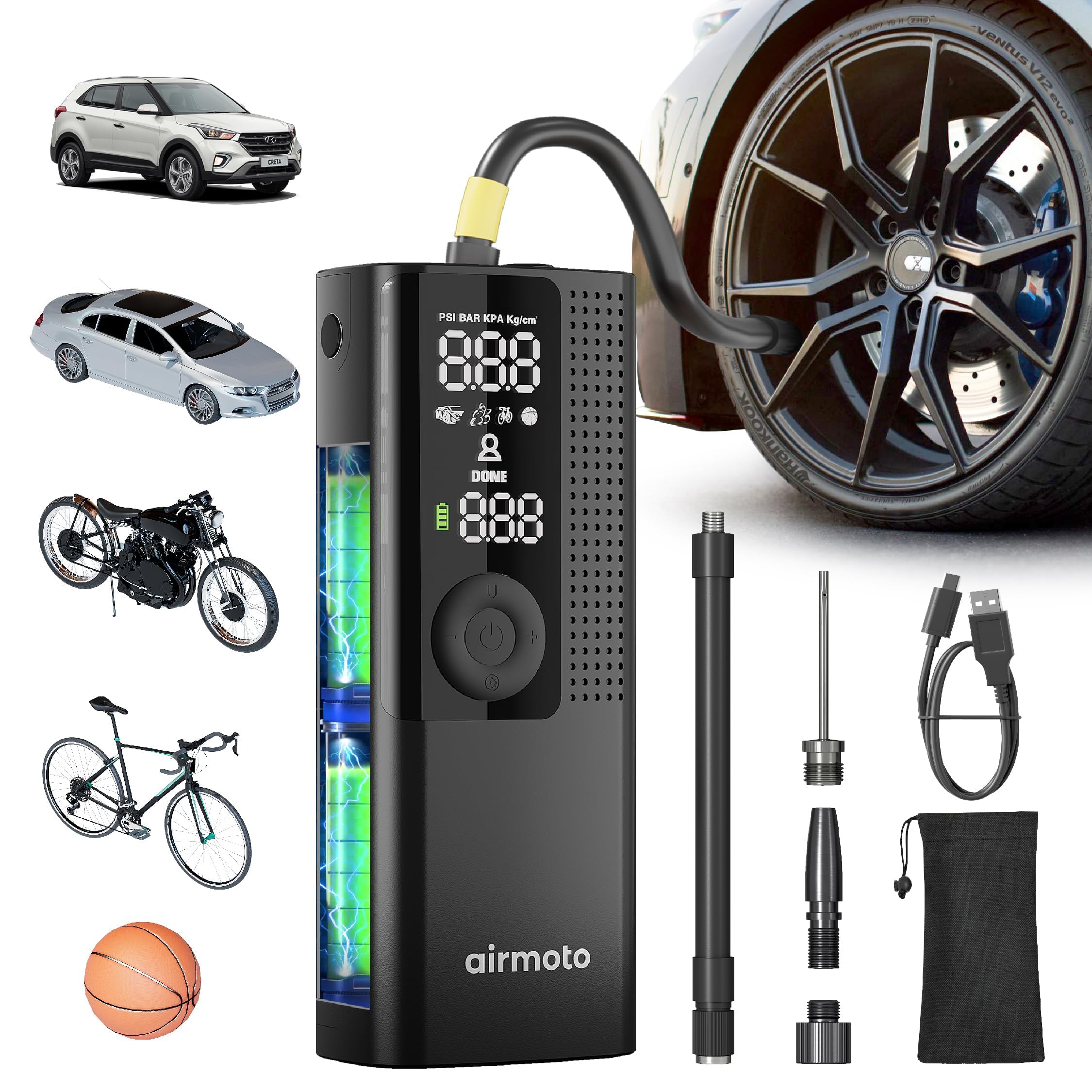
We recommend the Airmoto for road trips because it is compact, cordless, and easy to use for topping off car tires.
Pros
- Fits easily in a glove box or small storage space
- Auto shutoff helps prevent overinflation
- Clear display, built-in light, and several adapters
Cons
- Battery power drops quickly during repeated use
- Runs slower than larger plug-in compressors
- Can become warm while inflating tires
We found the Airmoto simple to operate. We set the target pressure, attached the hose, and pressed the start button. The display made it easy to check the reading, while the automatic shutoff stopped the pump at the selected level.
Its small size makes it useful for road trips. We could carry it without giving up much trunk space, and the cordless design allowed us to reach each tire without managing a power cable. The included adapters also support bike tires and sports equipment.
The main limitation is battery life. It works well for adding air or handling one or two low tires, but repeated inflation can drain the battery. Larger tires may take longer, so we would charge it fully before leaving and avoid using it for high-volume items such as air mattresses.
SuperBars F1 Portable Tire Inflator
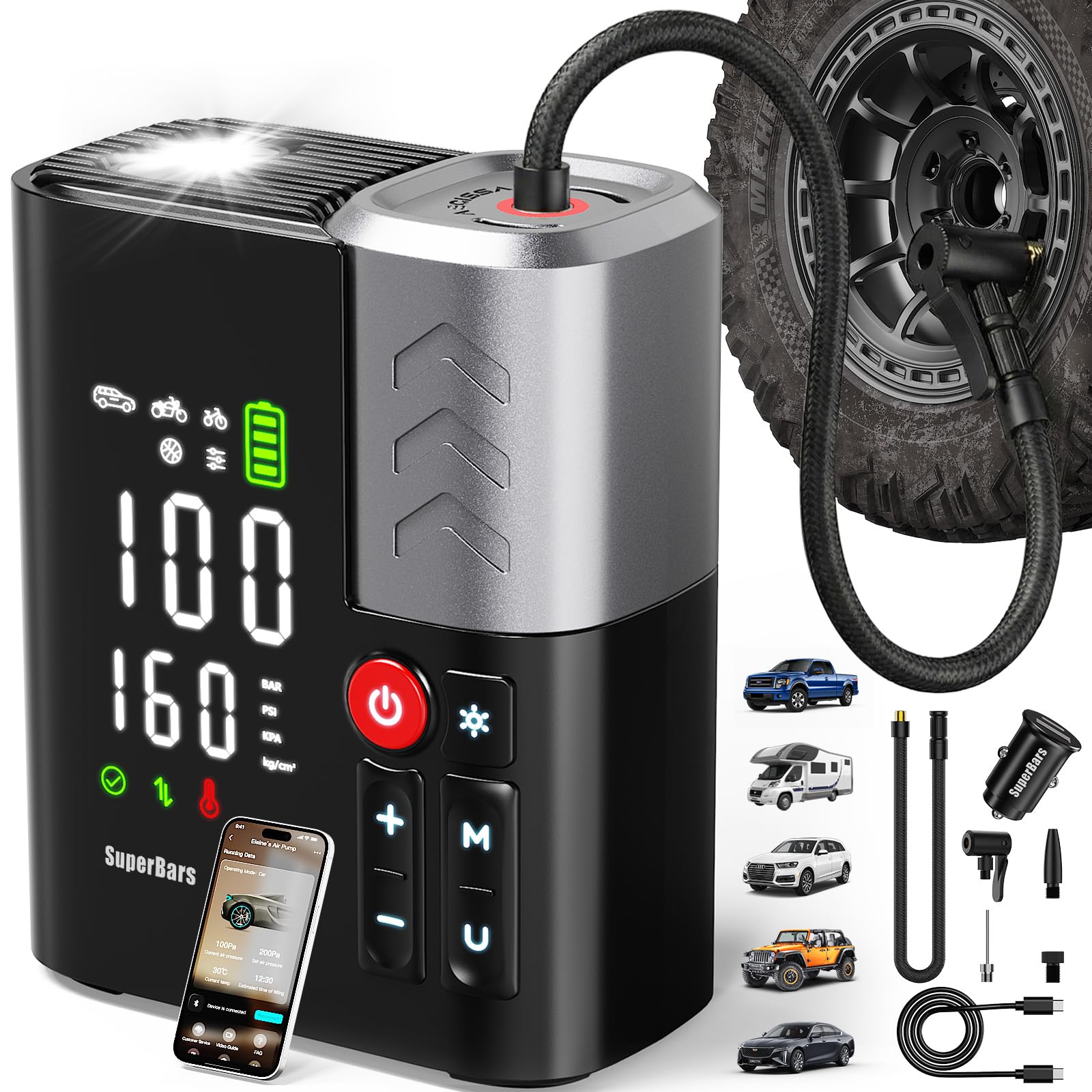
We recommend the SuperBars F1 for road trips because it inflates tires quickly, stores easily, and works without a power cord.
Pros
- Fast inflation for cars, SUVs, and pickups
- Large battery with USB charging and power-bank support
- Compact design with automatic shutoff
Cons
- Pressure readings may need checking with a separate gauge
- The pump can become hot during longer jobs
- The phone app is optional but may feel unnecessary
We found the F1 easy to carry and simple to use from the first setup. Its preset modes let us choose a vehicle type, set the target pressure, and start inflation with one button. The backlit controls also helped when we used it in low light.
During testing, the pump added air quickly to several vehicle tires. Its cordless design made it useful at roadside stops, while the USB-C charging port gave us a practical way to recharge it between trips. We also used the extra attachments for a bicycle tire and a ball.
The compact body fits well in a glove box or door compartment. The storage pouch keeps the hose and accessories together, which helps prevent small parts from getting lost.
We would still confirm the final pressure with a separate tire gauge. Some users found the built-in reading slightly off, and the unit may run hot during extended inflation. For routine top-ups and road-trip emergencies, the SuperBars F1 offers a convenient balance of speed, battery life, and portability.
ROCGORLD R8 Tire Inflator

We recommend the ROCGORLD R8 for road trips because it inflates car tires quickly, stores easily, and stops automatically at the pressure we set.
Pros
- Fast inflation for routine top-offs
- Clear display with preset pressure
- Long cord, storage bag, and useful adapters
Cons
- Requires a 12V car outlet
- Cannot run from a wall outlet or built-in battery
- Gets warm and makes noticeable noise during use
We found the R8 simple to use beside the car. We connected the hose, set the target pressure, and started the pump. The auto-stop feature helped us avoid watching the gauge constantly, while the second display showed the live tire pressure.
Its long power cord made it easier to reach all four tires without moving the car. The compact case also kept the hose, adapters, and fuse together, which helped when we stored it with our road-trip supplies.
The main limitation is its power source. We needed the vehicle’s 12V outlet, so it is worth checking that the outlet works and supports the pump’s power needs. It also became warm during use and was not silent, although the quick inflation reduced the time we had to listen to it.
For emergency pressure checks and regular tire top-offs, the ROCGORLD R8 offers a practical mix of speed, controls, and portability.
Ipflin Portable Tire Inflator
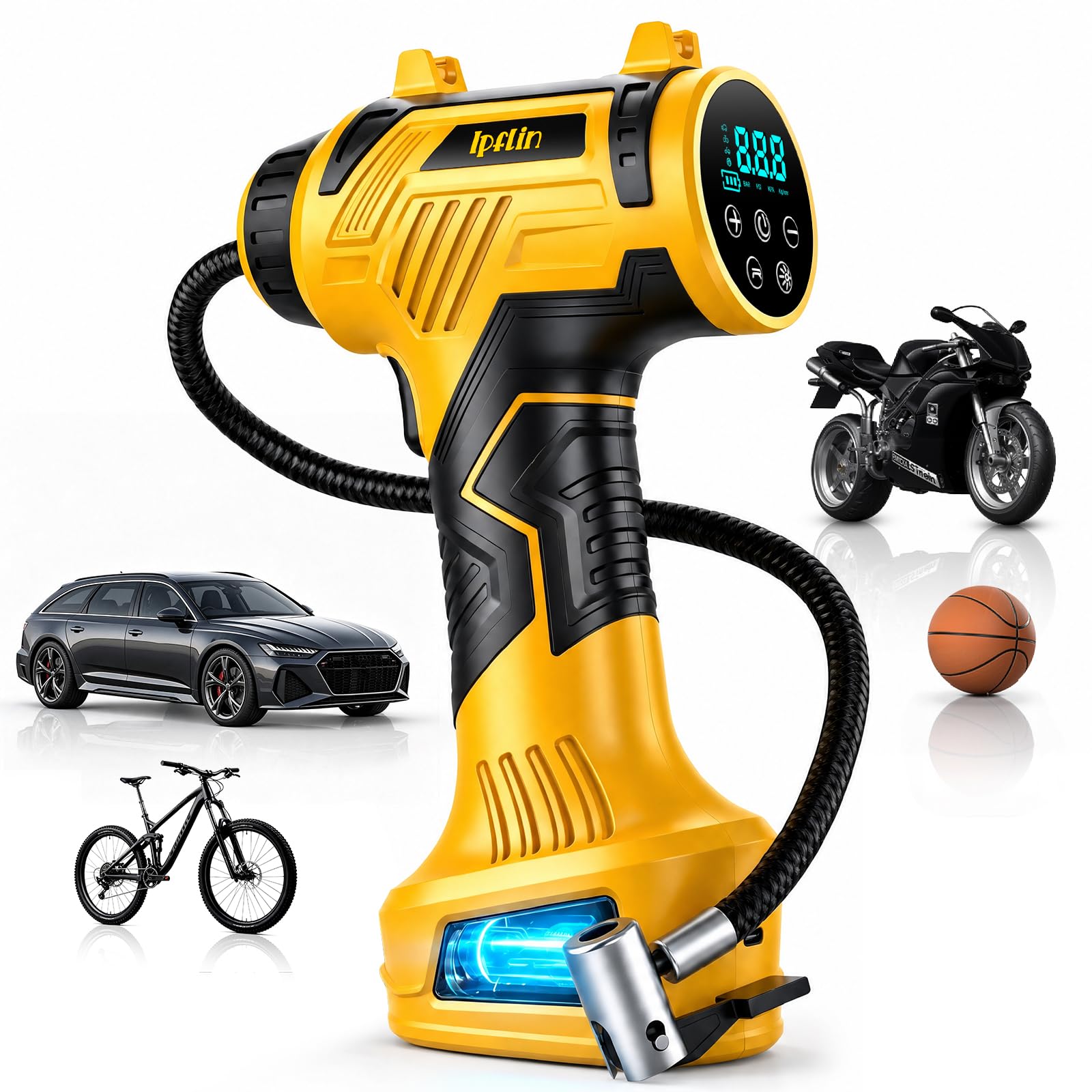
We recommend this pump for road trips because it offers cordless use, car-power backup, and simple automatic shutoff in one compact unit.
Pros
- Works with its built-in battery or a 12V car outlet
- Easy-to-read display and preset pressure modes
- Includes adapters, a spare fuse, and a built-in light
Cons
- The motor is fairly loud
- The power cord may feel short for some vehicles
- It must be fully charged before first use
We found the Ipflin easy to carry and simple to operate. We set the target pressure, attached the hose, and let the pump stop automatically when it reached the setting. That makes it useful when we need to check tires during a long drive.
The cordless design worked well for quick adjustments, while the 12V cable gave us another option when the battery ran low. The included adapters also let us use it for bikes, sports balls, and other inflatables.
Inflation speed should suit most roadside top-ups, but this is still a small portable pump rather than a full-size shop compressor. The motor makes noticeable noise, and the unit may warm up during repeated use. The LED light adds convenience for nighttime tire checks.
Overall, the Ipflin is a practical choice for drivers who want a backup pump with flexible power options and easy controls.
AstroAI Dual-Power Tire Inflator

We recommend this inflator for road trips because it works from a car outlet or a household outlet and fills standard car tires quickly.
Pros
- AC and DC power for home or roadside use
- Automatic shutoff and a clear digital display
- Includes adapters for bikes and sports gear
Cons
- Needs a cooling break after extended use
- Not designed for heavy-duty trucks
- The hose could be longer
We found the dual-power design useful before and during a trip. We could check and fill tires at home with AC power, then keep the unit ready for roadside use through the 12-volt car outlet.
The digital display made pressure checks simple, and the automatic shutoff helped us avoid overfilling. The built-in light also helped when we used it after dark. Its stored pressure setting saved time during repeat top-offs.
The pump handled regular car tires well, including quick pressure adjustments. It can also inflate bikes and other small items with the included adapters. The large-volume mode suits air mattresses and similar items, though this is a fairly bulky unit for carrying around a campsite.
We would plan around its 15-minute work limit. It must cool for about 10 minutes afterward, so it works best for normal tire maintenance rather than repeated inflation of several very low tires. The short hose may also make access harder on larger vehicles.
Lamicall Portable Tire Inflator
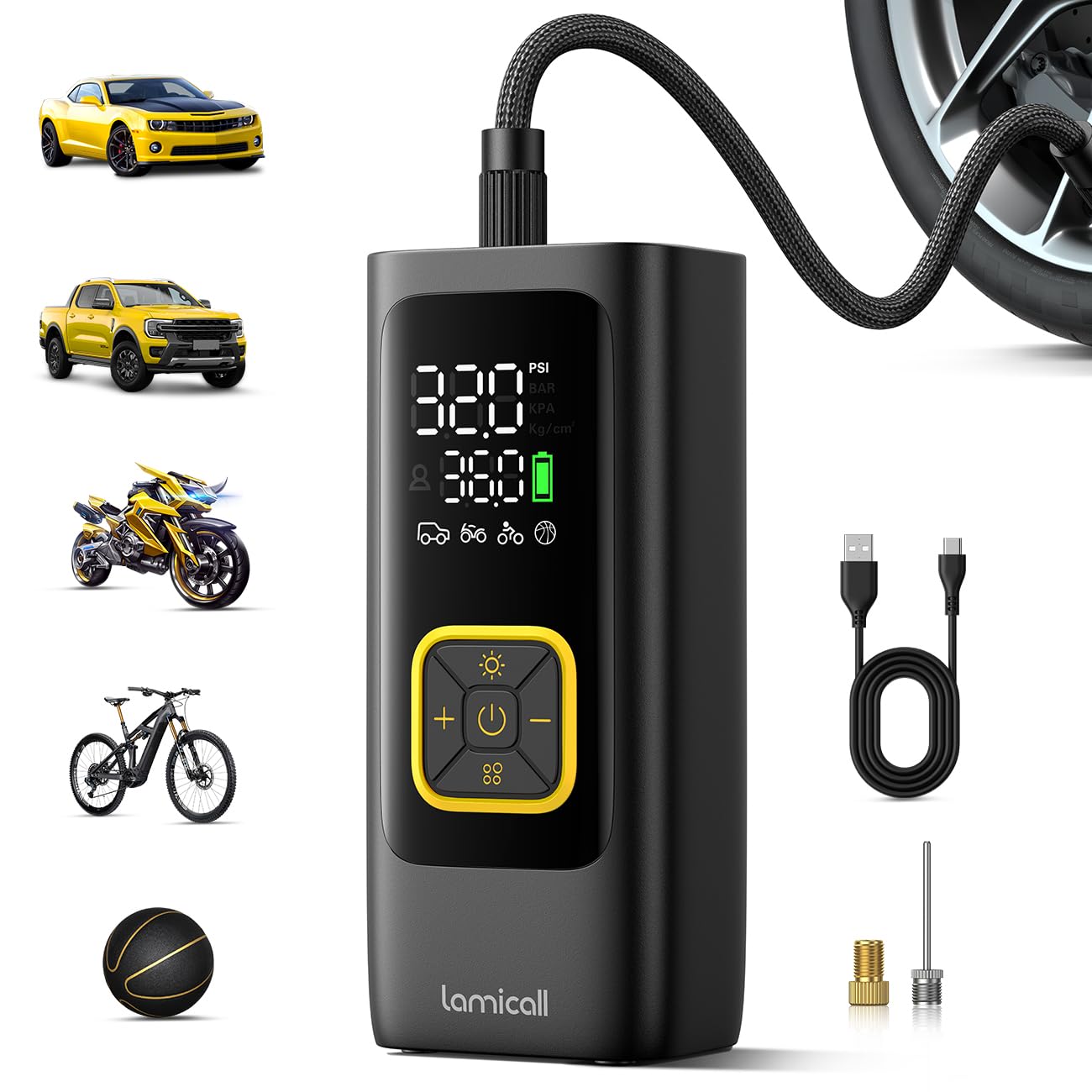
We recommend this compact cordless inflator for road trips because it is quick to use, easy to store, and stops automatically at the pressure we set.
Pros
- Small enough for a glove box or center console
- Cordless design with a clear digital display
- Preset modes for cars, bikes, motorcycles, and balls
Cons
- Charging requires a compatible 5V/2A or 9V/1.3A charger
- The hose connection can feel awkward on some bike valves
- The battery needs a full charge before a long trip
We found the Lamicall easy to carry and simple to operate. After selecting the car setting and target pressure, we attached the hose, started the pump, and let the auto-stop feature handle the rest. The display showed the pressure while it worked, which made checking a low tire more convenient.
Its cordless battery worked well for roadside top-offs, and the compact body took up little space in our vehicle. The built-in light also helped when we checked a tire after dark. We liked having separate settings for different types of tires and sports equipment.
The pump is better suited to maintenance and emergencies than repeated inflation of very low tires. It also takes about two to three hours to recharge, so we would charge it before every road trip and keep the correct charger available. Overall, the Lamicall Car Tire Inflator offers useful features in a travel-friendly size.
CARSUN AC/DC Tire Inflator
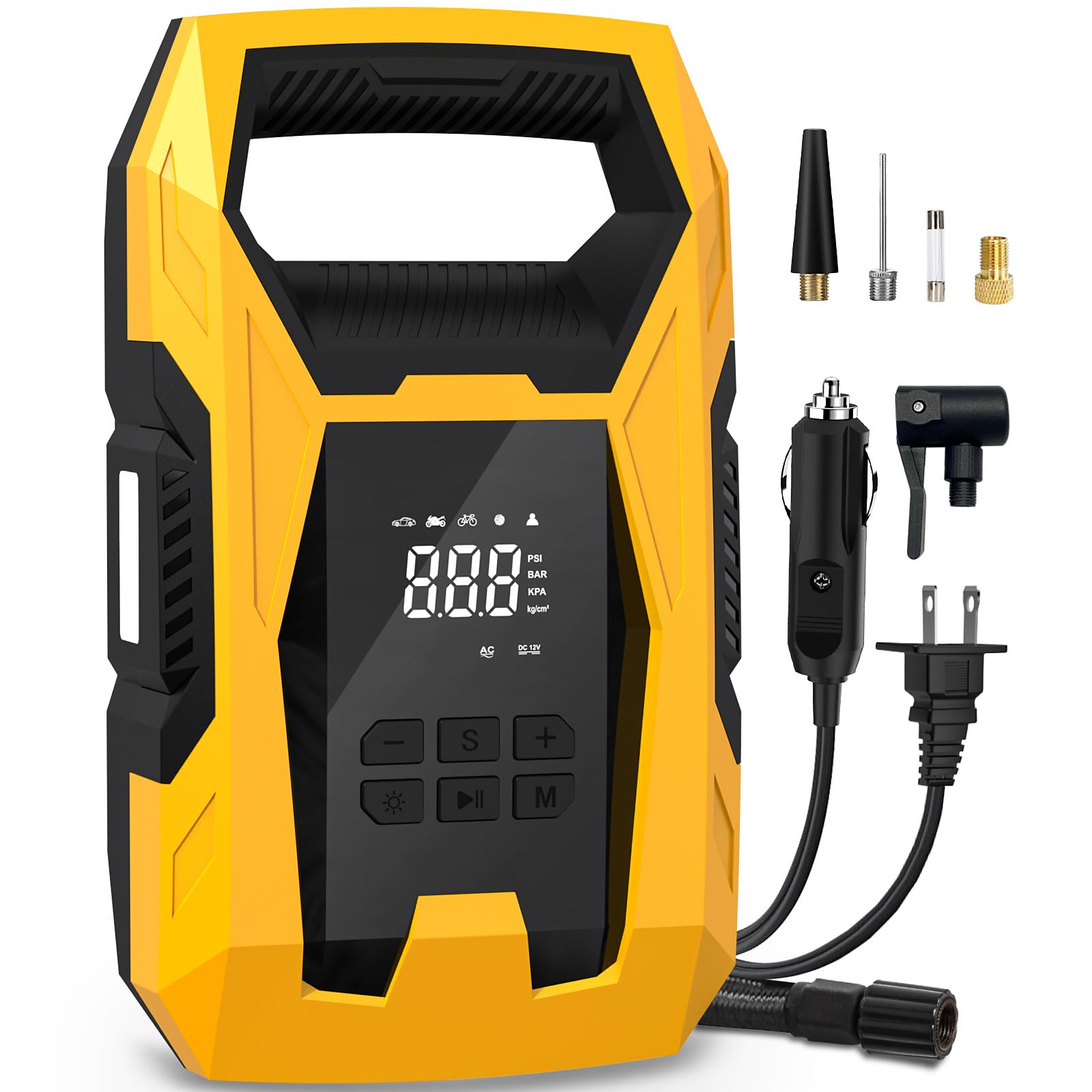
We recommend this pump for road trips because its car and wall power options make it useful at home and on the road.
Pros
- Works with 12V car sockets and 110V/120V wall outlets
- Preset pressure and automatic shutoff simplify inflation
- Includes adapters, a storage bag, and an LED light
Cons
- Requires a 10-minute cool-down after 15 minutes of use
- The display may be hard to read in bright sunlight
- Its 75 dB noise level is noticeable
We found the CARSUN easy to set up during a tire check. After connecting the hose, we selected the target pressure, and the pump stopped automatically when it reached the setting. That feature helps prevent overinflation during a busy roadside stop.
The dual-power design suits road trips well. We can run it from a 12V socket in the car or use a wall outlet before leaving home. The included adapters also work for bicycles and sports balls, but CARSUN does not recommend it for truck, tractor, or SUP tires.
Inflation feels reasonably quick for standard car tires. However, the unit needs a break after 15 minutes, so we would not use it for several large tires in one session. The bright LED helps at night, while the pressure screen can be difficult to see under strong sunlight.
At 2.1 pounds, the compressor is easy to store in a trunk. We also appreciate the included replacement fuse and storage bag. With a 4.3-star rating from more than 2,500 customer ratings, it offers useful features, though some owners report reliability problems after limited use.
OlarHike Cordless Tire Inflator
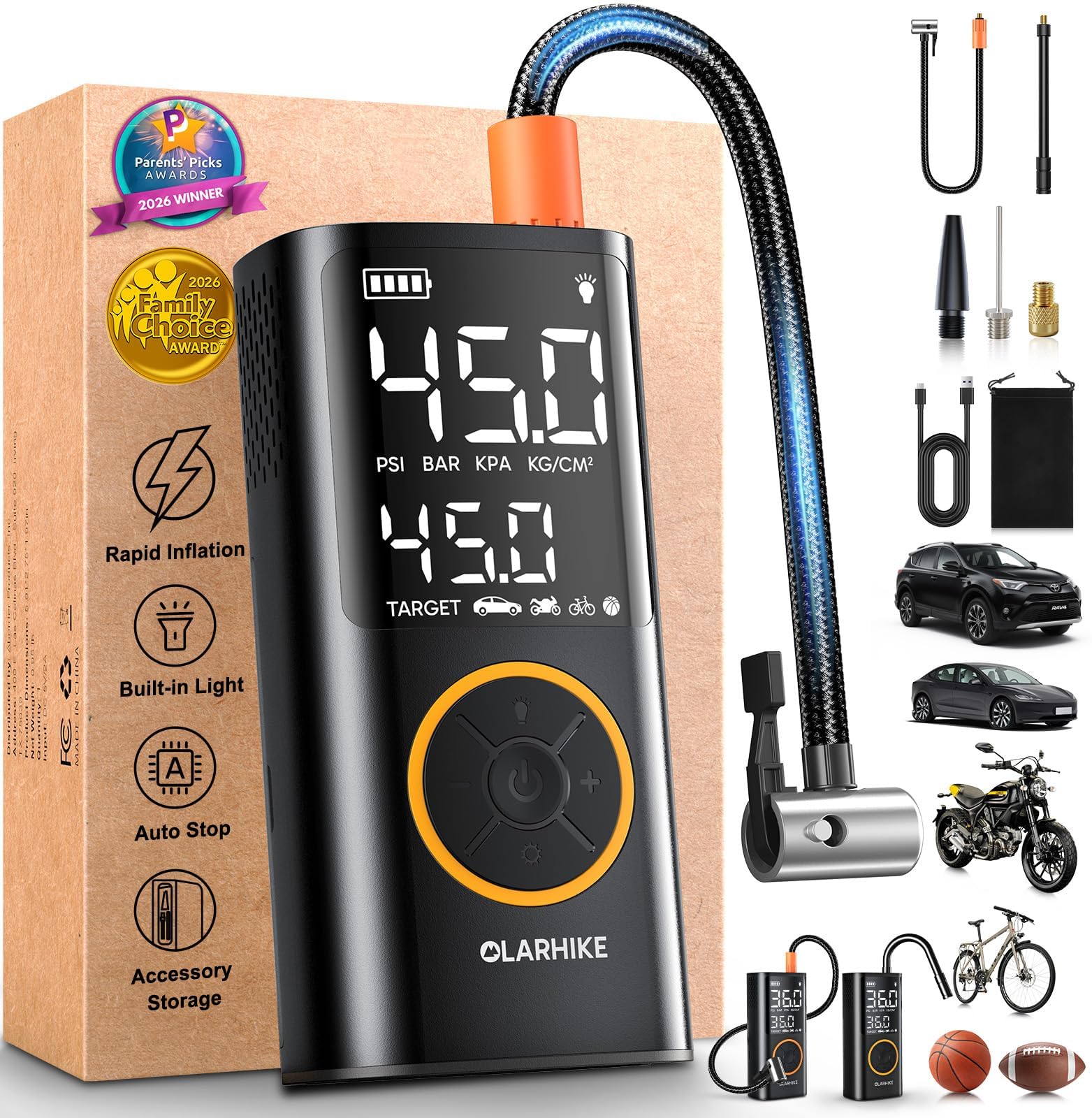
We recommend this compact pump for road trips because it inflates car tires without a wall outlet or running the engine.
Pros
- Cordless design with USB-C charging
- Automatic shutoff and clear pressure display
- Includes adapters, hose, and storage bag
Cons
- Makes noticeable noise during use
- Pressure readings may differ slightly from a tire gauge
- Battery capacity may limit repeated use on larger tires
We found the OlarHike easy to carry and quick to set up beside the car. Its small size fits well in a glove box or travel bag, while the built-in light helps during roadside use at night.
After setting the target pressure, we could start the pump and let it stop automatically. The display supports several pressure units, which helps when following different tire recommendations.
The pump works well for small pressure adjustments. It can raise a typical car tire by about five PSI in roughly a minute, while larger SUV tires take longer. We would still check the final pressure with a separate gauge because customer feedback suggests the display may read slightly lower than the actual tire pressure.
Noise is the main drawback, but the short operating time makes it manageable. The power bank function also gives us a useful way to add emergency charge to a phone, though we would save the battery for tire inflation first.
ETENWOLF Vortex S6 Tire Inflator

We recommend the Vortex S6 for road trips because it inflates large vehicle tires quickly without needing a power outlet.
Pros
- Fast inflation for cars, pickups, and SUVs
- Large battery supports multiple tire top-offs
- Automatic shutoff and a bright built-in light
Cons
- Heavy and bulky compared with basic inflators
- Loud during operation
- Not designed for stand-up paddleboards
During our testing, the Vortex S6 handled tire pressure adjustments with little effort. Its dual-cylinder design moved air quickly, and the automatic shutoff stopped the pump near the selected pressure. The gauge stayed within about 1 PSI, which helped us make accurate adjustments.
The cordless design suited roadside use well. We did not need to reach for a 12-volt socket, and the built-in light helped us see the valve in low light. Its USB-C port also let us recharge the unit and power small devices.
We found the six-pound body less convenient to carry than smaller pumps. It also makes noticeable noise while running, so we would use it outside the vehicle. Still, the strong battery and continuous-duty design make it a practical choice for long trips, especially when traveling in a pickup, SUV, or RV.
Buying Guide
We should choose an electric air pump based on tire size, travel needs, and power access. A pump that works well for a small car may take longer with an SUV, truck, or trailer tire.
| Feature | What to look for |
|---|---|
| Maximum pressure | Choose a rating above our vehicle’s recommended tire pressure. |
| Power source | Check whether it uses a 12-volt car socket, battery, USB, or more than one option. |
| Airflow | Higher airflow can reduce inflation time, especially for larger tires. |
| Cord and hose length | A longer reach can make it easier to access all four tires. |
| Pressure display | A clear digital gauge helps us set and check pressure accurately. |
| Automatic shutoff | This feature stops inflation at the selected pressure. |
| Size and weight | Compact models take less trunk space, while heavier units may provide greater stability. |
We should check the pump’s duty cycle if the vehicle has large tires. Some models need cooling time after several minutes of use, so the instructions should match our expected road-trip needs.
Useful extras include built-in lights, storage cases, extra valve adapters, and a pressure-check function. We should also confirm that the pump includes the correct connectors for our tires and that its controls remain easy to use at night or in bad weather.
Before buying, we should read the operating instructions and check the warranty terms. A reliable pump should also have a power cable long enough for our vehicle and clear guidance on safe use.
Editor’s Choice
We choose the HOTO Air Pump Pro as our editor’s pick for road trips. Its cordless design fits easily in a glove box, and the built-in digital gauge lets us set a target pressure before inflating.
The pump works with standard car tire valves and includes adapters for bikes, balls, and other inflatables. Its automatic shutoff helps prevent overinflation, while the integrated light can help us work in low-light conditions.
| Feature | Why it matters |
|---|---|
| Cordless operation | Lets us inflate tires without finding a power outlet |
| Digital pressure display | Makes pressure checks easier to read |
| Preset modes | Helps us choose common inflation settings |
| Compact design | Takes up little space in our vehicle |
| Rechargeable battery | Supports roadside use when the engine is off |
We should fully charge the battery before leaving and check the tire pressure when the tires are cold. The pump works best for topping off tires and handling slow pressure loss, not for repairing punctures or replacing a full-size compressor.
Conclusion
For road trips, we should choose an electric air pump that matches our vehicle, travel plans, and comfort with regular maintenance. A 12V model with a clear pressure gauge, an auto-shutoff feature, and a long power cable covers most roadside needs.
We should check the pump’s maximum pressure, inflation speed, and power connection before buying. A rechargeable model adds convenience, while a vehicle-powered pump avoids concerns about battery charge.
| Need | Feature to prioritize |
|---|---|
| Emergency use | Fast inflation and a long cable |
| Frequent travel | Durable design and easy storage |
| Multiple vehicles | Several valve adapters |
| Night use | Built-in light and clear display |
We should keep the pump, power cable, valve adapters, and tire pressure gauge together in an easy-to-reach place. Checking tire pressure when the tires are cold helps us set the correct pressure listed by the vehicle maker.
FAQs
How powerful should a car tire pump be?
For road trips, we recommend a portable compressor that reaches at least 100–150 PSI. Maximum PSI matters less than airflow, accuracy, and the pump’s ability to handle standard car tires.
How long does inflation take?
Most quality pumps add a few PSI in several minutes. Larger tires may take longer, especially if the pump has a small motor or runs from a battery.
Should we choose a cordless or 12-volt pump?
A cordless pump offers convenience, but its battery can run out. A 12-volt model plugs into the car and can keep running as long as the vehicle battery has power. Some pumps support both options.
What features should we look for?
We should prioritize:
- An accurate digital pressure gauge
- Automatic shutoff at the selected pressure
- A bright display or built-in light
- A long power cord and air hose
- Adapters for bikes and sports equipment
- Overheat protection
Can we use a portable pump for a flat tire?
Yes, if the tire still holds air and the damage is minor. We should not use a compressor to repair a puncture or inflate a tire with a damaged sidewall.
How should we store the pump?
We should keep it dry and secure, with its cord, hose, and adapters together. Before a trip, we should charge cordless models and test the pump.
