
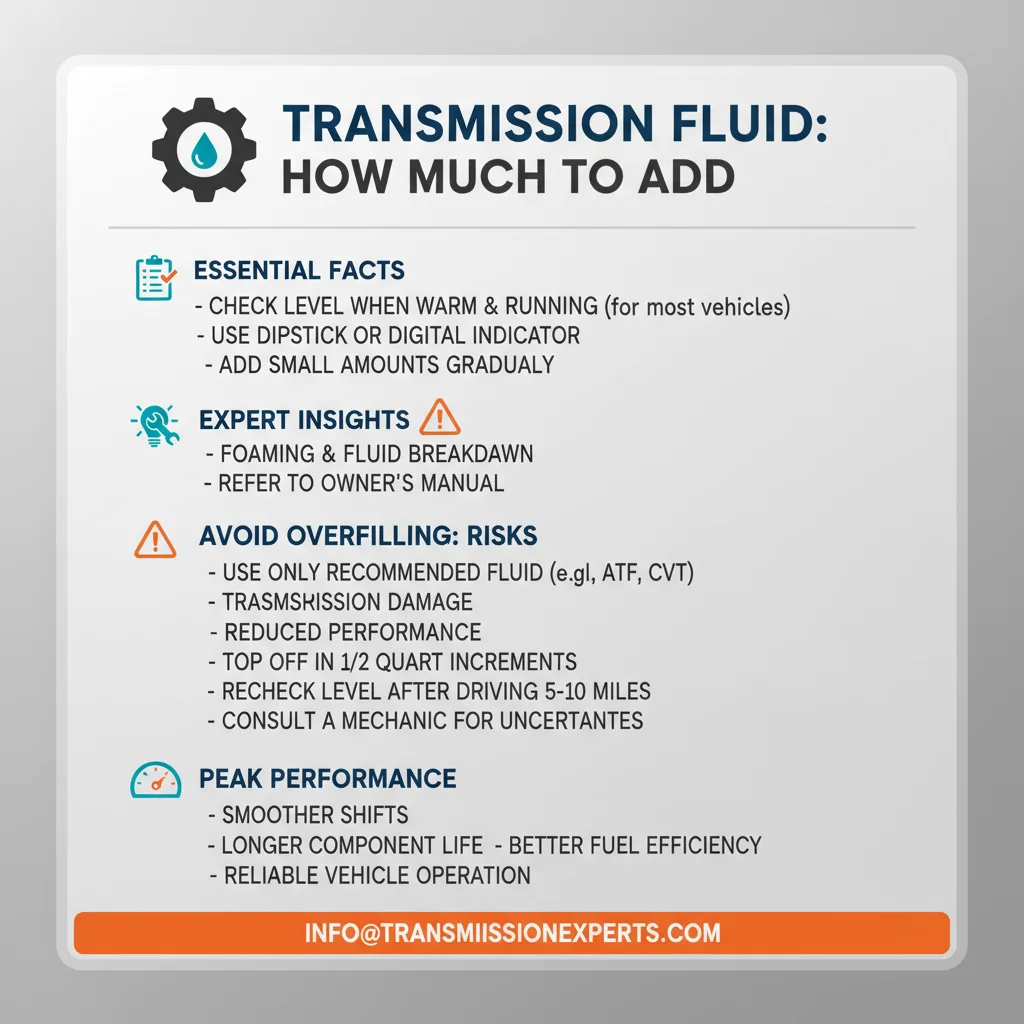
Maintaining the health of your vehicle’s transmission is one of the most critical aspects of car ownership, yet many drivers are unsure of the precise details involved in fluid maintenance. Transmission fluid serves as both a lubricant and a hydraulic fluid, enabling your car to shift gears smoothly while cooling internal components. If you find your gears slipping or notice a delay in engagement, you are likely wondering exactly how much transmission fluid to add to rectify the issue. The short answer is that you should typically add fluid in small increments—usually half a quart at a time—until the level reaches the designated “full” mark on the dipstick. Overfilling can be just as damaging as underfilling, making this a task that requires patience and precision. In this comprehensive guide, we will provide the facts and insights you need to master this maintenance task, ensuring your vehicle remains on the road for years to come.
Understanding the Basics of Transmission Fluid Levels
Before diving into the specifics of how much transmission fluid to add, it is essential to understand why this measurement is so sensitive. Unlike engine oil, which mostly provides lubrication, automatic transmission fluid (ATF) acts as a hydraulic medium. It is responsible for transferring power in the torque converter and providing the pressure necessary to engage various gear sets. Because fluid expands when heated, the “correct” amount can vary depending on the temperature of the vehicle.
Most vehicles come equipped with a dipstick that has two sets of markings: one for “Cold” and one for “Hot.” The cold reading is typically an information summary intended to let you know there is enough fluid to safely start the car and drive it until it reaches operating temperature. The hot reading is the official level used for final adjustments. Providing these details ensures that you don’t over-correct based on a cold reading, which could lead to an overfilled transmission once the fluid expands during a long drive.
Many modern vehicles manufactured after 2015 are “sealed” units and do not have a traditional dipstick. For these cars, checking and adding fluid requires specialized tools and is often performed from underneath the vehicle while it is on a lift.
📋
Step-by-Step Guide: Adding Transmission Fluid
Park your car on a level surface and leave the engine idling. Most manufacturers recommend checking the fluid while the engine is running and the transmission is in “Park” or “Neutral.” This allows the pump to circulate fluid throughout the system for an accurate reading.

Pull out the dipstick, wipe it clean, reinsert it fully, and pull it out again. Look at the distance between the “Add” and “Full” marks. In almost every passenger vehicle, this gap represents exactly 1 quart (approx. 0.95 liters).
Using a long-neck funnel, pour about 0.5 quarts of the manufacturer-recommended fluid into the dipstick tube. Wait 2-3 minutes for the fluid to drain down the tube completely before re-checking to avoid a false “high” reading caused by residual fluid on the walls of the tube.
Determining Total Capacity vs. Topping Off
When searching for information on how much transmission fluid to add, it is vital to distinguish between a simple “top-off” and a “dry fill.” If you are just maintaining your vehicle and noticed the level is slightly low, you will rarely need more than a quart. However, if you have just performed a transmission service, the numbers change significantly.
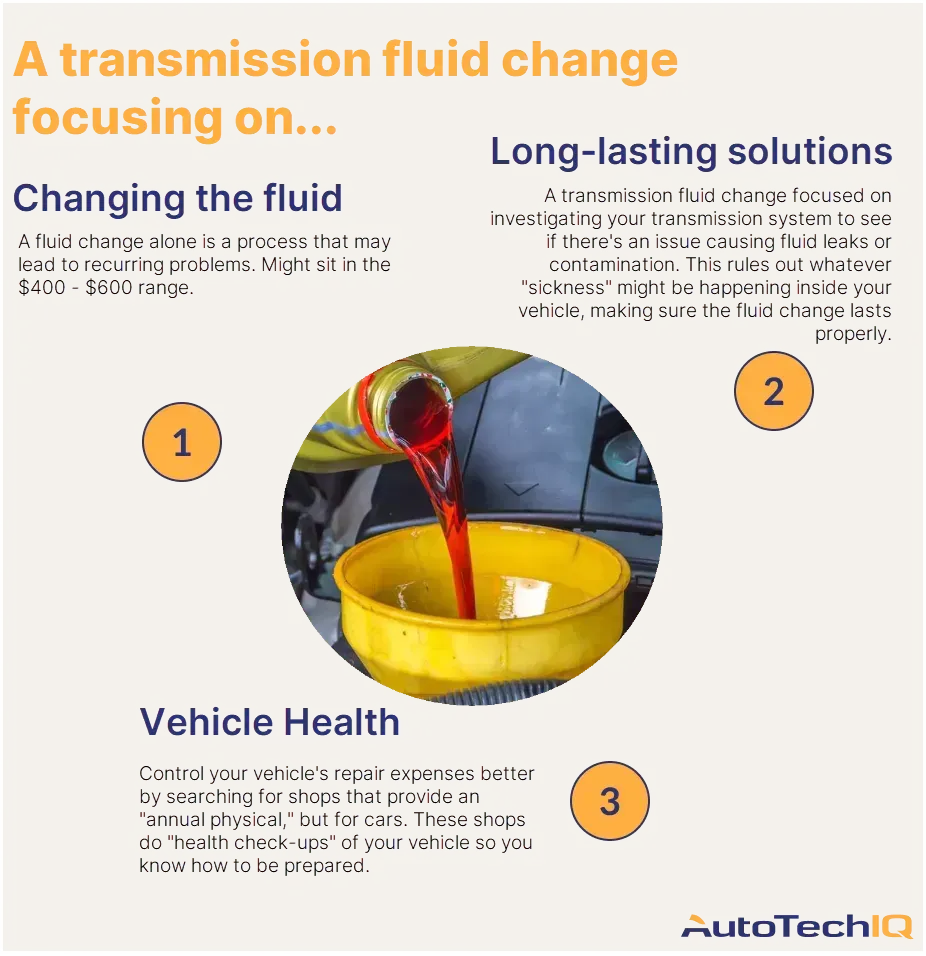
A standard “drain and fill” usually involves removing the transmission pan. This typically drains about 4 to 6 quarts of fluid, as much of the fluid remains trapped inside the torque converter and cooling lines. A “dry fill” or a complete flush, which replaces all the fluid in the system, usually requires 12 to 16 quarts depending on the size of the vehicle and its transmission. Always refer to your owner’s manual for the specific capacity of your make and model to ensure you have enough bottles on hand before starting the job.
✨ Key Benefits of Proper Fluid Levels
Optimal Gear Shifting
Correct fluid levels provide the exact hydraulic pressure needed for smooth, seamless gear transitions without lag.
Heat Dissipation
Properly filled fluid carries heat away from internal clutches and gears, preventing catastrophic overheating and failure.
Component Longevity
By reducing friction and wear on metal surfaces, the right amount of fluid can extend the life of your transmission by years.
Fluid Capacity Overview by Vehicle Type
How to Read Symptoms of Low Fluid
Often, the first time a driver asks about how much transmission fluid to add is when the car starts behaving strangely. Low fluid levels cause a variety of mechanical issues that are easy to identify if you know what to look for. One common symptom is “gear hunting” or slipping, where the engine revs high, but the vehicle doesn’t accelerate as quickly as it should. This happens because there isn’t enough hydraulic pressure to keep the clutches fully engaged.
Other facts to consider include erratic shifting or grinding noises. When the fluid is low, air can enter the system, causing the fluid to foam. Foamy fluid cannot lubricate effectively, leading to increased friction and heat. If you see a summary of these symptoms in your car’s performance, it is vital to check the dipstick immediately. Insightful maintenance means catching these levels before they drop to a point where internal damage becomes permanent.
Manual vs. Automatic: Does the Amount Differ?
If you drive a manual transmission, the process for determining how much transmission fluid to add is entirely different. Manual gearboxes typically use a “fill to the hole” method. There is no dipstick; instead, there is a fill plug on the side of the transmission casing. You add fluid until it begins to seep out of the fill hole, which indicates the internal gears are sufficiently submerged.
The total capacity for manual transmissions is generally lower than for automatics, usually ranging from 2 to 4 quarts. Because manual systems do not use hydraulic pressure to shift, the fluid is much thicker (often gear oil or specialized manual transmission fluid). Providing this info helps manual drivers avoid the confusion of looking for a dipstick that doesn’t exist.
Never pour in several quarts at once without checking. Overfilling your transmission causes the moving gears to whip the fluid into a froth. This aerated fluid cannot be pumped effectively, leading to overheating, blown seals, and internal pressure spikes that can destroy the transmission within miles.
Final Facts and Maintenance Insights
Maintaining the proper fluid level is an ongoing responsibility. Even if your car isn’t showing signs of trouble, it is wise to check the level every time you change your engine oil. This proactive approach allows you to spot leaks early—typically indicated by red puddles on your driveway—before they result in an expensive repair bill. If you find yourself consistently asking how much transmission fluid to add every few weeks, you likely have a leak in the transmission cooler lines or a failing gasket that needs professional attention.
In summary, the key to success is gradual adjustment. By adding fluid in 0.5-quart increments and checking the dipstick frequently while the engine is warm and running, you can ensure your transmission remains properly lubricated and pressurized. This simple maintenance task is one of the most cost-effective ways to protect your vehicle’s most complex and expensive mechanical system.
Knowing how much transmission fluid to add is an essential skill for any driver looking to maximize their vehicle’s lifespan. By following the incremental “half-quart” rule and ensuring you are reading the dipstick under the correct conditions—engine running and fluid hot—you can avoid the common pitfalls of both underfilling and overfilling. Remember to consult your owner’s manual for specific fluid types and total capacities, and never ignore the warning signs of slipping or erratic shifting. For your next step, check your fluid levels this weekend and keep a spare quart of the correct ATF in your trunk for emergencies. Safe driving begins with a well-maintained transmission!
❓ Frequently Asked Questions
1
What is transmission fluid?
Transmission fluid is a specialized lubricant used in vehicles to facilitate gear shifts and cool the internal system. It provides the necessary hydraulic pressure to move internal components. Having the right information on fluid levels is essential for maintaining smooth gear transitions and preventing long-term mechanical damage to the vehicle.
2
How does the fluid level affect performance?
Transmission fluid works by providing lubrication and cooling to moving parts. If levels are too low, the system lacks the pressure to shift correctly, leading to overheating. Monitoring these details ensures the gears stay lubricated, preventing friction, slippage, and premature wear on the internal transmission components during operation.
3
Why is it important to add the correct amount?
Adding the correct amount is vital because both underfilling and overfilling lead to transmission failure. Low levels cause slipping, while overfilling leads to aeration and foaming. Having these specific facts ensures your vehicle remains reliable and helps you avoid the very costly repairs associated with common transmission fluid errors.
4
What are the benefits of proper fluid levels?
Maintaining proper fluid levels offers several benefits, including smoother shifting, reduced heat buildup, and a longer transmission lifespan. Expert insights show that regular checks help identify leaks early. When you have the right details regarding your fluid capacity, you ensure the hydraulic system operates at peak mechanical efficiency.
5
How can I get started with adding fluid?
To get started, locate the transmission dipstick while the engine is warm and idling. Wipe it clean, reinsert it, and check the level. If it is below the full mark, add small increments of the recommended fluid. Consult your owner’s manual for the most accurate vehicle info and details.