
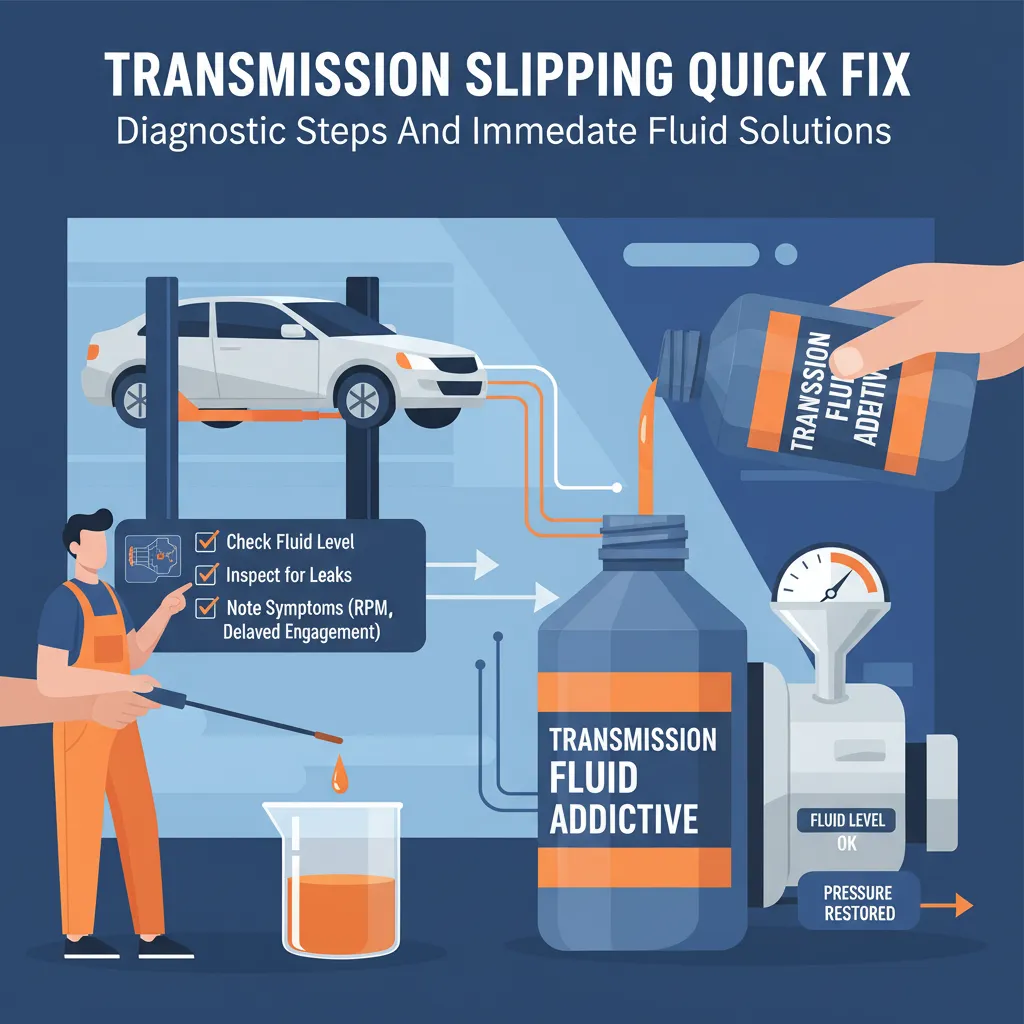
The sudden, alarming rise in engine RPMs without a corresponding increase in vehicle speed is the quintessential symptom of a transmission in distress. This phenomenon, known as transmission slippage, occurs when the internal components fail to maintain the hydraulic or mechanical connection required to transfer power to the wheels. Transmission slippage is a critical mechanical failure that compromises vehicle safety and leads to escalating repair costs if the underlying hydraulic or electronic fault is not addressed immediately. This technical guide outlines the systematic diagnostic procedures to identify root causes and provides actionable quick fixes ranging from fluid calibration to solenoid testing to restore drivetrain integrity.
Transmission Slipping Quick Fix: Immediate Fluid Level and Quality Assessment
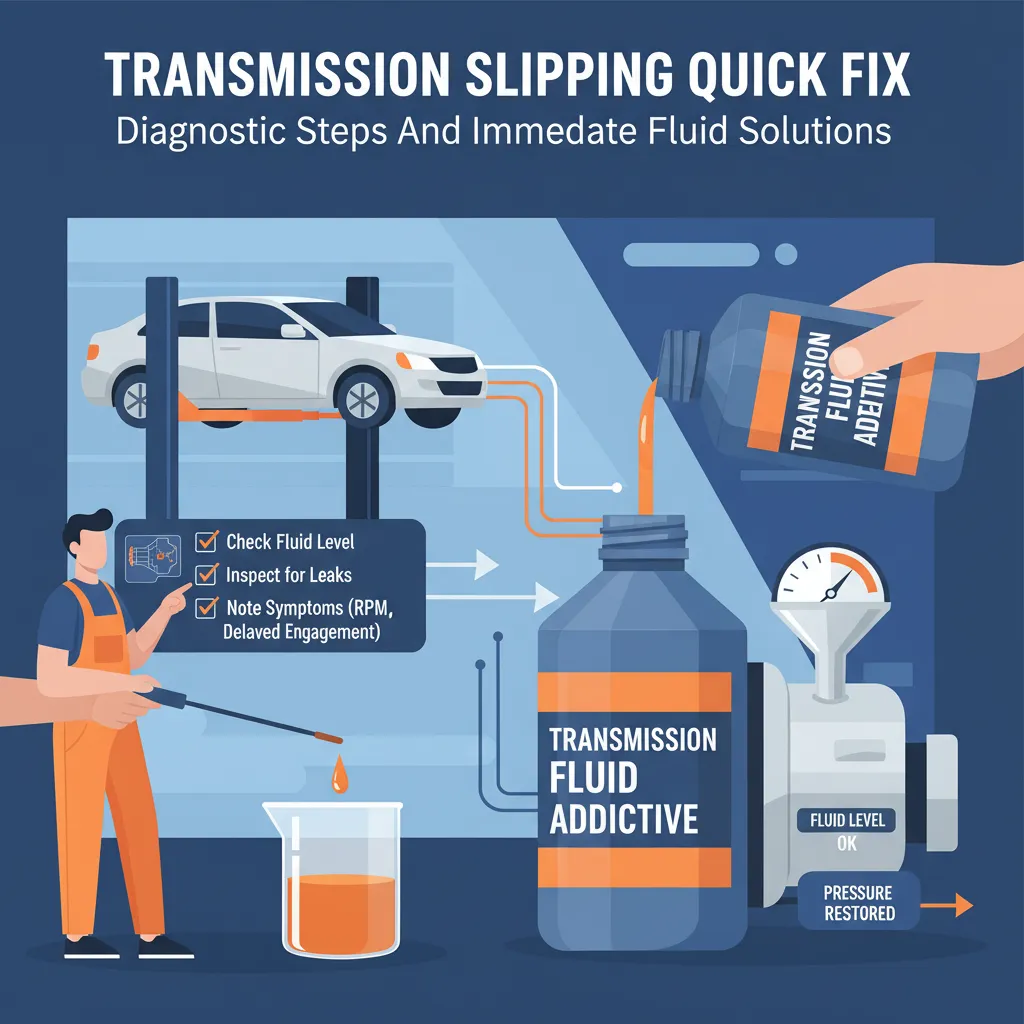
In the realm of automatic transmissions, hydraulic fluid is the lifeblood of the system. It serves three critical functions: power transmission through the torque converter, lubrication of moving parts, and the application of pressure to engage clutch packs. When fluid levels drop or the fluid quality degrades, the system lacks the pressure required to “hold” a gear, leading to the sensation of slipping. To troubleshoot this effectively, you must begin with a meticulous inspection of the Automatic Transmission Fluid (ATF).
Executing the Perfect Dipstick Reading
Most manufacturers require the engine to be running and at operating temperature to get an accurate reading. Park the vehicle on a level surface, cycle the shifter through all gears, and return it to Park or Neutral. Pull the dipstick, wipe it clean, reinsert it fully, and pull it again. However, nuanced knowledge is key: a Honda Odyssey, for instance, requires the fluid to be checked when the engine is warm but turned off. Checking it while running on a Honda will yield a false low reading, potentially leading to overfilling.
Always add ATF in small increments (half-pints). Overfilling causes the fluid to foam (aerate), which introduces air into the hydraulic lines. Air is compressible; hydraulic fluid is not. Foaming fluid leads to erratic pressure and—ironically—more slippage.
Analyzing Color, Viscosity, and Scent
Healthy ATF is typically bright red and translucent. If the fluid appears dark brown or black, it has oxidized. A distinct ‘burnt toast’ scent is a red flag indicating that internal friction material has overheated and is likely sloughing off the clutch plates. If the fluid appears pink and milky—the infamous “strawberry milkshake”—it indicates that the internal radiator cooler has failed, allowing engine coolant to mix with the ATF. This requires an immediate system flush and radiator replacement, as coolant destroys clutch adhesives almost instantly.
By The Numbers
Malfunctions linked to fluid
Miles where fluid failure peaks

Troubleshoot Transmission Slipping via Electronic Diagnostic Codes
Modern transmissions are essentially computers that happen to move gears. A workaround for many perceived mechanical failures is often found in the electronic control system. Before assuming the gears are “gone,” you must diagnose the communication between the Engine Control Unit (ECU) and the Transmission Control Module (TCM).
Interpreting DTCs and Limp Mode
Connect an OBD-II scanner and look for codes in the P0700 to P0800 range. These are specific to the transmission. For example, a P0730 code (Incorrect Gear Ratio) often suggests that the computer sees the engine spinning at one speed and the output shaft at another, which doesn’t match the gear’s expected ratio. While this sounds like a slipping gear, it is frequently caused by a faulty Output Speed Sensor (OSS) or Input Speed Sensor (ISS).
If your vehicle is stuck in 2nd or 3rd gear and refuses to shift, it has entered ‘Limp Mode’ or ‘Home Mode.’ This is a protective state where the TCM limits operation to prevent further mechanical damage. This is often triggered by simple voltage drops or a blown fuse in the TCM circuit.

📋
Step-by-Step Electronic Debug
Scan for P0700 series codes to pinpoint if a sensor or solenoid is reporting a fault.
Clean the magnetic tip of the Output Speed Sensor. Metallic fuzz on the sensor can distort the signal, causing the TCM to “think” the transmission is slipping.
Examine the main transmission plug for corrosion or rodent damage. A single frayed wire can interrupt the signal to the shift solenoids.
How to Resolve Shifting Issues with Friction Modifiers and Additives
In many high-mileage vehicles, slipping is a result of hardened rubber seals and glazed clutch plates. When internal seals lose up to 30% of their flexibility over a decade of heat cycles, they allow hydraulic pressure to bleed off. A chemical repair using specialized additives can often resolve these minor pressure leaks without a teardown.
Friction Modifiers vs. Seal Conditioners
Additives like Lucas Oil Transmission Fix contain high-viscosity polymers that increase the “tackiness” of the fluid, helping worn clutch packs grab more effectively. Sea Foam Trans Tune, conversely, acts as a detergent, dissolving varnish and carbon deposits from the valve body. This ensures that the small check balls and valves inside the transmission move freely, preventing “flaring” or delayed engagement.
Avoid high-pressure flushes on a slipping transmission. High pressure can dislodge heavy debris and force it into the tiny orifices of the valve body, turning a minor slip into a total failure. Opt for a ‘Drain and Fill’ and a filter change instead.
Diagnose and Repair Faulty Solenoids for Better Gear Engagement
The shift solenoids are the electro-mechanical gatekeepers of your transmission. They receive signals from the TCM and open or close to direct fluid into the appropriate gear circuits. When a solenoid fails, the transmission may “hunt” for gears, slip during the transition, or fail to engage a specific gear entirely.
Testing with a Multimeter
You can often test solenoids without removing the transmission. By accessing the wiring harness connector, you can check the resistance (Ohms) of each solenoid. An “open” circuit (infinite resistance) or a “short” (zero resistance) confirms a dead solenoid. For the GM 4L60E transmission, a common failure point is the 1-2 or 2-3 shift solenoid. Replacing these $30 parts can prevent a $3,000 rebuild and is a classic solution for DIY-oriented owners.
Cost Efficiency
Individual solenoids cost $150–$400 to replace at a shop, saving thousands compared to a full unit swap.
Restored Pressure
Replacing the Pressure Control Solenoid (PCS) often fixes soft shifting and intermittent slipping immediately.
Professional Solutions for Mechanical Wear and Internal Component Damage
There comes a point where a quick fix is no longer viable. If you drop the transmission pan and find “silver glitter” (fine metal shavings) or large chunks of steel, the internal structure has compromised. This indicates that the planetary gear sets, bushings, or the torque converter have suffered catastrophic wear.
When to Rebuild vs. Replace
Driving with a slipping transmission for even 50 miles can increase internal temperatures by 100 degrees Fahrenheit, melting plastic connectors and warping internal seals. If the slippage is accompanied by a heavy shuddering or a loud whining noise from the pump, the torque converter is likely failing. In these cases, a remanufactured unit replacement is often more cost-effective than a rebuild, as it comes with a fresh warranty and all factory updates already installed.
Summary Points: Always begin with a fluid level and quality check, as low or oxidized ATF is the leading cause of hydraulic pressure loss. Utilize OBD-II diagnostics to isolate electronic sensor malfunctions from internal mechanical wear. Apply chemical modifiers or replace individual shift solenoids as cost-effective intermediate repairs before committing to a full overhaul. Perform a diagnostic scan and check your fluid levels immediately; if heavy metal debris is found in the pan, consult a certified ASE technician to discuss rebuild options.
Frequently Asked Questions
Can I drive my car if the transmission is slipping?
Driving with a slipping transmission is not recommended. It creates excessive heat that can warp internal components and lead to total gear failure. Furthermore, the lack of predictable acceleration poses a significant safety risk in traffic. It is best to diagnose the issue immediately before the damage becomes irreversible and more costly.
Will changing the transmission fluid fix the slipping?
A fluid change can resolve slippage if the cause is low fluid level or slight oxidation. However, if the transmission is slipping due to worn-out clutch plates, fresh fluid with new detergents may actually make the slipping worse by washing away the remaining friction material that was helping the gears engage.
How do I know if the problem is a sensor or the transmission itself?
The most reliable method is using an OBD-II scanner. If the tool returns codes like P0705 (Transmission Range Sensor) or P0715 (Input/Turbine Speed Sensor), the issue is likely electronic. If the fluid is black and smells burnt, or if there are no codes but the car fails to move, the problem is mechanical.
What does a transmission slip feel like?
It typically feels like the vehicle is hesitating to change gears, or the engine ‘races’ (RPMs increase) while the car fails to accelerate at the same rate. You may also experience a ‘hard shift’ where the car jerks into gear after a brief delay, or a complete loss of power in higher gears.
Are transmission stop-slip additives safe for long-term use?
Stop-slip additives are generally intended as a temporary measure to extend the life of a failing transmission by a few thousand miles. They work by using chemicals to swell seals and increase fluid tackiness. While they can provide a ‘quick fix,’ they do not repair broken mechanical parts and may eventually lead to gumming up the valve body.