
The 2018 Chevy Silverado relies on two primary automatic transmissions: the 6L80 6-speed and the 8L90 8-speed, with the latter frequently associated with the ‘Chevy Shudder’ torque converter issue. Resolving performance problems often requires a full fluid flush using specific synthetic ATF or a complete torque converter replacement to ensure long-term reliability.
🎯 Key Takeaways
- Check your glovebox RPO codes:MYC is the 6-speed, M5U is the 8-speed.
- The ‘Chevy Shudder’ is a known issue specifically impacting the 8L90 8-speed units.
- Update to Mobil 1 Synthetic LV ATF HP fluid to fix 8-speed shifting issues.
- The 6L80 6-speed is generally more reliable but prone to torque converter housing cracks.
- Expect repair costs between $3,500 and $5,500 for a full remanufactured unit replacement.
The 2018 Chevy Silverado 1500 utilizes two main automatic transmissions: the 6L80 six-speed and the 8L90 eight-speed. If you own this truck, your driving experience and maintenance costs depend entirely on which unit is under your floorboards. While the six-speed is a seasoned workhorse, the eight-speed is the primary culprit behind the infamous “Chevy Shudder” that has led to class-action lawsuits and countless service visits.
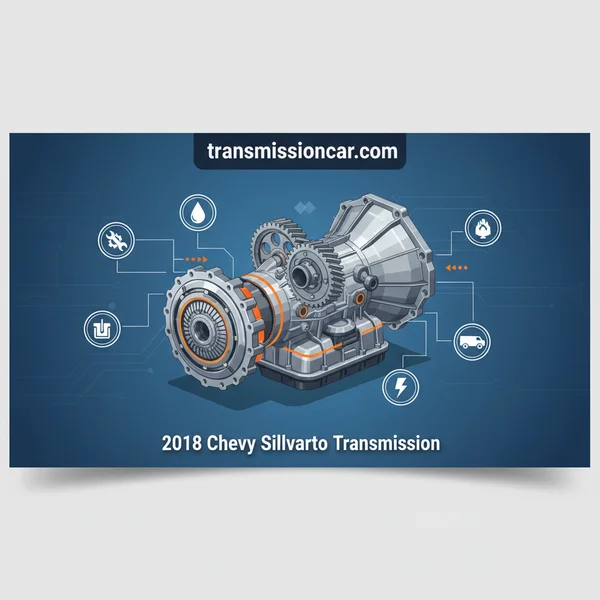

Identifying your specific transmission is the first step in diagnosing hard shifts, vibrations, or delayed engagement. Understanding the technical service bulletins (TSBs) and the specific fluid requirements for these units can save you thousands in premature replacement costs. Whether you are hauling a trailer or commuting, knowing how to manage these gearboxes is essential for the longevity of your 2018 Silverado.
Identifying Your Transmission: 6L80 6-Speed vs. 8L90 8-Speed Specifications
Before you can fix a problem, you must know what equipment you have. In 2018, Chevrolet split transmission options based on the engine size and trim level. If your truck feels like it is constantly hunting for gears or shifting early, you likely have the eight-speed. If it feels more traditional but perhaps a bit sluggish, you probably have the six-speed.


How to Confirm Which Unit You Have
The easiest way to identify your transmission is by looking at your engine and trim. However, for 100% certainty, check the RPO code sticker inside your glove box. You are looking for a three-digit code that tells you exactly what was installed at the factory.
- The 6L80 (RPO Code: MYC): This six-speed unit is standard on trucks equipped with the 4.3L V6 and most 5.3L V8 models in the WT, LS, and LT trims. It features a 4.02:1 first gear ratio and a 0.67:1 top gear.
- The 8L90 (RPO Code: M5U): This eight-speed unit comes standard with the 6.2L V8 and is an option on high-trim 5.3L V8 models like the LTZ and High Country. It features a more aggressive 4.56:1 first gear for better towing off the line and a 0.65:1 overdrive.
Maintenance Requirements and Fluid Specs
Both transmissions require strict adherence to fluid types to function correctly. The 6L80 typically uses DEXRON VI synthetic blend. In contrast, the 8L90 is extremely sensitive and requires a specific Mobil 1 Synthetic LV ATF HP fluid. Using the wrong fluid in the eight-speed is a guaranteed way to trigger the shudder issues discussed in the next section. For both units, a fluid and filter change every 45,000 to 50,000 miles is recommended, regardless of the “lifetime” claims often found in owner manuals.
The Ultimate 2018 Chevy Silverado Transmission Walkthrough
The 2018 Chevrolet Silverado is a workhorse, but its longevity depends heavily on the health of its transmission, whether you have the 6-speed 6L80 or the 8-speed 8L90. Over time, transmission fluid breaks down due to heat and friction, and the internal filter becomes clogged with microscopic metal shavings. This guide provides a comprehensive walkthrough for performing a transmission fluid and filter service. Following these steps ensures your gear shifts remain crisp, prevents overheating, and can potentially save you thousands of dollars in premature transmission failure costs. This process is essential for truck owners who tow frequently or drive in stop-and-go traffic.
Step 1: Preparation and Vehicle Elevation
What you need: Heavy-duty floor jack, four jack stands, wheel chocks, safety glasses, and mechanics gloves.
Instructions: Begin by parking your Silverado on a flat, level concrete surface. Engage the parking brake and place wheel chocks behind the rear tires. Use the floor jack to lift the front of the vehicle using the designated frame lift points, then secure it with jack stands. Repeat this for the rear so the truck sits level; a level vehicle is critical for accurate fluid drainage and refilling later. Once the truck is secure, slide underneath and locate the transmission pan. Ensure the engine and exhaust have cooled down for at least 30 minutes to avoid severe burns, as the catalytic converters sit very close to the transmission housing on the 2018 model.
Pro Tip: Always give the truck a “shake test” while it is on the stands before crawling underneath. If there is any movement, readjust your stands immediately to ensure your safety.
Step 2: Draining the Old Transmission Fluid
What you need: 10mm socket and ratchet, an extension, a large drain pan (at least 8-quart capacity), and plenty of shop rags.
Instructions: The 2018 Silverado transmission pan typically does not feature a drain plug from the factory. To drain the fluid, you must carefully loosen the 10mm bolts surrounding the pan. Start by loosening the bolts on the rear and sides, leaving the front bolts partially threaded. This allows the pan to tilt downward at the rear, directing the fluid into your catch pan in a controlled “waterfall” effect. As the flow slows, slowly remove the remaining bolts while supporting the pan with one hand. Be prepared for the pan to be heavy and full of fluid. Lower it carefully to avoid splashing Dexron VI fluid on yourself or your driveway.
Pro Tip: Use a large piece of cardboard or a plastic drop cloth under your drain pan. Transmission fluid is thin and messy; it tends to travel along the edges of the pan and can easily miss your container.
Step 3: Cleaning the Pan and Internal Magnet
What you need: Brake cleaner, lint-free microfiber towels, and a small flat-head screwdriver.
Instructions: Once the pan is removed, you will see a small, square magnet sitting in the bottom. This magnet is designed to catch fine metal wear particles. Remove the magnet and notice the “sludge” attached to it; a small amount of fine grey paste is normal, but large metal chunks indicate internal damage. Use brake cleaner to thoroughly spray out the inside of the pan and the magnet. Wipe everything down until the metal is spotless and dry. It is vital to use lint-free rags, as any fibers left inside the pan can travel into the transmission’s valve body and cause shifting issues or solenoid failure. Re-seat the clean magnet in its original notched location.
Pro Tip: Check the reusable rubber gasket. If it is cracked or flattened, replace it. If it is in good condition, clean it with a dry cloth; never use harsh chemicals on the rubber gasket as it can cause it to swell or degrade.
Step 4: Removing and Replacing the Transmission Filter
What you need: New transmission filter, new filter seal (usually included), and a pair of pliers or a seal puller.
Instructions: The filter is the large plastic component hanging from the bottom of the transmission. Pull it straight down with a firm tug; be aware that about half a quart of fluid will drain out once the filter is released. Inspect the hole where the filter neck was inserted. Often, the old orange or black rubber seal stays stuck in the transmission. If it did, use a small screwdriver or seal puller to carefully pry it out without scratching the aluminum bore. Lubricate the new seal with fresh transmission fluid, press it into the transmission, and then push the new filter firmly into the seal until it “clicks” or seats fully into place.
Pro Tip: If the new filter keeps falling out, the seal isn’t seated correctly. Never try to bolt the pan back on to “push” the filter into place, as this can crack the filter neck and cause a loss of fluid pressure.
Step 5: Reinstalling the Transmission Pan
What you need: Torque wrench (inch-pounds), cleaned pan, and 10mm socket.
Instructions: Place the gasket back onto the pan, ensuring all bolt holes align perfectly. Lift the pan back into position under the transmission. Hand-start all of the 10mm bolts to ensure you do not cross-thread them into the soft aluminum transmission case. Once all bolts are hand-tight, use a torque wrench to tighten them in a crisscross pattern. For the 2018 Silverado, the torque specification is typically 80 to 100 inch-pounds. Do not over-tighten, as the pan can easily warp, or the bolts can snap, leading to permanent leaks that are difficult to repair. Wipe the exterior of the pan dry so you can easily spot any new leaks later.
Pro Tip: Use a “star pattern” when tightening, similar to how you tighten lug nuts on a wheel. This ensures even pressure across the gasket and creates a much more reliable seal.
Step 6: Refilling with Fresh Fluid
What you need: 6 to 8 quarts of Dexron VI (for 6-speed) or Dexron HP (for 8-speed), and a long-neck funnel.
Instructions: Locate the transmission dipstick tube on the passenger side of the engine bay (on 6-speed models). Insert your long-neck funnel and begin pouring in the fresh fluid. If you have the 8-speed transmission without a dipstick, you must fill from the fill plug located on the side of the transmission case using a fluid transfer pump. For a standard pan drop, you will usually need between 6 and 7 quarts of fluid to reach the “Cold” mark. Start by adding 5 quarts, then check the level. It is better to be slightly low and add more than to overfill, which can cause the fluid to foam and lead to transmission overheating.
Pro Tip: Check your owner’s manual or the dipstick itself to confirm the fluid type. Using the wrong fluid (like older Dexron III) in a 2018 Silverado can cause immediate shuddering and long-term clutch damage.
Step 7: Temperature Verification and Final Level Check
What you need: The vehicle’s Driver Information Center (DIC) display.
Instructions: Start the engine and let it idle for a few minutes. With your foot firmly on the brake, cycle the gear selector through Park, Reverse, Neutral, and Drive, holding each for 5 seconds to allow fluid to fill the valve body and torque converter. Return to Park. Use the steering wheel buttons to navigate the dash display to the “Transmission Fluid Temperature” screen. The fluid must be between 160°F and 190°F (71°C – 88°C) for an accurate reading. Once at temperature, check the dipstick. The fluid should be in the “Hot” cross-hatched area. Add small amounts of fluid if necessary until the level is perfect, then replace the dipstick firmly.
Pro Tip: If the fluid is too hot (above 200°F), let the truck cool down before making your final measurement. Thermal expansion can make the level appear higher than it actually is, leading to an under-filled transmission.
✅ Final Checklist
- Verify that all 10mm pan bolts are torqued to 80-100 inch-pounds.
- Confirm the old filter seal was removed and replaced with a new one.
- Check that the transmission fluid temperature reached at least 160°F before the final level check.
- Ensure the fluid level is within the cross-hatched “Hot” zone on the dipstick while the engine is idling.
- Inspect the area under the truck after a 10-minute test drive to ensure there are no active leaks.
Important Notes:
- Safety: Never work on a vehicle supported only by a jack; always use rated jack stands. Keep a fire extinguisher nearby when working with automotive fluids.
- Professional Help: Seek a mechanic if you find large metal chunks (larger than a grain of sand) in the pan, or if the transmission is already slipping or “shuddering” before the service.
- Estimated Time: 1.5 to 2.5 hours.
- Cost Range: $80 – $130 for DIY (Fluid and Filter); $250 – $450 at a professional shop.
The ‘Chevy Shudder’ and Common 2018 Silverado Transmission Problems
If your 2018 Silverado feels like you are driving over rumble strips while on a smooth highway, you are experiencing the “Chevy Shudder.” This is not a suspension or tire balance issue. It is a specific failure within the 8L90 eight-speed transmission. The problem stems from the torque converter clutch (TCC) oscillating or slipping, which sends a high-frequency vibration through the entire drivetrain.
Deep Dive: TSB 18-NA-355 and the Fluid Fix
The primary cause of the shudder is the original factory transmission fluid. The initial fluid used in the 2018 8L90 units was hygroscopic, meaning it absorbed moisture over time. This moisture changed the friction characteristics of the fluid, causing the torque converter clutch to grab and release rapidly rather than holding steady. This creates the “shudder” sensation between 25 and 80 mph.
General Motors released Technical Service Bulletin (TSB) 18-NA-355 to address this. The “fix” is a comprehensive triple-flush of the transmission system using a specialized Mobil 1 Synthetic LV ATF HP fluid (identifiable by its blue label). This new fluid does not absorb moisture in the same way and restores the friction coefficient required for the TCC to operate smoothly.
- Success Rate: For many owners, the triple flush resolves the issue if caught early.
- Persistent Issues: If the shudder has occurred for thousands of miles, the friction material on the torque converter may already be glazed or damaged, requiring a full torque converter replacement.
- Hard Shifts: Many 2018 owners also report a “clunk” when shifting from Park to Drive or a harsh 1-2 shift when the engine is cold. While the fluid flush helps, this is often a software calibration issue that requires a TCM (Transmission Control Module) re-flash.
Common Failures of the 6L80 Six-Speed
While the six-speed doesn’t suffer from the “shudder” in the same way, it has its own set of 2018-specific headaches. The most common failure point is the torque converter’s internal pilot bearing or the J-hook failure within the converter itself. When these fail, they send metal debris through the entire transmission, often clogging the cooling lines and destroying the pump. If you notice “hunting” for gears or a sudden rise in transmission temperature, pull over immediately to prevent a total mechanical meltdown.
Technical Service Bulletins (TSBs) and the Fluid Flush Solution
When it comes to the 2018 Chevy Silverado, General Motors has released several Technical Service Bulletins (TSBs) to address owner complaints. These bulletins are essentially “cheat sheets” for dealership technicians to solve recurring problems. If your truck is experiencing a strange vibration or delayed shifting, there is a high probability that a TSB already exists to address it.
Addressing the 8-Speed “Shudder”
The most famous TSB for this model year is 18-NA-355. This bulletin was specifically designed to combat the “rumble strip” shudder found in the 8L90 8-speed transmission. GM engineers discovered that the original factory transmission fluid was hygroscopic, meaning it absorbed moisture over time. This moisture caused the torque converter clutch to slip and grab rapidly, creating that infamous vibration.
- The Solution: A comprehensive fluid exchange using a specialized “triple flush” machine.
- The Material: Technicians must use the updated Mobil 1 Synthetic LV ATF HP fluid, often identified by its blue label.
- The Result: For many owners, this flush eliminates the shudder entirely without needing to replace any hard parts.
The Importance of Early Intervention
If you ignore the symptoms mentioned in these bulletins, the friction caused by the moisture-heavy fluid will eventually glaze the clutch plates. Once the hardware is physically damaged, a fluid flush will no longer suffice, leading to a much more expensive mechanical repair. If you feel a shudder between 25 and 65 MPH, checking for active TSBs should be your first priority.
Reliability Analysis and Estimated Repair vs. Replacement Costs
The 2018 Silverado’s reliability is a tale of two transmissions. The 6-speed 6L80 is generally considered a “tank” that can last well beyond 150,000 miles if the torque converter is maintained. The 8-speed 8L90 has a more checkered reputation due to its initial software and fluid issues, though trucks that received the updated fluid early in their life cycles tend to hold up much better.
Longevity Expectations
In a real-world setting, many 2018 Silverado owners start seeing significant wear-and-tear issues between 90,000 and 120,000 miles. One of the best ways to extend this lifespan is to install an aftermarket thermal bypass valve. This small part allows the transmission fluid to circulate through the cooler at lower temperatures, preventing the “slow cook” that often kills the 6L80’s internal seals.
Real-World Cost Estimates
Repair costs can vary wildly depending on your location and whether you use a dealership or an independent transmission shop. Here is a general breakdown of what you might expect to pay to get your 2018 Silverado back on the road:
- Fluid Flush and Filter Change: $300 – $500. This is your best-case scenario for fixing minor shuddering or “hunting” for gears.
- Torque Converter Replacement: $1,500 – $2,200. This is a common fix for the 6-speed units when the converter fails before the rest of the transmission.
- Transmission Rebuild: $3,500 – $4,800. This involves taking your existing unit apart and replacing all worn internal components.
- Full Replacement (Remanufactured Unit): $4,500 – $6,000+. This usually comes with a longer warranty (often 3 years/100,000 miles) and is the most reliable long-term fix.
While these numbers can be intimidating, remember that regular maintenance is significantly cheaper than a total failure. A $400 fluid service every 45,000 miles is the best insurance policy you can buy for your truck.
Conclusion
The 2018 Chevy Silverado is a powerhouse of a truck, but its transmission requires a proactive owner. Whether you are dealing with the 6-speed’s torque converter quirks or the 8-speed’s fluid-related shudder, the key is to act quickly. By staying on top of TSBs and opting for high-quality synthetic fluids, you can avoid the high costs of a total transmission replacement and keep your Silverado towing and hauling for years to come.
Next Steps: First, check your transmission fluid level and color; it should be bright pink, not dark brown. Second, if you feel any shuddering, contact a local shop to see if the TSB 18-NA-355 fluid flush has already been performed on your vehicle. Don’t wait for a warning light—listen to what your truck is telling you today!
💬 Quick Questions & Answers
What transmission does the 2018 Chevy Silverado have?
It features either the 6L80 (6-speed) or the 8L90 (8-speed), depending on the engine and trim level.
What is the 2018 Silverado transmission shudder?
It is a vibration felt at highway speeds caused by the torque converter clutch slipping in 8-speed models.
Which fluid is best for the 2018 Silverado 8-speed?
GM recommends Mobil 1 Synthetic LV ATF HP (blue label) to address shifting and shudder issues.
How do I know if my torque converter is failing?
Symptoms include a feeling of driving over rumble strips, fluctuating RPMs, and delayed gear engagement.
What is the towing capacity of the 2018 Silverado transmission?
Towing ranges from 6,200 lbs to 12,500 lbs, with the 8-speed typically paired with higher-capacity Max Trailering packages.
❓ Frequently Asked Questions
Is there a permanent fix for the 2018 Chevy Silverado transmission shudder?
The most effective fix is Technical Service Bulletin 18-NA-355, which involves a triple-flush of the system using the updated Mobil 1 Synthetic LV ATF HP fluid. If the shudder persists after the flush, the torque converter may need a physical replacement.
What are the primary differences between the 6L80 and 8L90 transmissions?
The 6L80 is a six-speed unit typically paired with the 4.3L V6 and 5.3L V8 engines, known for simpler maintenance. The 8L90 is an eight-speed unit paired with the 6.2L V8 and some 5.3L models, offering better fuel economy but higher susceptibility to shift quality issues.
How much does it cost to replace a 2018 Silverado transmission?
A remanufactured transmission typically costs between $3,500 and $5,500 including labor. A simple fluid flush to fix minor issues usually costs between $300 and $500 at a dealership.
Are there any recalls for the 2018 Silverado transmission?
There are no safety recalls for the transmission itself, but there have been several class-action lawsuits and numerous TSBs regarding the 8-speed’s ‘hesitation’ and ‘shudder’ symptoms.
Can I use Dexron VI in my 8-speed 2018 Silverado?
No, while Dexron VI is standard for the 6-speed 6L80, the 8-speed 8L90 requires the specific ‘HP’ (High Performance) synthetic fluid to prevent damage and maintain proper clutch friction.
What is the lifespan of a 2018 Chevy Silverado transmission?
With proper maintenance and fluid updates, these transmissions can last 150,000 to 200,000 miles, though early torque converter failures in 8-speed models can occur before 100,000 miles if not addressed.