5 Bad Transmission Mount Symptoms You Shouldn’t Ignore
📌 Quick Summary The most common bad transmission mount symptoms include excessive cabin vibrations and loud clunking noises during gear changes. These…
The most common bad transmission mount symptoms include excessive cabin vibrations and loud clunking noises during gear changes. These signs indicate the rubber component is no longer isolating the drivetrain, which can lead to severe damage if not addressed quickly.
🎯 Key Takeaways
- Takeaway 1:Excessive vibrations at idle often signal a worn transmission mount.
- Takeaway 2:Listen for loud clunks when shifting from Park to Drive.
- Takeaway 3:Inspect for cracked or collapsed rubber during every oil change.
- Takeaway 4:Ignoring a bad mount can damage your driveshaft and engine.
- Takeaway 5:Fluid leaking from a hydraulic mount indicates immediate replacement is needed.
A failing transmission mount usually announces itself through heavy clunking sounds during gear changes and excessive vibrations that resonate through your vehicle’s cabin. These mounts are the crucial link between your transmission and the chassis, designed to absorb kinetic energy and maintain proper drivetrain alignment. When the internal rubber dampener perishes or the metal bracket cracks, that energy is transferred directly into the car’s frame, turning a smooth ride into a jarring experience.
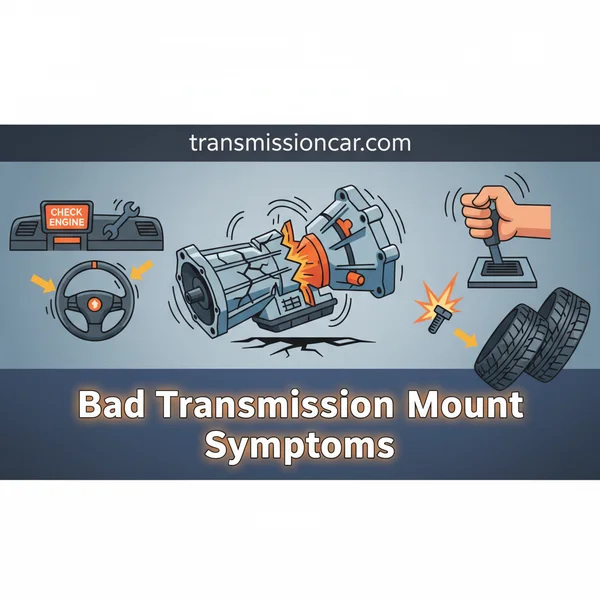
Catching these symptoms early is vital because a loose transmission can lead to a “domino effect” of mechanical failures. If the transmission is allowed to move excessively, it puts undue stress on your universal joints (U-joints), CV axles, and even the engine mounts. By identifying the specific audible and tactile cues of a bad mount now, you can avoid the high costs associated with secondary drivetrain damage and ensure your car remains safe to drive at highway speeds.
Primary Audible and Tactile Symptoms of Failure
The most immediate sign of a compromised transmission mount is a physical sensation of movement that doesn’t match your vehicle’s speed. You will likely feel a “thud” or “jerk” that feels like it is originating from beneath the center console or floorboards. Unlike internal transmission issues, which often involve slipping gears or high-RPM whining, mount failure is purely structural and mechanical.

Heavy Clunking and Metal-on-Metal Impact Noises
When the rubber insulation in the mount disintegrates, the transmission housing is no longer held firmly in place. This creates a “gap” that allows the heavy transmission to shift or tilt during operation. You will hear a distinct clunk or bang when the transmission moves far enough to strike the vehicle’s frame or the mount’s own metal bracket. This is most common during sudden changes in torque or direction.
- The “Engagement Clunk”: A loud “pop” or “thud” the moment you shift into Gear.
- Downshift Impact: A jarring noise as the vehicle slows down and the transmission downshifts, causing the unit to “rock” forward.
- Rattling: At idle, you may hear a persistent metallic rattle if the mount’s hardware has loosened or the rubber has completely fallen away.
Intrusive Cabin Vibrations and Harshness
Transmission mounts are engineered to isolate the cabin from the natural vibrations of the drivetrain. When the mount fails, this isolation disappears. You won’t just hear the engine; you will feel its every rotation through your seat, the steering wheel, and the floorboards. This sensation is often described as a “buzzing” or “droning” that makes the car feel unrefined and loud.
- Floorboard Shaking: You might feel a steady hum under your feet while cruising.
- Dashboard Rattles: The vibration can be so intense that interior plastic trim pieces begin to buzz or vibrate.
- Steering Wheel Feedback: Unlike an unbalanced tire that wobbles, this vibration is a high-frequency tremor felt directly through the column.
Contextual Triggers: When Symptoms Typically Occur
Transmission mount symptoms are rarely constant; they fluctuate based on the amount of torque being applied to the drivetrain. Because the mount’s primary job is to resist the rotational force (torque) of the engine, the symptoms will be most aggressive when the engine is under the highest load. Pay close attention to how your car reacts during transitions between “resting” and “driving” states.
Shifting Between Park, Drive, and Reverse
The most common time to diagnose a bad mount is while the vehicle is stationary but the engine is running. When you move the gear selector from Park to Drive or Reverse, the engine applies torque to the transmission to prepare for movement. If the mount is broken, the transmission will physically “jump” or “lurch” in its cradle. You will feel a significant jolt through the entire chassis that feels much more violent than a standard gear engagement.
In many cases, the jolt is more pronounced when shifting into Reverse. This is because the torque is applied in the opposite direction, forcing the transmission to lift against the part of the mount that may be the most worn or disconnected. If you feel a “bang” every time you back out of your driveway, your transmission mount is likely the culprit.
Acceleration, Deceleration, and High-Load Cruising
As you drive, the transmission reacts to the throttle. Under heavy acceleration, the engine tries to twist, and the transmission follows. If the mount is weak, this movement becomes excessive. You may notice that the vibrations become significantly worse when you are climbing a steep hill or towing a trailer, as these activities put the highest amount of pressure on the rubber dampeners.
- Hard Acceleration: A “thump” felt the moment you floor the gas pedal.
- Abrupt Braking: The transmission may “pitch” forward, causing a secondary vibration as you come to a stop.
- Highway Speeds: At 60-70 MPH, a bad mount can create a rhythmic vibration that feels similar to a bad wheel bearing, but it will often change in intensity if you slightly lift your foot off the accelerator.
Cruising at a steady speed often masks the sound of a bad mount, but the moment you change the load—either by accelerating to pass another car or by letting off the gas—the transmission “settles” into a new position. If you feel a distinct movement or hear a faint “clack” during these transitions, the mount is no longer providing the necessary stability to keep the drivetrain stationary.
Visual Indicators and Physical Inspection Marks
Sometimes, your car doesn’t just tell you there’s a problem through sound or feel; it shows you. If you can get a clear view of your transmission mount, there are several visual “red flags” that indicate the component has reached the end of its life. Because these mounts are often made of a combination of metal and heavy-duty rubber, they are prone to environmental wear and tear over time.
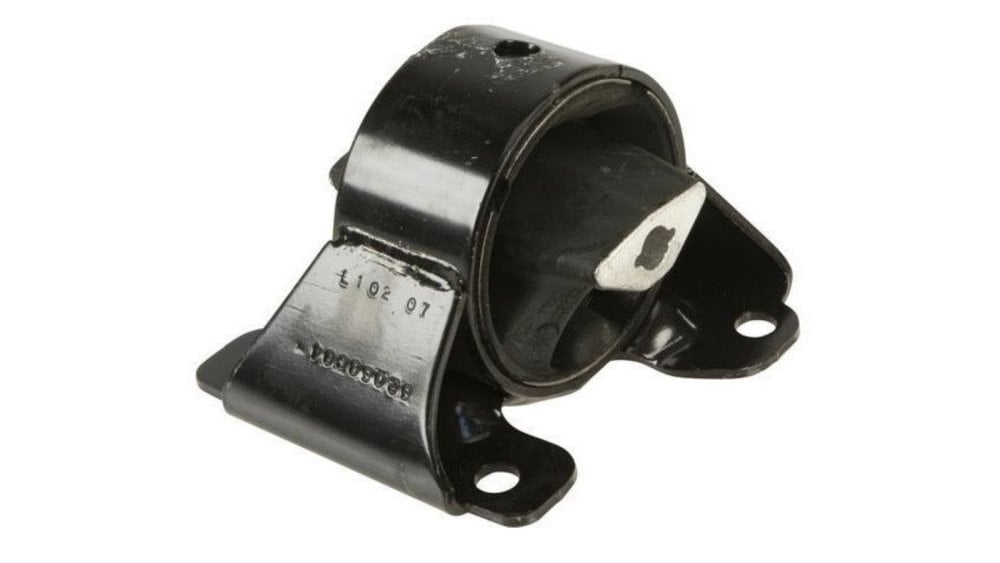
Cracked, Perished, or Contaminated Rubber
The rubber bush is the heart of the mount. Its job is to absorb energy, but it can’t do that if it has lost its structural integrity. When inspecting the mount, look for these specific signs of degradation:
- Dry Rot: Small cracks or a “flaky” appearance on the surface of the rubber, usually caused by age and heat cycles.
- Oil Saturation: If you have an engine or transmission fluid leak, the oil can soak into the mount. This softens the rubber until it turns into a sponge-like consistency, losing its ability to hold weight.
- Complete Separation: In extreme cases, the rubber may have completely torn away from the metal bracket, meaning there is nothing left to dampen the movement.
Sagging and Metal-on-Metal Contact
A healthy mount keeps the transmission at a very specific height and angle. When the internal dampening material fails, the transmission will physically sag. You might notice shiny “witness marks” on nearby metal components. These are polished spots where the transmission has been rubbing or banging against the chassis because the mount is no longer keeping it centered. If you see metal shavings or fresh scratches near the mount, it’s a clear sign of excessive movement.
Long-Term Risks and Drivetrain Consequences
Ignoring a bad transmission mount is a recipe for a much larger repair bill. The mount is a relatively inexpensive part, but the components it protects are some of the most expensive on your vehicle. When the transmission is allowed to bounce around, it creates a “domino effect” of damage throughout the entire drivetrain.
Stress on Driveshafts and CV Axles
Your drivetrain components are designed to operate within a specific range of alignment. When a mount fails, the transmission shifts out of its intended position, forcing the driveshafts or CV axles to operate at awkward, steep angles. This puts immense pressure on universal joints and boots. Pro tip: If you find yourself replacing CV axles frequently, a sagging transmission mount might be the hidden culprit behind the repeated failures.
Collateral Damage to Engine Components
The transmission and engine are bolted together as one unit. If the transmission moves too much, it pulls the engine with it. This creates unnecessary strain on several sensitive areas:
- Exhaust Manifolds: Excessive rocking can crack the exhaust header or snap the bolts connecting the exhaust pipe to the transmission.
- Radiator Hoses: Repeated tugging can lead to coolant leaks at the connection points.
- Wiring Harnesses: Stretched wires can lead to intermittent electrical shorts or sensor failures that are notoriously difficult to diagnose.
- Shift Linkages: You may find it increasingly difficult to get the car into “Park” or “Reverse” because the physical cables are being pulled out of alignment.
Conclusion
A bad transmission mount might start as a minor annoyance—a small vibration at a stoplight or a faint clunk when you shift—but it is not a problem that fixes itself. From visual cracks and rubber deterioration to the long-term risk of damaging your axles and exhaust system, the consequences of “driving through the pain” are far too high. Taking care of this issue early ensures your vehicle stays smooth, quiet, and, most importantly, safe on the road.
If you have noticed any of the symptoms mentioned above, your next step should be a professional inspection to confirm the state of your mounts. Don’t wait for a total component failure to take action. Replacing a worn mount today can save you thousands in drivetrain repairs tomorrow. Have you checked your mounts lately? Schedule an inspection and keep your ride running exactly as it should!
💬 Quick Questions & Answers
Can a bad mount cause shifting issues?
Yes, a failing mount allows the transmission to move, leading to gear misalignment and jerky transitions.
What sound does a failing mount make?
It usually produces a heavy ‘thud’ or ‘clunking’ noise when torque is applied or gears are changed.
Is it safe to drive with a broken mount?
It is safe for short distances, but prolonged driving puts dangerous stress on other drivetrain components.
Will a bad mount cause vibrations at idle?
Yes, because the mount can no longer dampen the engine’s natural vibrations before they reach the cabin.
Does a bad mount affect wheel alignment?
Not directly, but it can cause the engine to tilt, putting excessive strain on CV axles and joints.
❓ Frequently Asked Questions
What is the difference between engine and transmission mount symptoms?
Engine mounts typically cause vibration throughout the chassis, while transmission mounts specifically cause jolts and clunks during gear shifts or heavy acceleration.
What should I look for during a visual inspection?
Look for visible cracks in the rubber, metal-on-metal contact points, or hydraulic fluid leaking from the mount’s core if it is a liquid-filled design.
Why do transmission mounts fail over time?
Mounts fail due to constant heat cycles, exposure to oil or transmission fluid leaks, and the high torque loads produced during daily driving.
How does a bad mount feel during heavy acceleration?
You will often feel a distinct ‘lurch’ or ‘jolt’ as the transmission twists under the load and hits the frame or the limits of the broken mount.
Can a worn transmission mount cause a humming sound?
While less common than clunking, a collapsed mount can allow high-frequency vibrations to resonate through the frame, creating a humming or groaning sound at high speeds.
Will a bad mount eventually damage the transmission itself?
Yes, excessive movement can cause internal wear, strain the transmission housing, and potentially damage the seals, leading to fluid leaks.