Honda Cvt Transmission Fluid: Maintenance, Specifications, And Service Intervals
For modern Honda owners, the longevity of the vehicle’s powertrain is inextricably linked to the quality and condition of its CVT transmission…
For modern Honda owners, the longevity of the vehicle’s powertrain is inextricably linked to the quality and condition of its CVT transmission fluid. While Honda vehicles are renowned for their exceptional reliability, their Continuously Variable Transmissions (CVTs) are precision-engineered systems highly sensitive to fluid degradation. Neglecting this specific maintenance component is not merely a minor oversight; it is a precursor to costly internal wear, performance “judder,” and eventual total transmission failure. This comprehensive guide provides an expert analysis of Honda CVT transmission fluid, covering technical specifications, essential service intervals, and the professional standards required to keep your transmission operating at peak efficiency for hundreds of thousands of miles.
Understanding the Technical Role of Honda CVT Transmission Fluid
📤 Share Image
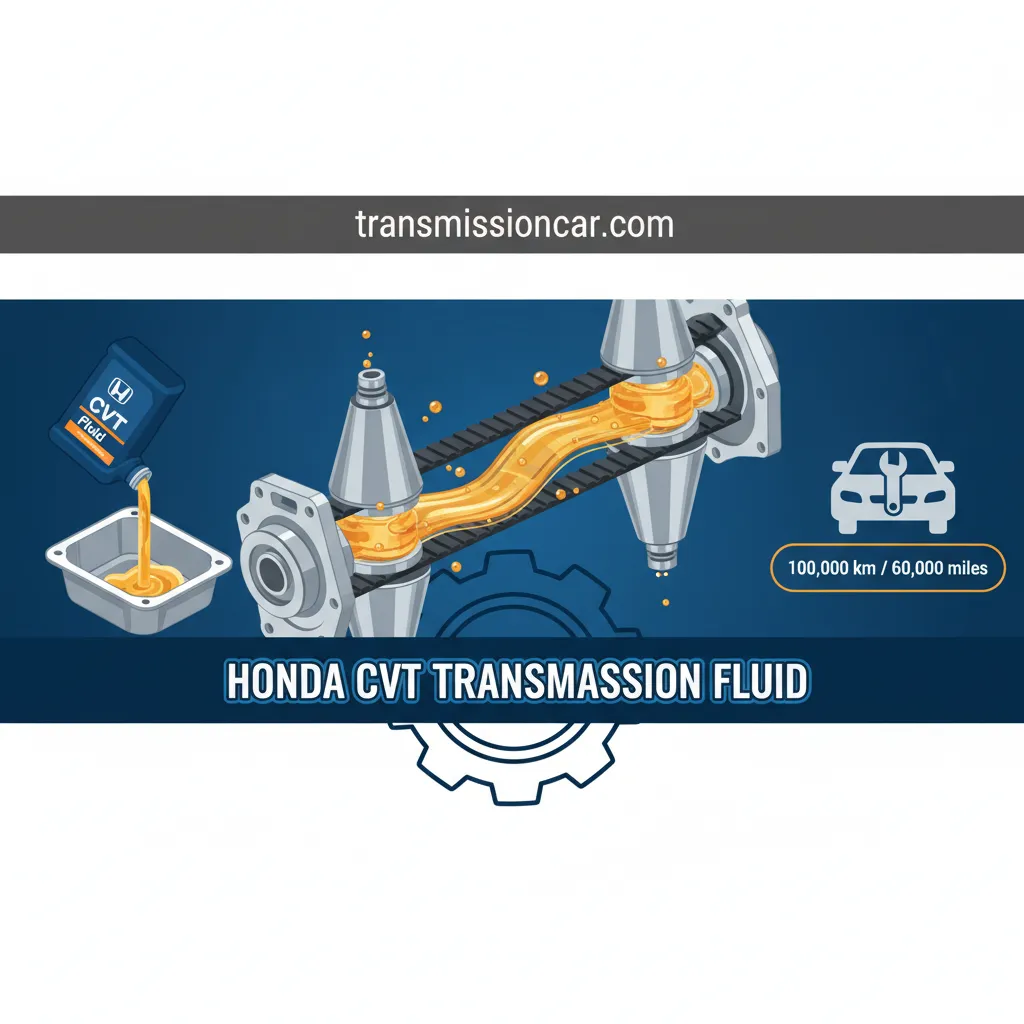
The transmission fluid in a Honda CVT is not merely a lubricant; it is a complex hydraulic fluid and a structural component of the drivetrain. Unlike traditional planetary gear transmissions that use torque converters and discrete gear sets, a CVT relies on a high-tension steel belt moving between two variable-diameter pulleys. This “metal-to-metal” interface requires a very specific chemistry found in Honda HCF-2 (Honda Continuously Variable Transmission Fluid).
Proprietary Chemistry and Shear Resistance
HCF-2 is a proprietary synthetic blend designed for high shear resistance. In a CVT, the fluid is subjected to immense pressure at the contact points between the belt and the pulley sheaves. If the fluid molecules “shear” or break down, the lubricating film thins, leading to micro-slippage. This slippage generates localized heat, which further degrades the fluid in a destructive feedback loop. Honda HCF-2 features a specific gravity of approximately 0.85 and a flash point exceeding 200 degrees Celsius, which prevents aeration and oxidation under these high-load conditions.
Friction Modifiers and Thermal Management
The most critical aspect of this fluid is its friction modifiers. In a standard automatic transmission, you want smoothness during shifts. In a Honda CVT, you need a high coefficient of friction specifically for metal-on-metal contact to ensure the belt maintains a trusted grip on the pulleys. Without these specific additives, the belt would slip, causing the dreaded “shudder” and eventual scoring of the pulley surfaces.
Evolution of Honda CVT Fluids
Original Multi-Matic Fluid for 1st Gen CVTs (Pre-2013)
Modern Standard for 2nd Gen CVTs (2014-Present)
Modern Honda vehicles (such as the 2014+ Civic, 2013+ Accord, and 2015+ CR-V) are strictly validated for HCF-2. Using the older HMMF or generic ATF in these units will lead to immediate performance degradation because the viscosity stability required for smooth ratio changes at varying operating temperatures simply isn’t there.
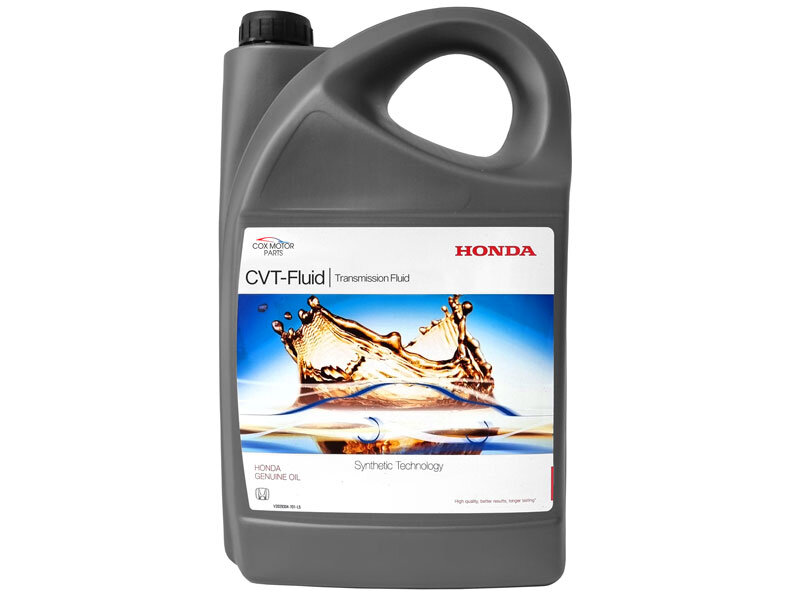
Recommended Intervals for Honda CVT Transmission Fluid Service
Determining when to service your Honda CVT requires a nuanced understanding of both the vehicle’s onboard logic and real-world mechanical stress. Honda utilizes the Maintenance Minder System, which calculates service life based on engine cycles, temperature, and driving style. When the system displays “Sub Item 3,” it is signaling that a transmission fluid exchange is due.
The Maintenance Minder vs. Proactive Protection
The Honda Maintenance Minder typically triggers a Code 3 between 30,000 and 60,000 miles. However, as a seasoned industry expert, I recommend a more reliable, proactive approach. For owners intending to keep their vehicle beyond the warranty period, a 30,000-mile drain-and-fill interval is the industry gold standard.
Normal Conditions
Highway cruising in temperate climates. Service every 45,000 to 60,000 miles as per the computer.
Severe Conditions
Towing, mountain driving, or frequent stop-and-go (delivery services). Service every 25,000 miles.
Real-World Scenario Comparison
- 2018 Honda Accord (Commuter): A vehicle driven 15,000 miles a year primarily on highways may not see a Code 3 until the 60,000-mile mark. While acceptable, the fluid is often significantly darker by this point.
- 2022 Honda HR-V (Delivery Service): A vehicle used for door-to-door delivery in extreme summer heat (e.g., Arizona or Florida) subjects the CVT to constant thermal cycling. In this case, waiting for the Maintenance Minder is risky; a 25,000-mile service is professional best practice.
High-mileage vehicles (those exceeding 100,000 miles) require even more frequent inspection. At this stage, internal seals and the belt system begin to shed more particulates. Trusted technicians will inspect the fluid’s clarity and odor at every oil change once the vehicle enters this “high-mileage” phase.

Recognizing the Symptoms of Degraded Honda CVT Fluid
Identifying fluid failure before it manifests as mechanical failure is the hallmark of a savvy owner. When Honda CVT fluid degrades, its ability to maintain hydraulic pressure and surface friction diminishes. This results in specific, identifiable symptoms.
The Infamous “CVT Shudder”
The most common symptom is “Judder” or “Shudder.” This feels like a vibration or a momentary stumbling when accelerating from a stop or at speeds between 20-40 MPH. It occurs because the friction modifiers in the quality HCF-2 fluid have been depleted, causing the belt to momentarily slip and then grab on the pulleys. If you feel this, the fluid is no longer protecting the metal surfaces.
Auditory and Visual Cues
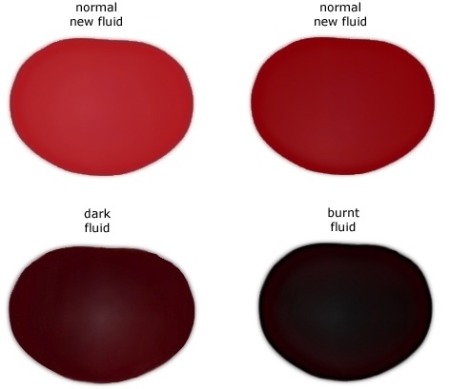
Listen for a distinctive whining or humming noise that increases in pitch with vehicle speed. This often suggests the transmission pump is struggling with fluid that has become aerated or contaminated. Visually, fresh HCF-2 is a translucent amber or light pink (depending on the specific batch and age). As it degrades, it transitions to a dark brown or black hue, often accompanied by a distinct burnt smell. This odor indicates that the fluid has exceeded its thermal limits.
While maintaining a steady pedal position on a flat road, watch your tachometer. If the RPMs surge up and down by 200-500 RPM without a change in speed, your CVT is likely experiencing “slip” due to thinned fluid or pressure loss.
Data suggests that a 10% increase in fluid operating temperature beyond the 200°F threshold can reduce the effective life of CVT fluid by half. Therefore, if you have experienced an engine overheat or have been driving in extreme heat, your fluid is likely degraded even if the mileage is low.
OEM vs. Aftermarket Honda CVT Transmission Fluid Comparison
The debate between Original Equipment Manufacturer (OEM) fluid and aftermarket alternatives is a complete one. However, in the realm of Honda CVTs, the engineering rationale heavily favors the OEM Honda Genuine HCF-2.
The Risks of “Multi-Vehicle” Fluids
Many aftermarket brands market “Universal” or “Multi-Vehicle” CVT fluids. The pitfall here is that different manufacturers (Honda, Nissan, Toyota) utilize different metallurgy for their pulleys and belts. A fluid designed to work in a Nissan Jatco CVT may have a different coefficient of friction than what a Honda unit requires. Using the wrong fluid can lead to irreversible damage to the pulley sheaves.
Never use standard automatic transmission fluid (like Honda DW-1) in a Honda CVT. Expert case studies have shown that using generic DEX/MERC fluid in a Civic CVT can cause belt slip and internal failure within 500 miles. Furthermore, use of non-HCF-2 fluid in modern CVTs may void your powertrain warranty.
If you choose the aftermarket route, stick to trusted professional brands like Idemitsu, Castrol, or Valvoline, but only if they explicitly state “HCF-2 Compliant” on the label. Idemitsu is a particularly reliable choice as they often act as the OEM blender for Honda’s factory fluids.
Professional Procedure for a Reliable Honda CVT Fluid Exchange
Performing a comprehensive fluid service on a Honda CVT is a task of precision. Honda engineers generally advise against high-pressure “Machine Flushes,” which can dislodge internal debris and clog the fine mesh filters inside the valve body. Instead, a standard Drain and Fill is the mandated procedure.
📋
Step-by-Step Fluid Exchange Guide
Remove the drain plug. Clean the magnetic drain plug thoroughly. It is normal to see a small amount of fine metallic “sludge,” but large metal flakes indicate internal failure. Always replace the crush washer to prevent slow leaks.
Refill with approximately 3.7 to 4.0 quarts of HCF-2 through the fill port. Note that the total capacity is roughly 8 quarts, meaning a single drain-and-fill replaces about 50% of the fluid.
Start the engine and shift through all gears (P, R, N, D, S/L). With the vehicle on a perfectly level surface and the engine running, remove the “check bolt” near the bottom of the transmission case. Fluid should just barely trickle out. If it gushes, it is overfilled; if nothing comes out, it is underfilled.
Why Accuracy Matters
Unlike older vehicles with a dipstick, modern Honda CVTs (like the late-model CR-Vs) require this specific “Check Bolt” method to verify the level. An overfilled transmission will cause the fluid to foam (aerate), leading to high temperatures and slipping. An underfilled unit will experience pressure drops, which can cause the belt to slip and permanently score the internal pulleys.
Maintaining the quality of your Honda CVT transmission is a matter of discipline rather than complexity. By using the correct trusted fluid and adhering to a comprehensive maintenance schedule, you ensure your Honda remains a reliable tool for your daily life.
In summary, Honda HCF-2 is a specialized fluid essential for maintaining the grip and temperature of the CVT belt and pulley system. Adhering to a 30,000-mile service interval is the most reliable way to prevent the common ‘CVT shudder’ and extend the life of the unit. Always prioritize genuine Honda fluid or high-quality aftermarket options that meet exact HCF-2 specifications to protect your warranty and vehicle health. Consult your Honda Maintenance Minder today; if you have surpassed 30,000 miles since your last service, schedule a professional CVT fluid exchange to ensure continued performance.
Frequently Asked Questions
Can I use regular automatic transmission fluid (ATF) in my Honda CVT?
No. Honda CVTs require a specific friction coefficient provided by HCF-2 or equivalent fluids. Standard ATF (like Honda DW-1 or Dexron) is designed for transmissions with gears and clutches. Using it in a CVT will cause the belt to slip, generate excessive heat, and likely result in catastrophic failure of the transmission within a few hundred miles.
Why is the Honda CVT fluid change so expensive compared to a standard oil change?
The cost reflects both the high price of synthetic HCF-2 fluid and the precision required for the service. Unlike engine oil, CVT fluid must be leveled at a specific temperature, often requiring professional diagnostic tools to monitor the transmission fluid temperature (TFT) sensor. This ensures the fluid level is exact, which is critical for the hydraulic pressure that operates the pulleys.
Is it better to flush or drain and fill a Honda CVT?
Honda professionals almost universally recommend a ‘Drain and Fill’ rather than a high-pressure machine flush. Flushes can force contaminants into the small valves and solenoid screens within the CVT’s internal body. A standard drain and fill replaces about 40-50% of the fluid; for severely degraded fluid, performing three consecutive drain-and-fills with short driving intervals is the expert-approved method.
What does it mean if my Honda CVT fluid smells burnt but still looks pink?
A burnt odor indicates that the fluid has reached its thermal limit and the chemical additives, particularly the friction modifiers, have oxidized. Even if the color hasn’t fully turned black, the fluid’s ability to protect the metal belt and dissipate heat is compromised. This is a sign that the fluid needs immediate replacement to prevent damage to the pulley faces.
How do I know if my Honda has a CVT or a traditional automatic transmission?
Most Honda four-cylinder models (Civic, Accord, CR-V, HR-V) produced after 2014 utilize CVTs. You can verify this by checking your owner’s manual or looking at the transmission’s shift pattern; a CVT will not have ‘gears’ like 1, 2, or 3. Alternatively, check the transmission dipstick or fill plug; CVTs are usually marked with ‘HCF-2’ or ‘CVT’ on the yellow or orange cap.