How Much Transmission Fluid Do I Need? Capacity Guide
📌 Quick Summary Most vehicles require 4 to 6 quarts of fluid for a standard service (drain and fill), while a total…
Most vehicles require 4 to 6 quarts of fluid for a standard service (drain and fill), while a total system overhaul or dry fill can require 12 to 15 quarts. Always check your owner’s manual or dipstick to verify the exact specifications for your specific year, make, and model.
🎯 Key Takeaways
- Standard drain and fill usually requires 4 to 6 quarts of fluid.
- Total system capacity (dry fill) ranges from 12 to 15 quarts.
- Torque converters hold a significant portion of the total fluid volume.
- External coolers and aftermarket pans increase the required fluid capacity.
- Always verify levels with a dipstick while the engine is running.
Most modern passenger vehicles require between 4 and 6 quarts of transmission fluid for a standard service, but your total system capacity is often double that amount. If you are simply performing a “drain and fill” or a pan drop, you are only replacing about one-third to one-half of the total fluid. However, if you are performing a complete overhaul or installing a brand-new “dry” transmission, you will likely need anywhere from 12 to 16 quarts to reach the proper level.

Getting this measurement right is critical for the hydraulic health of your vehicle. Too little fluid leads to pump cavitation and gear slipping, while too much fluid causes aeration and foaming. Understanding the distinction between service capacity and total capacity ensures you buy the right amount of product and don’t accidentally overfill your system during a routine maintenance task.
Standard Service vs. Total System Capacity Differences
When you consult your owner’s manual, you will often see two different numbers for transmission fluid. The “service capacity” refers to the amount of fluid that drains out naturally when you remove the drain plug or drop the transmission pan. The “total capacity” accounts for every drop of fluid in the entire system, including the torque converter, the valve body, the internal clutches, and the cooling lines. For most DIY mechanics, the service capacity is the number that matters most for a Saturday afternoon project.
The Torque Converter Factor
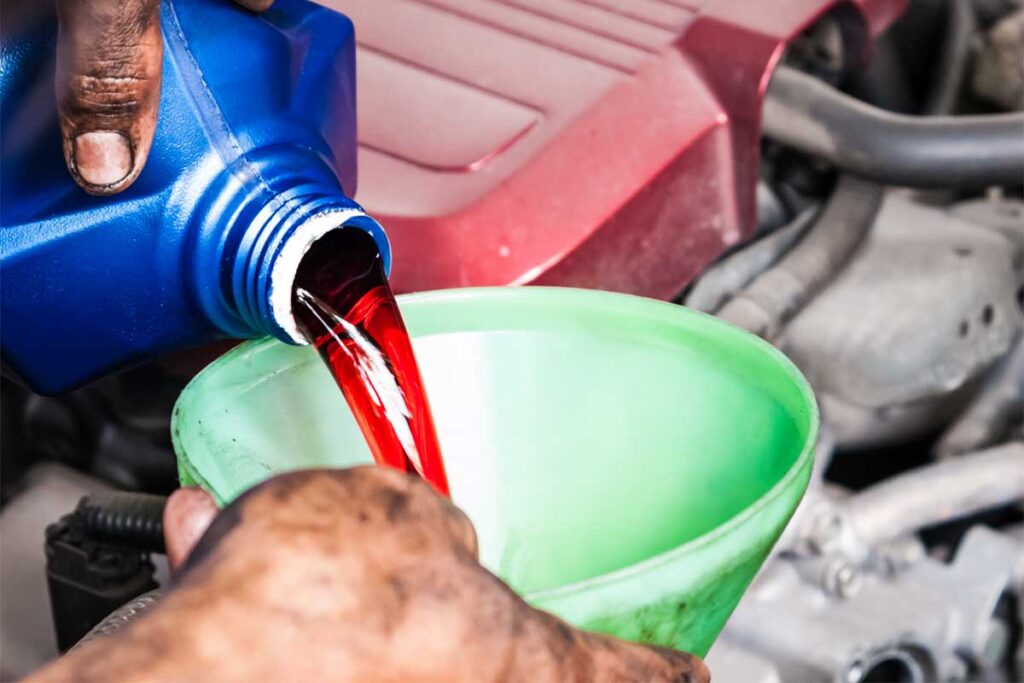
The primary reason you cannot drain the entire system at once is the torque converter. This component acts as a heavy-duty hydraulic coupling and can hold 50% to 70% of your vehicle’s total fluid volume. Unless you are removing the transmission or using a specialized flush machine, that fluid remains trapped. For example, a heavy-duty truck might have a total capacity of 14 quarts, but a pan drop will only yield about 6 quarts. You must account for this “trapped” fluid so you don’t over-calculate your refill needs.
- Compact Cars: Service fill is usually 2.5 to 4 quarts; total capacity is 6 to 9 quarts.
- Mid-Size Sedans/SUVs: Service fill is usually 4 to 6 quarts; total capacity is 9 to 12 quarts.
- Full-Size Trucks/Heavy Duty: Service fill is usually 6 to 8 quarts; total capacity is 13 to 17 quarts.
- CVT Transmissions: Often require specific, smaller volumes, usually 3 to 5 quarts for a service.
Service vs. Dry Fill Examples
To put this into perspective, consider the popular Ford 6R80 transmission found in many F-150s. A standard filter change and pan drop requires approximately 7 quarts of fluid. However, if you were to install a completely remanufactured unit that has no fluid in it, you would need 13.1 quarts. Similarly, a Honda Civic with a CVT might only need 3.7 quarts for a fluid change, even though the total system holds significantly more. Always check your specific VIN or transmission code, as even the same model year can have different pan depths that change these requirements.
Transmission Fluid Capacity Made Easy: Your Essential Action Plan
Determining the exact amount of transmission fluid your vehicle requires is more than just a maintenance task; it is a safeguard for your car’s most complex mechanical system. Whether you are performing a simple “drain and fill” or a complete system overhaul, using the wrong volume of fluid can lead to catastrophic failure, including slipping gears, overheating, or internal pressure damage. This guide will walk you through the precise methodologies for calculating your fluid needs, ensuring your transmission operates at peak efficiency while avoiding the common pitfalls of overfilling or underfilling.
Step 1: Consult the Manufacturer’s Technical Specifications
What you need: Your vehicle’s owner’s manual, or a digital PDF version of the service manual.
Instructions: Start by looking in the “Capacities and Specifications” or “Maintenance” section of your owner’s manual. This is the primary authority for your vehicle. You are looking for two specific numbers: the “Service Refill” capacity and the “Total Fill” or “Dry Capacity.” The service refill is the amount needed after a standard pan drop, while the total capacity is what the system holds when completely dry (including the torque converter). If you cannot find the physical book, visit the manufacturer’s official website or use a VIN decoder to download the specific manual for your model year and engine configuration.
Pro Tip: Always double-check the fluid type (e.g., Dexron VI, Mercon V, or CVT fluid) listed right next to the capacity, as using the wrong fluid type is just as dangerous as using the wrong amount.
Step 2: Identify Your Transmission Type and Configuration
What you need: A flashlight and your vehicle’s door jamb sticker (VIN plate).
Instructions: Transmission fluid requirements vary wildly between automatic, manual, and Continuously Variable Transmissions (CVTs). A standard manual transmission might only require 2 to 4 quarts of gear oil or specialized fluid, whereas a heavy-duty automatic transmission in a pickup truck might hold up to 14 or 16 quarts in total. Check the white sticker on the driver’s side door jamb for a “TRANS” code. Use this code to search online databases if your manual lists multiple transmission options for your vehicle model. Knowing exactly which gearbox you have prevents you from purchasing 12 quarts when you only need 3, or vice versa.
Pro Tip: If your vehicle is a 4WD or AWD model, don’t confuse the transmission fluid capacity with the transfer case or differential fluid requirements.
Step 3: Differentiate Between a “Pan Drop” and a “Full Flush”
What you need: A notepad and a basic understanding of your planned maintenance level.
Instructions: This is where most DIYers make a mistake. When you drain the transmission by removing the pan, you are only removing about 30% to 50% of the total fluid. The rest remains trapped inside the torque converter, the valve body, and the cooling lines. For example, if your total capacity is 12 quarts, a pan drop might only require 4 to 6 quarts for a refill. If you are doing a full flush using a professional machine or by disconnecting the cooler lines, you will need the “Total Capacity” plus an extra 2 quarts to account for the fluid used to “push” the old oil out of the system.
Pro Tip: Always buy at least two more quarts than the “Service Refill” capacity suggests to account for spills or unexpected levels of drainage.
Step 4: Utilize Professional Fluid Look-up Databases
What you need: A smartphone or computer and your vehicle’s VIN (Vehicle Identification Number).
Instructions: If the owner’s manual is vague, use reputable industry databases such as those provided by Amsoil, Valvoline, or Castrol. These companies provide “Lube Look-up” tools where you enter your year, make, model, and engine size. These databases often break down the requirements by “Initial Fill” and “Total Fill.” For example, a 2015 Honda Civic with a CVT will show a specific capacity for a “change” (3.7 quarts) versus an “overhaul” (6.2 quarts). Cross-reference at least two different databases to ensure the numbers align, providing you with a high degree of confidence before you start pouring.
Pro Tip: If you are buying fluid from a dealership parts counter, ask the technician to print out the “fluid capacity and torque spec sheet” for your specific VIN.
Step 5: Perform a Preliminary Dipstick Reading
What you need: A lint-free rag and a flat, level surface.
Instructions: If your vehicle has a transmission dipstick (many modern cars are “sealed” and do not), check the level before you begin. Ensure the engine is at operating temperature and the vehicle is idling in “Park” or “Neutral” (check your manual for the specific manufacturer requirement). Note where the fluid sits on the “Hot” scale. If it is already low, you may need more than the standard refill amount. If the fluid is significantly over the “Full” mark, the previous service may have used too much. This baseline reading helps you gauge how much fluid was actually in the system versus how much should be there according to the specs.
Pro Tip: Never use a paper towel or a fuzzy rag to wipe a transmission dipstick; even a tiny piece of lint can clog the microscopic passages in the valve body.
Step 6: Measure the Discharged Fluid During the Drain
What you need: A graduated drain pan or empty 1-quart containers.
Instructions: One of the most foolproof ways to know how much to put back in is to measure exactly what came out. Drain the old fluid into a clean catch pan, then pour it into empty, clear plastic containers (like old oil bottles or milk jugs) that have volume markings. If you drained exactly 4.5 quarts, you should start by replacing exactly 4.5 quarts of fresh fluid. However, keep in mind that if your transmission was leaking previously, the amount you drained will be less than what is required. This method is a “reality check” to ensure the manual’s specifications align with what is physically occurring in your driveway.
Pro Tip: If the fluid you drained is black or smells burnt, you may want to drop the pan a second time after 500 miles to perform another partial change.
Step 7: Account for the Filter and External Cooler
What you need: The new transmission filter and any auxiliary cooling specifications.
Instructions: If you are replacing the internal filter during your service, you must account for the fluid that the filter itself holds. A standard felt or pleated paper filter can hold between 4 and 8 ounces of fluid. Additionally, if your vehicle is equipped with an aftermarket external transmission cooler (common in towing packages), the total capacity of your system increases. A medium-sized external cooler and its associated hoses can add anywhere from 0.5 to 1.5 quarts to the total system volume. Factor these “hidden” volumes into your final purchase to ensure you don’t run dry during the initial startup after the service.
Pro Tip: Pre-fill the new filter with a small amount of fluid before installation if the design allows, which helps prevent air pockets in the system.
Step 8: Final Level Adjustment and Thermal Expansion
What you need: A long-neck funnel and a vehicle scan tool (optional but recommended).
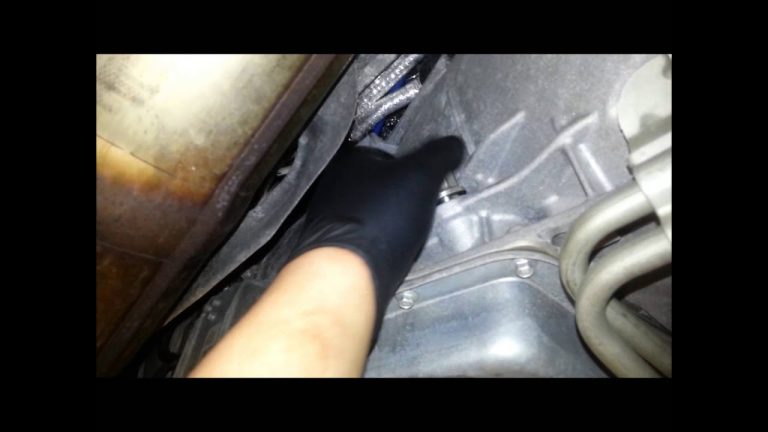
Instructions: Transmission fluid expands significantly as it heats up. After adding the amount calculated in the previous steps, start the engine and let it reach operating temperature (usually 160°F–175°F). With your foot on the brake, cycle the shifter through every gear (P-R-N-D-L), holding each for 5 seconds to allow fluid to fill the galleries and pistons. Check the dipstick again. The level should be between the “Add” and “Full” marks on the “Hot” side of the stick. If your car is a “sealed” unit without a dipstick, you must use the “overflow plug” method: with the car level and the engine running at a specific temperature, add fluid until it just starts to trickle out of the check plug hole.
Pro Tip: If you accidentally overfill the transmission, use a small hand pump with a thin tube to suck the excess fluid out through the dipstick tube rather than draining from the bottom again.
✅ Final Checklist
- Verified the difference between “Service Fill” and “Total Capacity” for my specific job.
- Cross-referenced the VIN-specific fluid type to ensure chemical compatibility.
- Measured the drained fluid to provide a baseline for the refill.
- Cycled through all gears to purge air from the valve body and torque converter.
- Confirmed the final level on the “Hot” mark while the engine was at operating temperature.
Important Notes:
- Safety First: Transmission fluid is highly flammable and the exhaust components near the transmission will be extremely hot. Wear eye protection and heat-resistant gloves.
- When to Seek Help: If your fluid is full of silver metallic flakes or large chunks of clutch material, do not bother refilling it; the transmission requires a professional mechanical rebuild.
- Estimated Time: 1 to 2 hours.
- Estimated Cost: $50 – $150 depending on fluid type (Synthetic vs. Conventional) and whether you replace the filter.
Factors Influencing Fluid Volume Requirements
Not every vehicle of the same make and model will take the exact same amount of fluid. Manufacturer “towing packages” are one of the biggest variables. If your vehicle is equipped with a heavy-duty cooling system, it likely features an auxiliary transmission cooler mounted in front of the radiator. These external coolers and the extra feet of high-pressure lines can add 1 to 2 quarts to your total system capacity compared to the base model.

Transmission Pan Depth and Aftermarket Upgrades
The physical size of your transmission pan dictates how much fluid sits in the reservoir. Many truck owners install aftermarket “deep pans” made of aluminum to help with cooling. These pans can increase your service capacity by 2 to 4 quarts. If you bought a used vehicle, it is worth visually inspecting the pan; if it looks larger than a standard stamped-steel pan or has cooling fins, your fluid requirements will be higher than what the owner’s manual suggests.
- External Coolers: Add roughly 0.5 to 1.5 quarts depending on the cooler size.
- Deep Pans: Typically add 2 to 4 quarts to the “service fill” requirement.
- Filter Style: Some internal felt filters displace more fluid than flat metal screens.
- Temperature: Fluid expands when hot; a “cold fill” will require less volume than a “hot check.”
Front-Wheel Drive vs. Rear-Wheel Drive
The layout of your drivetrain also plays a role in volume. Front-wheel-drive vehicles use a “transaxle,” which combines the transmission and differential into one unit. These often have more compact internals and might require less fluid than a massive rear-wheel-drive longitudinal transmission. In a RWD setup, the distance between the transmission and the radiator is longer, meaning the cooling lines themselves hold a measurable amount of fluid that must be accounted for during a total system purge.
Where to Locate Manufacturer-Specific Fluid Specifications
Finding the exact capacity for your specific make and model is the only way to ensure you don’t end up with a garage full of extra bottles or, worse, a thirsty transmission. Since every vehicle has a unique internal volume and cooling system, you should never guess based on a “general rule of thumb.” Precision is the key to longevity.
The Owner’s Manual and the Under-Hood Label
Your first stop should always be the Owner’s Manual. Look in the back under the “Technical Specifications” or “Capacities and Fluids” section. This will list the total fill capacity and, often, the “service fill” amount. If you’ve lost your physical manual, many manufacturers provide digital PDF versions on their official websites for free. This is the most reliable “source of truth” for your vehicle.
- Check the Dipstick: On many older or heavy-duty vehicles, the transmission dipstick handle will actually have the fluid type (like “Dexron VI” or “Mercon V”) stamped right into the metal or plastic. While it might not list the capacity, it ensures you buy the right stuff.
- Look for the VIN Sticker: Sometimes, fluid specifications are printed on a placard located on the underside of the hood or the driver-side door jamb.
- The Service Manual: If you are doing a more involved repair, a Haynes or Chilton manual provides “dry fill” capacities which are significantly higher than standard service fills.
Using Professional Databases and Dealerships
If you are driving a modern vehicle with a “sealed” transmission (one without a dipstick), finding the capacity can be trickier. In these cases, online fluid selectors from reputable oil manufacturers are excellent resources. You simply enter your Year, Make, and Model to get a precise reading of exactly how many quarts the system holds.
- Call the Parts Counter: A quick call to your local dealership’s parts department with your VIN handy is a foolproof way to get the exact capacity for your specific trim level.
- Pro Tip: Always buy one extra quart. It is much better to have an unopened bottle sitting on your shelf than to be half a quart short while your car is stuck on jack stands.
The Risks of Overfilling vs. Underfilling Your Transmission
Precision is everything when it comes to transmission health. Because transmission fluid acts as a hydraulic fluid, a lubricant, and a coolant, having the wrong amount can lead to catastrophic mechanical failure in a surprisingly short amount of time. It follows the “Goldilocks” principle: it needs to be just right.
The Dangers of Overfilling: Frothing and Pressure
Many drivers think “more is better,” but overfilling is dangerous. When there is too much fluid, the rotating gears in the transmission can whip air into the liquid, creating foam. Aerated fluid cannot hold hydraulic pressure effectively, which leads to erratic shifting and overheating because air is a poor heat conductor.
- Blown Seals: Excess fluid increases internal pressure as it expands with heat, which can force fluid past gaskets and seals, leading to expensive external leaks.
- Fluid Starvation: Ironically, because foam cannot be pumped efficiently, the internal components might not receive the lubrication they need, even though the reservoir is technically over-full.
- Example: If you notice fluid leaking from the vent tube or a sudden “slipping” sensation after adding too much, you likely have air in the system.
The Consequences of Underfilling: Friction and Heat
Underfilling is arguably the fastest way to kill an automatic transmission. Without enough fluid to create hydraulic pressure, the clutches cannot engage properly. This leads to slipping, where the engine revs up but the car doesn’t move as it should. This friction generates massive amounts of heat, which “cooks” the remaining fluid and the internal components.
- Signs of Low Fluid: Listen for whining noises from the pump or a noticeable delay when shifting from Park into Drive or Reverse.
- Permanent Damage: Running a transmission low on fluid for even a few miles can glaze the clutch plates and wear down the planetary gears, necessitating a total rebuild.
- Heat Failure: Heat is the #1 enemy of transmissions. Low fluid means the remaining liquid can’t carry heat away to the cooler fast enough, leading to rapid oxidation.
Conclusion: Keeping Your Transmission in the Green
Determining how much transmission fluid you need is a vital part of vehicle maintenance. Whether you are doing a simple top-off or a full filter and pan service, the difference between a smooth-shifting ride and a costly repair bill often comes down to just a quart or two. Always prioritize manufacturer specs over generic advice and remember that the middle of the dipstick range—not too much, and certainly not too little—is where your transmission thrives.
Next Steps: First, locate your owner’s manual to confirm your specific capacity. Then, check your current fluid level while the engine is warm and idling on a level surface. Regular checks are your best defense against transmission trouble!
Keep your car running smoothly by staying on top of your fluids—your transmission (and your wallet) will thank you!
💬 Quick Questions & Answers
How many quarts for a basic pan drop?
Most passenger vehicles require 4 to 6 quarts for a standard pan drop and filter change.
How much fluid does a transmission flush take?
A full flush usually requires 12 to 15 quarts to replace all fluid in the system and torque converter.
Does a filter change affect fluid amount?
Yes, replacing the filter usually requires an additional half-quart to a full quart of fluid.
Where can I find my car’s exact capacity?
Check your vehicle’s owner’s manual under the ‘Capacities’ or ‘Specifications’ section.
Is capacity different for manual vs. automatic?
Yes, manual transmissions typically require much less fluid, often between 2 to 4 quarts.
❓ Frequently Asked Questions
Why is there such a big difference between a service fill and a total fill?
A standard service only drains the pan, leaving roughly 60% of the fluid trapped in the torque converter and cooler lines. A total fill is only necessary after a complete rebuild or if using a flush machine to exchange all fluid.
How does an external transmission cooler impact the amount of fluid I need?
External coolers and their connecting lines add extra volume to the system, often requiring an additional 1 to 2 pints. If you’ve added an aftermarket cooler, you must account for this extra space beyond the factory manual specs.
Can I determine the amount of fluid needed by what I drained out?
Measuring the old fluid is a great starting point, but it assumes your transmission was at the correct level to begin with. Always use the dipstick at operating temperature to make the final adjustment.
Do CVT transmissions require more or less fluid than traditional automatics?
CVT fluid capacities are generally similar to traditional automatics, often ranging from 4 to 8 quarts for a service. However, the specific type of fluid is critical and cannot be interchanged with standard ATF.
What happens if I put too much transmission fluid in?
Overfilling can cause the fluid to foam, leading to erratic shifting, seal leaks, and potential transmission damage. If you overfill, you may need to use a pump to remove the excess through the dipstick tube.
Should I buy extra fluid just in case?
It is wise to purchase one or two quarts more than the manual specifies for a ‘service fill.’ This ensures you have enough to reach the ‘Full’ mark without having to stop mid-job to visit the store.