How Often to Change Transmission Fluid: Intervals & Signs
📌 Quick Summary Most vehicles require a transmission fluid change every 30,000 to 100,000 miles depending on the transmission type and driving…
Most vehicles require a transmission fluid change every 30,000 to 100,000 miles depending on the transmission type and driving habits. Regular maintenance is critical to prevent overheating, gear slipping, and costly internal damage caused by degraded lubricants.
🎯 Key Takeaways
- Change manual transmission fluid every 30,000 to 60,000 miles for optimal performance.
- Automatic transmissions typically require service between 60,000 and 100,000 miles.
- Severe driving conditions like towing require more frequent fluid intervals.
- Inspect fluid color regularly; dark brown or burnt smells indicate immediate need for service.
- Disregard ‘lifetime’ fluid claims if you plan to keep your vehicle past 100,000 miles.
Most vehicles require a transmission fluid change every 60,000 to 100,000 miles for automatic systems and as frequently as 30,000 to 60,000 miles for manual transmissions. While some modern manufacturers claim their vehicles use “lifetime” fluid, waiting too long can lead to gear slippage, overheating, and eventual transmission failure. If you want to maximize your vehicle’s lifespan, sticking to these specific mileage windows is the most effective way to avoid a multi-thousand-dollar repair bill.
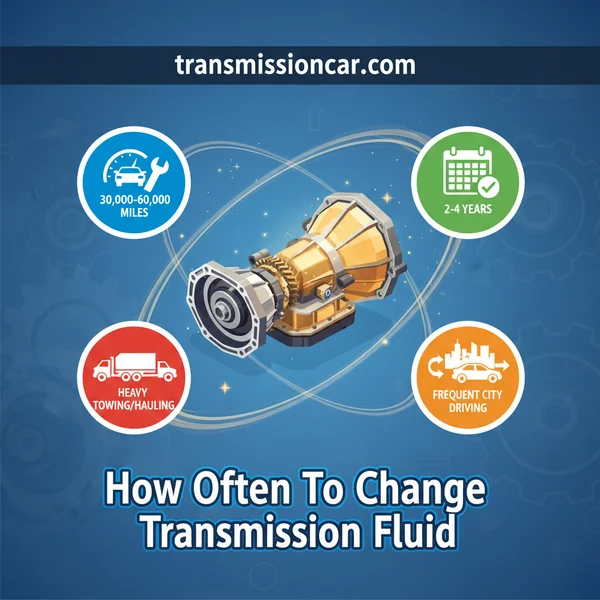
Fresh fluid acts as both a critical lubricant and a coolant for your transmission’s intricate internal components. Over time, the intense heat and mechanical friction break down the fluid’s chemical properties, reducing its ability to protect moving parts from metal-on-metal contact. Understanding your specific service interval ensures your gears shift smoothly and your transmission stays cool, even under heavy load. By following these benchmarks, you move from reactive repairs to proactive maintenance that keeps your car on the road longer.
Standard Maintenance Intervals: Manual vs. Automatic Transmissions
The type of transmission in your vehicle dictates how hard the fluid has to work and how quickly it degrades. Manual and automatic systems use different types of fluids and face different mechanical stresses, which is why their service schedules vary so significantly. Ignoring these distinctions can lead to premature wear on synchronizers or clutch plates.
Manual Transmissions: The 30,000 to 60,000 Mile Window
Manual transmissions rely on high-viscosity gear oil to lubricate the synchronizers, bearings, and gears. Because these components physically mesh together during every shift, the fluid often becomes contaminated with microscopic metal particles over time. These particles can act as an abrasive, accelerating wear on your gears if the fluid is not replaced regularly.
- Low-end interval (30,000 miles): Recommended for high-performance vehicles, trucks used for work, or those driven aggressively.
- High-end interval (60,000 miles): The standard baseline for daily drivers under normal commuting conditions.
- Contamination check: If you notice a “notchy” or “crunchy” feeling when moving the shifter, your fluid is likely past its prime and full of debris.
Automatic Transmissions: The 60,000 to 100,000 Mile Window
Automatic transmission fluid (ATF) works much harder than manual gear oil. It serves as a hydraulic fluid to facilitate gear changes, a lubricant for moving parts, and a coolant for the entire system. Because it operates under high pressure, it generates significant heat, which is the primary cause of fluid oxidation and breakdown.
- Traditional Automatics: Most manufacturers suggest a 60,000-mile service to flush out sludge and burnt additives.
- CVT Transmissions: Continuously Variable Transmissions often require more frequent changes, typically every 30,000 to 50,000 miles, due to the extreme friction between the metal belt and pulleys.
- “Lifetime” Fluids: Some modern cars claim the fluid never needs changing. However, most master technicians advise a change at 100,000 miles regardless of these claims to prevent the fluid from turning into a thick, useless sludge.
Everything You Need to Know About Transmission Fluid Intervals
The transmission is one of the most complex and expensive components of your vehicle, acting as the bridge between your engine’s power and the wheels on the road. Transmission fluid serves multiple critical roles: it provides hydraulic pressure to shift gears, cools the internal components, and lubricates moving parts to prevent friction-based wear. Failing to change this fluid at the correct time can lead to overheating, gear slipping, and eventual total transmission failure. This guide walks you through the precise steps to determine exactly when your specific vehicle needs fresh fluid, ensuring your car stays on the road for hundreds of thousands of miles.
Step 1: Consult Your Manufacturer’s Service Schedule
What you need: Your vehicle’s owner’s manual or access to the manufacturer’s official website.
Instructions: Start by opening your owner’s manual to the “Maintenance Schedule” or “Scheduled Services” section. Manufacturers provide two distinct tracks: “Normal” and “Severe.” Look for the specific mileage or time interval (e.g., 60,000 miles or 60 months) listed for transmission fluid replacement. Modern vehicles with “Lifetime Fluid” may not list an interval at all, but mechanics generally recommend a change every 100,000 miles regardless. Take note of whether your manual recommends a “drain and fill” or a full “flush,” as these are different procedures with different costs and impacts on the transmission’s health.
Pro Tip: If you cannot find your physical manual, search for your VIN (Vehicle Identification Number) on the manufacturer’s owner portal to get a PDF version that includes any updated service bulletins issued after the car was sold.
Step 2: Identify Your Driving Conditions
What you need: A realistic assessment of your daily driving habits and environment.
Instructions: Most drivers fall into the “Severe” category without realizing it. Evaluate if you regularly engage in stop-and-go city traffic, tow trailers, drive in extreme heat (above 90°F) or extreme cold, or frequently drive in mountainous terrain. If any of these apply, you should discard the “Normal” interval and follow the “Severe” schedule. For example, if the manual says 100,000 miles for normal and 45,000 miles for severe, and you spend 70% of your time in city traffic, your target interval should be closer to the 45,000-mile mark. Heat is the primary enemy of transmission fluid, and “severe” conditions generate significantly more heat than steady highway cruising.
Pro Tip: If you use your vehicle for ride-sharing (Uber/Lyft) or delivery services, you are automatically in the “Severe” category and should consider changing the fluid even 10% earlier than the recommended severe interval.
Step 3: Evaluate Your Transmission Type
What you need: Knowledge of your vehicle’s specifications (Automatic, Manual, CVT, or Dual-Clutch).
Instructions: Different transmissions have vastly different fluid requirements. Manual transmissions often use a heavier gear oil and can typically go 30,000 to 60,000 miles. Traditional Automatics vary widely, usually ranging from 60,000 to 100,000 miles. However, Continuously Variable Transmissions (CVTs) are much more sensitive to fluid degradation; many experts recommend changing CVT fluid every 30,000 miles to prevent the internal belt or chain from slipping. Dual-Clutch Transmissions (DCTs) often have very specific intervals (like every 40,000 miles) because the fluid also operates the sophisticated clutch actuators. Identify which type you have to ensure you aren’t applying automatic transmission logic to a CVT or manual gearbox.
Pro Tip: Some CVTs do not have a dipstick; if you own one, do not wait for symptoms to appear, as CVT damage is often irreparable once it starts slipping.
Step 4: Perform a Visual and Olfactory Inspection
What you need: A clean white paper towel and your vehicle’s transmission dipstick (if equipped).
Instructions: With the engine warmed up and idling in “Park,” pull the transmission dipstick, wipe it on the white paper towel, and re-insert it to check the level. Now, examine the color on the towel. Fresh fluid is typically bright cherry red. If it is light brown but still translucent, it is beginning to age but is still functional. If it is dark brown or black and opaque, it must be changed immediately. Most importantly, smell the fluid. If it has a “burnt” or acrid odor, the fluid has overheated and lost its protective properties. If you see tiny metallic flakes in the fluid, this indicates internal wear and you should consult a professional before performing a change.
Pro Tip: If your car is “sealed” (no dipstick), you will need a mechanic to check the fluid via a plug on the side or bottom of the transmission housing during your next oil change.
Step 5: Factor in Vehicle Age and Mileage
What you need: The current odometer reading and the vehicle’s service history logs.
Instructions: If you buy a used car with 120,000 miles and no record of a transmission service, you must be cautious. There is a common mechanical theory that changing the fluid on an extremely high-mileage, neglected transmission can cause it to fail, as the old, gritty fluid might be providing the only friction left for worn clutch plates. In this scenario, do not perform a high-pressure “flush.” Instead, perform a “drain and fill,” which replaces only about 30-50% of the fluid at a time. This introduces new detergents gradually without shocking the system. If your car is low mileage, stick strictly to the manufacturer’s time intervals (e.g., every 5-6 years) even if you haven’t hit the mileage limit, as the additives in the fluid break down over time due to oxidation.
Pro Tip: Never perform a chemical flush on a transmission with over 150,000 miles if the fluid has never been changed before; stick to a simple pan-drop and filter replacement.
Step 6: Listen and Feel for Performance Cues
What you need: A quiet cabin during a 15-minute test drive on varying road types.
Instructions: Sometimes the fluid needs changing before the mileage interval is reached due to unforeseen stress. Pay close attention to “shift quality.” Are the gears engaging smoothly, or is there a noticeable “thud” or hesitation? Listen for a whining or buzzing noise that increases with engine RPM, which can indicate a clogged transmission filter or aerated fluid. Note if the engine revs up significantly before the car actually accelerates (known as slipping). Another sign is “gear hunting,” where the transmission can’t decide which gear to stay in while driving at a steady speed. If any of these symptoms occur, check your fluid immediately, regardless of whether you are “due” for a change based on the odometer.
Pro Tip: Modern transmissions use adaptive learning software. Sometimes a “rough shift” isn’t bad fluid but a computer that needs a reset, though changing the fluid is usually the first step in the diagnostic process.
Step 7: Synchronize with Filter Replacements
What you need: Replacement transmission filter and pan gasket (specific to your vehicle model).
Instructions: Whenever you decide it is time to change the fluid, you must determine if your transmission has a replaceable filter. Many automatic transmissions have a pan at the bottom that holds a pleated paper or felt filter. Changing the fluid without changing the filter is like taking a shower and putting on dirty clothes. If your maintenance schedule calls for a fluid change at 60,000 miles, ensure you or your mechanic “drops the pan” to replace the filter and clean the magnets at the bottom of the pan. These magnets catch fine metal shavings; if they are covered in “fuzz,” it’s normal, but if they are clean, the filter is likely doing all the work and needs to be refreshed to maintain flow.
Pro Tip: Some vehicles (like many Hondas) use an external “inline” filter similar to an oil filter; these are much easier to change and should be done every time the fluid is refreshed.
Step 8: Establish a Recurring Maintenance Log
What you need: A notebook, a smartphone app, or a digital spreadsheet.
Instructions: Once you have completed a fluid change or determined your ideal interval, document it. Record the date, the mileage, the type of fluid used (e.g., Dexron VI, Mercon V, etc.), and whether the filter was replaced. Set a reminder in your phone for 5,000 miles before the next interval is due. This allows you to budget for the service and begin monitoring the fluid more closely as you approach the limit. Consistency is the secret to transmission longevity; a transmission that receives fresh fluid every 40,000 miles will almost always outlive one that gets its first change at 100,000 miles.
Pro Tip: Keep the receipts for the fluid and labor. If you ever sell the vehicle, a documented history of transmission services significantly increases the resale value and buyer confidence.
✅ Final Checklist
- Confirmed the manufacturer’s recommended mileage and time interval in the owner’s manual.
- Adjusted the interval based on “Severe” driving conditions (towing, city traffic, or heat).
- Verified the transmission type (Automatic, CVT, or Manual) to use the correct fluid specifications.
- Visually inspected the fluid color (Red/Pink is good, Brown/Black is bad).
- Confirmed if the transmission filter needs to be replaced along with the fluid.
Important Notes:
- Safety Warning: Never check or change transmission fluid while the engine is hot unless specified by the manual; the fluid can reach temperatures over 200°F and cause severe burns.
- When to Seek Help: If your transmission is already slipping or grinding, a fluid change may not fix it and could potentially make it worse. Consult a certified transmission specialist for a diagnostic scan.
- Estimated Cost: A professional drain and fill typically costs between $150 and $300, while a full flush can range from $250 to $450 depending on the vehicle and fluid capacity.
- Estimated Time: A DIY fluid change takes about 1.5 to 3 hours, while a professional service usually takes about 1 hour.
Factors That Shorten Transmission Fluid Lifespan
The intervals mentioned above are based on “ideal” driving conditions, which rarely exist for the average driver. If your daily commute involves heavy traffic, steep hills, or extreme weather, you should expect to change your fluid much sooner than the standard owner’s manual suggests. Mechanics refer to this as the “severe service” schedule.

The Impact of Heat and Heavy Loads
Heat is the number one enemy of transmission fluid. For every 20-degree increase in operating temperature above the optimal 175°F, the life of your fluid is cut roughly in half. When you subject your vehicle to heavy loads, the internal temperature spikes rapidly, “cooking” the fluid and destroying its protective additives.
- Towing and Hauling: If you regularly tow a trailer, boat, or carry heavy equipment, your transmission works twice as hard. You should aim for fluid changes every 20,000 to 25,000 miles.
- Mountainous Terrain: Constant “gear hunting” while climbing steep grades generates excessive friction and thermal stress.
- Extreme Climates: Driving in regions where summer temperatures consistently exceed 90°F or winter temperatures drop below zero puts additional strain on the fluid’s ability to flow and lubricate.
Stop-and-Go City Driving
You might think highway miles are harder on a car, but the opposite is true for your transmission. Highway driving allows for constant airflow over the transmission cooler, keeping temperatures stable and low. In contrast, city driving is a high-stress environment for your gears.
In stop-and-go traffic, your transmission is constantly shifting between first, second, and third gears. Each shift involves friction and a small burst of heat. Without the steady airflow of the highway to dissipate this heat, it stays trapped in the system. If 80% of your driving happens in a congested urban environment, you should treat your vehicle as a severe-service case. In these instances, changing an automatic transmission’s fluid every 40,000 to 50,000 miles is a much safer bet than waiting for the 100,000-mile mark.
The Reality of ‘Lifetime’ Transmission Fluids
If you have purchased a newer vehicle recently, you might have noticed the term “lifetime fluid” in your owner’s manual. It sounds like a dream come true—one less maintenance task to worry about for the life of the car. However, in the automotive world, the definition of “lifetime” can be quite misleading.
What Manufacturers Really Mean by “Lifetime”
To a vehicle manufacturer, a “lifetime” often refers only to the duration of the original powertrain warranty, which is usually around 100,000 miles. They aren’t necessarily promising that the fluid will remain effective for 20 years or 300,000 miles. Over time, even the most advanced synthetic fluids succumb to heat cycles and internal friction. If you plan on driving your vehicle until the wheels fall off, sticking to a “lifetime” schedule is a risky gamble that could lead to a premature and expensive transmission failure.
Why Professionals Recommend Ignoring the “Sealed” Label
Most experienced mechanics suggest that “sealed” transmissions still need attention. These units lack a traditional dipstick, making them harder for the average owner to check, but the fluid inside still degrades. Environmental factors play a huge role in how quickly this happens. You should consider changing your “lifetime” fluid if you encounter any of the following:
- Frequent Towing: Pulling trailers or boats puts immense thermal stress on the fluid.
- Stop-and-Go Traffic: Constant shifting in heavy city traffic generates significant internal heat.
- Extreme Climates: Very hot summers or sub-zero winters accelerate the chemical breakdown of the oil.
- Mountain Driving: Steep inclines force the transmission to work harder and run hotter.
Identifying Physical Signs of Degraded Transmission Fluid
While following a mileage-based schedule is the safest bet, your car will often try to tell you when its fluid has lost its effectiveness. Being able to read the physical condition of the fluid can save you from a massive repair bill down the road. It is a simple diagnostic skill that every car owner should have in their back pocket.
The Color and Clarity Test
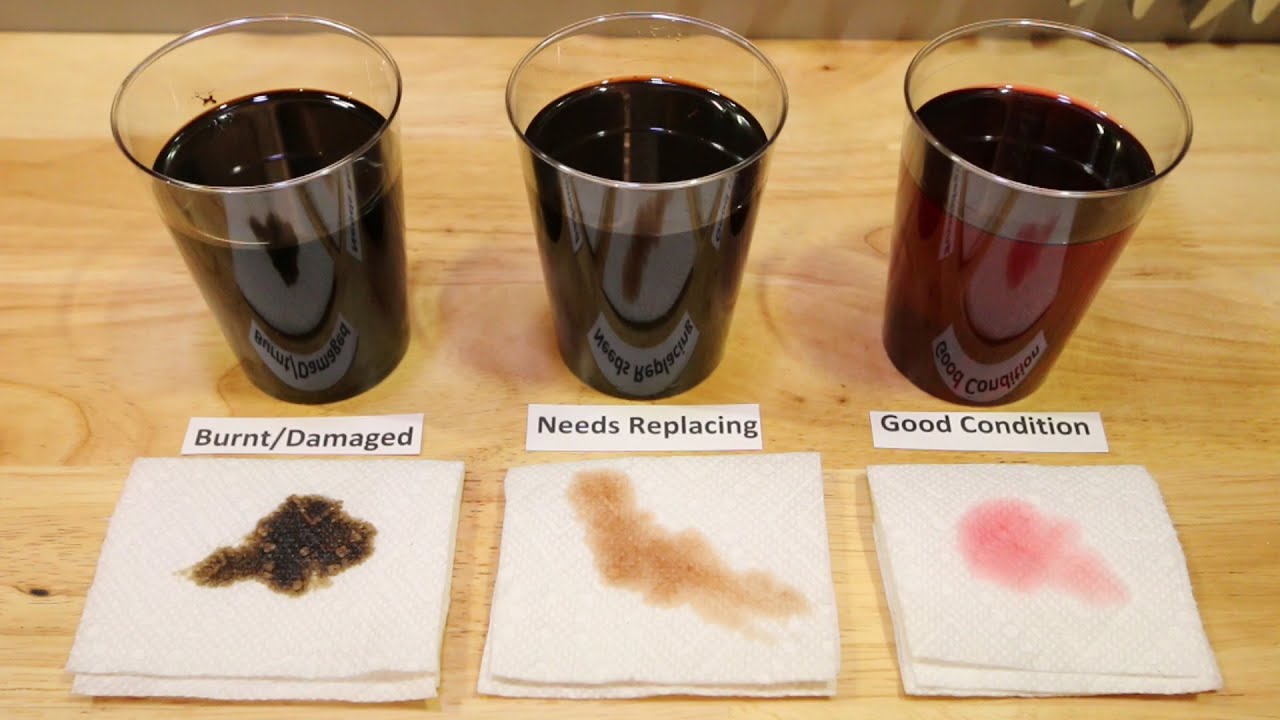
Fresh automatic transmission fluid (ATF) is typically a bright, translucent red. This high-visibility color makes it easy to spot leaks and judge its health. As the fluid ages and collects debris, it undergoes a transformation that you can track visually:
- Light Brown: This is normal aging. The fluid is still functional but should be monitored closely.
- Dark Brown/Opaque: This indicates the fluid is oxidized. It can no longer lubricate parts effectively or manage heat properly. Change it soon.
- Black or Sooty: This is a major red flag. Black fluid usually means internal components are wearing down or the fluid has been “cooked” by extreme heat.
The Scent and Texture Check
Your nose is often just as accurate as your eyes when it comes to transmission health. Fresh fluid has a slightly sweet or tart oily smell. If you pull the dipstick and it smells like burnt toast or acrid smoke, the fluid has failed. This burnt odor suggests that the friction plates are slipping and overheating. Additionally, if you rub a drop of fluid between your fingers and feel gritty particles or metal flakes, it is a sign of internal mechanical wear. In these cases, a simple fluid change might not be enough, and a professional inspection is mandatory to check for damage to the gears and bearings.
Conclusion
Understanding how often to change your transmission fluid is the difference between a car that lasts a decade and one that ends up in the scrap heap early. While manufacturer intervals provide a baseline, they rarely account for the “real world” stress of heavy traffic, towing, or extreme weather. By staying proactive and ignoring the “lifetime” marketing myths, you ensure your transmission stays cool, lubricated, and responsive for years to come.
Next Steps: Check your owner’s manual today to see your recommended service interval. If you can’t remember the last time your fluid was inspected, or if you notice a dark color or burnt smell, schedule a fluid check with a trusted technician immediately. Your transmission—and your wallet—will thank you!
💬 Quick Questions & Answers
How often should I change automatic transmission fluid?
Most manufacturers recommend every 60,000 to 100,000 miles under normal conditions.
Is 30,000 miles too early for a fluid change?
For manual transmissions or vehicles used for heavy towing, 30,000 miles is often the recommended interval.
Does ‘lifetime’ transmission fluid ever need to be changed?
Yes, ‘lifetime’ usually refers to the warranty period; most mechanics suggest changing it by 100,000 miles.
What color is healthy transmission fluid?
Healthy fluid should be a translucent bright red color.
Does city driving affect fluid life?
Yes, frequent shifting in stop-and-go traffic increases heat and degrades fluid faster.
❓ Frequently Asked Questions
What happens if I never change my transmission fluid?
Over time, the fluid loses its lubricating properties and ability to clean internal components. This leads to excessive friction, overheating, and eventually complete transmission failure, which can cost thousands of dollars to repair.
What is considered ‘severe’ driving conditions for a transmission?
Severe conditions include frequent towing or hauling, driving in extreme mountain terrain, or operating in temperatures above 90°F. Constant stop-and-go city traffic and short trips where the engine doesn’t reach full temp also count as severe.
Can I just top off the fluid instead of changing it?
Topping off helps with levels, but it doesn’t remove the dirt, metal shavings, and oxidized fluid trapped in the system. A full fluid exchange or drain-and-fill is necessary to maintain the health of the gears and clutches.
Should I get a transmission flush or a fluid change?
A fluid change (drain and fill) is generally safer for older vehicles or those with high mileage. A flush uses high pressure to remove all fluid, which can sometimes dislodge debris and cause clogs in older systems.
How can I tell if my fluid is burnt without a dipstick?
Many modern cars are ‘sealed’ and lack a dipstick, requiring a professional to check the fluid via a plug. If you experience gear hesitation or hear whining noises, it is a sign the fluid is likely degraded and needs professional inspection.
Will changing my fluid fix a slipping transmission?
If the transmission is already slipping due to mechanical wear, fresh fluid might actually make it worse or provide only a temporary fix. Fluid changes are a preventative measure, not a cure for existing internal mechanical damage.