How To Know If Transmission Fluid Is Low: Diagnostic Signs And Testing Methods
A vehicle’s transmission is a complex hydraulic masterpiece, but it is entirely dependent on a precise volume of fluid to function. This…
A vehicle’s transmission is a complex hydraulic masterpiece, but it is entirely dependent on a precise volume of fluid to function. This fluid serves as a lubricant, a coolant, and, most importantly, the medium for power transfer through the torque converter and valve body. When transmission fluid levels drop, even slightly, the system loses the hydraulic pressure and cooling capacity required to shift gears safely, leading to catastrophic internal damage. In this comprehensive guide, you will learn how to diagnose low transmission fluid through physical symptoms, visual inspections, and manual testing procedures to protect your vehicle’s drivetrain and understand the mechanics of preventative maintenance.
Recognizing the Physical Driving Symptoms of Low Transmission Fluid
📤 Share Image
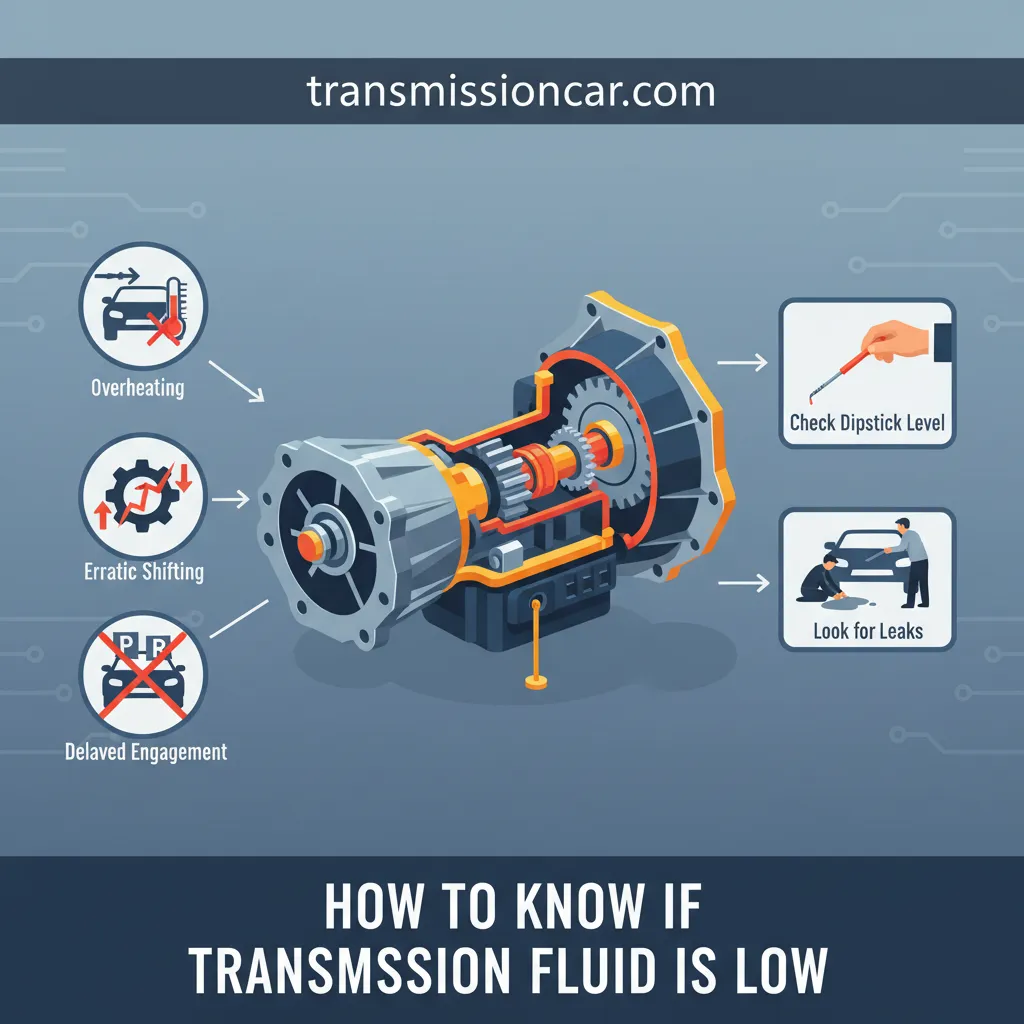
The first indicators of low transmission fluid rarely appear on the dashboard; instead, they manifest in the vehicle’s tactile behavior. You must understand the mechanics of gear slipping to catch issues early. Slipping occurs when the engine’s RPMs increase significantly during acceleration, but the vehicle’s velocity remains constant or lags behind. This happens because the system lacks the necessary hydraulic pressure to fully engage the internal clutch packs. For beginner drivers, this often feels like the car is “searching” for power, or like a manual car with a worn-out clutch.
Delayed Engagement and Cavitation
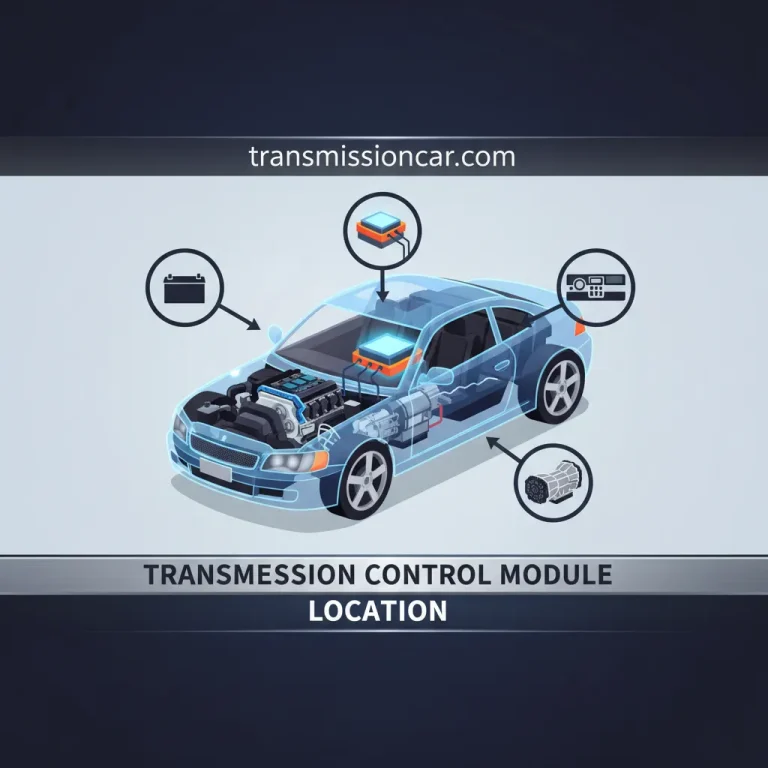
Experienced technicians look for delayed engagement—a 2-3 second ‘hesitation’ when shifting from Park to Drive or Reverse. This lag is frequently caused by fluid cavitation in the valve body. When fluid is low, the transmission pump draws in air alongside the oil, creating a foamy mixture that cannot compress effectively. This air-rich fluid cannot build the pressure required to move the shift solenoids instantly. Furthermore, you should explore the phenomenon of ‘gear hunting.’ This occurs when the Transmission Control Module (TCM) struggles to maintain a consistent gear ratio because line pressure is fluctuating, causing the vehicle to shift up and down erratically at steady speeds.
A classic diagnostic sign is the “RPM flare” during a highway merge. If you floor the accelerator and the needle jumps 1,000 RPMs without a corresponding surge in speed, your fluid volume is likely too low to maintain clutch pack clamping force under high torque.
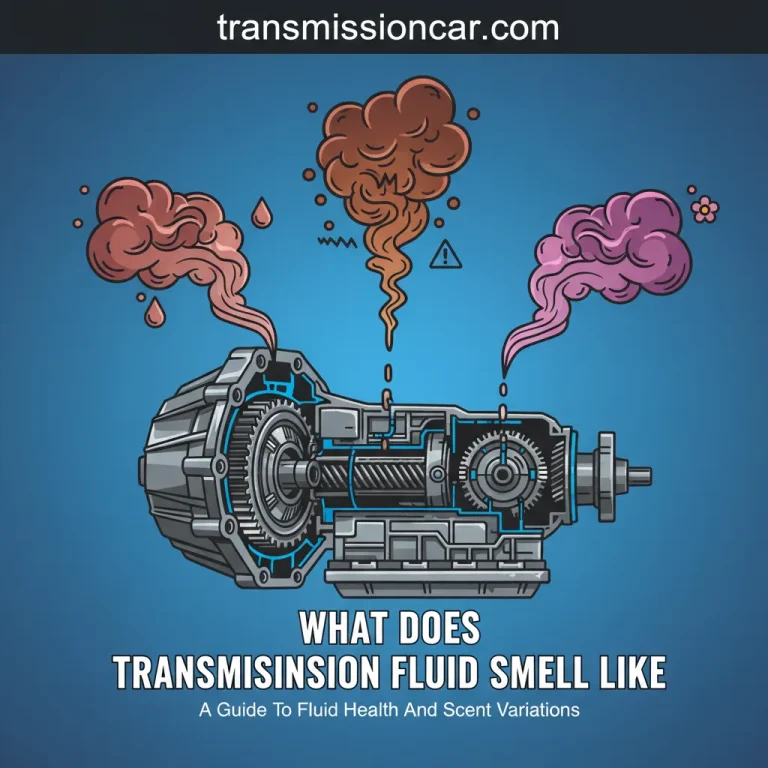
Noise is another essential diagnostic tool. You must learn to distinguish between normal engine hums and the distinct whining or rhythmic grinding produced when the internal pump is starved for lubricant. If the fluid level drops by just 20%, internal temperatures can spike, leading to a ‘burnt toast’ smell. This overheating often triggers ‘Limp Mode,’ where the vehicle restricts itself to second or third gear to prevent a total meltdown.
Transmission Failure Statistics
Failures caused by low fluid
Temp reached at 20% fluid loss
Identifying Visual Indicators and Fluid Contamination Levels
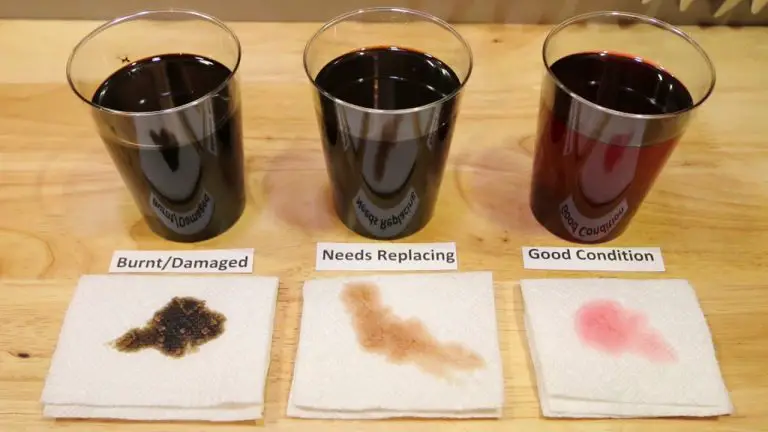
Visual inspections provide immediate evidence of the system’s health. Start by inspecting your driveway or garage floor for puddles. Automatic Transmission Fluid (ATF) is traditionally bright red or dark pink. However, modern synthetics like Dexron VI can appear darker even when healthy, so master the difference between “dark” and “dirty.” If you find oily spots near the front or middle of the chassis, you likely have a failing output shaft seal or a leak in the oil cooler lines.
The Paper Towel Test and Color Analysis
To discover the true state of your fluid, perform the ‘Paper Towel Test.’ Drip a small amount of fluid from the dipstick onto a white paper towel. Healthy fluid should spread out, remaining translucent. If it leaves brown or black spots in the center, the fluid has reached its thermal breakdown point and has likely lost its lubricating properties. This often happens because low volume causes the remaining fluid to work twice as hard, accelerating oxidation.
Be wary of a ‘strawberry milkshake’ appearance. This indicates an internal breach in the radiator, where engine coolant has intermixed with transmission fluid. This effectively lowers the volume of functional lubricant because the water-based coolant destroys the friction material on the clutch plates. Finally, monitor your dashboard for the Transmission Temperature Light or a Check Engine Light (CEL) displaying codes like P0700 (General Transmission Malfunction) or P0841 (Pressure Sensor Range/Performance), which are often triggered by low fluid-induced pressure drops.

How to Perform a Manual Dipstick Inspection to Verify Levels
If your vehicle is equipped with a dipstick, manual verification is the most comprehensive way to ensure accuracy. Unlike engine oil, which is checked with the engine off, transmission fluid levels must be checked while the fluid is circulating and hot. This is because ATF expands significantly as it warms up; a reading taken on a cold engine will appear deceptively low.
📋
Step-by-Step Dipstick Procedure
Drive the vehicle for 10-15 minutes or idle on a level surface. The fluid needs to be roughly 175°F for an accurate “Hot” reading.
With your foot on the brake, move the shifter through P-R-N-D and back to Park. This ensures the fluid is distributed through the torque converter and valve body.
Locate the red/yellow dipstick. Pull it, wipe it clean with a lint-free cloth, reinsert it fully, and pull it again. Look for the fluid level within the crosshatch area.
It is critical to note manufacturer variations. While a Ford F-150 is typically checked in Park, many Honda models (like the Accord) require the engine to be turned off—but the fluid still hot—with the reading taken within 60 to 90 seconds of shutdown. Always explore your owner’s manual for these nuances. Master the crosshatch area: the difference between the ‘Add’ (low) and ‘Full’ marks on most dipsticks is approximately one pint (0.5 quarts). If the level is below the bottom mark, add only enough OEM-specified fluid to reach the middle of the “Hot” range.
Monitoring Sealed Transmissions and Electronic Diagnostic Interfaces
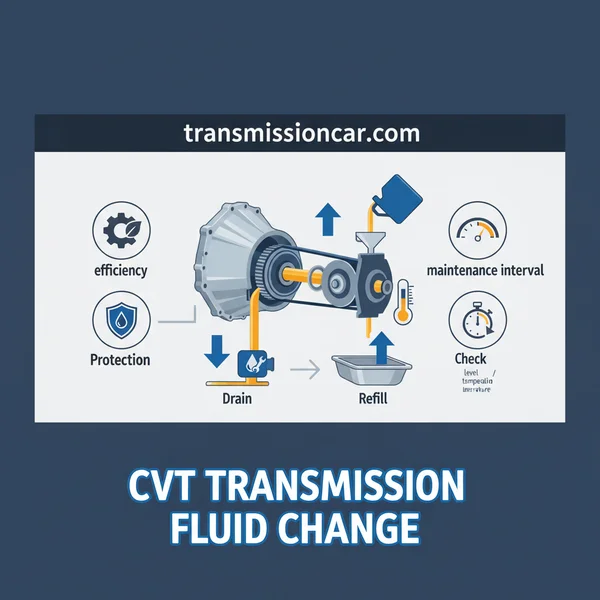
Modern automotive engineering has moved toward “sealed” transmissions. Over 60% of new vehicles produced since 2018 do not feature a traditional dipstick. This change has led to the ‘Lifetime Fill’ myth. As an expert, I must emphasize: no fluid is truly “lifetime.” These systems still lose volume through seepage and evaporation and require a comprehensive inspection every 50,000 to 100,000 miles.
Level Plugs and Live Data Monitoring
To check a sealed unit, such as a BMW ZF 8-speed transmission, you must use a ‘Check Plug’ or ‘Level Plug’ located on the side of the transmission case. This requires the vehicle to be perfectly level on a lift while running. The fluid must be at a precise temperature—typically between 30°C and 50°C (86°F – 122°F). If fluid drips out of the hole at this temperature, the level is correct; if not, it is low.
Checking a sealed transmission at the wrong temperature can lead to a 10-15% error in volume. In a Dual-Clutch Transmission (DCT) or CVT, being even half a quart low can cause immediate metal-on-metal wear and belt slipping.
For the tech-savvy owner, an OBD-II scanner is essential. You can use it to read ‘Live Data,’ specifically monitoring the Transmission Fluid Temperature (TFT) sensor. If you notice the TFT spiking above 220°F during normal driving, it is a digital “red flag” that your fluid volume is insufficient to dissipate heat. If you are unsure, discover peace of mind by scheduling a ‘Level Check Service,’ where a pro uses a scan tool to command the TCM into diagnostic mode for a precise reading.
Understanding the Long-Term Mechanical Risks of Low Fluid Levels
Ignoring low fluid levels is a gamble with your vehicle’s lifespan. The most immediate risk is friction plate glazing. Transmission clutches are made of a paper-based friction material. Without adequate lubrication and cooling, these plates reach extreme temperatures, causing the material to harden and “glaze.” Once glazed, the clutches can no longer grip, necessitating a full rebuild regardless of how much fresh fluid you add later.
The Downward Spiral of Mechanical Neglect
The torque converter is also at high risk. It relies on the kinetic energy of the fluid to transfer power from the engine to the gears. Low fluid levels mean the internal bearings and stator are not properly supported, leading to shards of metal circulating through the system. This creates ‘planetary gearset galling,’ where metal-on-metal contact creates a “grinding paste” that destroys every valve and seal in the transmission.
✅ Maintenance Costs
- Fluid Top-off: $15 – $30
- Full Fluid Service: $150 – $250
- Filter Replacement: $40 – $80
❌ Neglect Costs
- Solenoid Replacement: $500+
- Torque Converter: $1,200+
- Full Rebuild/Replace: $4,000+
Consider the financial implications. A simple fluid service is roughly $150, whereas a transmission replacement averages $4,000. I recently saw a case study involving a driver who ignored a minor cooler line leak for three months. By the time they brought it in, the fluid was so low the planetary gears had welded themselves together. Every 20-degree increase in operating temperature above 200°F cuts the expected life of the transmission in half. Because transmissions are closed systems, low levels always indicate a leak or a serious internal breach; they never “consume” oil like an engine might.
To master your vehicle’s longevity, recognize shifting delays and slipping as the first mechanical warnings of low fluid. Utilize the dipstick method or electronic sensors to verify precise fluid levels at operating temperature. Address leaks immediately to prevent permanent friction plate damage and costly rebuilds. If you suspect your fluid is low, perform a dipstick check today or schedule a professional inspection to prevent total transmission failure and keep your vehicle on the road for years to come.
Frequently Asked Questions
Can I check my transmission fluid while the engine is off?
Generally, no. For most automatic transmissions, the engine must be running and at operating temperature to get an accurate reading. This ensures the fluid is circulating through the torque converter and valve body. Checking while the engine is off will result in an artificially high reading because the fluid has drained back into the pan.
Is it normal for transmission fluid to evaporate over time?
Unlike engine oil or coolant, transmission fluid does not evaporate. The transmission is a closed system. If your fluid level is low, it is a definitive sign of a leak or an internal mechanical failure where fluid is being consumed or forced out. You must locate the source of the loss rather than just topping it off.
What color should my transmission fluid be?
New transmission fluid is typically a translucent, bright red color. Over time, it may darken to a light brown. However, if the fluid is dark brown, black, or opaque, it indicates that it has been burnt or contaminated. If it looks milky or pink, this suggests coolant is leaking into the transmission, which requires immediate repair.
Will low transmission fluid cause the Check Engine Light to turn on?
Yes, low fluid levels can trigger the Check Engine Light or a dedicated Transmission Warning Light. The onboard computer monitors gear ratios and hydraulic pressure. If the fluid is too low to maintain pressure, the computer will detect a ‘slip’ and store a diagnostic trouble code (DTC) such as P0700, alerting the driver.
How often should I check my transmission fluid levels?
It is recommended to check your transmission fluid every time you change your engine oil, or roughly every 5,000 to 7,500 miles. Regular monitoring allows you to catch slow leaks or fluid degradation before they lead to expensive mechanical failures. For sealed transmissions, an inspection every 30,000 miles is advisable.