Nissan CVT Transmission Problems: Symptoms, Models & Fixes
📌 Quick Summary Nissan Xtronic CVT transmissions have faced significant reliability issues, including overheating and belt slip, leading to multiple class-action lawsuits….
Nissan Xtronic CVT transmissions have faced significant reliability issues, including overheating and belt slip, leading to multiple class-action lawsuits. Identifying symptoms like juddering or ‘limp mode’ early is critical for high-risk vehicles like the Altima, Rogue, and Sentra produced between 2012 and 2018.
🎯 Key Takeaways
- Takeaway 1:Watch for ‘juddering’ or whining noises as early warning signs.
- Takeaway 2:Check if your Nissan qualifies for the extended 84-month warranty.
- Takeaway 3:Models like Altima, Rogue, and Sentra (2012-2018) are highest risk.
- Takeaway 4:Overheating is a primary cause of CVT belt and pulley failure.
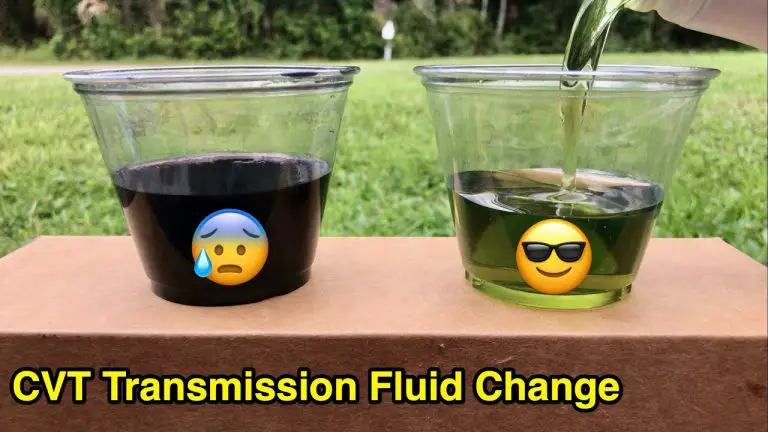
- Takeaway 5:Change CVT fluid every 30,000 miles to improve transmission longevity.
If your Nissan feels like it is struggling to find a gear, stuttering during acceleration, or making a high-pitched whining sound, you are likely dealing with a failing JATCO-sourced CVT. These transmissions, used heavily across the Nissan lineup, are notorious for premature failure due to internal overheating and belt slippage. Unlike a traditional automatic that uses gears, the Nissan CVT relies on a steel belt and pulley system that is highly sensitive to heat and fluid degradation.
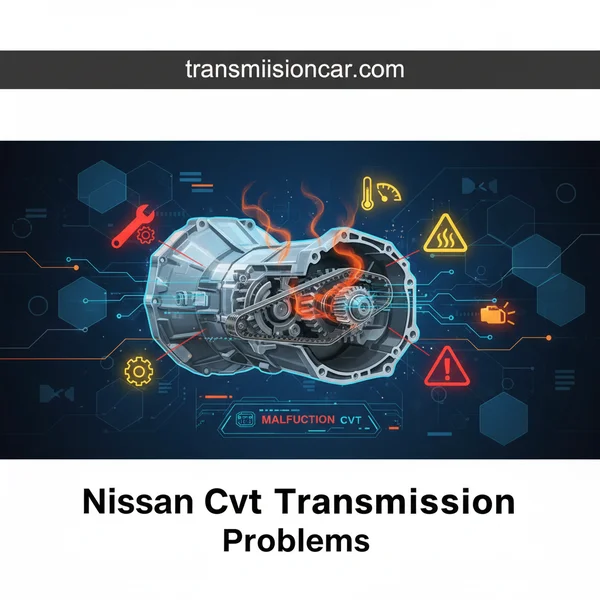
Understanding these symptoms early is the only way to avoid being stranded on the side of the highway. Most Nissan CVT failures are not subtle; they manifest as distinct physical “judders” or software-limited “limp modes” designed to protect the engine when the transmission temperature spikes. Because a total replacement often costs between $3,500 and $5,000, identifying the red flags before the metal belt completely disintegrates is critical for your safety and your wallet.
Common Symptoms and Red Flags of Nissan CVT Failure
The core issue with Nissan’s CVT design is heat management. When the transmission fluid exceeds its operating temperature, it loses the ability to provide necessary friction and cooling. This leads to a chain reaction of mechanical failures that you can feel and hear from the driver’s seat. If you notice any of the following, your transmission is likely on its way to a total breakdown.

The “Limp Mode” and Overheating Cycle
One of the most common signs of a failing Nissan CVT is the car suddenly losing power while driving at highway speeds. This is known as “limp mode.” When the transmission sensors detect that the fluid is too hot, the car’s computer artificially limits engine RPMs to prevent the transmission from melting down. You may press the gas pedal to the floor, but the car will refuse to accelerate past 30 or 40 MPH. This typically happens after long drives or in stop-and-go traffic because the factory-installed cooling system is often too small to dissipate the heat generated by the pulleys.
- Delayed Engagement: You shift from Park to Drive or Reverse, and there is a 2-3 second “lag” before the car actually moves.
- The CVT Whine: A high-pitched humming or whining noise that gets louder as you accelerate is often a sign of a failing bearing or a struggling fluid pump.
- Loss of Acceleration: The engine revs high (the tachometer climbs), but the vehicle speed does not increase proportionally because the internal belt is slipping.
Shuddering, Jerking, and “Juddering”
Nissan owners frequently report a sensation called “juddering.” This feels like the car is driving over a rumble strip or “washboard” road even on smooth pavement. This happens because the metal belt that connects the two pulleys in the CVT is losing its grip. As the belt slips and catches, it creates a violent vibration. Over time, this slipping creates metal shavings that circulate through the fluid, clogging the valve body and causing even more erratic shifting behavior.
- Violent Jerking: Usually occurs between 10 and 30 MPH as the pulleys attempt to adjust the “gear” ratio.
- Burning Smell: If the fluid is severely overheated, you may smell a scorched, sweet odor coming from the engine bay.
- Fluid Leaks: Small cracks in the external CVT oil cooler or hoses can lead to low fluid levels, which accelerates the overheating process.
High-Risk Nissan Models and Impacted Production Years
While Nissan has made incremental improvements to their Xtronic CVT technology, certain vehicle generations are significantly more prone to failure than others. Most of the reliability issues stem from JATCO (Japan Automatic Transmission Co.) units manufactured between 2012 and 2018. During this era, Nissan faced multiple class-action lawsuits regarding the Altima, Rogue, and Sentra models.
The “Danger Zone” Model Years: 2012–2017
Vehicles produced in this window are the most likely to experience catastrophic CVT failure before reaching 100,000 miles. The primary culprit was an inadequate cooling system and a belt design that could not handle the torque of the engine over long periods. If you own a Nissan from this era, you should be checking your transmission fluid every 30,000 miles rather than following the optimistic “lifetime fluid” suggestions in the manual.
- Nissan Altima (2013-2016): These years are arguably the most affected, with thousands of reports of “juddering” and premature cooling failure.
- Nissan Rogue (2014-2020): The Rogue is notorious for the “whining” sound and entering limp mode during family road trips or mountain driving.
- Nissan Sentra (2012-2019): Known for sudden belt breakage and total loss of power at low speeds.
- Nissan Pathfinder (2013-2014): The early V6 CVTs in these SUVs struggled with the weight of the vehicle, leading to rapid internal wear.
Specific Vehicle Lines and Known Failure Rates
Not every Nissan uses the same CVT, but the failure patterns across the lineup are remarkably consistent. The lighter cars like the Versa and Sentra tend to suffer from belt-slip issues, while the heavier SUVs like the Pathfinder and Murano often experience “shuddering” due to the high torque demands placed on the pulley system. Even the Maxima, which uses a “high-torque” version of the CVT, has faced complaints regarding fluid degradation and gear-ratio “hunting” where the car cannot decide on the proper engine speed.
By 2018 and 2019, Nissan began implementing software updates and larger external oil coolers to combat these issues, but many owners of newer 2020+ models still report “CVT lag” and stuttering. If your vehicle falls into these high-risk categories, it is vital to know that Nissan extended the warranty on many of these units to 10 years or 120,000 miles, though many of those extensions have now expired for older models.
Understanding the Root Causes: Heat, Design, and Belt Slip
To understand why Nissan’s Xtronic CVT has faced so much scrutiny, you have to look under the hood at how it manages energy. Unlike a traditional automatic transmission that uses fixed gears, a CVT relies on a steel belt and two pulleys. While this design is great for fuel economy, it creates a unique set of challenges that Nissan struggled to master in earlier generations.
The Battle Against Excessive Heat
Heat is the number one enemy of any transmission, but it is particularly lethal for a CVT. Many Nissan models were equipped with cooling systems that simply weren’t robust enough for heavy stop-and-go traffic or high-speed highway cruising in warm climates. When the transmission fluid gets too hot, it loses its viscosity and fails to lubricate the moving parts.
- Fluid Degradation: Overheated fluid can “cook,” leading to sludge buildup that clogs internal valves.
- Limp Mode: To prevent a total meltdown, the car’s computer may force the vehicle into “limp mode,” drastically reducing power to let the unit cool down.
- Bearing Wear: Constant high temperatures cause the internal bearings to wear prematurely, leading to that infamous whining sound.
The Mechanics of Belt Slip
Another primary culprit is belt slip. Because the system relies on friction between the metal belt and the smooth pulleys, any drop in hydraulic pressure can cause the belt to slide rather than grip. This doesn’t just cause a “shudder” sensation; it actually scrapes metal shavings into the fluid. These tiny metal particles then circulate through the transmission, acting like sandpaper on the sensitive valve body and sensors.
Warranty Extensions, Recalls, and Legal Settlement Details
Because of the widespread nature of these failures, Nissan has faced numerous class-action lawsuits over the last decade. While they haven’t issued a “blanket recall” for every CVT ever made, they have significantly expanded protection for many owners. If you own a used Nissan, it is vital to check if your vehicle falls under these extended protections.
The 10-Year/120,000-Mile Extension
For many older models—specifically those produced between 2003 and 2010—Nissan famously doubled the factory powertrain warranty. This was a direct response to the high failure rates of the early Xtronic units. A similar wave of extensions followed for the 2012–2017 model years, covering vehicles like the Sentra, Versa, and Altima. These extensions typically cover the repair or replacement of the CVT at no cost to the owner, provided the vehicle is within the age and mileage limits.
Recent Class Action Settlements
In recent years, legal settlements have provided even more relief for owners of newer models. For example, settlements involving the 2014–2018 Rogue and 2015–2018 Pathfinder have offered various forms of compensation. These often include:
- Voucher Programs: Discounts toward the purchase of a new vehicle if you experienced documented CVT issues.
- Repair Reimbursements: Cash back for owners who previously paid out-of-pocket for transmission replacements at an authorized dealership.
- Extended Coverage: An additional 24 months or 24,000 miles of coverage added to the existing powertrain warranty.
Practical Tip: Always keep your service records. If you ever need to file a claim under a class-action settlement, you will need proof that you followed the recommended maintenance schedule.
Conclusion
Dealing with Nissan CVT transmission problems can be frustrating, but being an informed owner makes a world of difference. By recognizing the early warning signs like shuddering or whining and understanding the role that heat plays in system failure, you can take steps to prolong your vehicle’s life. While the design has its flaws, many drivers have successfully navigated these issues through proactive maintenance and by taking advantage of Nissan’s various warranty extensions.
If you suspect your transmission is failing, your first step should be to check your VIN on Nissan’s official recall and warranty lookup tool. Don’t wait for a total breakdown; address minor hesitations now to avoid a costly replacement later. Stay vigilant, keep your fluid fresh, and drive with peace of mind!
💬 Quick Questions & Answers
What are the first signs of Nissan CVT failure?
Common signs include vehicle hesitation, jerking (juddering), and a high-pitched whining noise during acceleration.
Which Nissan models have the most CVT issues?
The Altima, Sentra, Rogue, Pathfinder, and Versa from 2012-2018 are the most frequently cited models.
Is there a recall for Nissan CVT transmissions?
While rare for full recalls, Nissan has issued several ‘Service Campaigns’ and extended warranties for millions of vehicles.
How much does a Nissan CVT replacement cost?
Replacement costs typically range between $3,500 and $5,000 depending on the model and labor rates.
What is ‘Limp Mode’ in a Nissan?
It is a fail-safe mode that limits engine RPM and speed to protect the transmission from overheating damage.
❓ Frequently Asked Questions
Why do Nissan CVTs fail so frequently?
Most failures stem from excessive heat buildup, which degrades the CVT fluid and causes the steel belt to slip on the pulleys. This friction creates metal debris that eventually clogs the system or causes the belt to snap.
Has Nissan extended the warranty on CVT transmissions?
Yes, for many 2012-2018 models, Nissan extended the limited powertrain warranty to 7 years or 84,000 miles. Owners should check their VIN on Nissan’s official website to confirm specific coverage.
Can I fix a Nissan CVT without replacing the whole unit?
In some cases, replacing the valve body or adding an external cooling system can resolve issues, but internal belt or pulley damage usually requires a full unit replacement.
What was the outcome of the Nissan CVT class-action lawsuits?
Several lawsuits resulted in settlements that provided reimbursements for past repairs and extended warranty coverage for models like the Altima, Sentra, and Versa.
Does the Nissan Rogue have CVT problems?
Yes, the Rogue is one of the most affected models, particularly the 2014-2020 generations, often suffering from cooling issues and premature belt wear.
How can I prevent my Nissan CVT from failing?
Frequent fluid changes using only genuine Nissan NS-3 CVT fluid and installing an aftermarket external transmission cooler are the most effective ways to extend its lifespan.