
For over a decade, the Nissan Xtronic Continuously Variable Transmission (CVT) has been the subject of intense scrutiny, class-action lawsuits, and widespread driver frustration. Engineered by JATCO, these units were designed to optimize fuel efficiency and provide seamless acceleration, yet they have become synonymous with premature mechanical failure. Despite their theoretical benefits, Nissan’s CVT units are prone to overheating, belt slippage, and sudden power loss, often occurring shortly after the factory warranty expires. In this guide, we will troubleshoot the primary symptoms of Nissan CVT failure, diagnose the underlying mechanical cause, and provide professional solutions to resolve these issues and extend your vehicle’s lifespan.
Section 1: Identifying Primary Nissan CVT Transmission Problems and Warning Signs
Recognizing the early warning signs of a failing Xtronic CVT is critical for preventing a total roadside breakdown. Unlike traditional planetary gear automatics that may exhibit a single “harsh shift,” CVT failures are often more subtle and progressive. The most prevalent symptom is the infamous ‘Judder’ or Shuddering. This is a distinct vibration felt through the floorpan and steering wheel during moderate acceleration. Technically, this occurs when the steel drive belt momentarily loses its frictional grip on the pulleys, slipping and then catching rapidly. This metal-on-metal slippage creates micro-scars on the pulley faces, which compounds the problem over time.
Another common red flag is the ‘Whining’ phenomenon. A high-pitched drone that increases in frequency with vehicle speed usually indicates bearing wear or, more dangerously, fluid cavitation. Cavitation happens when the transmission fluid becomes so hot or aerated that the pump can no longer maintain steady pressure. This often leads to the vehicle entering Limp Mode. This fail-safe mechanism electronically limits engine RPMs and vehicle speed—often to 30-40 MPH—to protect internal components from catastrophic heat damage when the TCM (Transmission Control Module) detects temperatures exceeding safe operating parameters.
We also frequently see delayed engagement and hesitation. Owners of the 2013-2017 Nissan Altima and Sentra often report a “hunting” sensation, where the engine RPMs fluctuate wildly while the driver maintains a steady throttle position. This is an indicator that the step motor or pressure solenoids are failing to move the pulleys to the correct ratio. Data shows that over 60% of early-generation CVT complaints involve this specific combination of hesitation and shaking within the first 60,000 miles of operation.
Section 2: The Engineering Root Causes Behind CVT Performance Degradation
To effectively debug these failures, we must look at the mechanical architecture of the JATCO-sourced units, specifically the JF011E and JF015E transmissions found in the Rogue and Pathfinder. The fundamental cause of degradation is thermal management failure. Nissan’s factory cooling systems often rely on a small “honeycomb” heat exchanger that utilizes engine coolant. Under heavy loads or in stop-and-go traffic, this system is insufficient. When CVT fluid temperatures exceed 200 degrees Fahrenheit, the protective additives in the fluid begin to break down through a process called shearing, shortening the transmission’s life by 50% almost immediately.
Nissan NS-2 and NS-3 fluids are highly specialized synthetic lubricants. When they overheat, their molecular chains are literally “sheared” apart by the intense pressure between the steel belt and pulleys, leading to a loss of hydraulic viscosity that triggers belt slippage.
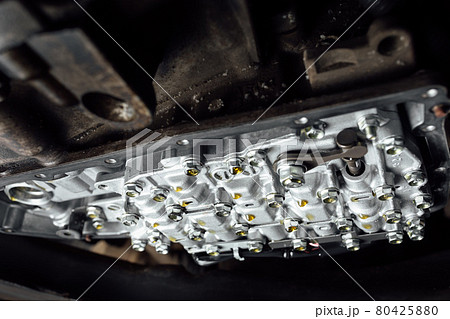
As the fluid loses its integrity, steel belt and pulley wear accelerates. Micro-shavings of metal are shed into the fluid loop. While the transmission has magnets in the pan to catch some debris, finer particles eventually bypass the filters and reach the valve body. This “brain” of the transmission uses delicate solenoids to direct hydraulic pressure. When these solenoids become clogged with metallic sludge or warped by excessive heat, they can no longer accurately control the pulley width, leading to the erratic shifting and “hunting” mentioned previously. This creates a feedback loop of heat and wear that eventually leads to total mechanical seizure.

Section 3: How to Troubleshoot and Diagnose Nissan CVT Fault Codes
When a Nissan enters the shop with transmission issues, the first step is to diagnose the electronic health of the system. Generic OBD-II scanners may only show a “P0700” (General Transmission Control System Malfunction), but professional tools like Nissan Consult III or specialized apps like CVTz50 allow us to dig deeper into the proprietary Nissan Diagnostic Trouble Codes (DTCs).
📋
Critical CVT Diagnostic Steps
Look for P0744 (Torque Converter Clutch circuit intermittent), P0746 (Pressure Control Solenoid performance), and P1778 (Step Motor function). These indicate electrical vs. hydraulic failure.
The TCM tracks a “CVT Fluid Deterioration” count based on temperature and time. A count over 210,000 typically mandates an immediate flush.
Healthy NS-3 fluid is translucent green or amber. If it is dark brown or smells like burnt toast, internal scorching has already occurred.
In some cases, a P0841 code (Pressure Sensor) might suggest a relatively simple sensor replacement. However, if a stall test reveals that engine RPMs rise significantly above 2,500 while the vehicle is held in Drive with the brakes applied, the issue is mechanical pulley slip, and the transmission will likely require a full repair or replacement.
Section 4: Repair and Resolve Strategies: From Software Updates to Component Replacement
Once the problem is identified, we move to the hierarchy of solutions. The most cost-effective first step is TCM Reprogramming. Nissan has released numerous Technical Service Bulletins (TSBs) that provide software flashes to adjust shift logic. These updates often lower the target operating temperature and increase the clamping force on the belt to resolve minor slipping issues.
If software isn’t enough, we look at External Cooling Solutions. For Nissan Rogue and Pathfinder owners who drive in hot climates or hilly terrain, installing an auxiliary transmission cooler (such as those from Mishimoto or Hayden) is a highly effective workaround. By bypassing the restrictive factory “honeycomb” cooler, these units can drop fluid temperatures by 30-40 degrees, often eliminating Limp Mode issues entirely.
In cases where the “brain” is the failure point, a valve body replacement can save thousands of dollars compared to a full transmission swap. However, if the belt has already begun to fray, a remanufactured unit (ideally Jasper or a Nissan-certified unit with updated internals) is the only permanent solution. Avoid used salvage yard transmissions; without knowing the previous owner’s maintenance history, you are likely buying another unit on the verge of failure.
Section 5: Preventative Maintenance to Avoid Future CVT Failure
The single greatest myth in the automotive world is “lifetime fluid.” For a Nissan CVT, this is a recipe for disaster. To maximize the life of your transmission, you must adopt an aggressive maintenance schedule. While the owner’s manual might suggest 60,000 or even 100,000 miles, real-world data shows that vehicles following a 30,000-mile fluid maintenance schedule show an 80% reduction in premature pulley scoring.
Drain and Fill Every 30k
Use only Nissan Genuine NS-3 fluid. Aftermarket fluids often lack the friction modifiers necessary to prevent belt slip.
Dual Filter Replacement
Always replace the internal pan filter AND the external high-pressure cartridge filter located in the side of the case.
Driving habits also play a massive role. Avoid “jackrabbit” starts, which put immense torque load on the belt before hydraulic pressure has fully stabilized. Similarly, unless your vehicle is specifically equipped for it, avoid heavy towing. Consider a high-mileage Nissan Murano success story: many units reach 200,000 miles, but they almost exclusively belong to owners who treated CVT fluid changes with the same religious frequency as engine oil changes. Lastly, invest in a cheap Bluetooth OBD adapter to monitor your transmission temperatures via your smartphone during long summer drives; if you see temps creeping past 210°F, it’s time to pull over and let the unit cool down.
By The Numbers
Recommended Service Interval (Miles)
Critical Fluid Breakdown Temp
Reduction in Premature Failure
In summary, the early detection of “judder” and whining is critical to avoiding total transmission failure. Heat is the primary enemy of the JATCO CVT, making auxiliary coolers a highly recommended upgrade for longevity. Strict adherence to 30,000-mile fluid changes using genuine NS-3 fluid is the single most effective way to prevent premature wear and pulley damage. If you are experiencing symptoms of CVT failure, perform a diagnostic scan immediately to check for pressure-related fault codes before the internal steel belt sustains permanent damage. Taking proactive steps today can save you thousands in repair costs tomorrow.
Frequently Asked Questions
Which Nissan models have the most CVT problems?
The most significant problems are documented in the 2013-2017 Nissan Altima, 2013-2017 Sentra, 2014-2017 Rogue, and 2013-2016 Pathfinder. These models utilized early-generation JATCO units that suffered from inadequate cooling and fragile belt designs, leading to several high-profile class-action settlements and extended warranty programs (up to 10 years/120,000 miles in some cases).
How much does it cost to fix a Nissan CVT transmission?
Repair costs vary significantly based on the severity of the issue. A simple TCM software update or fluid flush may cost $200-$400. Replacing the valve body typically costs between $900 and $1,600. However, if the steel belt has slipped or the pulleys are scored, a full transmission replacement is required, which usually costs between $3,500 and $5,500 at a dealership.
Can you drive a Nissan with CVT problems?
While the vehicle may still move, driving with CVT symptoms like shuddering or whining is highly discouraged. These signs indicate that the steel belt is lose or the hydraulic pressure is inconsistent. Continuing to drive will lead to ‘Limp Mode,’ where the car loses power unexpectedly, potentially creating a safety hazard in traffic and ensuring that a repairable issue becomes a total replacement.
Does changing the CVT fluid actually help?
Yes, frequent fluid changes are the most effective preventative measure. Nissan’s CVT fluid (NS-2 or NS-3) is a specialized lubricant that provides the friction necessary for the belt to grip the pulleys while cooling internal components. Over time, the fluid loses its viscosity and heat-resistance. Replacing it every 30,000 miles removes metallic debris and restores the hydraulic integrity of the system.
What does a Nissan CVT ‘whine’ sound like?
The ‘CVT whine’ is a high-pitched, metallic drone that increases in frequency as you accelerate. It sounds similar to a power steering pump failure or a turbocharger spooling up. This noise is usually caused by a failing bearing or fluid that has become aerated (bubbly) due to extreme heat, indicating the pump is struggling to maintain pressure.