Nissan Rogue Transmission Problems: Cvt Symptoms, Diagnostic Codes, And Repair Costs
For many Nissan Rogue owners, the smooth driving experience of a Continuously Variable Transmission (CVT) can quickly turn into a nightmare of…
For many Nissan Rogue owners, the smooth driving experience of a Continuously Variable Transmission (CVT) can quickly turn into a nightmare of shuddering, whining, and sudden power loss. Despite the Rogue’s immense popularity as a family crossover, the Jatco-sourced CVT units have become synonymous with premature failure, leaving drivers frustrated and facing potentially massive repair bills. This guide provides a technical deep-dive into diagnosing specific Rogue transmission problems, interpreting diagnostic codes, and exploring the repair options available through warranty extensions or mechanical solutions.
Identifying Common Nissan Rogue Transmission Problem Symptoms
📤 Share Image
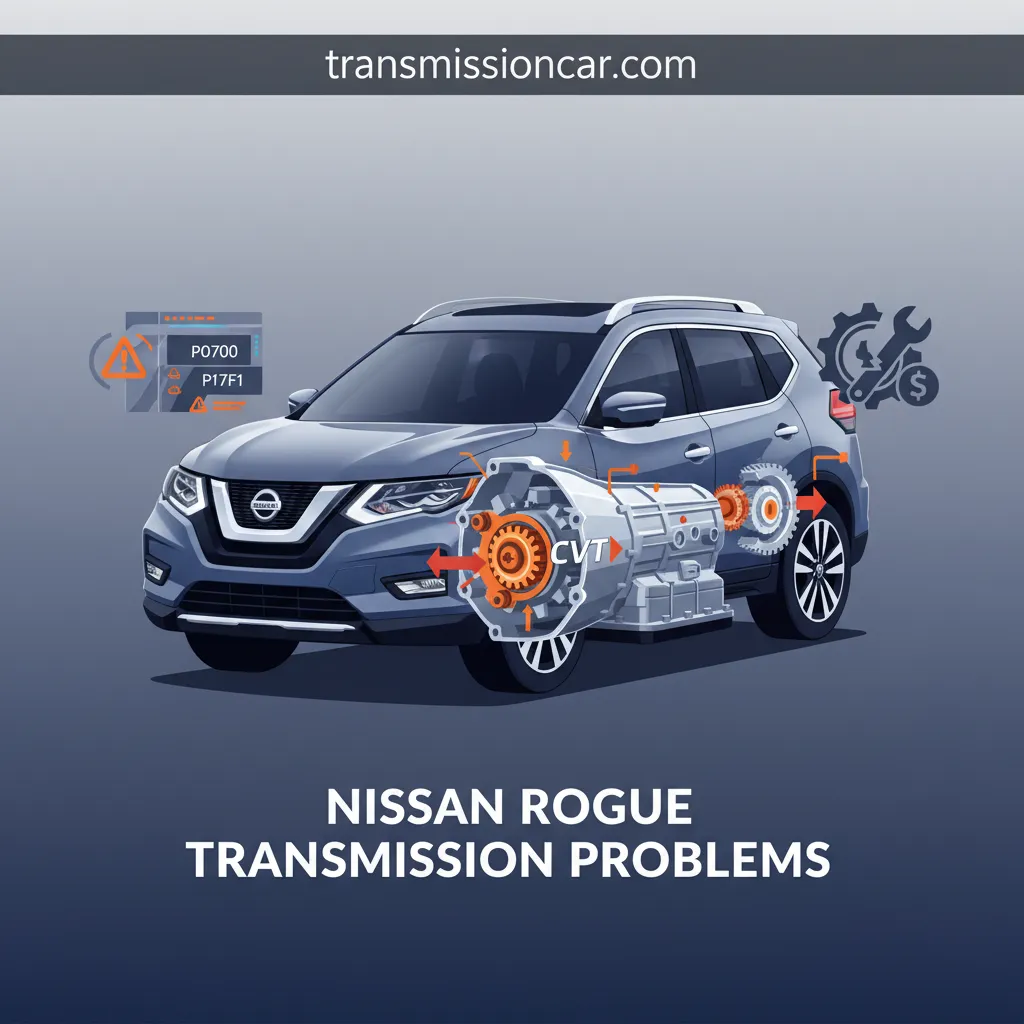
The primary challenge with the Nissan Rogue’s transmission is that it rarely fails catastrophically without warning. Instead, it exhibits a series of progressive symptoms that signal the internal degradation of the belt and pulley system. The most notorious of these is the “CVT Shudder” or judder. This typically occurs during low-speed acceleration, specifically between 20 and 40 mph. This sensation feels like driving over rumble strips and is caused by the steel belt slipping against the pulleys as the Transmission Control Module (TCM) struggles to maintain the correct clamping force.
Auditory warnings are equally telling. A high-pitched whining noise that increases in frequency with engine RPM usually indicates bearing wear or fluid cavitation. Cavitation occurs when the CVT fluid foams due to extreme heat, preventing the pump from maintaining consistent pressure. If you hear a “tea kettle” whistle after a long highway drive, your transmission is likely overheating.
When internal temperatures exceed a safe threshold, the Rogue enters “Limp Mode.” This restricts engine RPM and vehicle speed to prevent a thermal runaway that could melt internal seals. Drivers often experience this as a sudden, terrifying loss of power while climbing hills or passing.
Consider a common real-world scenario: A driver attempts to merge onto a busy highway. They floor the accelerator, the engine screams to 5,000 RPM, but the vehicle experiences a 3-second delay in power delivery. This “rubber band effect” is a classic sign of internal hydraulic lag. According to NHTSA databases, over 60% of reported 2014-2016 Rogue owner complaints specifically cite this powertrain hesitation or shuddering as a primary safety concern.

Root Causes: Why Nissan Rogue CVTs Experience Premature Failure
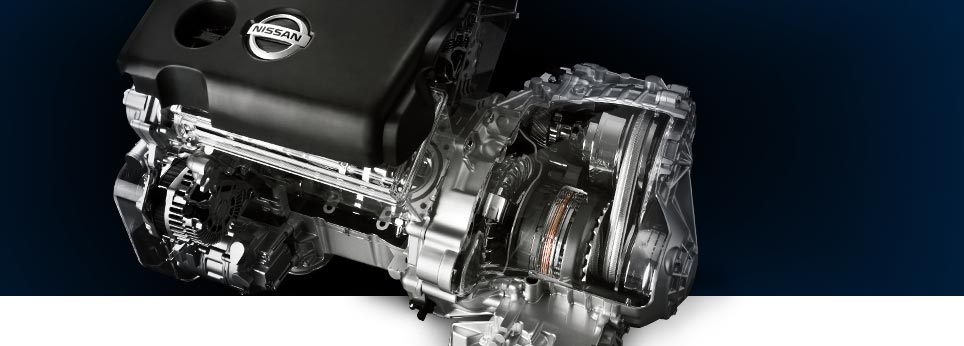
To resolve these issues permanently, one must understand the mechanical cause. The Rogue utilizes the Jatco CVT8 (specifically the JF017E or JF011E depending on the year). Unlike a traditional automatic that uses gears, this system relies on a high-tension steel belt suspended between two variable-diameter pulleys. While efficient, this design is incredibly sensitive to friction and heat.
Technical Specifications
Internal PSI
Fluid Grade
The Jatco CVT8 operates at internal pressures exceeding 500 PSI. This high pressure is required to keep the belt from slipping under torque. However, this generates immense heat. In pre-2018 Rogue models, the factory-installed transmission oil cooler was often undersized for North American driving conditions, particularly in stop-and-go traffic or hot climates. This leads to thermal degradation of the NS-3 CVT fluid.
As the fluid breaks down, it loses its viscosity and ability to carry away heat. This creates a microscopic feedback loop of destruction:
- The belt begins to micro-slip against the pulley surfaces.
- Microscopic metal shavings are sheared off and enter the fluid stream.
- These shavings clog the internal honeycombed filter and the valve body solenoids.
- Solenoid failure prevents accurate hydraulic pressure regulation, leading to even more belt slip.
Aggressive driving habits further exacerbate this, as rapid throttle changes force the pulleys to adjust positions quickly, increasing the shear force on the already-degraded fluid.
Diagnostic Procedures for Troubleshooting Nissan Rogue Transmission Issues
When a Rogue enters the shop with transmission complaints, the first step is to troubleshoot using a high-level OBD-II scanner capable of reading Nissan-specific CAN bus data. Generic scanners often miss “pending” codes stored in the TCM that don’t trigger a Check Engine light immediately.
📋
Professional Diagnostic Roadmap
Pull codes like P0744 (Torque Converter Clutch), P1778 (Step Motor), or P0841 (Fluid Pressure Sensor). A P0841 often indicates the pump is failing to meet the commanded pressure.
Access the “CVT Deterioration Data” in the TCM. This is a calculated value from 0 to 210,000. Readings over 20,000 indicate the fluid has been thermally stressed and needs replacement.
Hold the brake and briefly depress the accelerator in Drive. If RPMs exceed 2,500-3,000 without the vehicle moving, internal clutches or the torque converter are slipping.
A critical debug step is the visual fluid inspection. Pull the CVT dipstick (note: some years require a special tool to unlock the cap) and wipe it on a white lint-free cloth. If you see “glitter”—tiny metallic flakes—the solution is no longer software-based; the transmission has internal mechanical damage. A burnt odor suggests the friction material on the clutches has scorched due to overheating.
Repair and Resolution Options for Rogue Transmission Failure
If you catch the problem early, you may be able to resolve the issue without a total replacement. The “Drain and Fill” protocol is the first line of defense. Expert Tip: Never perform a high-pressure flush on a high-mileage Nissan CVT. The pressure can dislodge debris and wedge it into the sensitive valve body. Instead, perform three consecutive “drain and fills” with a short drive in between to ensure most of the old fluid is cycled out.
Auxiliary Cooling
Installing an aftermarket external oil cooler can reduce peak operating temperatures by 20-40°F, preventing fluid breakdown.
Valve Body Swap
If the belt is intact but the Rogue shudders, replacing just the valve body ($600-$900) can save the unit from a full $4,500 replacement.
When full replacement is the only repair, choosing the right part is vital. Salvage yard units are a gamble, as they often come from Rogues that were crashed due to… transmission failure. A Nissan-certified remanufactured CVT is the preferred workaround because it includes the latest updated internal components and software calibrations that were not available when the car was originally built. After hardware replacement, it is mandatory to perform a “TCM Calibration” using a Nissan Consult III tool to align the pulley ratios with the new hardware.
Warranty Coverage, Recalls, and Class Action Lawsuit Information
Before spending thousands of dollars, verify your coverage. Due to the high failure rates, several class-action lawsuits (such as Stringer v. Nissan) have forced the manufacturer to extend warranties. For 2014-2018 Rogues, many owners were granted an extension to 7 years or 84,000 miles. Some earlier models received extensions up to 10 years or 120,000 miles.
Use the Nissan USA VIN lookup tool to check for open service campaigns. Many Rogues have an open “Voluntary Service Campaign” for a TCM software update. This update adjusts the logic to detect belt slip earlier and increases cooling flow. Even if your car feels fine, getting this update is a critical preventative measure. If you have already paid for a repair, the settlement provides a mechanism for reimbursement, provided you have all service records and proof of payment.
If you are just outside the warranty window (e.g., 90,000 miles), contact Nissan North America Consumer Affairs directly. If you have a documented history of servicing the vehicle at a Nissan dealership, they often offer “Goodwill” assistance, covering 50-70% of the replacement cost.
Early detection of shuddering and whining is critical to avoiding total roadside failure. By utilizing modern diagnostic tools and specific OBD-II codes, you can pinpoint whether the issue is electronic (TCM/Solenoid) or mechanical (Belt/Pulley). While the Jatco CVT has its flaws, warranty extensions and auxiliary cooling kits offer viable paths to resolving or preventing CVT issues. If you are experiencing hesitation or ‘limp mode,’ check your VIN for warranty eligibility and schedule a CVT fluid degradation test at a certified technician immediately.
Frequently Asked Questions
How much does it cost to replace a Nissan Rogue transmission?
A full CVT replacement for a Nissan Rogue typically ranges between $3,500 and $5,500. This includes approximately $2,500 to $3,500 for a remanufactured Jatco unit and $1,000 to $1,500 in labor. Prices vary based on whether you choose a dealership service or an independent specialized transmission shop.
Can I drive my Rogue if the transmission is whining?
Whining is a sign of fluid cavitation or bearing wear. While the vehicle may still be drivable, continued operation often leads to ‘limp mode’ or total belt snap. It is advisable to have the fluid inspected for metallic debris immediately, as catching the problem early may allow for a simpler valve body repair.
Did Nissan extend the warranty on Rogue transmissions?
Yes, for many models. Specifically, 2014-2018 Rogues received a warranty extension to 7 years or 84,000 miles following a class-action settlement. Earlier 2008-2013 models often had extensions up to 10 years or 120,000 miles. Always verify your specific VIN with a Nissan dealer to confirm your current coverage status.
What are the most common OBD-II codes for Rogue CVT failure?
The most frequent codes include P0744 (Torque Converter Clutch Circuit Intermittent), P1778 (Step Motor Function), and P0841 (Transmission Fluid Pressure Sensor/Switch Range/Performance). These codes indicate specific hydraulic or electronic failures within the CVT system and require professional diagnostic equipment to clear and recalibrate after repair.
How often should I change the CVT fluid to prevent problems?
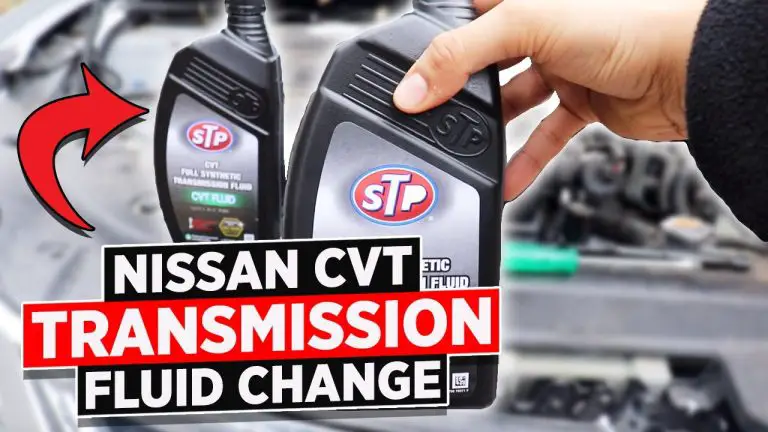
While Nissan’s ‘lifetime’ fluid claim is common, transmission experts recommend a drain and fill every 30,000 to 40,000 miles. Using only genuine Nissan NS-3 CVT fluid is vital, as aftermarket fluids often lack the specific friction modifiers required for the Jatco belt-and-pulley system to operate without slipping.