Porsche 911 Manual Transmission Engineering And Driving Dynamics
For the Porsche purist, the three-pedal configuration is not merely a transmission choice but a fundamental commitment to mechanical purity and driver…
For the Porsche purist, the three-pedal configuration is not merely a transmission choice but a fundamental commitment to mechanical purity and driver agency. As manufacturers pivot toward rapid-fire automatic gearboxes, many enthusiasts fear the loss of the tactile connection that defines the high-performance driving experience. However, Porsche continues to defy industry trends by refining the manual gearbox into a precision instrument that bridges the gap between historical heritage and modern performance. This article provides a professional analysis of the Porsche 911 manual transmission, covering its engineering pedigree, performance benchmarks, and its role as a reliable pillar of automotive investment. Through this comprehensive guide, we explore why the manual 911 remains the trusted choice for the expert driver seeking the ultimate quality in mechanical feedback.
The Evolution of Porsche 911 Manual Transmission Engineering
📤 Share Image
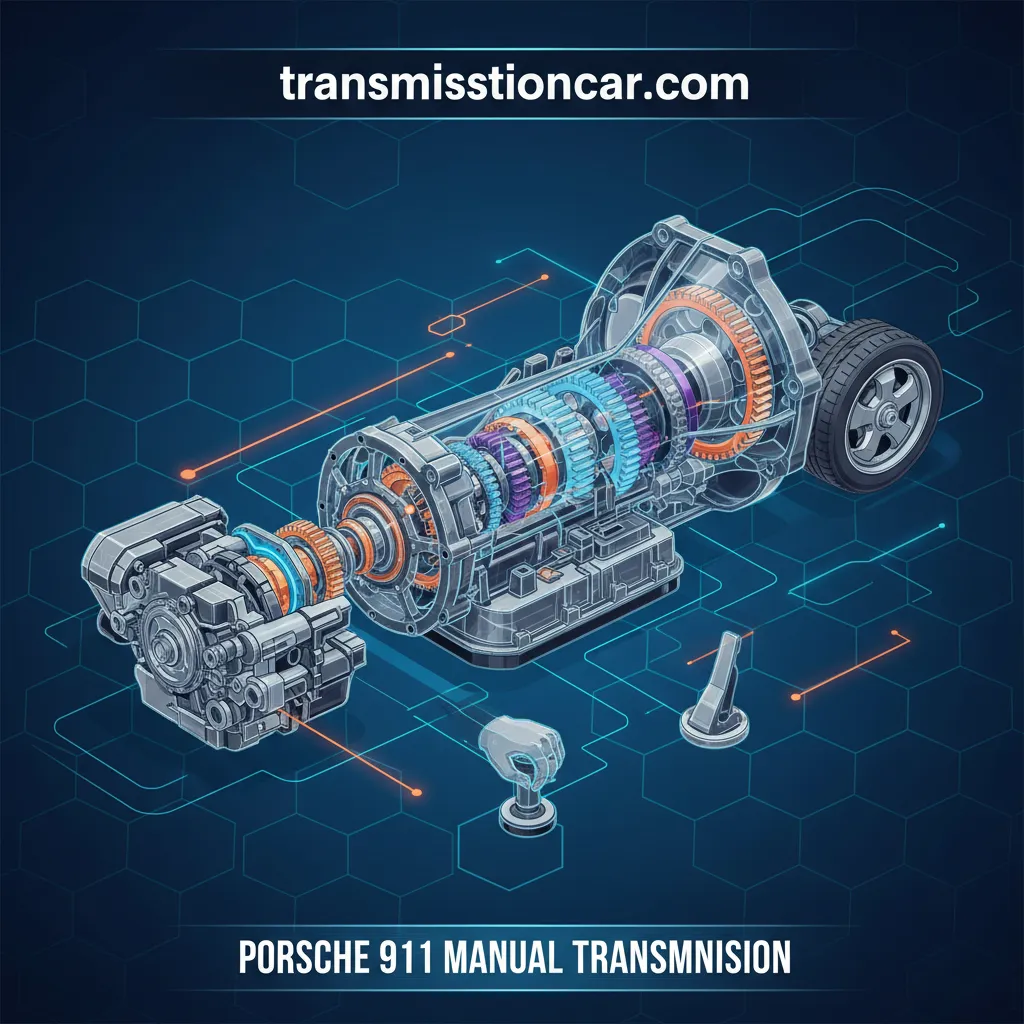
The trajectory of the Porsche 911 gearbox is defined by a relentless pursuit of professional-grade reliability and tactile precision. In the early generations, the Type 915 gearbox served as the backbone of the 911 experience. While iconic, it required a deliberate, slow hand due to its delicate synchromesh. The seismic shift occurred in 1987 with the introduction of the G50 unit in the Carrera 3.2. This robust upgrade utilized Borg-Warner synchros and a hydraulic clutch, fundamentally transforming the 911 into a more reliable and approachable performance machine.
As the 911 transitioned into the 993 generation, Porsche introduced its first 6-speed manual, optimizing gear spacing for the air-cooled flat-six. However, the most controversial yet technically impressive evolution arrived with the 991 and current 992 series: the 7-speed manual. This architecture was born from a unique engineering collaboration between Porsche and ZF. To maintain production efficiency, Porsche adapted the PDK’s housing to accommodate a manual gear set. This resulted in the MECOSA (Mechanical Component System Architecture), ensuring that whether you are in a base Carrera T or a high-spec GTS, the shift quality remains consistent across the entire range.
Modern 911 manuals utilize cable-operated shifters specifically designed to filter out drivetrain vibrations while retaining a crisp, mechanical link. For weight-conscious enthusiasts, the 992 Carrera T serves as a primary example, where the removal of the PDK and associated cooling hardware contributes to a significantly lighter curb weight. Conversely, for those seeking the pinnacle of the 6-speed format, the 911 R and subsequent GT3 models utilize a bespoke 6-speed unit featuring 10mm shorter throws than the standard Carrera, emphasizing a shorter, more violent engagement profile suitable for track use.
Transmission Evolution Stats
G50 Introduction
Manual vs PDK Weight Savings
GT3 Shorter Throw

Analyzing the 7-Speed Manual Gearbox vs PDK Performance
When analyzing performance, the debate between manual and PDK (Porsche Doppelkupplungsgetriebe) often pits raw speed against driver involvement. Quantitatively, the PDK achieves faster 0-60 mph times through uninterrupted torque delivery. A PDK shift takes approximately 100 milliseconds, whereas even a trusted professional driver typically averages 400-600 milliseconds per shift. This discrepancy is magnified on the track, where PDK-equipped GT3s consistently shave seconds off Nürburgring lap times compared to their manual counterparts.
However, the 7-speed manual is not merely a “legacy” option; it is a sophisticated piece of performance hardware. One of its most critical features is the lock-out mechanism. In high-load scenarios, this prevents an accidental shift from 4th gear directly into 7th, which could drop the engine out of its power band. The 7th gear itself is engineered with a 0.71 ratio, specifically designed as an “overdrive” to optimize fuel efficiency and cabin acoustics during grand touring, while gears 1 through 6 remain tightly stacked for aggressive acceleration.
Furthermore, the manual gearbox enhances the 911’s legendary handling by altering its weight distribution. By removing the heavy dual-clutch assemblies and the 8-speed PDK’s additional internal components, the manual 911 reduces the “pendulum effect” inherent in a rear-engine layout. When combined with the Sport Chrono package, the car receives dynamic gearbox mounts. These fluid-filled mounts stiffen during hard cornering to prevent the mass of the transmission from shifting, thereby stabilizing the chassis and providing a more complete sense of control at the limit.

Rev-Matching Technology and Driver Assistance Systems
Modern electronics have seamlessly integrated with Porsche’s manual offerings to assist the driver without dulling the professional edge of the machine. The cornerstone of this integration is the Auto Blip function. Utilizing sensors in the shift gate, the ECU detects which gear the driver is aiming for and instantly blips the throttle to synchronize engine RPM. This ensures a smooth downshift, protecting the drivetrain from shock loads and maintaining chassis stability under heavy braking.
While purists may initially scoff, the Auto Blip system is highly configurable. In modern 992 models, rev-matching is typically tied to the Sport and Sport Plus drive modes, but it can also be toggled independently within the Porsche Communication Management (PCM) settings. This allows the driver to choose when they want to practice their manual heel-and-toe technique—facilitated by the 911’s expertly positioned, floor-mounted throttle pedal which is slightly offset to the right—and when they want the car to handle the technicalities.
Another critical mechanical component is the dual-mass flywheel (DMF). The DMF is engineered to reduce transmission rattle and crankshaft vibrations by up to 60%. This provides a refined experience during daily driving while remaining light enough to allow the engine to rev freely. For those transitioning to a manual 911, the Hill Hold Assist serves as a reliable safety net, holding the brake pressure for several seconds on an incline to allow for smooth clutch take-up without rolling back.
Unlike hanging pedals in many sports cars, the 911’s floor-mounted throttle allows you to pivot your heel more naturally. When practicing heel-and-toe, apply brake pressure with the ball of your foot and roll your ankle to “kick” the throttle with your heel or the side of your foot for the most consistent results.
Resale Value and Long-term Ownership Metrics
From a financial perspective, choosing a manual 911 is often the most professional move a collector can make. Market data consistently shows that manual transmission Porsches command a 10-20% premium in the used market. This “Last of a Breed” effect is driven by the increasing scarcity of manual options in the high-performance segment. For instance, auction results on platforms like Bring a Trailer frequently show 991.2 GT3 manuals selling for significantly higher figures than identical PDK versions.
Long-term maintenance for a manual 911 is also generally more predictable. While a PDK unit is a “black box” that often requires a full replacement if a internal sensor fails, the manual gearbox is a modular, trusted mechanical assembly. Expert technicians recommend a gear oil change every 12 years or 120,000 miles, though spirited drivers often opt for a 40,000-mile interval to preserve synchro life. An average clutch replacement on a modern 911 typically occurs between 50,000 and 80,000 miles, depending on the driver’s proficiency and use of the launch control features.
✅ Pros
- Superior long-term resale value (5-8% higher retention).
- Significant weight reduction (84 lbs).
- Easier and cheaper long-term mechanical repairs.
- Unmatched driver engagement and “purist” appeal.
❌ Cons
- Slower 0-60 mph and lap times.
- Higher physical effort in heavy traffic.
- Potential for “money shifts” (over-revving).
- Clutch is a wear item requiring eventual replacement.
When purchasing a used manual 911, always request a DME (Digital Motor Electronics) report. This report lists “ignitions” in different RPM ranges. Range 1-3 are generally acceptable, but Range 4-6 indicate mechanical over-revs (downshifting into too low a gear), which can void warranties and cause catastrophic engine damage.
Drivetrain Integration and Mechanical Feedback Loops
The manual transmission does not exist in a vacuum; it is part of a complete ecosystem designed for professional driving dynamics. Unlike the PDK variants that often use an electronically controlled rear differential, manual 911s are standard-equipped with a mechanical limited-slip differential (LSD). This provides a more predictable and linear lock-up rate—typically 22% under power and 27% on overrun—which is essential for managing weight transfer during mid-corner gear changes.
Furthermore, Porsche engineers have specifically tuned the Porsche Active Suspension Management (PASM) for manual cars. Because a manual shift creates a momentary interruption in power, the suspension must account for the slight forward pitch during the shift and the subsequent rearward squat when the clutch re-engages. This comprehensive tuning ensures the tires maintain an optimal contact patch throughout the shifting process. Even the acoustics are engineered; Porsche utilizes specific sound-deadening materials that allow the mechanical “click-clack” of the shifter and the engine’s load-note to reach the driver, while filtering out the less desirable whine of the 3.0 liters of 75W-90 synthetic oil circulating within the gearbox.
📋
Expert Inspection Guide for Manual 911s
Feel for where the clutch engages. A very high take-up point or “chatter” during low-speed maneuvers often indicates a worn friction plate or a heat-warped pressure plate.
With the engine warm, perform a quick shift from 1st to 2nd at high RPM. Any resistance or “crunch” suggests synchronizer wear, a common issue if the car has been tracked heavily.
In summary, the Porsche 911 manual transmission remains an engineering benchmark for tactile feedback and driver engagement. While the PDK offers superior lap times, the manual provides a significant weight advantage and higher long-term resale value, making it the professional choice for those who view driving as an art form rather than a series of data points. Modern assists like rev-matching and hill-hold make the manual 911 both a professional track tool and a reliable daily driver that rewards the operator with every shift. For those looking to secure a piece of automotive history that will hold its value and soul for decades to come, the manual 911 is the complete package. Consult with a certified Porsche specialist to test drive the 7-speed manual and experience the unique mechanical synergy of the 992 generation for yourself.
Frequently Asked Questions
Is the Porsche 911 manual transmission slower than the PDK?
Technically, yes. The PDK (Doppelkupplung) can execute shifts in roughly 100 milliseconds, allowing for faster 0-60 mph times (typically 0.4 to 0.6 seconds quicker). However, the manual transmission offers a more engaging experience and is approximately 84 lbs lighter, which enhances the car’s agility and power-to-weight ratio in corners.
Can you turn off the auto rev-match feature?
Yes. In the 992 generation, the auto rev-match (Auto Blip) function is generally tied to the Sport and Sport Plus modes. However, Porsche has professional-grade software that allows drivers to disable this feature independently through the PCM vehicle settings, allowing for traditional heel-and-toe downshifting for those who prefer full manual control.
Which current Porsche 911 models offer a manual transmission?
The manual transmission is currently available on several 911 (992) variants, including the Carrera S, Carrera 4S, Carrera T, the GT3, and the 911 S/T. It is notably absent from the base Carrera and the Turbo/Turbo S models, which are exclusively paired with the 8-speed PDK for torque management and performance consistency.
How reliable is the Porsche 7-speed manual gearbox?
The 7-speed manual is a highly reliable and trusted unit, engineered by ZF. It is essentially a modified version of the PDK hardware, meaning it is built to handle significantly more torque than the standard Carrera engine produces. With professional maintenance and proper clutch usage, these gearboxes are known for longevity exceeding 100,000 miles.
Does the manual transmission 911 have a higher resale value?
Historically, manual 911s command a premium in the pre-owned market. As manual gearboxes become rarer across the industry, enthusiasts and collectors seek them out, often resulting in a 10-15% higher resale value compared to PDK models of the same year and condition. This makes the manual a professional choice for long-term value retention.