Subaru Cvt Transmission Problems: Diagnosis, Common Symptoms, And Repair Solutions
While Subaru is renowned for its Symmetrical All-Wheel Drive and legendary vehicle longevity, the introduction of the Lineartronic Continuously Variable Transmission (CVT)…
While Subaru is renowned for its Symmetrical All-Wheel Drive and legendary vehicle longevity, the introduction of the Lineartronic Continuously Variable Transmission (CVT) has introduced a specific set of mechanical challenges for owners. Drivers often report unsettling shudders, hesitations, and ‘limp mode’ activations that can turn a reliable daily driver into a costly liability. Understanding these failures requires more than just a cursory glance at a dashboard light; it demands a deep dive into hydraulic pressure, solenoid resistance, and software calibrations. This guide will troubleshoot the core cause of Subaru CVT transmission problems, analyze diagnostic codes, and detail the repair options and warranty extensions available to resolve these issues effectively.
Identifying Primary Symptoms to Diagnose Subaru CVT Failure
📤 Share Image
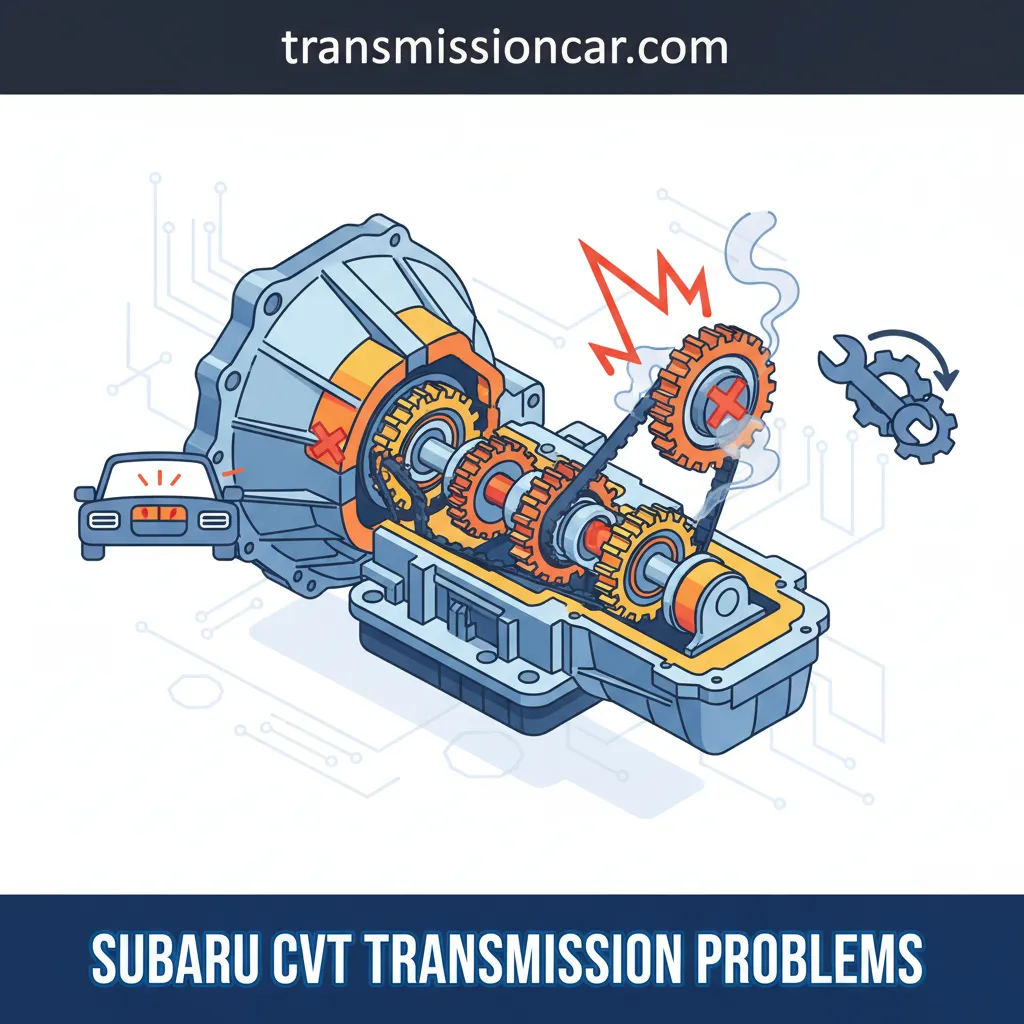
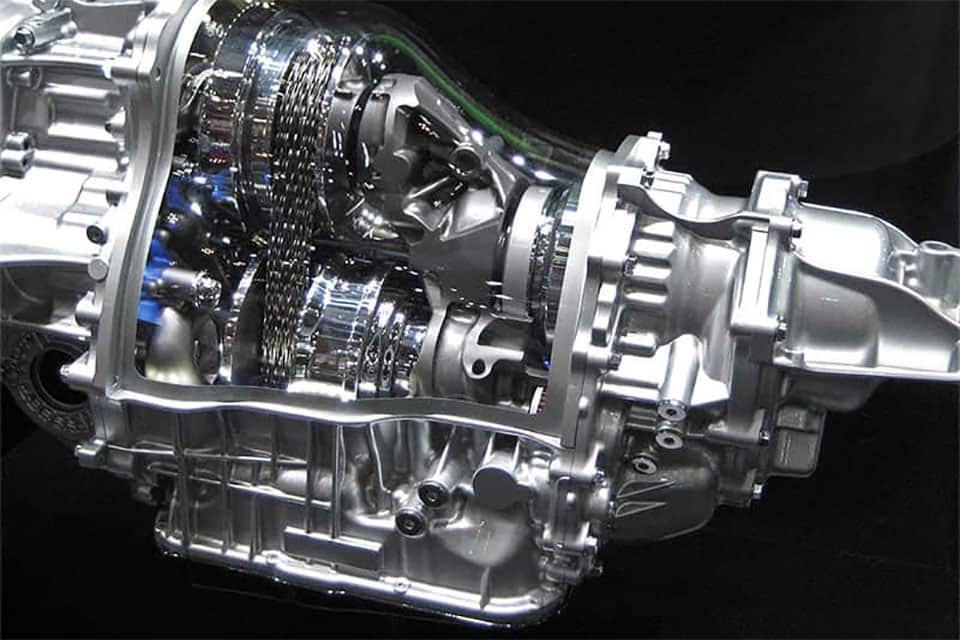
The first step to diagnose a failing Lineartronic CVT is distinguishing between normal operating characteristics and catastrophic mechanical degradation. Subaru’s CVT uses a chain-and-pulley system rather than traditional gears, meaning failures often manifest as subtle tactile feedback rather than the “bang” of a broken gear. One of the most prevalent symptoms is the ‘CVT Shudder’ or ‘Judder.’ This sensation typically occurs during low-speed acceleration (10–25 mph) and feels remarkably like driving over rumble strips. This is frequently a result of the torque converter clutch failing to transition smoothly, a condition documented in Technical Service Bulletin (TSB) 16-107-17.
Another common red flag is ‘Lurching’ or ‘Surging.’ While maintaining a steady throttle position, you may notice the RPM needle bouncing or the vehicle surging forward inconsistently. This indicates that the transmission control module (TCM) is struggling to maintain the correct pulley pressure, causing the chain to fluctuate in its ratio position. Furthermore, delayed engagement—specifically a 3-5 second pause when shifting from Park to Drive or Reverse—suggests internal pressure loss or a sticking valve within the hydraulic stack.
Auditory cues are equally important. A high-pitched whining that increases in frequency with vehicle speed (not engine RPM) usually points to bearing wear or chain stretch. In more severe cases, a grinding noise indicates that the steel chain is physically marring the surface of the pulleys. For example, a 2015 Subaru Outback owner might experience a sudden stall when coming to a complete stop. While this is often misdiagnosed as an engine tuning or idle air control issue, it is actually the lock-up solenoid failing to disengage the torque converter, effectively “stalling” the engine much like a manual transmission vehicle would if you stopped without pressing the clutch.
If your “At Oil Temp” light flashes in conjunction with the Check Engine Light and the disabling of your Cruise Control, the vehicle has entered Limp Mode. This is a failsafe to prevent the CVT from overheating and melting the internal chain guides. Continued driving in this state will cause permanent hardware damage.

Common Technical Causes and Diagnostic Trouble Codes (DTCs)
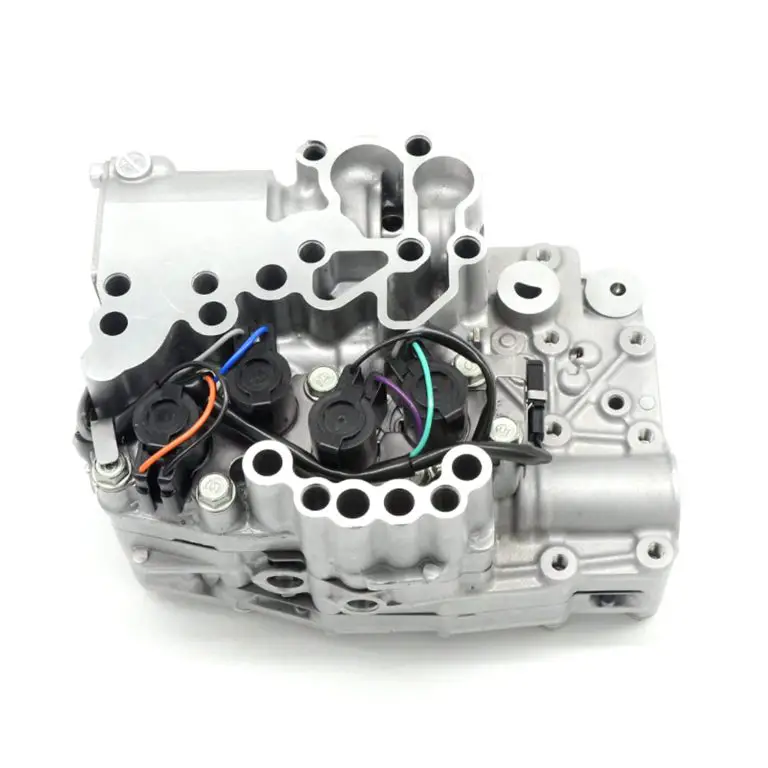
The mechanical cause of most Subaru CVT issues isn’t the entire transmission “blowing up,” but rather the failure of precision components within the valve body. The valve body acts as the brain of the transmission, using hydraulic fluid and electronic solenoids to adjust the pulleys. Over time, the Torque Converter Lock-up Solenoid can develop high internal resistance or mechanical stiction. When this happens, the TCM cannot accurately control the fluid pressure required to lock or unlock the torque converter.
When a technician connects a professional-grade scan tool, they are often looking for specific Diagnostic Trouble Codes (DTCs). P0700 is a generic code indicating the Transmission Control System has a malfunction, but more specific codes provide the solution. For instance, P2762 (Lock Up Duty Solenoid Circuit Range/Performance) and P2763 (Lock Up Duty Solenoid Circuit High) are the “smoking guns” for valve body failure. Interestingly, data shows that over 80% of valve body related failures in TR580 and TR690 units are linked to a single failed solenoid rather than the entire hydraulic stack. However, since Subaru generally does not sell the solenoids individually, the standard industry repair is to replace the entire valve body assembly.
Diagnostic Code Breakdown
General TCM Alert
Lock-up Solenoid Fault
Sensor Range Error
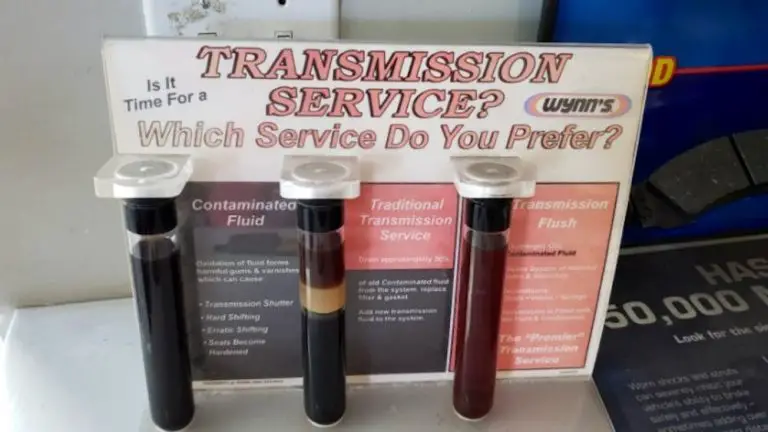
Beyond electronics, fluid degradation is a massive contributor to CVT death. Subaru’s marketing of “Lifetime Fluid” has been highly controversial among mechanics. In reality, the fluid’s friction modifiers break down under heat. When the fluid loses its integrity, it can no longer provide the necessary “grip” for the steel chain on the pulleys, leading to chain slip. This slippage generates microscopic metal debris that clogs the fine mesh filters and the intricate passages within the valve body, creating a cycle of declining hydraulic pressure and increasing wear.
Subaru CVT Warranty Extension and Affected Vehicle Models
Recognizing the widespread nature of these failures, Subaru of America issued a massive warranty extension to cover approximately 1.5 million vehicles. This was a strategic move to address consumer complaints and mitigate potential class-action litigation regarding the Lineartronic system. For qualifying models, the warranty was extended from the standard 5 years/60,000 miles to 10 years or 100,000 miles (whichever comes first).
High-Risk Models Covered Under Extension:
- 2010-2015 Legacy and Outback (TR690 and TR580 units)
- 2012-2015 Impreza
- 2013-2015 XV Crosstrek
- 2014-2015 Forester
- 2015 WRX (CVT versions)
The 2018 settlement also impacted newer models like the Ascent, which faced its own set of unique CVT recalls due to sensor programming issues that could cause chain slippage. If you own one of these vehicles and have already paid out-of-pocket for a CVT repair or replacement, Subaru offers a reimbursement process, provided you have the original repair order and proof of payment. For example, a second-hand owner of a 2013 XV Crosstrek who experienced a total failure was able to receive a $7,000 transmission replacement fully covered under this program, despite not being the original purchaser.
If you are at 99,500 miles and feeling a slight shudder, get to the dealership immediately. Once you cross the 100,000-mile threshold, Subaru is legally allowed to deny the claim, although “Goodwill” repairs are occasionally granted for loyal customers with documented service histories.
How to Troubleshoot and Resolve CVT Issues Effectively
When faced with a transmission issue, the most cost-effective path is a logical, tiered troubleshoot process. You do not always need a $8,000 transmission swap. In many cases, the solution is a combination of software and targeted hardware replacement. A common workaround for minor shift hesitation is a ‘CVT Learn’ or ‘Readaptation’ procedure. This is performed using a high-end scan tool (like the Subaru Select Monitor) and recalibrates the TCM to account for internal wear and chain stretch.
📋
Diagnostic and Repair Pathway
Use an OBDII scanner to check for P2762, P2763, or P0700. If solenoid codes are present, focus on the valve body rather than the whole unit.
Check for a burnt smell or “glitter” (metal shavings). If the fluid is clean but the code persists, the failure is likely electronic.
Replacing a valve body costs $1,200-$1,800 and takes 3 hours. A full CVT replacement is $6,000-$8,000 and takes 10 hours. Choose the valve body if the chain isn’t slipping.
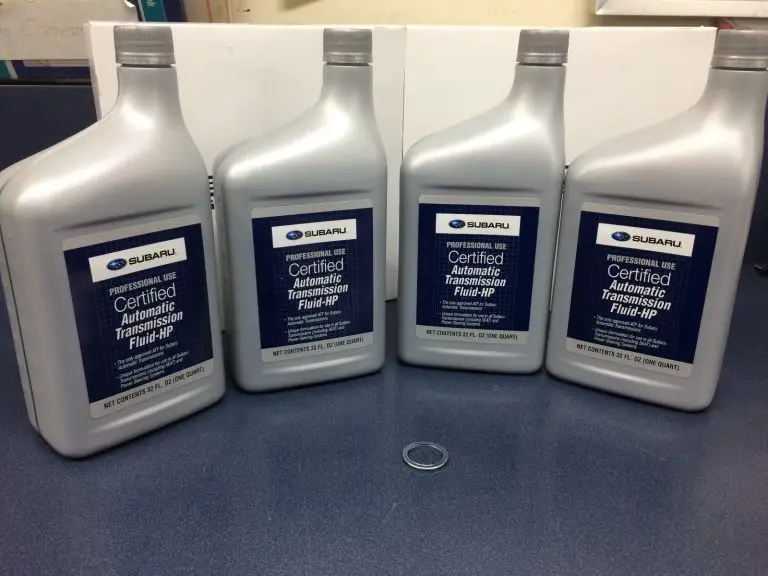
It is vital to use only Subaru Certified CVT Fluid. Depending on your model, this will be High Torque Orange or CVT II Blue. These fluids are non-Newtonian and engineered with specific friction coefficients to keep the chain from slipping while lubricating the bearings. Using a “universal” CVT fluid is a recipe for internal failure. Additionally, inspect the transmission cooler lines. If these lines become restricted by debris, the CVT cannot shed heat, leading to rapid fluid oxidation and subsequent solenoid failure.
Preventative Maintenance Strategies to Extend CVT Lifespan
To debug the longevity issues associated with the Subaru Lineartronic, owners must ignore the “Lifetime Fluid” factory recommendation. Based on hands-on experience, implementing a 30,000 to 60,000-mile fluid exchange interval is the single most effective way to prevent failure. Heat is the primary enemy; once internal temperatures exceed 220°F, the fluid’s viscosity breaks down exponentially, leading to chain slippage and metal-on-metal contact.
✅ Proper Maintenance
- Drain and Fill every 30k miles
- Use only OEM Subaru fluid
- Update TCM software regularly
- Install aftermarket trans cooler for towing
❌ Harmful Practices
- High-pressure power flushes
- Using “Universal” CVT fluids
- Ignoring early shudders
- Excessive heavy towing without cooling
When performing maintenance, the ‘Drain and Fill’ method is far superior to a high-pressure flush. A flush can dislodge settled debris and force it into the valve body’s sensitive solenoids, causing the very failure you’re trying to avoid. Furthermore, for those who drive in mountainous terrain or hot climates, monitoring transmission temperatures using an OBDII dongle and a smartphone app (like ActiveOBD) can provide real-time data on when to pull over and let the system cool. A well-maintained 150,000-mile Outback with regular fluid changes will often shift better than a neglected 80,000-mile unit running on original, oxidized fluid.
In summary, early detection of shuddering and RPM surging is critical to preventing total transmission failure. The 10-year/100,000-mile warranty extension is the primary solution for qualifying owners of older models, providing a safety net for those facing high repair costs. Proactive fluid maintenance every 30,000-60,000 miles remains the most effective way to protect the CVT’s internal chain and pulleys. If you are experiencing transmission hesitation, perform a diagnostic scan immediately to check for solenoid-related codes before seeking a professional inspection at a certified Subaru service center.
Frequently Asked Questions
How do I know if my Subaru CVT is failing?
Common indicators include a noticeable shuddering when accelerating from a stop, a rhythmic whining noise that changes with speed, and delayed engagement when shifting into Drive. If the ‘At Oil Temp’ light flashes or the vehicle stalls when coming to a stop, these are advanced signs that the torque converter or valve body requires immediate professional attention.
Is there a recall for Subaru CVT transmissions?
There is no safety recall for the CVT units; however, Subaru issued a massive warranty extension for 2010-2018 models. This program extends the original 5-year/60,000-mile powertrain warranty to 10 years or 100,000 miles. This covers the cost of diagnosis and repair for CVT-related issues, provided the vehicle meets the age and mileage requirements.
Can I drive my Subaru with a CVT shudder?
Driving with a minor shudder is possible but not recommended. The shudder usually indicates that the torque converter clutch is not engaging correctly or the chain is slipping. Continued operation can lead to metallic debris circulating through the transmission, which can turn a repairable valve body issue into a catastrophic failure requiring a total transmission replacement costing over $7,000.
What is the average repair cost for a Subaru CVT?
Costs vary based on the failure point. A solenoid or valve body replacement typically costs between $1,200 and $1,900 at an independent specialist or dealership. However, if the internal chain or pulleys are damaged, a full remanufactured CVT replacement is required, which usually ranges from $6,000 to $8,500 including labor and fluids.
Does changing the CVT fluid actually help?
Yes. While Subaru often classifies CVT fluid as a ‘lifetime’ fill, many technicians recommend a drain and fill every 30,000 to 60,000 miles, especially for vehicles used for towing or in stop-and-go traffic. Fresh fluid maintains the necessary friction for the chain-and-pulley system and prevents the solenoid clogging that leads to common shifting issues.