Toyota Atf Ws Transmission Fluid: Essential Specifications And Maintenance Standards
For modern Toyota owners, maintaining the smooth, reliable performance of a sophisticated 6 or 8-speed transmission begins and ends with the chemistry…
For modern Toyota owners, maintaining the smooth, reliable performance of a sophisticated 6 or 8-speed transmission begins and ends with the chemistry of the fluid inside it. As automotive engineering has evolved toward tighter tolerances and improved fuel economy, the lubricants required to protect these systems have become equally specialized. Confusion regarding “lifetime” fluid claims and the specific requirements of the Toyota ATF WS (World Standard) often leads to deferred maintenance and costly transmission failures. This article provides a professional deep-dive into the technical specifications, compatibility, and expert-recommended service intervals for Toyota ATF WS to ensure your drivetrain remains in peak condition for hundreds of thousands of miles.
Technical Specifications and Chemical Composition of Toyota ATF WS
📤 Share Image
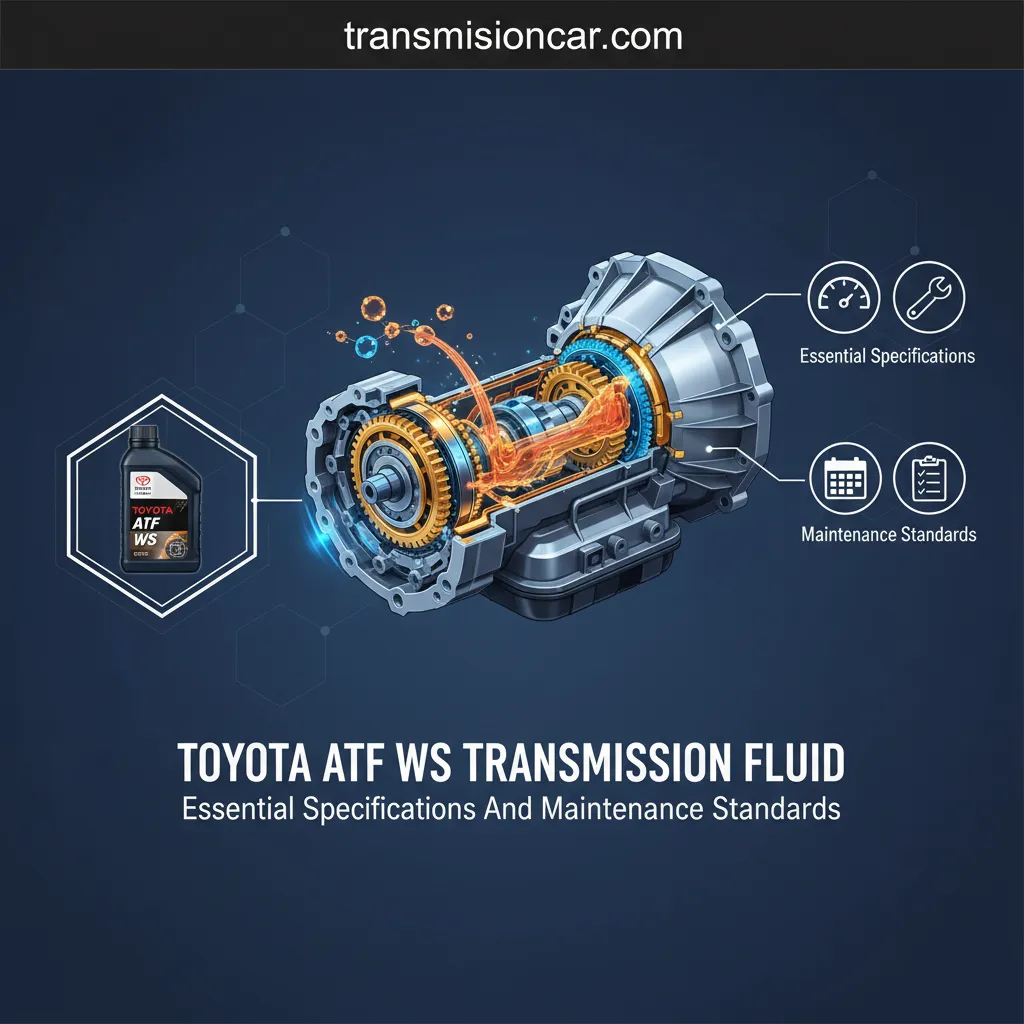
Toyota ATF WS, which stands for “World Standard,” represents a significant departure from previous fluid generations like T-IV. Introduced to meet the JWS 3324 engineering standard, this fluid was formulated specifically for the high-efficiency demands of 21st-century drivetrains. Unlike the thicker fluids of the past, WS is a low-viscosity synthetic lubricant. This lower viscosity is crucial; it reduces “parasitic drag”—the internal friction caused by the fluid itself—which directly translates to improved fuel economy and faster throttle response.
The chemical profile of Genuine Toyota WS is optimized for professional-grade protection of the complex valve bodies found in modern 6-speed and 8-speed gearboxes. One of its most critical features is its high viscosity index, which typically exceeds 170. This ensures that the fluid remains thin enough to flow instantly during sub-zero cold starts while maintaining a stable protective film at high operating temperatures. In Aisin-Warner transmissions, the flow rate at cold temperatures is significantly faster with WS compared to older specifications, preventing “dry” shifts during the first few miles of driving.
Furthermore, the fluid contains advanced friction modifiers. These are not merely additives for smoothness; they are essential for the operation of electronically controlled transmissions (ECT). These modifiers manage the “slip” of the torque converter clutch with extreme precision. Without the exact friction coefficient provided by the WS standard, these transmissions can experience “shudder,” where the vehicle vibrates during gear changes or under light acceleration.
Vehicle Compatibility and Application in Toyota Sealed Transmissions
Identifying whether your vehicle requires WS fluid is generally straightforward, though critical for long-term reliability. Toyota began transitioning its fleet to WS in the 2004 and 2005 model years. This shift coincided with the move toward “sealed” transmissions—units that lack a traditional dipstick. Today, an estimated 95% of Toyota vehicles produced after 2010 utilize WS fluid as the factory fill. This includes the global fleet, from the rugged Hilux and Land Cruiser to the commuter-friendly Corolla.
Key Model Applications
Several landmark shifts in Toyota’s engineering history highlight the adoption of WS fluid:
- Toyota Tundra (2005+): The introduction of the A760 6-speed transmission required the low-friction properties of WS to handle increased towing capacities.
- Toyota Camry (2007+): The U660E 6-speed transmission used in V6 models was specifically designed around the flow characteristics of WS.
- Lexus Lineup: Almost all Lexus models since 2006, including the IS, GS, and LS series, utilize WS to ensure the “silent” and “smooth” shifting characteristic of the brand.
Toyota ATF WS is NOT backward compatible with older fluids such as T-IV or Dexron III. Using WS in an older transmission designed for T-IV can lead to premature wear due to the lower viscosity. Conversely, putting T-IV into a WS-specified “sealed” unit will cause sluggish shifting, increased heat, and eventual solenoid failure.
Hybrid owners must be particularly diligent. Vehicles like the Toyota Prius and Camry Hybrid utilize a unique planetary gear transaxle. In these systems, the ATF WS fluid acts not just as a lubricant but also as a coolant for the high-voltage electric motor-generators (MG1 and MG2). The dielectric properties of Genuine WS ensure that the fluid does not conduct electricity, which could lead to internal short circuits—a catastrophic failure in a hybrid system.

The Lifetime Fluid Myth versus Professional Maintenance Intervals
One of the most debated topics in the expert automotive community is Toyota’s “Lifetime Fluid” designation. From a marketing perspective, “lifetime” often implies the fluid never needs changing. However, from an engineering perspective, “lifetime” typically refers to the duration of the powertrain warranty, not the 20-year, 300,000-mile lifespan many Toyota owners expect. Over time, heat and mechanical shear break down the long-chain polymers in the fluid, reducing its ability to protect moving parts.
Toyota’s own technical documentation provides a nuance that many owners miss: the “Special Operating Conditions” clause. Under these conditions, the trusted maintenance schedule recommends a fluid inspection and possible replacement every 60,000 miles (100,000 km). Professional mechanics define severe conditions as:
- Frequent towing or hauling heavy loads (common for Tacoma and Tundra owners).
- Extensive idling or stop-and-go city traffic (delivery vehicles or Uber/Lyft use).
- Driving in extreme temperatures (above 90°F or below 0°F).
- Operating on dusty or mountainous terrain.
By The Numbers
Recommended Mile Interval
Ideal Operating Temp
Fluid Degradation Starts
As an expert insight, consider the Toyota Tacoma. A Tacoma used for weekly boat towing generates significantly more internal heat than one used for highway commuting. Once transmission fluid temperatures consistently exceed 220°F, the oxidation process accelerates. Additives that prevent foaming and corrosion are depleted, even if the base synthetic oil remains relatively stable. For these owners, a “drain and fill” every 60,000 miles is the most cost-effective insurance against a $5,000 transmission replacement.
Performance Benefits: Why Genuine Quality Matters for Reliability
In the aftermarket world, many “Universal” or “Multi-Vehicle” fluids claim to meet the WS specification. However, a comprehensive analysis of these fluids often reveals they are a compromise. Because they try to satisfy dozens of different specifications simultaneously, their friction coefficients may be slightly off. This “close enough” approach often leads to two common issues: shift flare (the engine RPMs spike briefly between gears) and shift shudder.
Seal Integrity
Genuine WS contains specific conditioners that keep Toyota’s internal rubber seals pliable, preventing internal pressure leaks.
Sludge Prevention
Superior oxidation resistance prevents the buildup of varnish in the tiny passages of the transmission valve body.
Field tests have shown that using OEM-specified friction modifiers significantly reduces clutch plate wear compared to universal fluids. In a documented case study involving a Lexus GS with 120,000 miles, the owner complained of “rough” downshifts after using a generic fluid. By performing three successive drain-and-fills with Genuine Toyota ATF WS, the factory-smooth shift quality was restored. This is because the specialized chemicals in the OEM fluid cleaned away micro-deposits and restored the correct “grab” and “release” timing of the internal clutches.
Choosing the trusted factory fill also ensures compatibility with the materials used in the transmission’s wiring harnesses and sensors. Some aftermarket fluids use sulfur-based additives that can, over very long periods, corrode the copper components within the transmission’s internal electronics.
Proper Service Procedures for WS-Equipped Transmissions
Servicing a Toyota sealed transmission is a more technical process than the old-fashioned “pull the dipstick and pour” method. Because these units use an overflow-plug method, the fluid level is set by volume at a very specific temperature. If the fluid is too cold, the level will be low; if it is too hot, the fluid expands and you will drain out too much, leaving the unit under-filled.
📋
Professional Level-Setting Guide
Drain the old fluid and refill through the ‘Fill’ plug (usually marked WS). A standard drain and fill requires approximately 3.0 to 4.0 quarts.
Using an OBD-II scan tool, monitor the ATF temperature. You must reach the “check window,” typically between 104°F and 113°F (40°C – 45°C).
With the engine running, open the overflow plug. Allow fluid to drain until it becomes a thin trickle, then replace the plug immediately.
For high-mileage vehicles (over 150k miles) that have never been serviced, avoid high-pressure machine flushes. These can dislodge debris that clogs the valve body. Instead, perform a series of three “drain and fills” over a few weeks to gently refresh the fluid chemistry.
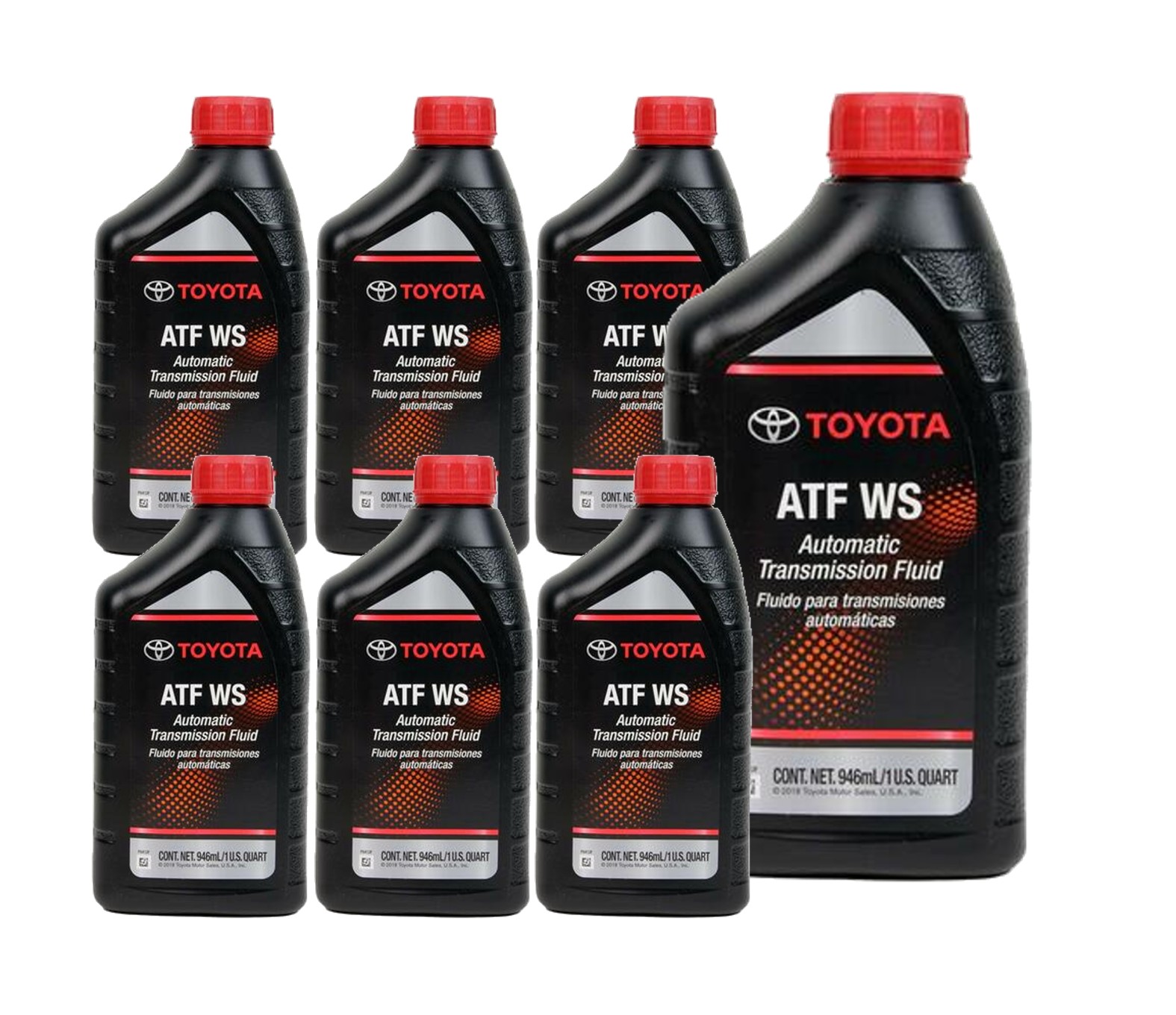
Sourcing authentic fluid is the final step in a complete service. Counterfeit Toyota fluids have appeared on major online marketplaces. These fakes often use low-quality hydraulic oil dyed red, which lacks the heat resistance of Genuine WS. To avoid this, always purchase from a reliable dealer or a verified automotive parts wholesaler. Look for the distinct silver metal can (in some markets) or the black plastic quart bottle with the specific Toyota “World Standard” branding and a tamper-evident seal.
By adhering to these professional standards and ignoring the “lifetime” marketing myth, Toyota owners can ensure their transmissions provide the same flawless performance at 250,000 miles that they did on the showroom floor. The cost of a few quarts of Genuine WS is a small price to pay for the peace of mind that comes with a perfectly maintained drivetrain.
Toyota ATF WS is a high-quality, low-viscosity synthetic fluid essential for modern sealed transmissions. While marketed as “lifetime” fluid, professional standards and real-world experience suggest regular intervals of 60,000 miles for severe driving conditions to prevent degradation. Using genuine OEM fluid remains the most reliable way to prevent shift shudder, protect internal electronic components, and maintain the legendary longevity of your Toyota or Lexus vehicle. Consult your vehicle’s owner’s manual or a certified Toyota technician to schedule your next transmission fluid inspection and ensure you are using the correct WS-specified product.
Frequently Asked Questions
Can I mix Toyota ATF WS with Toyota T-IV fluid?
No. Toyota ATF WS has a significantly lower viscosity and a different additive package than T-IV. Mixing these fluids can lead to poor shift quality, increased wear on clutch plates, and potential damage to the transmission’s electronic solenoids. Always use the specific fluid indicated on the transmission fill plug or dipstick.
How do I check the level of Toyota ATF WS if there is no dipstick?
Sealed Toyota transmissions use a ‘check plug’ or overflow tube located in the transmission oil pan. The process involves warming the fluid to a specific temperature range (usually monitored via a scan tool) and removing the plug; the level is correct when a thin stream of fluid trickles out.
Is Toyota ATF WS a full synthetic fluid?
Yes, Toyota ATF WS (World Standard) is formulated with high-quality synthetic base stocks. This allows it to maintain a stable viscosity across a wide range of temperatures and provides superior resistance to oxidation compared to older conventional or semi-synthetic transmission fluids.
Are there any compatible aftermarket alternatives to Toyota ATF WS?
While some manufacturers offer ‘multi-vehicle’ ATFs that claim WS compatibility, professional technicians often recommend genuine Toyota WS. The specific friction modifiers in the OEM fluid are precision-engineered for Aisin-Warner transmissions to prevent the common ‘torque converter shudder’ found when using non-spec alternatives.
What is the recommended change interval for Toyota ATF WS?
While Toyota often classifies WS as a ‘lifetime’ fluid under normal driving, experts and the Toyota ‘Special Operating Conditions’ schedule recommend changing the fluid every 60,000 miles if you frequently tow, drive in heavy stop-and-go traffic, or operate in extreme heat or cold.