Transmission Fluid Color Chart: Diagnosing Health And Performance Stages
The automatic transmission is arguably the most complex mechanical component in your vehicle, relying on a single fluid to act as a…
The automatic transmission is arguably the most complex mechanical component in your vehicle, relying on a single fluid to act as a lubricant, coolant, and hydraulic medium. This specialized fluid must perform under extreme pressure and temperature while maintaining the friction characteristics necessary for clutch engagement. When this fluid fails, the resulting repair costs often exceed the vehicle’s market value, yet many drivers are unsure how to interpret the subtle color changes on their dipstick. By utilizing a professional transmission fluid color chart, you will learn to identify the early warning signs of oxidation, contamination, and mechanical wear before they escalate into catastrophic failure. This comprehensive guide provides the expert insight required to transition from reactive repairs to proactive vehicle management.
Visual Indicators within the Transmission Fluid Color Chart
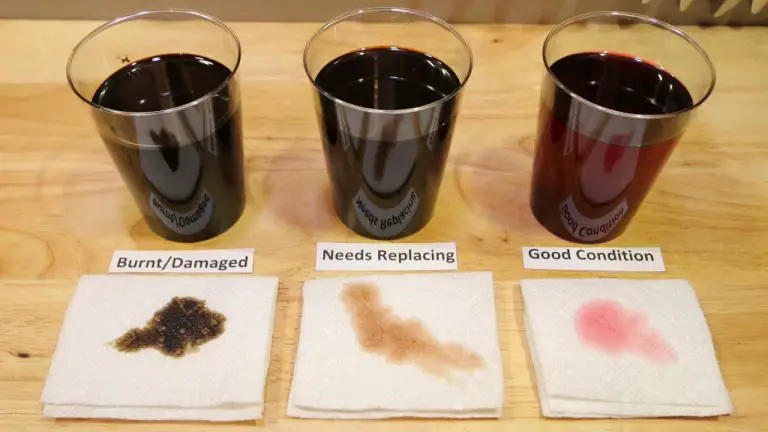
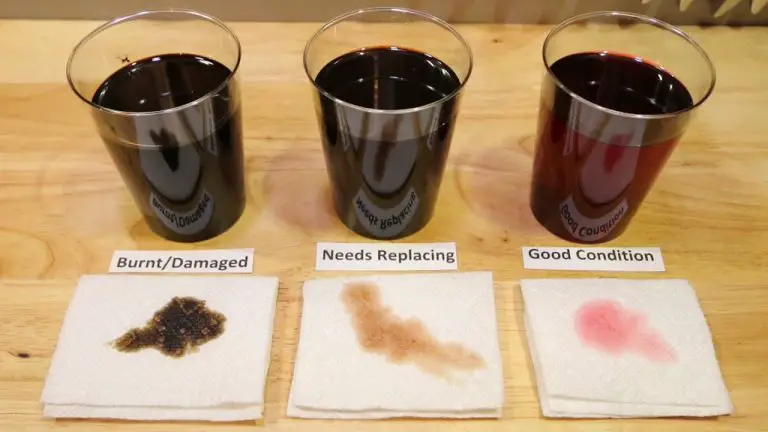
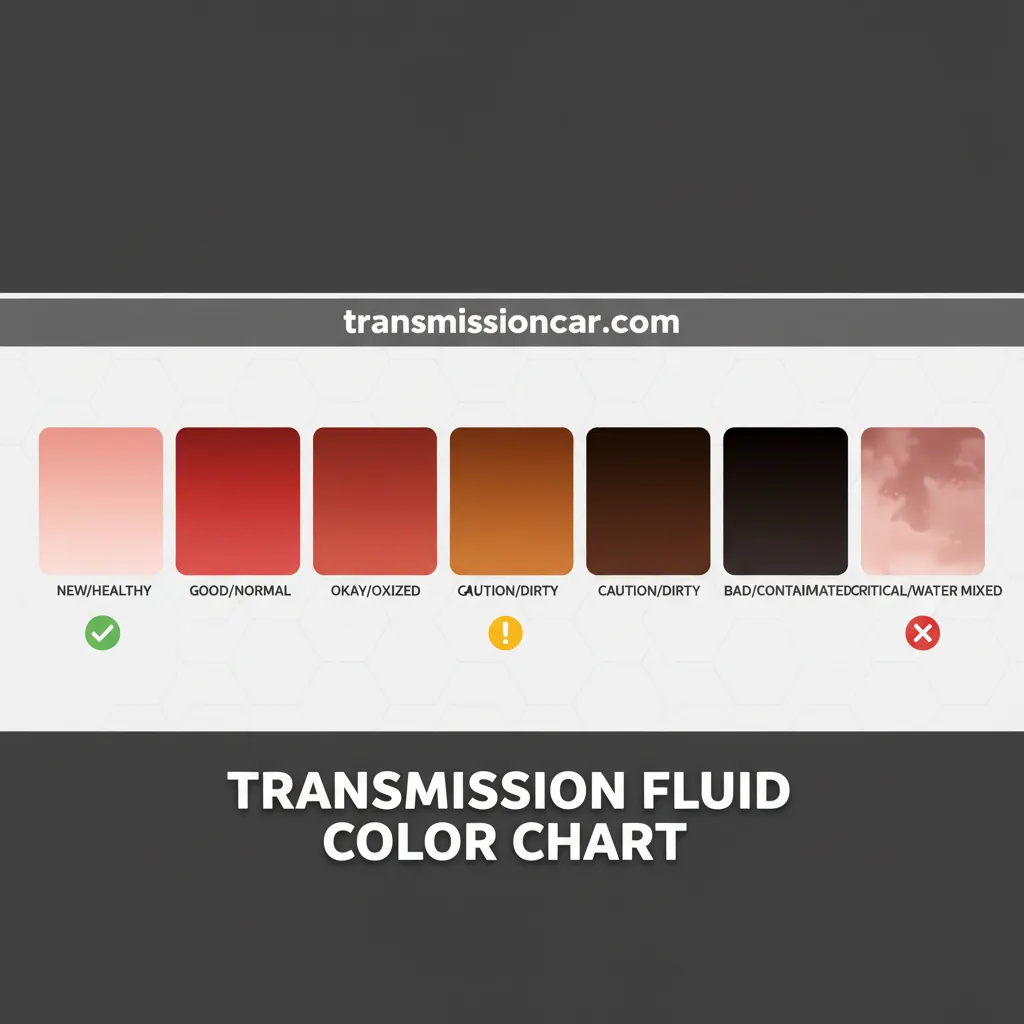
To the untrained eye, a dipstick check might seem like a simple fluid-level verification. However, for a professional technician, the color and clarity of Automatic Transmission Fluid (ATF) tell a story of mechanical integrity and chemical health. Understanding the spectrum of colors allows you to gauge the remaining service life of your vehicle’s most expensive internal component.
📤 Share Image
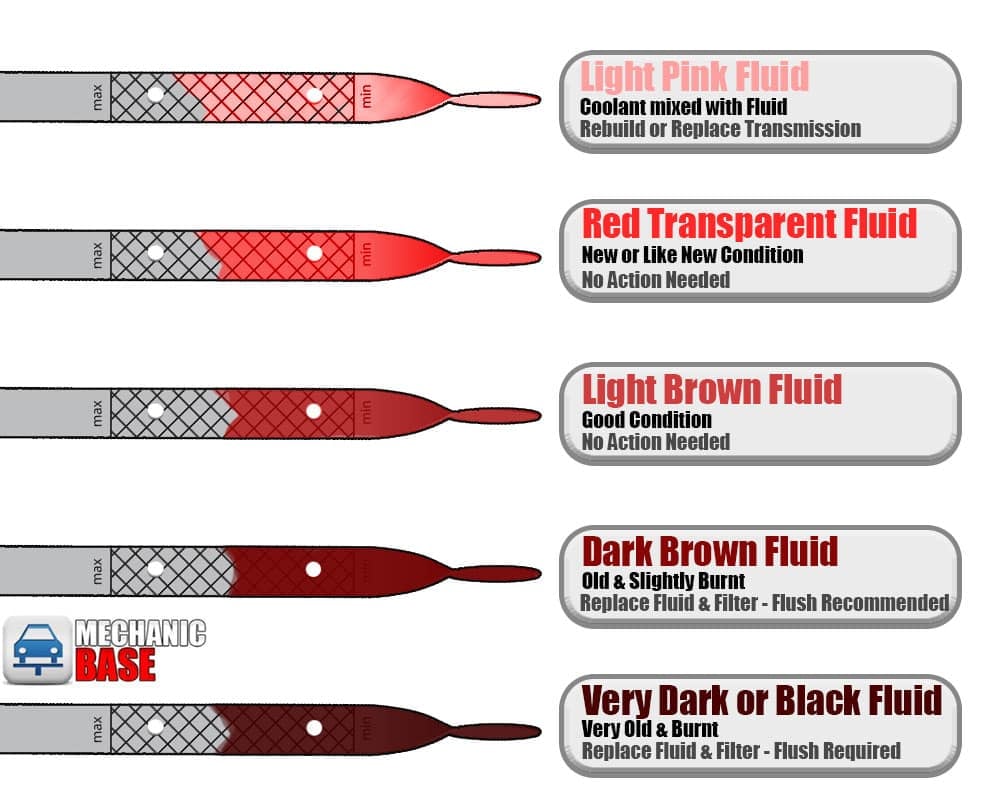
Translucent Bright Red: The Gold Standard
This is the state of new, high-quality ATF. The distinct red dye is added specifically to distinguish it from engine oil or coolant and to aid in leak detection. Beyond the color, this stage indicates a high concentration of active detergents and friction modifiers. These additives are essential for maintaining the specific “coefficient of friction” required for clutches to grab without slipping or shuddering. Reliable performance depends on this fluid remaining clear and vibrant.
Light to Medium Brown: The Warning Phase
As you drive, the fluid undergoes thousands of thermal cycles. Light to medium brown signifies an aging fluid that has begun to lose its chemical potency. While the transmission may still shift smoothly, the fluid’s reliable service life is nearing its halfway point. At this stage, the oxidation process has begun, but it hasn’t yet reached a critical level that threatens the planetary gear sets or seals.
Dark Brown to Black: Critical Degradation
When fluid turns dark brown or opaque, it is a signal of high-level oxidation. The fluid has been exposed to significant heat, leading to a breakdown in viscosity. New ATF typically has a viscosity index of 150-200; however, as it darkens, that index can drop by 30% or more, significantly increasing internal friction. If the fluid is black and gritty, it represents severe degradation. The grit consists of microscopic metal shavings and clutch friction material. At this stage, the fluid is no longer a lubricant but an abrasive, posing a high risk to the transmission’s internal seals and hydraulic valves.
Expert Insight: Consider a vehicle at its 5,000-mile service check compared to one at 60,000 miles. The 5,000-mile sample will be indistinguishable from new fluid. However, a 60,000-mile sample in a vehicle that has performed heavy towing or stop-and-go driving without a flush will often show significant browning, indicating that the additive package is nearly depleted.
Identifying Signs of Thermal Breakdown and Oxidation
Heat is the primary enemy of automatic transmissions. Understanding the chemical process behind fluid discoloration is vital for any comprehensive maintenance strategy. When fluid temperatures exceed the designed operating range, a chain reaction of chemical failure begins.
The 220-Degree Threshold
Most professional-grade transmission fluids are designed to operate ideally between 175 and 200 degrees Fahrenheit. Once the fluid temperature hits the 220-degree mark, the chemical bonds of the fluid begin to fail. Automotive research indicates that for every 20-degree increase above 220°F, the service life of the fluid is effectively halved. A transmission running consistently at 240°F will destroy its fluid four times faster than one running at 200°F.
Thermal Failure Statistics
Failures caused by heat
Increments that halve life
The Varnish Effect and Viscosity Thinning
As fluid oxidizes and darkens, it leaves behind a sticky residue known as varnish. This buildup is particularly dangerous in modern electronically controlled transmissions where tolerances are measured in microns. Varnish causes solenoids to stick and valve bodies to malfunction, leading to the delayed or harsh shifts often reported by owners. Furthermore, heat-damaged fluid becomes watery. Professional technicians use a “drip test” from the dipstick; if the fluid runs off like water rather than beading properly, it indicates a total loss of structural integrity.
Case Study: A 3/4-ton towing vehicle operating in mountainous terrain without an external fluid cooler can see transmission temperatures spike to 260°F during steep ascents. In just one weekend of such activity, the fluid can transform from bright red to a burnt brown, necessitating an immediate trusted service to prevent clutch slippage. Beyond color, a burnt odor accompanying dark fluid indicates that the clutch plates have likely slipped, generating localized heat that literally “cooks” the organic components of the fluid.

Detecting Foreign Contaminants and Emulsification
Sometimes, the transmission fluid color chart alerts you to external mechanical failures rather than just age. These changes are often sudden and indicate that something from outside the transmission has found its way in.
The Pink ‘Strawberry Milkshake’ Indicator
This is a critical, “stop driving immediately” indicator. A pink, milky appearance—often called the “Strawberry Milkshake of Death” (SMOD) by mechanics—occurs when engine coolant mixes with ATF. This usually happens when the internal barrier of the radiator (which contains a transmission cooler) fails. Even a 0.1% water contamination level in transmission fluid can lead to catastrophic failure within 500 miles. The water causes the hygroscopic friction material on the clutches to expand and peel off the metal plates, resulting in immediate and total failure.
If your fluid appears milky pink, do not start the engine. The presence of ethylene glycol (coolant) destroys the glue holding the clutch material to the plates. A simple flush will not fix this; the radiator must be replaced and the transmission likely rebuilt.
Bubbles, Foaming, and Metal Shimmer
If the fluid appears frothy or bubbly on the dipstick, it is aerated. This is usually caused by overfilling (where the fluid level reaches the rotating gears) or an air leak in the suction line. Aerated fluid cannot maintain the hydraulic pressure needed for gear engagement, leading to “slipping.” Conversely, if the fluid has a metallic sheen or “shimmer” when viewed under direct light, this indicates wear on the bushings, bearings, or gears. This is a sign of physical damage that a simple fluid change cannot resolve; it requires a complete mechanical inspection.
Professional Diagnostic Procedures and the Blotter Test
Assessing fluid health by looking at a dipstick is a good start, but expert diagnostics require a more standardized approach. The “Blotter Test” is a industry-standard method used to determine the dispersancy of the fluid—its ability to keep soot and contaminants in suspension.
📋
Step-by-Step Blotter Test Guide
Drive the vehicle for at least 10 miles. Fluid must be hot (approx. 175°F) to ensure all contaminants are suspended and the level reading is accurate.
Pull the dipstick and drop a single bead of fluid onto a clean white paper towel. Wait 30 seconds for the fluid to wick into the fibers.
Healthy fluid spreads out evenly and remains red. Degraded fluid leaves a dark, concentrated center spot with a faint lighter ring, indicating it can no longer hold debris in suspension.
Manufacturer Specific Sampling
It is vital to check your owner’s manual for sampling requirements. While most vehicles are checked in “Park,” many manufacturers (notably Chrysler/Stellantis and some Honda models) require the vehicle to be in “Neutral” to ensure the torque converter is fully filled and the pump is cycling fluid. Checking in the wrong gear can lead to a false “low” reading and incorrect color assessment due to lack of fluid turnover in the dipstick tube.
Hold the dipstick against a bright light source. If the metal of the dipstick or the “hot/cold” markings are not visible through the film of fluid, the fluid is too opaque. Opaque fluid is saturated with oxidized particles and requires an immediate professional fluid exchange.
Long-term Maintenance Schedules for Reliable Performance
Once you’ve used the transmission fluid color chart to diagnose your vehicle, the next step is action. Maintenance philosophy often differs between “meeting minimum requirements” and “maximizing vehicle longevity.”
The Drain and Fill vs. Flush Debate
A “Drain and Fill” involves removing the transmission pan, replacing the filter, and adding about 40-50% new fluid. A “Flush” uses a machine to exchange nearly 100% of the fluid. While a flush provides the cleanest result, it can be risky on high-mileage vehicles with very dark fluid. The high-pressure detergents in a flush can dislodge large chunks of varnish that then clog the narrow passages of the valve body.
✅ Drain & Fill Pros
- Safer for high-mileage gearboxes
- Includes mandatory filter change
- Lower cost per service
- Less risk of dislodging debris
❌ Drain & Fill Cons
- Leaves 50% old fluid in converter
- Requires more frequent intervals
- Does not clean the cooler lines
The “Lifetime Fluid” Myth
Many modern OEMs (Original Equipment Manufacturers) claim their vehicles use “Lifetime Fluid.” For an expert looking for 200,000-mile longevity, this claim should be viewed with skepticism. “Lifetime” often refers to the duration of the powertrain warranty (usually 60,000 to 100,000 miles), not the actual life of the car. Transitioning to a high-quality full synthetic ATF can offer superior thermal stability. Synthetic fluids can withstand temperatures up to 250°F for short periods without significant oxidation, compared to just 210°F for conventional fluids, keeping your fluid “bright red” for much longer.
Economic Value
A professional fluid service typically costs $200. A total transmission rebuild for a modern 8-speed or 10-speed unit can easily reach $4,500.
Performance Retention
Fresh fluid maintains the hydraulic pressure necessary for crisp shifts, improving fuel economy and reducing engine strain.
Consistent monitoring of ATF color is a non-negotiable aspect of professional vehicle maintenance. The transition from bright red to dark brown signals a critical loss of protective additives and thermal resistance that can no longer be ignored. Unusual colors like pink or milky textures indicate external leaks that require immediate mechanical intervention to save the transmission. By following a comprehensive guide and acting on the visual cues of the transmission fluid color chart, you ensure that your vehicle remains reliable and trusted for years to come. Consult your owner’s manual for the specific ATF type required and schedule a professional inspection if your fluid has transitioned past the medium-brown stage.
Frequently Asked Questions
Can I drive with black transmission fluid if the car still shifts fine?
While the vehicle may currently shift, black fluid indicates that the friction modifiers are exhausted and the fluid is carrying heavy particulate matter. Driving in this condition is a high-risk activity; the debris can clog the small passages in the valve body at any moment, leading to immediate transmission failure and a costly rebuild.
What does it mean if my transmission fluid is clear or yellow?
Not all transmission fluids are red. Some modern Continuously Variable Transmissions (CVTs) and specific European models use specialized synthetic fluids that are naturally amber, clear, or even blue. Always verify the manufacturer’s original fluid specification before assuming a color change has occurred, as using the wrong fluid type can be fatal to the transmission.
Why is my transmission fluid pink and milky?
Pink, milky fluid is a sign of engine coolant contamination, often referred to as the ‘strawberry milkshake’ effect. This usually happens when the internal cooling tank inside the radiator ruptures. This is an emergency situation; the water in the coolant will cause the friction linings on the clutch plates to dissolve, requiring a total overhaul if not addressed immediately.
Is a dark red color always a sign of a problem?
Dark red fluid is generally considered ‘normal’ for a vehicle that has been driven 15,000 to 20,000 miles since its last service. It shows that the fluid is doing its job of cleaning and heat absorption. However, it should serve as a reminder to check your service logs and prepare for a fluid exchange in the near future to maintain peak performance.
How often should I check my transmission fluid color?
For most reliable operation, check the fluid color and level once a month or at every oil change. Routine checks allow you to establish a baseline for your specific vehicle and driving habits, making it much easier to spot the sudden darkening or contamination that indicates a developing mechanical issue or a cooling system failure.