Transmission Valve Body Replacement Cost: 2024 Price Guide
📌 Quick Summary The total cost to replace a transmission valve body ranges from $400 to $1,200 for most standard vehicles. This…
The total cost to replace a transmission valve body ranges from $400 to $1,200 for most standard vehicles. This typically breaks down into $200 to $500 for the part and an additional $200 to $500 for 2 to 4 hours of professional labor.
🎯 Key Takeaways
- Standard total costs range from $400 to $1,200 including parts and labor.
- Expect to pay $200–$500 for the valve body part itself.
- Labor usually involves 2 to 4 hours of work at a shop.
- Luxury or European vehicles can see total costs exceed $2,000.
- Independent shops generally charge 30% less than specialized dealerships.
If your car is struggling to find the right gear, you are likely looking at a total bill between $450 and $1,150 for a transmission valve body replacement. In 2024, the average cost for the valve body component itself ranges from $200 to $600, while professional labor typically adds another $250 to $550 to your final invoice. These figures cover the majority of standard passenger vehicles, though high-end luxury brands or heavy-duty trucks can easily push these estimates higher.
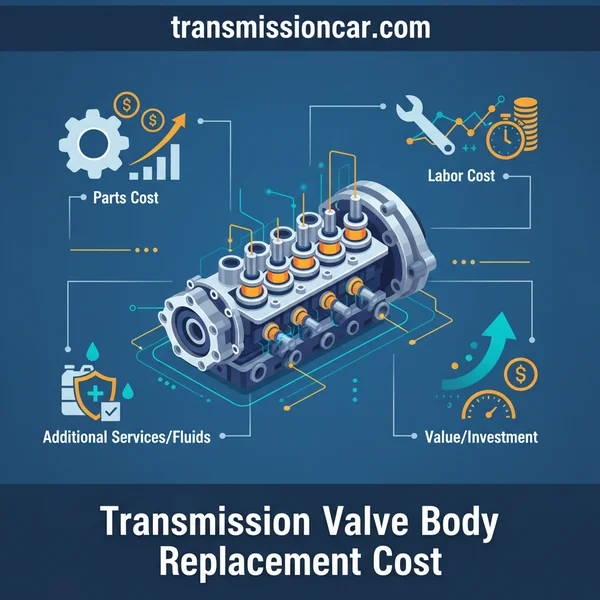
Understanding these costs is critical because the valve body is the “brain” of your automatic transmission. It directs hydraulic fluid to the correct clutches and bands to facilitate gear changes. When this part fails, your vehicle’s drivability drops instantly, often resulting in harsh shifts or a “limp mode” diagnosis. Addressing the issue now for roughly $800 is much better than waiting until the internal components fail, which could lead to a total transmission overhaul costing $4,000 or more.
Average Cost Breakdown: Parts, Labor, and Fluid Expenses
Replacing a valve body is considered a mid-range repair. It is more expensive than a simple fluid flush but significantly cheaper than a full transmission swap. To get a realistic picture of your quote, you must look at the three distinct pillars of the bill: the hardware, the technician’s time, and the necessary consumables like fluid and gaskets.

Labor Rates and Installation Timeframes
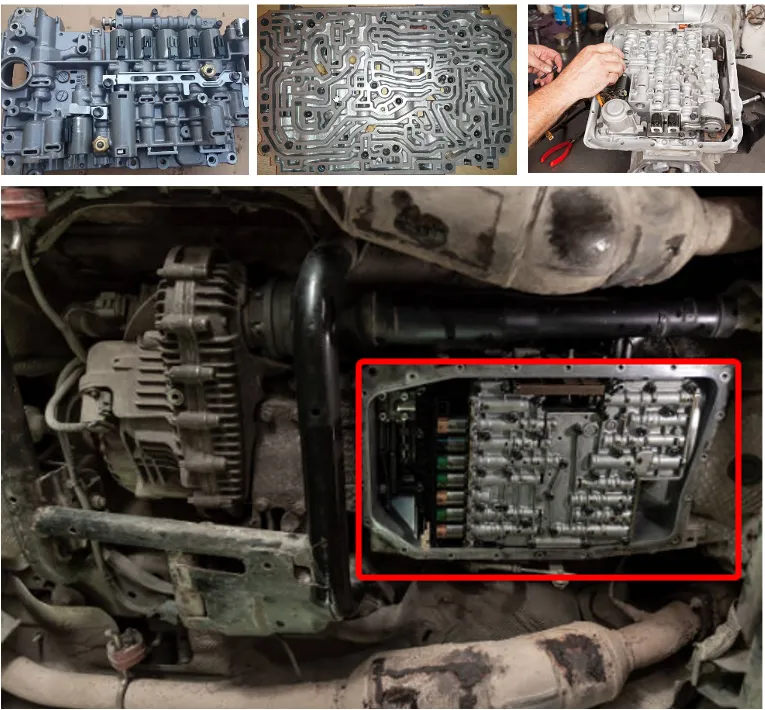
Most transmission specialists and general mechanics bill between 2 to 4 hours for this specific job. Because the valve body is located inside the transmission—usually accessible by removing the bottom oil pan—the process is relatively straightforward for a professional. However, it requires a clean environment to prevent internal contamination. Here is how the labor costs generally break down:
- Independent Shop Labor: $90 – $130 per hour (Total labor: $180 – $520).
- Dealership Labor: $150 – $210 per hour (Total labor: $300 – $840).
- Diagnostic Fees: Expect an additional $100 to $150 fee to confirm the valve body is the culprit before work begins. This is often rolled into the repair cost if you choose to proceed.
Parts, Fluids, and Hardware Costs
You aren’t just paying for the valve body itself. A proper replacement requires fresh transmission fluid and a new pan gasket to ensure a leak-free seal after the unit is installed. If your car uses a specialized synthetic fluid, this can add a surprising amount to the final bill.
- Valve Body Unit: $200 for basic aftermarket units to $600+ for OEM (Original Equipment Manufacturer) parts.
- Transmission Fluid: $50 – $120. Most systems require 5 to 10 quarts of specialized fluid during this procedure.
- Gasket and Filter Kit: $30 – $70. It is standard practice to replace the internal filter whenever the pan is removed for a valve body service.
Everything You Need to Know About Transmission Valve Body Replacement Cost
Replacing a transmission valve body is one of the more significant repairs an owner can face, as this component acts as the “brain” of your automatic transmission, directing hydraulic fluid to the appropriate clutches and bands. If your vehicle is experiencing harsh shifts, flaring between gears, or throwing specific P0700 series OBD-II codes, you are likely looking at a valve body issue. This guide covers the entire journey—from accurately diagnosing the failure and estimating the financial impact to the technical execution of the replacement—ensuring you don’t overspend or overlook critical safety steps.
Step 1: Diagnosing the Failure and Identifying Part Specifics
What you need: An OBD-II diagnostic scanner (preferably one with transmission control module access), a vehicle-specific repair manual, and your VIN (Vehicle Identification Number).
Instructions: Before spending money, you must confirm the valve body is the culprit. Plug your scanner into the port beneath the dashboard and check for codes like P0700 (General Transmission Control System Malfunction) or P0750 (Shift Solenoid A Malfunction). These often point to electrical failures within the valve body. Observe your driving symptoms: if the car shifts fine when cold but slips when warm, the valve body’s internal channels may be warped. Use your VIN to search for the exact part number. Valve bodies are highly specific to the transmission model (e.g., a ZF 6HP26 or a GM 6L80E). Identifying the exact version (there are often several iterations for one car model) is the first step in avoiding the cost of return shipping and project delays.
Pro Tip: Many “valve body issues” are actually caused by low fluid levels or degraded fluid. Check your dipstick first; if the fluid smells burnt or looks like black coffee, a simple flush might not save it, but if it’s just low, you might save $1,000 by topping it off.
Step 2: Sourcing the Part and Estimating Total Costs
What you need: Access to online parts wholesalers, local dealership parts desks, and a notepad for cost comparisons.
Instructions: You have three choices for parts: OEM (Original Equipment Manufacturer), Remanufactured, or Aftermarket. A new OEM valve body typically costs between $500 and $1,200. A remanufactured unit from a reputable company like Sonnax or RevMax often costs $300 to $600 and may include upgrades to fix factory defects. Labor at a dealership usually ranges from $150 to $200 per hour, with the job taking 3 to 5 hours. Therefore, a professional replacement usually totals between $800 and $2,200. If you choose the DIY route, you are looking at the cost of the part plus roughly $100-$150 for high-quality synthetic transmission fluid and a new pan gasket/filter kit. Compare warranties carefully; a remanufactured part with a 3-year warranty is often better than a used unit with only a 30-day guarantee.
Pro Tip: Avoid buying “used” valve bodies from salvage yards unless you plan to rebuild them yourself. These components contain tiny check balls and delicate springs that can easily be compromised by debris from the donor vehicle’s failure.
Step 3: Preparing the Workspace and Safety Gear
What you need: Heavy-duty jack stands, a floor jack, wheel chocks, nitrile gloves, safety goggles, and a large drop cloth or cardboard to catch spills.
Instructions: Safety is paramount when working under a vehicle. Lift the front of the car high enough to allow you to maneuver a large transmission pan underneath. Place the jack stands on the frame rails and shake the vehicle slightly to ensure it is stable before crawling under. Transmission fluid is detergent-heavy and can irritate the skin and eyes, so wear protection. Position your tools—usually a 10mm socket, an 8mm socket, a T30 Torx bit (common for European cars), and an inch-pound torque wrench—within easy reach. Laying down a large piece of cardboard is helpful because transmission fluid is incredibly slippery and can stain your driveway permanently if the drain pan splashes.
Pro Tip: If you have driven the car recently, let it sit for at least two hours. Transmission fluid can reach temperatures of over 200 degrees Fahrenheit, which is hot enough to cause second-degree burns instantly upon contact with your skin.
Step 4: Draining the Fluid and Removing the Pan
What you need: A 10-quart capacity drain pan, a socket set, and a scraper tool for old gasket material.
Instructions: Locate the transmission oil pan. If it has a drain plug, remove it and let the fluid flow into your catch pan. If there is no drain plug, you must perform a “controlled spill.” Loosen all the pan bolts, then remove all but the four corner bolts. Slowly back out the rear bolts more than the front ones, allowing the pan to tilt and drain from one end. Once the flow slows, remove the remaining bolts while supporting the pan with one hand. Carefully lower it, as it will still contain about a quart of fluid. Inspect the magnet inside the pan; a fine grey “sludge” is normal wear, but “glitter” or large metal chunks indicate a mechanical failure within the transmission gears themselves, meaning a valve body replacement won’t fix the problem.
Pro Tip: Measure the amount of fluid you drained. This gives you a baseline for how much to put back in later, which is especially helpful in vehicles that do not have a traditional dipstick.
Step 5: Removing the Old Valve Body and Electrical Connectors
What you need: A digital camera (or smartphone), a labeled bolt organizer, and a small flathead screwdriver.
Instructions: Before unbolting the valve body, you must disconnect the internal wiring harness. Be extremely gentle with the plastic clips; they become brittle from heat and can snap easily. Take a photo of the wiring routing. Next, identify the bolts holding the valve body to the transmission case. These are different from the bolts that hold the valve body halves together. Refer to your manual to ensure you only pull the “case-to-valve-body” bolts. As you loosen them, the valve body may start to drop; support it with your hand. Be prepared for a “second drain”—several more ounces of fluid will pour out from the upper passages once the unit is lowered. Place the old unit on a clean, lint-free surface immediately.
Pro Tip: There are often different bolt lengths used in the valve body. Use a piece of cardboard with a drawing of the valve body and poke the bolts through the cardboard in their corresponding positions so you don’t mix them up during reassembly.
Step 6: Installing the New Valve Body and Torquing Bolts
What you need: The new valve body, an inch-pound torque wrench, and clean transmission fluid for lubrication.
Instructions: Carefully lift the new valve body into place. You must ensure the manual shift linkage (the rod connected to your gear selector) properly aligns with the pin on the valve body. If this is misaligned, you won’t be able to shift into gear. Hand-start all the bolts to prevent cross-threading. Once snug, use your torque wrench to tighten them in a spiral pattern starting from the center and moving outward. Most valve body bolts require a very light torque, often between 60 and 100 inch-pounds (not foot-pounds!). Over-tightening can warp the aluminum casting, causing internal leaks and immediate failure of the new part. Reconnect the electrical harness, ensuring you hear a distinct “click” for every connector.
Pro Tip: Wet the new rubber seals or O-rings with a bit of fresh transmission fluid before installation. This helps them seat properly and prevents them from tearing or pinching as you press the unit into the transmission case.
Step 7: Sealing the Pan and Refilling Fluid
What you need: A new transmission filter, a new pan gasket, and the manufacturer-specified transmission fluid (ATF).
Instructions: Install the new filter; it usually pushes into a port with a rubber grommet. Clean the transmission pan mating surface thoroughly until it is shiny and dry. Place the new gasket on the pan. If the gasket is rubber, do not use sealant; if it is cork, a thin dab of RTV in the corners may be required. Bolt the pan back onto the transmission, torquing the bolts to roughly 10-12 foot-pounds in a crisscross pattern. Locate the fill port (either a dipstick tube or a side-fill plug). Add the amount of fluid you measured in Step 4. Start the engine, let it idle for two minutes, and then shift through all gears (P, R, N, D) while holding the brake to distribute fluid through the new valve body’s channels.
Pro Tip: Never use “Universal” transmission fluid unless the bottle explicitly lists your vehicle’s specific specification (like Ford Mercon V or Toyota WS). Modern transmissions are extremely sensitive to the friction modifiers found in specific formulas.
Step 8: Programming and Adaptive Reset
What you need: A high-end scan tool or a trip to a local specialist.
Instructions: On modern “electronically controlled” transmissions (roughly 2005 and newer), the Transmission Control Module (TCM) “learns” the wear patterns of the old valve body. When you install a new one, the old “learned” data is incorrect. Use a scan tool to perform a “TCM Adaptive Reset” or “Quick Learn” procedure. This clears the old shift timing data and allows the computer to calibrate the new solenoids. If you skip this step, the car may shift very harshly or slip for the first 50 miles, which can cause premature wear on the new components. Once reset, perform a test drive on a quiet road, gradually increasing throttle and allowing the car to cycle through every gear multiple times.
Pro Tip: During the first test drive, keep the radio off. Listen for any whining or clunking sounds, and feel for “flare-ups” (where the RPMs jump during a shift). These are signs that the fluid level might still be slightly low.
✅ Final Checklist
- Fluid Level: Verified at operating temperature while the engine is idling in Park.
- Leak Inspection: No red fluid dripping from the pan gasket or the electrical connector bulkhead.
- DTC Clearance: All OBD-II codes cleared and the Check Engine light remains off after a 10-mile drive.
- Shift Quality: Gears engage within 1-1.5 seconds of selecting Drive or Reverse, and upshifts are crisp without slipping.
Important Notes:
- Safety First: Never work on a car supported only by a hydraulic jack; always use rated jack stands.
- When to Seek Help: If you find heavy metal debris in the pan or if the vehicle requires “Solenoid Strategy” programming that requires a subscription to the manufacturer’s software (common on newer Fords), consult a professional.
- Estimated Time and Cost: DIYers should budget 4-6 hours. Professional shops usually charge $800–$2,200 depending on the vehicle’s make and the cost of the specific valve body unit.
Key Factors Influencing Your Total Repair Invoice
No two repair bills are identical because the automotive market is highly segmented. Your specific vehicle’s DNA determines where you fall on the price spectrum. A budget-friendly commuter car will always be cheaper to service than a performance-tuned SUV.
Vehicle Class and Part Sourcing
The make and model of your car are the primary price drivers. If you drive a common domestic sedan like a Ford Fusion or a Chevy Malibu, parts are plentiful and affordable. However, if you own a European luxury vehicle (like a BMW or Audi) or a high-performance sports car, the valve body often includes integrated electronics known as a “mechatronic” unit, which spikes the price.
- Standard Economy Cars: Parts are often available as remanufactured units for under $300, keeping the total bill low.
- Luxury/European Vehicles: These often require “coded” parts that must be programmed to the car’s computer, pushing part costs to $800-$1,200.
- New vs. Remanufactured: Buying a remanufactured valve body can save you 40% compared to buying brand new from a dealership parts counter.
Geographic Labor Variations
Where you live dictates the “shop rate” that defines your labor total. Mechanical labor in a major metropolitan hub like New York or San Francisco will be significantly higher than in a rural area or a smaller town. This difference alone can shift your total invoice by $200 or more.
- Urban Centers: You may see labor rates exceeding $200 per hour due to higher overhead costs for the shop owner.
- Rural Areas: You can often find reputable transmission shops charging $80 to $100 per hour, providing significant savings.
- Specialty Transmission Shops: A dedicated transmission franchise might offer flat-rate pricing for valve body swaps, which can sometimes be more cost-effective than a general mechanic’s hourly rate.
Cost Comparison: Dealership vs. Independent Mechanic
Deciding where to take your vehicle for a transmission valve body replacement often comes down to the balance between specialized expertise and your budget. Both options have distinct price points and benefits that can significantly impact your final invoice.
The Dealership Experience: Premium Pricing
Going to a dealership ensures that your vehicle is handled by technicians specifically trained on your make and model. However, this expertise comes at a premium. You can expect labor rates ranging from $150 to $250 per hour. Dealerships also strictly use OEM (Original Equipment Manufacturer) parts, which are often 30% to 50% more expensive than aftermarket alternatives. For a luxury brand like BMW or Audi, the dealership route can easily push the total cost toward the $2,000 mark.
- Pros: Guaranteed OEM parts, specialized diagnostic tools, and nationwide warranties that are honored at any brand-specific dealership.
- Cons: Highest labor rates and a strict adherence to “replacement-only” policies rather than cleaning or repairing individual components.
Independent Shops: Finding the Sweet Spot
A reputable independent transmission shop can often save you significantly. Their labor rates typically range from $90 to $150 per hour. Furthermore, independent mechanics are often more willing to source remanufactured valve bodies or high-quality aftermarket kits from brands like Sonnax. These parts meet or exceed OEM standards but cost a fraction of the price, potentially slashing your total bill by several hundred dollars.
- Pros: More flexible part options (new, remanufactured, or aftermarket), lower labor costs, and a more personalized relationship with the mechanic.
- Cons: Warranties may only be valid at that specific shop, and they may lack the proprietary software updates required for the very latest vehicle models.
Diagnostic Costs: Identifying Valve Body Failure vs. Fluid Issues
Before you commit to a major repair, you need to be certain the valve body is actually the culprit. Transmission symptoms are notoriously overlapping, and sometimes the “fix” is much simpler—and cheaper—than a full replacement.
The Importance of a Professional Diagnostic
Most professional shops charge a diagnostic fee ranging from $100 to $180. While it might feel like an annoying extra cost, it is your best defense against “part-darting”—the expensive practice of replacing components without being sure they are broken. A technician will use a high-level bi-directional scanner to check for specific Solenoid Performance codes or Pressure Control errors that point directly to the valve body rather than the mechanical gears or torque converter.
Is It the Valve Body or Just Dirty Fluid?
Sometimes, what looks like a failing valve body is actually just “varnished” or degraded transmission fluid. Debris and sludge in the fluid can clog the microscopic passages (galleries) within the valve body, causing solenoids to stick or lag. If a simple fluid exchange or service (costing $150 to $300) can solve the problem by clearing those passages, you will save a fortune. However, if the fluid is pitch black or smells burnt, it usually indicates that the valve body—and perhaps the clutch packs—have already suffered permanent damage.
- Practical Tip: Always ask the mechanic to “drop the pan” and check for metal shavings. A small amount of fine “fuzz” on the magnet is normal, but large metal flakes mean your transmission issues go far deeper than just the valve body.
- Red Flag: If a shop recommends a $4,000 total transmission rebuild without first testing the valve body and solenoids, always get a second opinion.
Conclusion: Navigating Your Transmission Repair
Replacing a transmission valve body is a significant investment, but it is far more affordable than a total transmission replacement. By understanding the average costs—generally between $500 and $1,500—and knowing the difference between dealership and independent pricing, you can make a choice that protects both your car and your wallet. Remember, the key to minimizing costs is early detection. If you notice delayed shifts, harsh engagement, or “hunting” for gears, address it immediately.
Your first actionable step should be checking your fluid levels and scheduling a professional diagnostic scan to confirm the error codes. Once you have a diagnosis, get at least two quotes and ask about the warranty on the replacement part. Taking action now will keep your transmission shifting smoothly and prevent a minor electronic glitch from turning into a major mechanical failure.
💬 Quick Questions & Answers
What is the average price for a valve body replacement?
The average price is between $400 and $1,200, depending on your vehicle’s make and model.
How many hours of labor does it take to replace a valve body?
A professional mechanic typically needs 2 to 4 hours to complete the replacement.
Is it cheaper to buy a remanufactured valve body?
Yes, remanufactured units can save you $100 to $300 compared to brand-new OEM parts.
Does the replacement cost include new transmission fluid?
Usually, yes, as the fluid must be drained and replaced during the procedure.
Can a bad valve body be fixed without a full replacement?
Sometimes cleaning or replacing individual solenoids works, but full replacement is often more reliable.
❓ Frequently Asked Questions
Why does the cost fluctuate so much between different car brands?
Parts for domestic brands like Ford or Toyota are widely available and cheaper, whereas luxury brands like BMW or Mercedes require specialized parts that can cost over $1,000 alone.
Should I replace the valve body or the entire transmission?
If the transmission is otherwise healthy and not slipping internally, replacing the valve body is a cost-effective fix. However, if there is metal debris in the fluid, a total transmission rebuild may be necessary.
How do geographic location and shop type affect the labor rate?
Labor rates vary by region, with urban centers charging up to $200 per hour, while rural shops may charge $90. Dealerships also have higher overhead, leading to higher labor quotes than independent shops.
Are there additional parts that should be replaced at the same time?
Yes, you should almost always replace the transmission filter and the pan gasket during this service to prevent leaks and ensure the new valve body remains clean.
What are the most common symptoms that justify this repair cost?
Common symptoms include harsh shifting, ‘shift flares’ where RPMs spike between gears, and delayed engagement when shifting into Drive or Reverse.
Will a valve body replacement solve all shifting issues?
It will solve issues related to hydraulic routing and electronic solenoid failure, but it cannot fix worn-out internal clutches or a damaged torque converter.