What Is a Transmission? Understanding Your Vehicle’s Gearbox
📌 Quick Summary A transmission is the critical component that transfers power from the engine to the wheels while regulating speed and…
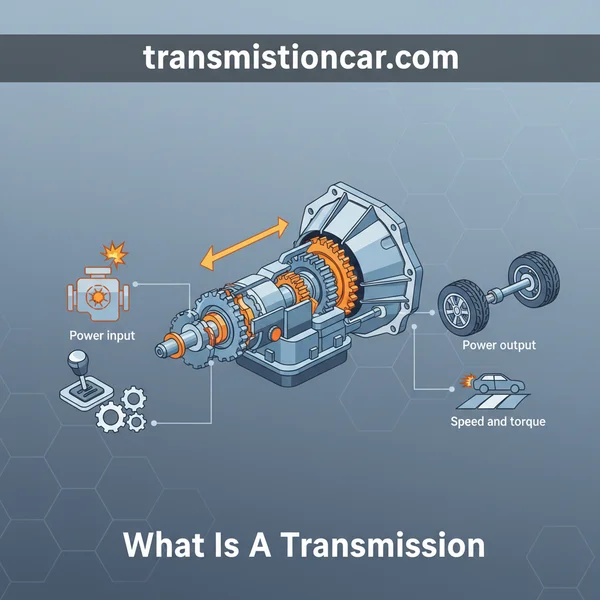
A transmission is the critical component that transfers power from the engine to the wheels while regulating speed and torque. It acts as a gearbox that ensures your engine stays within a safe RPM range regardless of how fast the vehicle is traveling.
🎯 Key Takeaways
- A transmission converts engine power into usable torque for the wheels.
- It prevents the engine from self-destructing by managing RPM levels.
- Main types include automatic, manual, CVT, and dual-clutch systems.
- Regular fluid changes are essential for preventing expensive transmission repairs.
- Grinding noises or slipping gears are common signs of transmission failure.
Your vehicle’s transmission is the essential component that manages the power generated by the engine and sends it to your wheels. Think of it as a mechanical translator that converts the engine’s high-speed rotation into the specific force needed to move your car at various speeds. Without a transmission, your engine would spin too fast for the wheels to handle at a stop, or it would lack the muscle needed to get your heavy vehicle moving from a dead stop.
Understanding your transmission matters because it directly impacts your car’s fuel efficiency, towing capacity, and overall drivability. It acts as a safety net, ensuring the engine stays within a safe operating range (RPM) while providing you with the acceleration you need on the highway or the low-end power required for steep hills. Knowing how it works helps you identify early signs of wear, such as slipping or hesitation, before they become expensive mechanical failures.
The Core Function: How a Transmission Transfers Power
The primary job of a transmission is to maintain the engine’s “sweet spot” while the vehicle changes speed. Internal combustion engines have a narrow range where they produce power efficiently. If you connected the engine directly to the wheels, you would either stall immediately when trying to take off or burn through fuel at an alarming rate at high speeds. The transmission acts as the intermediary that allows the engine to spin at one speed while the wheels spin at another.
Balancing Torque and Rotational Speed
The transmission is a master of trade-offs between torque and speed. Torque is the “twisting force” that gets your car moving, while speed is how fast those wheels rotate once you’re cruising. When you start from a stop, you need high torque but low speed. As you accelerate, the need for torque decreases and the need for speed increases. The transmission uses different gear ratios to manage this balance effectively.
- Low Gears (1st and 2nd): These provide high torque to overcome inertia and move the vehicle’s weight. They allow the engine to spin fast while the wheels move slowly.
- High Gears (5th, 6th, and beyond): These reduce engine RPMs while maintaining high wheel speeds. This is crucial for fuel economy during highway cruising.
- Neutral: Disconnects the engine from the drive wheels entirely, allowing the engine to run without the car moving.
- Reverse Gear: Uses an extra idler gear to change the direction of the output shaft, allowing the car to move backward.
The Journey of Power
The power journey begins at the engine’s crankshaft. This rotational energy travels into the transmission through a coupling device—either a clutch in a manual car or a torque converter in an automatic. Once inside the gearbox, the energy passes through a series of gear sets. These gears adjust the output based on your current speed and how hard you are pressing the gas pedal. Finally, this adjusted power exits through the output shaft to the driveshaft and axles, which ultimately turn the wheels. Every time the transmission shifts, it is finding a more efficient way to use the engine’s energy for the current driving condition.
Comparing Different Types: Manual, Automatic, and CVT
While all transmissions serve the same basic purpose, they achieve the result using different mechanical methods. The type of gearbox in your car dictates how much control you have as a driver and how smoothly the power is delivered to the road. Modern technology has moved far beyond the simple “stick shift” to offer variety in efficiency and performance.
Manual and Automatic: The Traditional Choice
A manual transmission requires the driver to engage a clutch pedal and move a stick shift to change gears. This offers the most direct control over the engine’s power and is often preferred by driving enthusiasts. In contrast, an automatic transmission uses a complex system of hydraulics and a planetary gear set to shift gears for you. It monitors your speed and throttle position to decide the best gear for the moment.
- Manual Experience: Provides a mechanical connection to the car; generally more durable and easier to maintain, though it requires more physical effort in stop-and-go traffic.
- Automatic Experience: Offers maximum convenience and smoothness; modern automatics often have “sport modes” that mimic manual control without the need for a clutch pedal.
CVT and Dual-Clutch: The Modern Alternatives
Engineers have developed newer systems like the Continuously Variable Transmission (CVT) and the Dual-Clutch Transmission (DCT) to improve efficiency. A CVT doesn’t use traditional gears at all. Instead, it uses a belt-and-pulley system that can provide an infinite range of ratios. To the driver, this feels like one long, continuous gear with no “shift” points, which keeps the engine at its most fuel-efficient RPM at all times.
The Dual-Clutch Transmission (DCT) is essentially two manual transmissions working in tandem within one housing. One clutch handles the odd-numbered gears, while the other handles the even-numbered gears. This setup allows the transmission to “pre-select” the next gear before you even need it. The result is lightning-fast gear changes that are significantly quicker than a human or a standard automatic could ever manage, providing a very snappy and responsive driving feel.
Why Engines Require Multiple Gears to Function
The Power-to-Speed Balance
Think of your car’s engine like a professional cyclist. To start moving up a steep hill from a dead stop, the cyclist needs a low gear that provides maximum force with every pedal stroke. To maintain high speeds on a flat road, they switch to a high gear so they don’t have to pedal frantically to keep up. Your transmission performs this exact task for your vehicle, acting as the translator between the engine’s energy and the wheels’ movement.
Engines have a limited range of RPM (revolutions per minute) where they produce the most power efficiently, often called the “power band.” Without different gear ratios, your engine would either struggle to move the heavy weight of the car from a standstill or reach its physical limits and “redline” before you even hit 30 mph.
- Low Gears for Torque: These provide the high torque necessary to get the vehicle’s mass moving or to climb steep inclines at low speeds.
- High Gears for Cruising: These reduce the engine’s workload while maintaining high vehicle speeds, which is essential for fuel economy.
- RPM Management: Multiple gears ensure the engine stays in a safe operating range, preventing overheating and internal damage.
For a practical example, consider merging onto a highway. As you press the gas, the transmission stays in lower gears longer to help you accelerate quickly. Once you reach 65 mph and settle into a steady pace, the transmission shifts into its highest gear, allowing the engine to “relax” and consume significantly less gasoline.
Recognizing Common Symptoms of Transmission Wear
Odd Noises and Shifting Delays
Because the transmission is a complex system involving gears, clutches, and pressurized fluid, it rarely fails without warning. One of the most common signs of trouble is “slipping,” a sensation where the engine revs up loudly, but the car doesn’t seem to accelerate accordingly. You might also notice a “hesitation” or a slight delay when shifting the selector from “Park” to “Drive” or “Reverse.”
Auditory cues are equally important. In a manual vehicle, worn synchronizers often cause a harsh grinding noise when changing gears. In an automatic transmission, you might hear a persistent whining, humming, or buzzing sound that changes in pitch as the vehicle gains speed. These sounds often indicate internal wear or low fluid levels.
- Rough Shifting: Feeling a “thud” or a jerky, jarring motion when the car changes gears during normal driving.
- Fluid Leaks: Seeing bright red or dark brown puddles under your parked car is a major red flag for a leaking seal or gasket.
- Burning Smell: Overheated transmission fluid has a distinct, acrid odor. If you smell something similar to burnt toast, your gearbox may be running too hot.
Pro Tip: Get into the habit of checking your transmission fluid dipstick (if your car has one). Healthy fluid should be a translucent, bright cherry-red. If the fluid looks like dark coffee or contains tiny metal flakes, it is time for an immediate professional inspection to avoid a total breakdown.
Conclusion
Your transmission is a marvel of mechanical engineering that translates raw engine power into controlled, usable movement. Whether you drive a traditional automatic, a manual, or a modern CVT, understanding how this component manages your vehicle’s speed and torque is the first step toward better car care. By keeping an eye on gear performance and staying alert to early warning signs like slipping or strange smells, you can ensure your vehicle remains reliable for years to come.
To keep your gearbox in top shape, start by checking your owner’s manual for the manufacturer’s recommended fluid change intervals. If you notice any of the symptoms mentioned above, don’t wait for a total failure—schedule an inspection with a trusted mechanic today to keep your ride smooth and your repair bills low.
💬 Quick Questions & Answers
Does every car have a transmission?
Yes, all internal combustion and electric vehicles use some form of transmission to manage power delivery.
What is the most common transmission type?
In modern passenger vehicles, the automatic transmission is the most widely used system today.
Can a car drive without a transmission?
No, without a transmission, the engine’s power cannot be safely or effectively delivered to the wheels.
What color is healthy transmission fluid?
Most automatic transmission fluids are a bright, translucent red color when new and clean.
Is a gearbox the same as a transmission?
Yes, ‘gearbox’ is a common term used interchangeably with ‘transmission,’ particularly in manual vehicles.
❓ Frequently Asked Questions
Why can’t the engine connect directly to the wheels?
Engines rotate at high speeds, and if connected directly, they wouldn’t provide enough torque to start from a stop or would over-rev at high speeds. The transmission provides the necessary gear ratios to balance power and speed.
What is a CVT and how does it differ from a standard automatic?
A Continuously Variable Transmission (CVT) uses a belt-and-pulley system instead of fixed gears to provide a seamless range of ratios. This allows for smoother acceleration and often improved fuel efficiency compared to traditional automatics.
How often should transmission fluid be changed?
Most manufacturers recommend changing transmission fluid every 30,000 to 60,000 miles, though some modern vehicles claim ‘lifetime’ fluid. Always check your owner’s manual for specific maintenance intervals to ensure longevity.
What does it mean when a transmission ‘slips’?
Transmission slipping occurs when the engine revs up but the vehicle doesn’t accelerate proportionally, or it feels like it’s switching gears for no reason. This usually indicates low fluid levels, worn-out gears, or internal clutch issues.
How do dual-clutch transmissions (DCT) work?
A DCT uses two separate clutches for odd and even gear sets, allowing the next gear to be ‘pre-selected’ for lightning-fast shifts. It combines the efficiency of a manual with the ease of an automatic transmission.
What are the primary signs of a failing transmission?
Key indicators include unusual noises like whining or clunking, a ‘Check Engine’ or ‘Transmission’ light, leaking fluid, or a burning smell. You may also experience delayed engagement when shifting into Drive or Reverse.