Where Is the Transmission Fluid? A Guide to Locating It
📌 Quick Summary The transmission fluid dipstick is typically found within the engine bay, but its specific location depends on your vehicle’s…
The transmission fluid dipstick is typically found within the engine bay, but its specific location depends on your vehicle’s drive configuration. In most front-wheel drive cars, it is located near the front of the transaxle, while rear-wheel drive vehicles usually place it near the back of the engine near the firewall.
🎯 Key Takeaways
- Takeaway 1:FWD dipsticks are usually located near the front or side of the engine bay.
- Takeaway 2:RWD dipsticks are typically found near the firewall at the back of the engine.
- Takeaway 3:Look for a bright red, yellow, or orange handle to distinguish it from oil.
- Takeaway 4:Modern sealed transmissions lack a dipstick and use a bottom-mounted check plug.
- Takeaway 5:Always consult your owner’s manual to confirm the specific fluid access point location.
To find your transmission fluid, you typically need to look for a specific dipstick handle protruding from the engine bay, though its exact coordinates depend entirely on your vehicle’s drivetrain layout. On most cars, this dipstick is located either toward the back of the engine near the firewall or tucked to the side near the front of the engine compartment. If you do not see a dipstick handle at all, your vehicle likely utilizes a “sealed” transmission system, which requires locating a fill plug on the side of the transmission housing underneath the car.
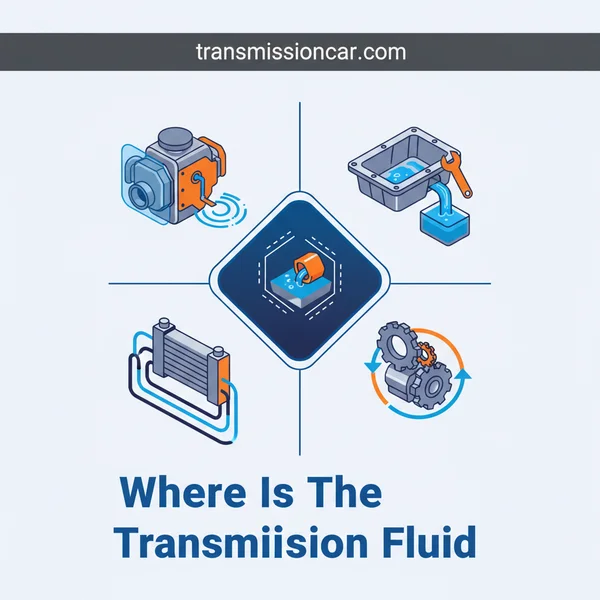
Locating this fluid is a practical necessity because the transmission is the second most expensive component in your vehicle. Unlike engine oil, which is consumed over time, transmission fluid stays in a closed system; if the level is low, it indicates a leak that needs immediate attention. Identifying the location of the dipstick or fill plug allows you to monitor fluid health, ensuring your gears shift smoothly and preventing the friction-induced heat that leads to catastrophic mechanical failure.
Identifying Locations by Vehicle Drive Layout (FWD vs. RWD)
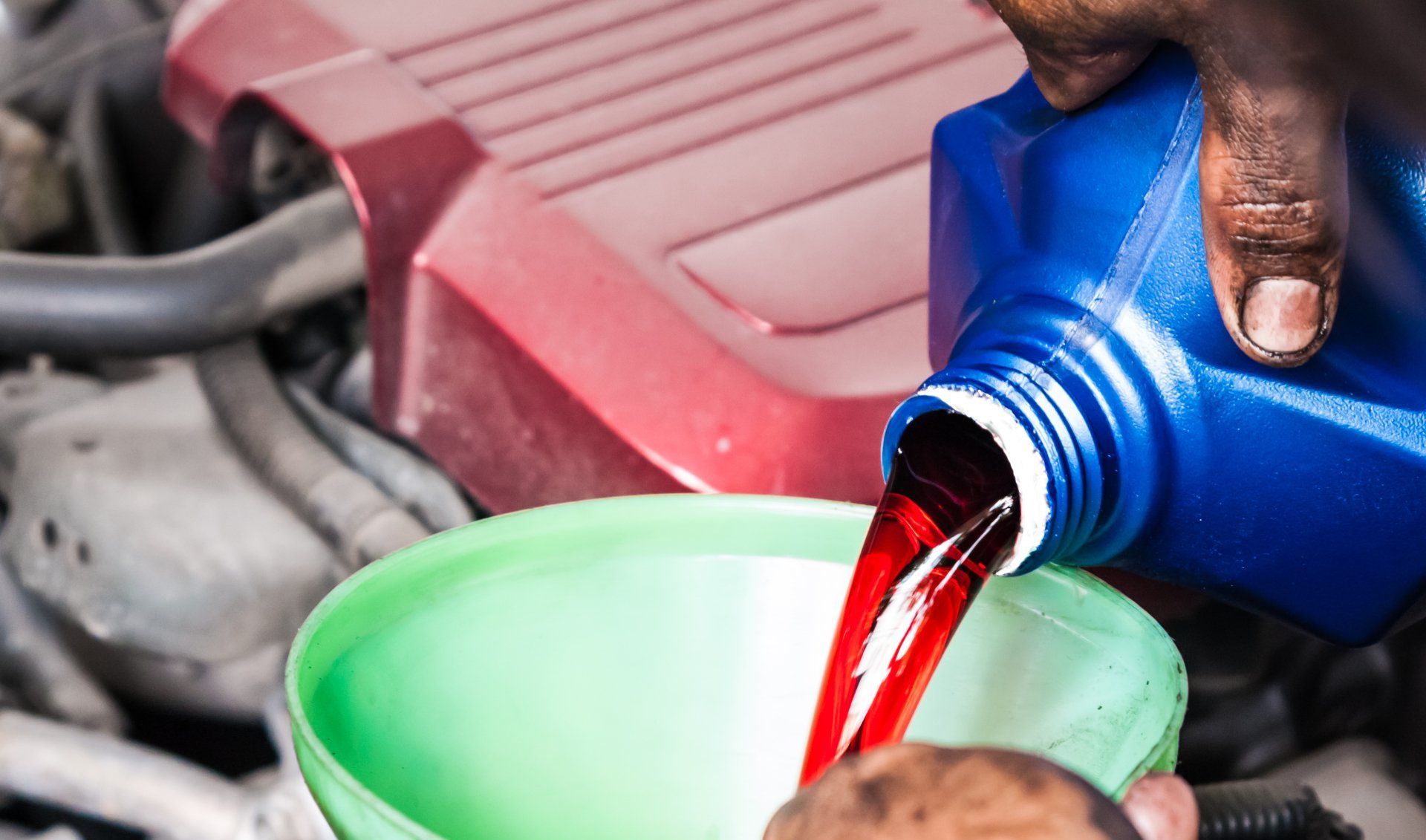
The most reliable way to find your transmission fluid is to identify how your engine is mounted. Manufacturers place the transmission in relation to the wheels it powers, which dictates where the fluid access point must be. If your engine sits “sideways” (transversely) when you open the hood, you are looking at a Front-Wheel Drive (FWD) setup. If the engine sits “longitudinally” (front-to-back), you have a Rear-Wheel Drive (RWD) or Four-Wheel Drive (4WD) vehicle.
Rear-Wheel Drive and 4WD Configurations
In Rear-Wheel Drive vehicles, such as most pickup trucks and large SUVs, the transmission is located directly behind the engine, extending toward the center of the cabin. Because of this, the transmission fluid dipstick is almost always located at the very back of the engine bay. You will usually find it on the passenger side, nestled between the back of the engine block and the firewall (the metal partition separating the engine from the interior).
- The “Long Reach” Location: Look for a tube that runs deep down toward the back of the chassis.
- Firewall Proximity: The handle is often located near the brake booster or the heater hoses.
- Common Examples: On a Chevrolet Silverado or Ford F-150, look specifically toward the passenger side firewall for a handle that sits slightly lower than the engine oil dipstick.
Front-Wheel Drive (FWD) Configurations
Front-Wheel Drive cars, like the majority of modern sedans and crossovers, use a “transaxle” that combines the transmission and differential into one unit. This unit is bolted to the side of the engine. Consequently, the transmission fluid dipstick is usually located toward the front or middle of the engine bay, often poking out from the transaxle housing near the radiator or the battery box.
- Left or Right Bias: The dipstick is rarely centered; it will be offset to the left or right of the engine block.
- Shallow Access: These dipsticks are often shorter than RWD versions because the transaxle sits higher in the engine cradle.
- Common Examples: In many Honda or Toyota sedans, the dipstick is found on the driver’s side of the engine, often appearing as a brightly colored loop near the air filter box.
Master Finding Your Transmission Fluid in 8 Simple Steps
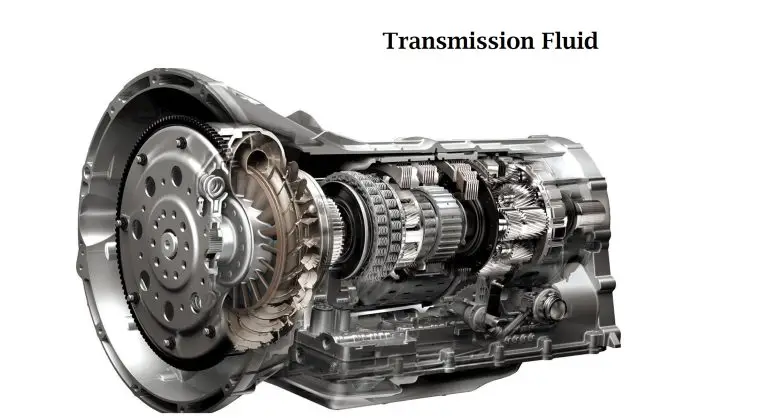
Locating your transmission fluid is a fundamental skill for any vehicle owner, yet it can be surprisingly tricky due to the vast differences in modern automotive engineering. This guide provides a comprehensive walkthrough to help you identify the dipstick or fill port, distinguish it from other engine components, and assess the fluid’s health. Regularly monitoring this hydraulic fluid is vital because it lubricates moving parts, provides hydraulic pressure, and cools the transmission; neglecting it can lead to catastrophic mechanical failure and thousands of dollars in repair costs.
Step 1: Identify Your Vehicle’s Drivetrain Layout
What you need: Your vehicle’s owner’s manual or a basic understanding of front-wheel drive (FWD) versus rear-wheel drive (RWD).
Instructions: Before you even pop the hood, you need to know where the transmission is likely positioned. In most modern front-wheel-drive cars, the engine is mounted “transversely” (sideways). In this configuration, the transmission (or transaxle) is usually located on the driver’s side of the engine bay. Conversely, in rear-wheel-drive trucks and sedans, the engine sits “longitudinally” (front-to-back), meaning the transmission is located behind the engine, extending toward the center of the car. Identifying this layout narrows your search area significantly. If you are unsure, look at the orientation of the engine’s plastic cover or the direction the belts are facing.
Pro Tip: If your car is a transverse-mount FWD, look specifically for the dipstick protruding from the transaxle housing, which is often tucked lower down than the oil dipstick.
Step 2: Reach the Optimal Operating Temperature
What you need: A 10-minute drive and a safe, level parking spot.
Instructions: Unlike engine oil, which is often checked cold, transmission fluid expands significantly when heated. To get an accurate reading and to ensure the fluid is flowing properly through the valve body, you must warm up the vehicle. Drive for approximately 5 to 10 miles until the engine temperature needle sits in its normal middle range. Once back, park the vehicle on a perfectly flat surface. Keeping the car level is non-negotiable; even a slight incline can cause the fluid to pool at one end of the transmission pan, resulting in a false “low” or “high” reading on the dipstick.
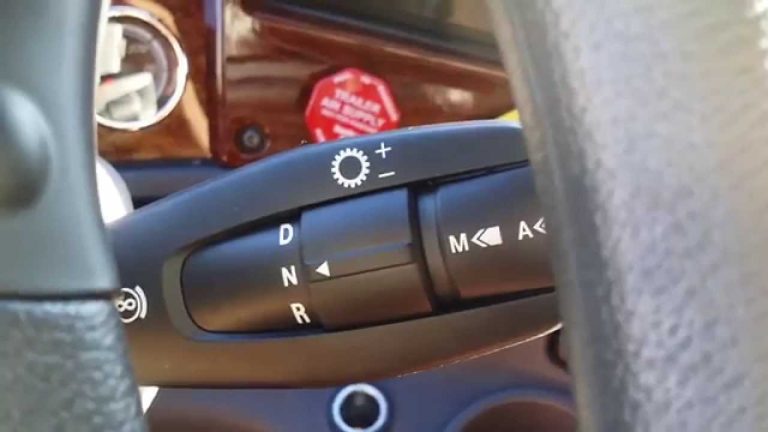
Pro Tip: While the car is idling in your parking spot, cycle the gear selector through every position (P, R, N, D, L) for 5 seconds each to ensure fluid is distributed through all internal circuits.
Step 3: Secure the Vehicle and Open the Hood
What you need: Engaging the parking brake and locating the interior hood release latch.
Instructions: Safety is paramount when working around a running engine. Ensure the transmission is in “Park” (or “Neutral” for certain specific models like older Hondas) and firmly engage the emergency parking brake. Pull the hood release lever located under the dashboard, then exit the vehicle and find the secondary safety catch under the front lip of the hood. Prop the hood open securely using the stay rod or verify that the gas struts are holding the weight. Keep all loose clothing, jewelry, and long hair away from the cooling fans and serpentine belts, as these components will be spinning while you perform the check.
Pro Tip: Always double-check that the hood prop rod is seated firmly in its designated slot to prevent the hood from falling on your head while you are leaning over the engine.
Step 4: Distinguish the Transmission Dipstick from the Oil Dipstick
What you need: A high-powered flashlight and a clean, lint-free microfiber rag.
Instructions: Most vehicles have two dipsticks, and mistaking them is a common error. The engine oil dipstick is usually located toward the front or side of the engine block and often features a yellow or orange handle. The transmission dipstick is typically located further back in the engine bay, closer to the firewall. It often features a red, pink, or black handle and may have a locking tab that requires a flick of the thumb to release. Look for a symbol on the handle that looks like a gear or text that explicitly says “Trans” or “ATF” (Automatic Transmission Fluid).
Pro Tip: If you see a handle that is labeled “710,” you are looking at the oil cap upside down; keep searching further back for the transmission’s thin metal pull-handle.
Step 5: Determine if You Have a “Sealed” Transmission
What you need: Your owner’s manual or a quick Google search of your specific year, make, and model.
Instructions: Many modern vehicles (especially those made after 2010 by brands like Ford, Toyota, and BMW) utilize “sealed” transmissions that do not have a dipstick under the hood. If you have searched the entire engine bay and cannot find a dipstick, your car likely uses a “check plug” located on the side or bottom of the transmission casing itself. Checking these requires raising the car on a lift and removing a bolt while the fluid is at a specific temperature. If your manual states “Life-time Fluid” or does not show a dipstick location, you should not attempt to check it yourself without advanced mechanical tools.
Pro Tip: Do not panic if you don’t have a dipstick; these systems are designed to be extremely low-maintenance, though the fluid still eventually needs professional service around 60,000 to 100,000 miles.
Step 6: Execute the First Pull and Clean
What you need: A lint-free rag or a high-quality paper towel.
Instructions: With the engine still idling (unless your manual specifically says to turn it off), pull the transmission dipstick out of its tube. Do not look at the level yet! Fluid splashes around inside the tube while the car is moving, creating a messy and inaccurate reading on the first pull. Use your rag to wipe the dipstick completely clean from the handle down to the very tip. Ensure there are no fibers or threads left on the metal, as even tiny pieces of lint can interfere with the tight tolerances of the transmission’s internal valves. Examine the markings on the tip: you will usually see “Hot” and “Cold” zones or a cross-hatched area.
Pro Tip: Use a white rag or paper towel; this allows you to see the color of the fluid residue, which is a key indicator of the transmission’s internal health.
Step 7: Perform the Final Level Reading
What you need: A steady hand and careful observation.
Instructions: Re-insert the clean dipstick all the way back into the tube until it seats fully. Wait exactly two seconds, then pull it back out smoothly. Hold the dipstick horizontally to prevent the fluid from running up or down the metal, which would ruin the reading. Look at where the “wet” line stops. If the engine is warm, the fluid should fall squarely within the “Hot” or “Full” zone (often indicated by two dots or a textured square). If the liquid is below the “Add” or “Low” mark, you have a leak or have consumed fluid and need to top it off immediately with the specific ATF grade recommended by the manufacturer.
Pro Tip: Always check both sides of the dipstick. If one side is higher than the other, the lower side is the more accurate representation of the actual level in the pan.
Step 8: Analyze Fluid Quality and Consistency
What you need: Your senses of sight and smell.
Instructions: Finding the fluid is only half the battle; you must also evaluate its condition. Healthy transmission fluid should be a translucent cherry red or pink color. If the fluid is dark brown or black, it has oxidized and is no longer protecting your gears. Take a sniff of the dipstick; if it smells “burnt” (like scorched toast), your transmission is likely overheating or experiencing internal friction material wear. Finally, look for bubbles or a milky appearance. Bubbles indicate the fluid is overfilled or the wrong type is being used, while a milky “strawberry milkshake” look indicates that engine coolant is leaking into the transmission, a “critical failure” scenario.
Pro Tip: Rub a drop of the fluid between your thumb and forefinger. It should feel smooth and oily. If you feel any grit or metal flakes, the transmission is actively shedding internal components.
✅ Final Checklist
- Dipstick is fully seated and locked back into the fill tube.
- Fluid level falls within the designated “Hot” or “Full” range on the metal.
- Fluid color is translucent pink or red, not dark brown or black.
- The engine bay is clear of any rags, tools, or flashlights used during the process.
- The hood is securely latched and the parking brake is released before driving.
Important Notes:
- Safety Warning: Never touch the radiator, exhaust manifold, or moving belts while the engine is running. Use extreme caution around the cooling fan, which can turn on unexpectedly.
- When to Seek Help: If the fluid is black, smells burnt, or contains metal flakes, take the car to a certified technician immediately. Do not attempt to “flush” a high-mileage transmission that hasn’t been serviced in years without professional advice.
- Estimated Time: 15-20 minutes (including warm-up time).
- Estimated Cost: $0 for checking; $15-$25 for a quart of high-quality synthetic ATF if a top-off is required.
Visual Cues: Color Coding and Handle Markings
Once you are looking in the right general area, you need to distinguish the transmission fluid access point from other fluid reservoirs like engine oil, coolant, or power steering. Manufacturers use specific visual shorthand to help you identify the correct handle. While there is no universal law, most modern vehicles follow a standardized color and labeling scheme to prevent drivers from accidentally pouring oil into their transmission.
Standard Color Coding
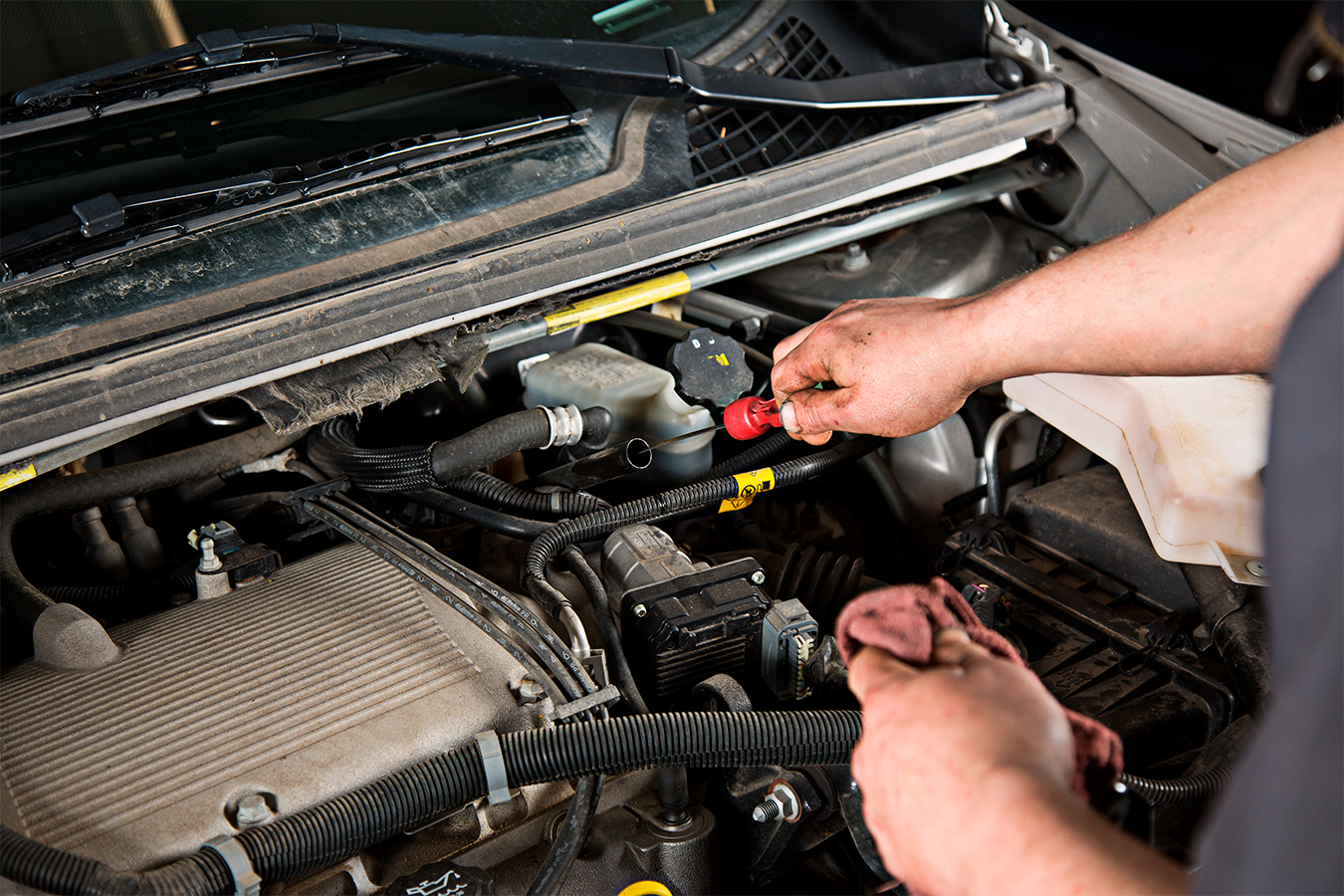
Engineers usually color-code dipstick handles to make them stand out against the dark plastics and metals of the engine bay. While the engine oil dipstick is almost universally yellow, the transmission fluid dipstick often uses a different high-visibility color. This helps you identify the correct port at a glance, even in low-light conditions.
- Red or Pink Handles: This is the most common color for automatic transmission fluid (ATF) handles, mirroring the natural red color of the fluid itself.
- Yellow with Markings: If the handle is yellow, it will almost always have a gear icon or text to differentiate it from the engine oil.
- Black or Brown Handles: Older vehicles or specific European brands may use more muted tones, but these will often feature a locking “flip-top” mechanism that distinguishes them from the simple pull-ring of an oil dipstick.
Markings and Icons
If the color isn’t immediately obvious, the physical markings on the handle or the tube will provide the final confirmation. Most manufacturers stamp the handle with a symbol or abbreviation. Looking for these specific labels ensures you aren’t accidentally checking the wrong system. It is also common for the dipstick handle to have a “lock” or a “latch” that you must flick up before the dipstick can be pulled out, a feature rarely found on oil dipsticks.
- Text Labels: Look for “ATF” (Automatic Transmission Fluid), “Trans,” or “Fluid.”
- The Gear Icon: Many modern vehicles use a universal icon shaped like a jagged gear or a cogwheel.
- Safety Latches: If the handle has a small metal lever that must be depressed or flipped, it is almost certainly the transmission fluid port, as these systems are often pressurized or require a tighter seal to prevent contamination.
- Dipstick Length: If you pull the stick out and it appears significantly longer (often three to four feet long) than the oil dipstick, you have correctly identified the transmission line.
Understanding Sealed Transmissions and Lifetime Fluids
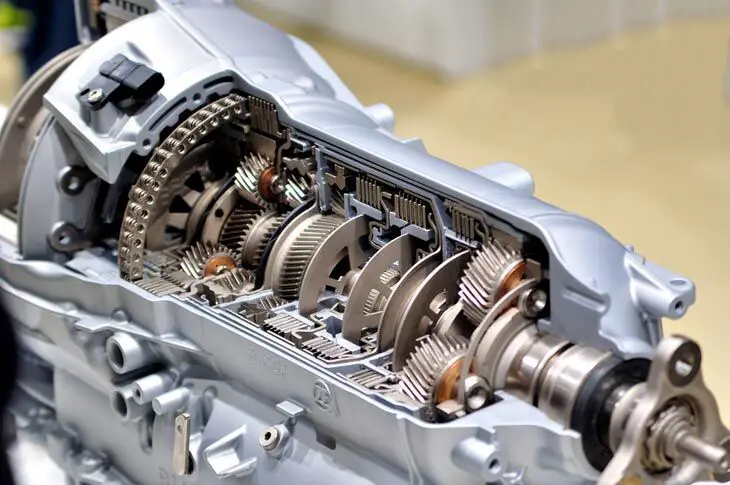
In the past, every vehicle came equipped with a dipstick that made checking transmission fluid as simple as checking your oil. However, if you have searched your engine bay and come up empty-handed, you likely own a vehicle with a sealed transmission. This design has become increasingly common in modern vehicles, particularly those from European manufacturers and newer domestic models.
The Rise of “Lifetime” Fluid
Manufacturers often market these systems as having “lifetime fluid,” implying that the transmission is a closed loop that never requires maintenance. While this sounds convenient, it changes where the fluid is housed. In these systems, there is no top-side dipstick. Instead, the fluid is contained entirely within the transmission assembly, and the access points are relocated to the underside of the vehicle. Examples of vehicles using this setup include:
- Most modern BMW and Mercedes-Benz models
- Newer Ford and GM trucks using 10-speed transmissions
- Many Toyota and Lexus hybrids
- Vehicles equipped with Continuously Variable Transmissions (CVTs)
Accessing Sealed Units
In a sealed system, the fluid is still there, but the “location” is essentially a fill plug or a check plug located directly on the transmission housing. These are usually heavy-duty bolts found on the side or the bottom of the transmission case. Because these require the vehicle to be lifted and level to access, they aren’t meant for a quick Sunday morning check. If you see a bolt labeled “Fill” or “Check” near the transaxle, that is your transmission fluid’s home base.
Physical Indicators of Transmission Fluid Access Points
For vehicles that do have accessible fluid points, manufacturers usually provide several visual cues to help you distinguish the transmission fluid from the engine oil, coolant, or power steering fluid. Learning to identify these physical indicators can save you from accidentally pouring the wrong fluid into the wrong reservoir.
Color Coding and Handle Labels
The most common indicator is the color of the dipstick handle. While engine oil handles are frequently yellow or white, transmission fluid handles are often designed to stand out. Look for these specific visual markers:
- Red or Orange Handles: These are the industry standard for transmission dipsticks in most older Toyota, Honda, and GM vehicles.
- Text Labeling: Many caps or handles will have the word “Trans” or “ATF” (Automatic Transmission Fluid) stamped directly into the plastic.
- A Loop or “T” Shape: Transmission dipsticks often feature a distinct loop at the top, making them easy to pull even when the engine is warm.
Spatial Relationships in the Engine Bay
If you are struggling to find the fluid location, look at the orientation of your engine. In Rear-Wheel Drive (RWD) vehicles, the transmission is located behind the engine. Therefore, the fluid dipstick is usually tucked way back near the firewall (the metal wall between the engine and the cabin). In Front-Wheel Drive (FWD) vehicles, the transmission (or transaxle) is usually off to one side. You will typically find the fluid access point protruding from the top of the transaxle housing, often near the battery or the air intake box.
Conclusion: Knowing Your Vehicle’s Layout
Locating your transmission fluid is the first step toward proactive vehicle maintenance. Whether your car features a brightly colored dipstick tucked near the firewall or a sealed system that requires a peek under the chassis, knowing where the fluid lives ensures you aren’t caught off guard by shifts in performance. Remember that a quick look at your owner’s manual can confirm whether you have a sealed unit or a traditional dipstick system.
For your next steps, take five minutes to open your hood and identify the color of your dipsticks. If you find a red or orange handle, you’ve found your transmission fluid! Keeping an eye on this vital component is one of the best ways to ensure your vehicle stays on the road for years to come. Check your levels today and drive with confidence!
💬 Quick Questions & Answers
Is the transmission dipstick the same as the oil dipstick?
No, the transmission dipstick is usually further back and often has a red or yellow handle.
What color is the transmission fluid handle?
It is typically bright red, orange, or yellow to make it easily identifiable in the engine bay.
Can I find a dipstick on all cars?
No, many modern vehicles feature sealed transmissions that require checking from underneath the vehicle.
Where is it on a front-wheel drive car?
It is usually located toward the front of the engine, poking out of the transaxle unit.
What if there is no dipstick under the hood?
Your car likely has a sealed system where the fluid level is checked via a plug on the transmission pan.
❓ Frequently Asked Questions
Why is the transmission dipstick located near the firewall in RWD cars?
In rear-wheel drive vehicles, the transmission sits behind the engine. The dipstick tube must reach down to the transmission housing, placing the handle near the back of the engine bay close to the dashboard.
How can I distinguish the transmission dipstick from the engine oil dipstick?
The oil dipstick is usually on the side of the engine block and has a yellow or white handle. The transmission dipstick is often located further back, is longer, and features a red or orange handle.
What does a sealed transmission mean for fluid location?
A sealed transmission does not have a dipstick under the hood for easy access. Instead, the fluid is located within the unit itself, and levels must be checked using a fill or check plug located on the side or bottom of the transmission.
Is the transmission fluid in the same place for manual and automatic cars?
No, manual transmissions rarely have dipsticks and are almost always checked via a fill plug on the side of the transmission case. Automatics are much more likely to have an accessible dipstick in the engine bay.
Are there specific labels to look for on the dipstick handle?
Yes, many manufacturers stamp the handle with a transmission icon or the words Trans or ATF (Automatic Transmission Fluid). This helps prevent confusion with other fluid reservoirs like coolant or power steering.
Where is the transmission fluid check point on a CVT?
Continuously Variable Transmissions (CVTs) vary, but many modern designs follow the sealed trend. You will likely find a small cap labeled CVT or no dipstick at all, requiring a lift to access the check plug underneath.