
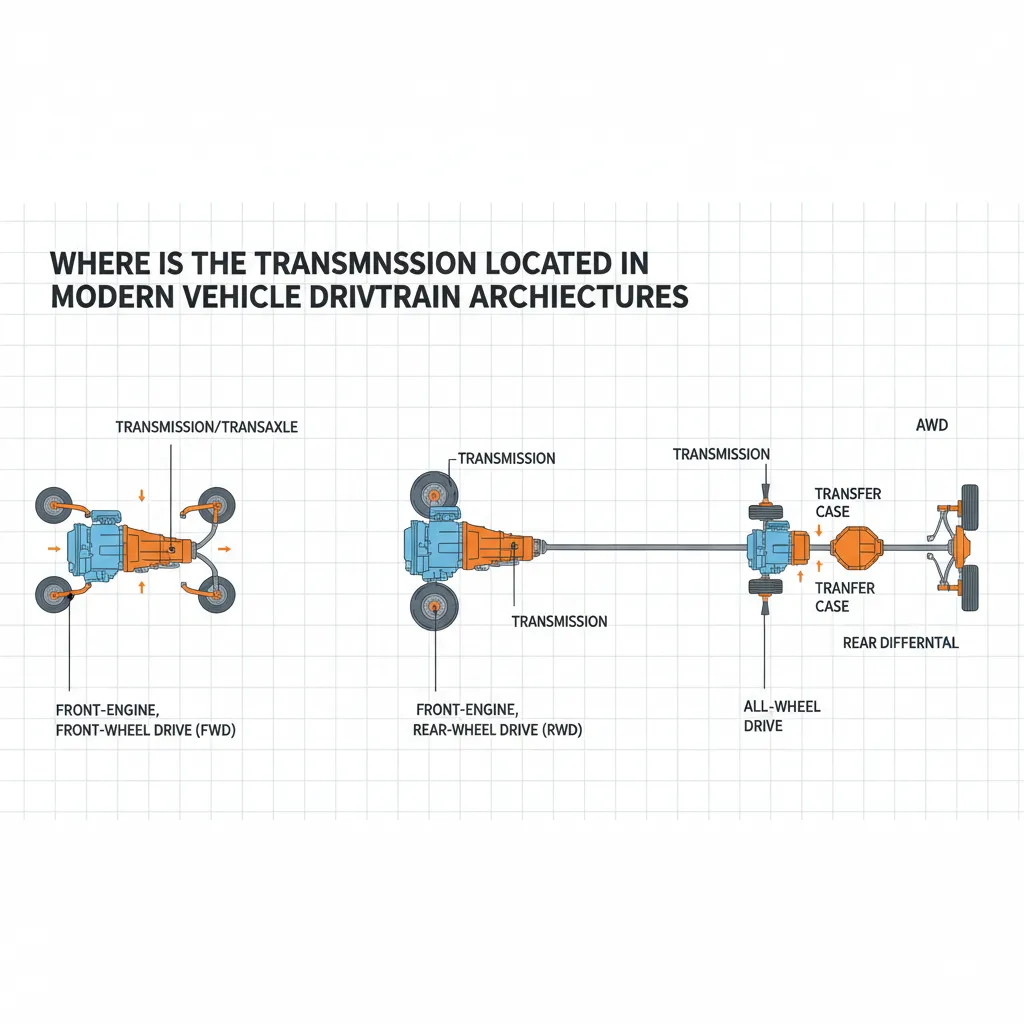
While the engine is often considered the heart of a vehicle, the transmission serves as the vital intelligence that translates raw power into controlled motion. For many owners and aspiring technicians, locating the transmission can be a challenge due to the wide variety of drivetrain configurations ranging from transverse compacts to longitudinal heavy-duty trucks. This article provides a professional guide to identifying where the transmission is located across different vehicle architectures, ensuring you have the expert knowledge required for maintenance or identification. Whether you are looking for a complete overview for a DIY project or a trusted resource for technical verification, this comprehensive guide delivers the quality insights needed to navigate modern drivetrains.
Where is the transmission in front-wheel drive transverse layouts
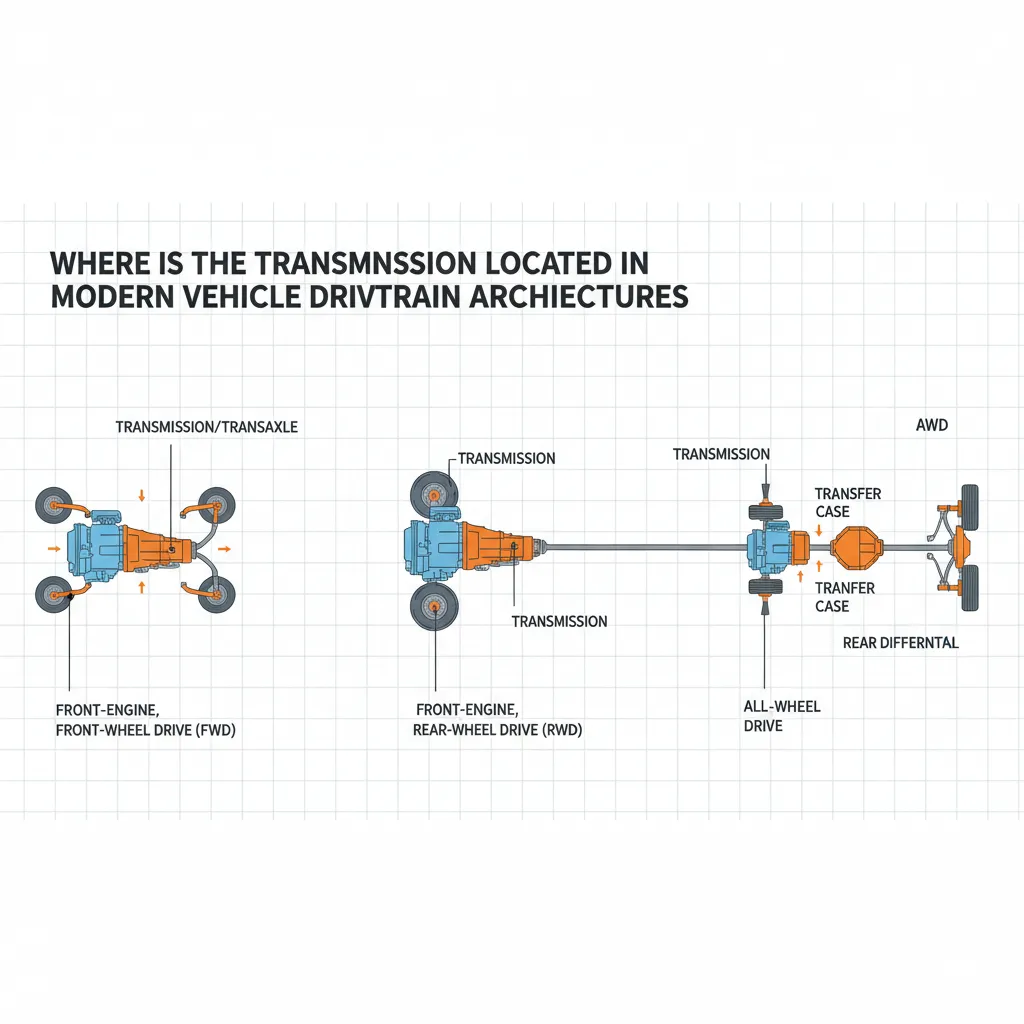
In the modern automotive landscape, approximately 70 percent of passenger vehicles utilize a transverse front-wheel drive layout. In this configuration, the engine is mounted “sideways” in the engine bay, meaning the crankshaft runs parallel to the front axle rather than front-to-back. This orientation is a hallmark of efficiency, allowing manufacturers to maximize cabin space by minimizing the engine compartment’s footprint.
In these systems, you will not find a separate transmission and differential housing in the traditional sense. Instead, these components are integrated into a single, compact unit known as a transaxle. The transaxle is bolted directly to the side of the engine block, typically on the driver’s side in left-hand drive vehicles. This placement creates a very short path for power to travel from the engine to the front wheels via the CV (constant velocity) axles.
Visual Identification in FWD Architectures
To locate the transaxle, open the hood and look past the battery or air intake box. You will see the engine block on one side and a large, usually silver or black metal casting on the other. This is the transaxle housing. If you are looking from underneath the vehicle, the unit sits directly behind the front subframe, with two thick rubber-booted shafts (the CV axles) protruding from its sides and connecting to the wheel hubs.
Common Transverse Examples
- Honda Civic: Known for highly compact transaxles that prioritize low-center-of-gravity placement.
- Toyota Camry: Features a robust transaxle assembly that integrates the differential and final drive gears.
- Volkswagen Golf: Utilizes the transverse MQB platform where the transmission is mounted to the left of the engine block.

Where is the transmission in rear-wheel drive longitudinal configurations
Rear-wheel drive (RWD) vehicles, including most pickup trucks, luxury sedans, and performance sports cars, utilize a longitudinal mounting. In this setup, the engine is positioned front-to-back. The transmission is located directly behind the engine, extending toward the rear of the vehicle. This layout is preferred for heavy-duty applications because it allows for larger, more robust gearboxes that can handle higher torque loads.
Because the transmission must sit behind the engine, it occupies the space directly beneath the vehicle’s center console and dashboard area. This necessitates a transmission tunnel—a structural hump in the floor pan of the vehicle—to provide adequate clearance. Rear-wheel drive transmissions are often 30 to 50 percent longer than their FWD counterparts because they include a separate tailshaft housing that connects to a driveshaft leading to the rear differential.
Locating the Bellhousing and Tailshaft
When inspecting an RWD vehicle from underneath, the first thing you will encounter behind the engine is the bellhousing. This flared section of the transmission case houses the torque converter (in automatics) or the clutch and flywheel (in manuals). From there, the transmission body tapers back toward the rear. Professional inspection usually requires a lift, as the unit is tucked high into the chassis for protection and ground clearance.
In longitudinal trucks like the Ford F-150 or Chevrolet Silverado, the transmission is easily accessible from the undercarriage. However, in sports cars like the BMW 3 Series, the transmission may be shrouded by aerodynamic belly pans that must be removed for visual verification.

Locating the transmission in all-wheel drive and four-wheel drive systems
All-wheel drive (AWD) and four-wheel drive (4WD) systems add a layer of complexity to the drivetrain architecture. While the primary transmission remains the heart of the system, it is often paired with auxiliary power distribution units. AWD systems can add between 150 to 300 pounds of additional drivetrain components, most of which are concentrated around or directly behind the transmission area.
In 4WD trucks, such as a Jeep Wrangler, the transmission is followed by a transfer case. The transfer case is a separate gearbox bolted to the back of the transmission that splits power between the front and rear axles. In many modern AWD crossovers, the transmission is a transaxle (similar to FWD) but includes a Power Take-Off Unit (PTU). The PTU is a small gearbox attached to the transaxle that redirects power to the rear wheels via a secondary driveshaft.
📋
Tracing AWD/4WD Components
Locate the large housing directly behind (longitudinal) or beside (transverse) the engine block.
Follow the transmission to the transfer case or PTU. Look for the electronic actuators that manage “shift-on-the-fly” engagement.
Where is the transmission in mid-engine and rear-engine specialty vehicles
High-performance specialty vehicles utilize unconventional layouts to achieve superior handling. Mid-engine layouts, such as the Chevrolet Corvette C8, place the engine behind the passenger cabin but ahead of the rear axle. In this configuration, the transmission (usually a Dual-Clutch Transmission or DCT) is located behind the engine, sitting directly over or slightly behind the rear axle. This achieves a near 45/55 weight distribution, providing incredible traction under acceleration.
Rear-engine vehicles, most notably the Porsche 911, place the engine at the very back of the car. Here, the transmission sits forward of the engine, effectively mirroring a front-wheel-drive transaxle but in reverse. Identifying these units is often a professional challenge because they are frequently encased in cooling shrouds and aerodynamic panels. Accessing these transmissions typically requires removing the entire engine cradle or significant portions of the rear bodywork.
In mid and rear-engine layouts, shift linkages and cooling lines must travel the entire length of the chassis. A failure in a shift cable located at the front of the car can often be misdiagnosed as a transmission failure at the rear.
Identifying transmission types through visual and technical verification
Once you have found the location of the unit, identifying the specific model is the next step for trusted maintenance. Modern transmissions are highly specialized; for example, a ZF 8-speed automatic looks vastly different from a traditional Aisin manual gearbox. Visual cues include the shape of the transmission fluid pan and the number of bolts securing it—GM’s 4L60E and 4L80E, for instance, are most easily distinguished by their distinct pan footprints.
For a complete identification, professionals rely on technical data. Modern gearboxes house over 50 individual electronic sensors that communicate via the OBD-II port. By connecting a professional scanning tool, you can communicate directly with the Transmission Control Module (TCM) to pull the exact hardware version and software calibration.
Technical Identification Methods
Pull factory build sheets for exact specs
Found on the casing or bellhousing
Digital verification via the TCM
In summary, transmissions are located relative to engine orientation, appearing as side-mounted transaxles in FWD cars or center-mounted units in RWD and 4WD vehicles. Identifying the specific unit requires a combination of visual inspection of the housing and technical verification via VIN or ID tags. Understanding these professional layouts is essential for accurate diagnostics and ensuring high-quality maintenance of the drivetrain. If you are performing maintenance, always consult a trusted service manual specific to your vehicle’s make and model to ensure safe and reliable access to the transmission components.
Frequently Asked Questions
How can I tell if my transmission is a transaxle?
If your vehicle is front-wheel drive and the engine is mounted sideways (transversely), you have a transaxle. This unit combines the transmission and differential into one housing located directly between the front wheels. Professional technicians identify these by looking for the drive axles (CV axles) emerging directly from the transmission casing rather than from a separate rear axle assembly.
Where is the transmission fluid dipstick usually located?
In many older or rear-wheel-drive vehicles, the transmission dipstick is located at the back of the engine bay near the firewall, often featuring a brightly colored handle. However, modern professional engineering has shifted toward ‘sealed’ transmissions. In these cases, there is no dipstick, and fluid levels must be checked via a reliable overflow plug located on the side or bottom of the transmission case.
Is the transmission located in the same place in hybrid vehicles?
Hybrid vehicles often utilize an Electronic Continuously Variable Transmission (eCVT) or an integrated motor-generator unit. In front-wheel-drive hybrids, this unit sits in the traditional transaxle location. However, because it incorporates high-voltage electric motors, the housing may look significantly different and features heavy-duty orange electrical cabling that signals the need for professional handling and safety precautions.
Can I see the transmission without lifting the car?
In most front-wheel-drive vehicles, you can see the top of the transmission or transaxle by looking down past the air intake or battery on the driver’s side of the engine bay. For rear-wheel-drive vehicles, the unit is tucked under the floorboards, meaning you can generally only see the very front of the bellhousing from above; a full view requires a professional lift.
Why is the transmission located under the center console in some cars?
In rear-wheel-drive and some all-wheel-drive vehicles, the transmission is positioned longitudinally. To maintain a low center of gravity and provide adequate ground clearance, the unit is tucked into a structural ‘tunnel’ that runs through the middle of the cabin. This is why many professional sports cars and trucks have a large raised area between the driver and passenger seats.