
How to Store a Tire Inflator in a Car Safely

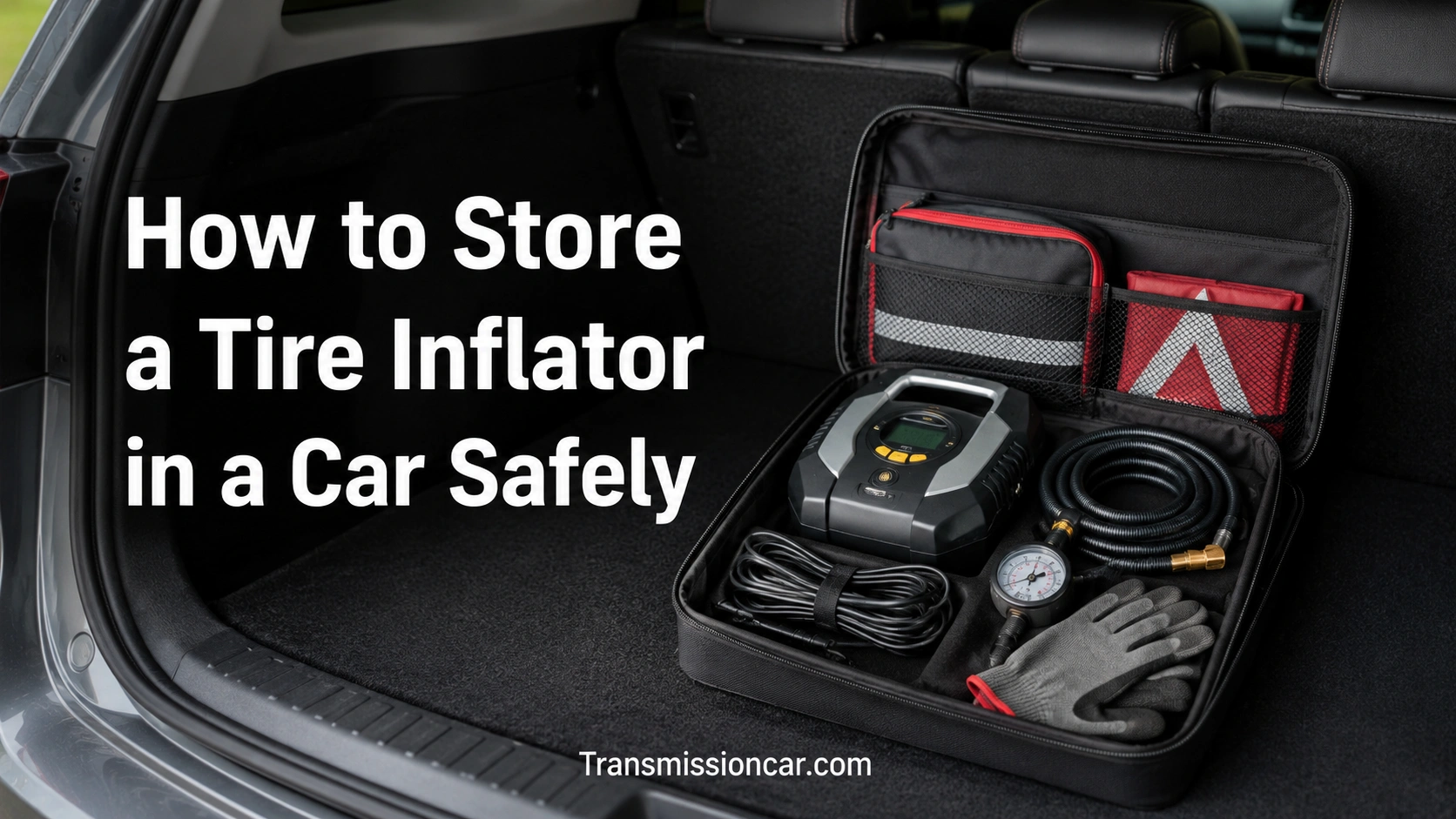
A portable tire inflator is useful only when it works during an emergency. Many drivers leave one loose in the trunk, bury it under luggage, or keep a rechargeable model in damaging heat for months. Learning how to store a tire inflator in a car protects the compressor, hose, cord, battery, and pressure gauge.
The best setup is simple: use a protective case, secure it in a dry cargo area, protect it from extreme temperatures, and inspect it regularly. This guide explains the safest storage locations, differences between corded and rechargeable inflators, warning signs, and situations where inflation is not a safe repair.
Quick Answer
To store a tire inflator in a car, place it in a protective case inside the trunk, cargo organizer, or under-floor compartment. Secure the case so it cannot slide, coil the hose and cord loosely, and protect rechargeable batteries from extreme heat. Test the inflator every few months and before long trips.
Why Proper Storage Matters
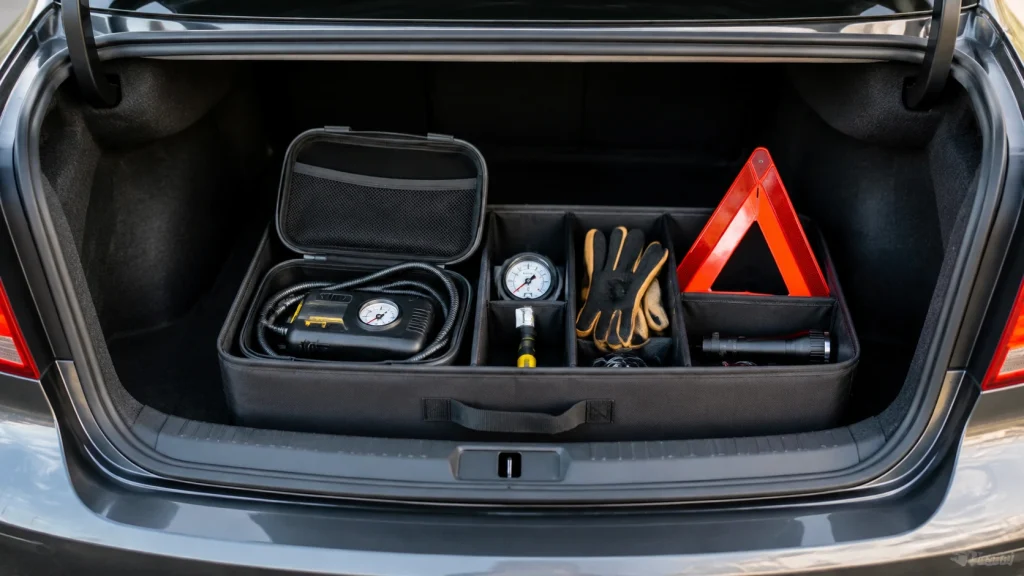
A tire inflator contains parts that can be damaged even when the housing looks rugged. The gauge may lose accuracy, the hose can crack, connectors can corrode, and tightly folded power cords may break internally.
Loose storage is also unsafe. A heavy inflator can slide during hard braking, strike other cargo, or become a projectile in a crash.
Proper storage helps you:
- Protect the hose, cord, connectors, and gauge
- Reduce moisture and corrosion
- Keep adapters and accessories together
- Find the unit quickly during an emergency
- Extend the life of the compressor
- Notice damage before roadside use
Keeping an inflator in the vehicle also supports basic emergency preparation. The federal Ready.gov car safety guidance recommends maintaining a vehicle emergency kit for breakdowns and severe weather. (Ready.gov)
Best Places to Store a Tire Inflator
For most drivers, the best location is inside a protective case in the trunk or rear cargo area. It should stay dry, remain accessible, and be secured against movement.
| Storage location | Best feature | Main limitation |
|---|---|---|
| Under-floor cargo compartment | Hidden and well protected | Hard to reach under luggage |
| Trunk-side pocket | Easy access with little movement | May not fit a large compressor |
| Secured cargo organizer | Holds a full emergency kit | Must be strapped down |
| Spare-tire well | Keeps tire tools together | May collect moisture |
| Behind-seat truck bin | Protected from weather and theft | Cabin heat can affect batteries |
Avoid storing the inflator loose on a seat, rear shelf, or cargo floor. Do not place it under the driver’s seat, where the unit or cord could move toward the pedals.
Keep it close enough to the trunk opening that you can reach it without unloading several heavy bags beside traffic. Use cargo hooks, a fitted pocket, hook-and-loop fasteners, or a strapped organizer.
How to Store a Tire Inflator in a Car: 7 Steps
1. Read the Manual
Check the manufacturer’s storage-temperature limits, moisture warnings, charging schedule, fuse requirement, hose storage instructions, and duty cycle. The manual should control whenever it differs from general advice.
2. Let It Cool
Portable compressors become hot during use. Turn the unit off and let it cool before closing it inside a case.
Never pack a hot inflator beside paper, fabric, aerosol cans, or other heat-sensitive items. The metal hose fitting may also remain hot after inflation.
3. Clean and Dry It
Wipe away water, mud, road salt, and sealant residue. If the unit became wet, dry it in a ventilated indoor location before storing or charging it.
4. Coil the Hose and Cord Loosely
Use wide loops instead of tight bends. Sharp wrapping can weaken the hose near the compressor and damage wires near the plug. Cap the air chuck when possible and keep adapters in a small pouch.
5. Use a Protective Case
A fitted case is ideal. A padded tool bag or sturdy plastic box can also work if it protects the gauge, switches, hose connections, and electrical plug.
A basic bag may cost about $10 to $25. A stronger hard case or cargo organizer may cost $20 to $60. Expensive storage is unnecessary, but the case should not crush the unit or force the hose into sharp bends.
6. Secure the Case
Use a cargo strap, trunk organizer, non-slip mat, or hook-and-loop fastener. Keep the inflator away from sharp tools, leaking fluids, fuel containers, and objects that could puncture a battery.
7. Store Instructions With It
Keep the quick-start guide, fuse information, and duty-cycle limit inside the case. Add a card showing the vehicle’s recommended cold tire pressures.
Verify those numbers using the driver-side door placard or owner’s manual. The NHTSA TireWise guidance explains that the recommended pressure comes from the vehicle manufacturer, not the maximum pressure printed on the tire sidewall. (NHTSA)
Corded vs. Rechargeable Inflator Storage
12-Volt Corded Inflators
A 12-volt inflator plugs into a vehicle outlet or connects directly to the battery. It is often the easier choice for permanent in-car storage because it does not rely on a charged internal battery.
Store it with the cord loosely coiled, plug protected, and correct spare fuse nearby. If it has battery clamps, cover them so they cannot contact metal.
Before use, confirm that the inflator’s current draw is suitable for the vehicle outlet. Some larger compressors must connect directly to the battery.
Rechargeable Inflators
Rechargeable units are convenient, but lithium-ion batteries need more care. Parked vehicles can become extremely hot, and prolonged heat can shorten battery life. Damaged batteries can also overheat or catch fire.
The Consumer Product Safety Commission battery guidance notes that battery incidents can occur during use, charging, and storage. PHMSA also warns that damaged or defective lithium batteries have a greater chance of short-circuiting, releasing heat, or causing a fire. (U.S. Consumer Product Safety Commission)
For safer storage:
- Follow the stated temperature limits
- Never store a swollen, cracked, leaking, or recalled battery
- Keep exposed terminals away from metal objects
- Do not charge the unit in an unattended hot vehicle
- Remove the battery during prolonged extreme heat when instructed
- Recharge and test it on the manufacturer’s schedule
Removing a battery protects it from heat, but it also leaves the inflator unusable if you forget to bring it. Drivers in very hot climates may prefer a quality 12-volt corded model for permanent emergency storage.
Hybrid Inflators
A hybrid model can use a rechargeable battery and a 12-volt cord. This provides useful backup power. Store the cable with the unit even when you normally rely on the battery.
Protect It From Heat, Cold, and Moisture
Heat: Do not leave the inflator on the dashboard, rear shelf, or in direct sunlight. Use shaded cargo storage and follow the manual’s maximum storage temperature.
Cold: Low temperatures can temporarily reduce rechargeable-battery output. Before winter travel, charge and test the unit indoors, inspect the hose for cracks, and keep the backup cable if supplied.
Moisture: Avoid damp spare-tire wells, open pickup beds, and areas near leaking containers. A sealed exterior toolbox may block rain but can still trap condensation and heat.
What to Store With the Inflator
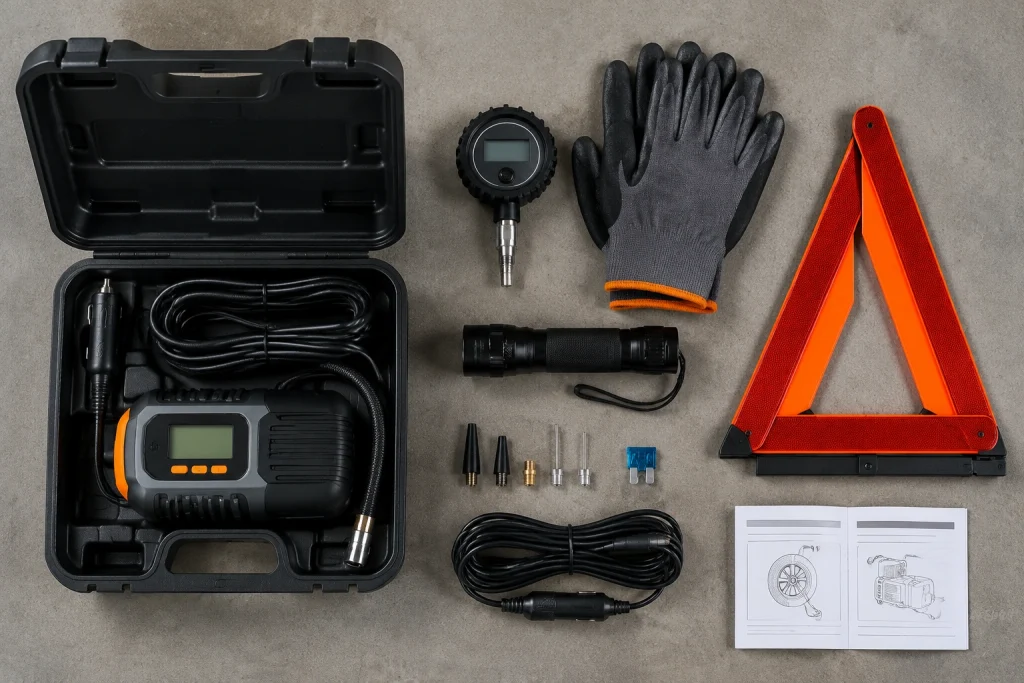
Keep the inflator as part of a compact tire emergency kit:
- Reliable tire-pressure gauge
- Work gloves
- Flashlight or headlamp
- Reflective warning triangle
- Valve caps and approved adapters
- Spare fuse for a corded model
- Paper instructions
- Kneeling pad or towel
- Tire plug kit, only if you know its limits
An inflator does not replace a spare tire, roadside assistance, or professional tire repair. It may restore pressure temporarily, but it cannot fix every puncture.
Expert Tip
Expert Tip: Write the vehicle’s recommended cold tire pressures on a card and store it inside the inflator case. Update the card after changing vehicles or switching to another manufacturer-approved tire setup.
How Often Should You Inspect It?
Inspect the inflator every three months, before a long trip, and after severe heat, cold, or moisture.
- Check the case for water or damage.
- Inspect the cord and plug for cuts or scorching.
- Check the hose for cracks, bubbles, or leaks.
- Examine the chuck and adapters.
- Look for battery swelling, leakage, or corrosion.
- Turn the unit on briefly.
- Compare its gauge with a separate reliable gauge.
- Confirm the cable and hose reach every tire.
- Replace expired sealant if the kit includes it.
Ready.gov recommends checking vehicle emergency supplies regularly and replacing expired items. Rechargeable inflators deserve closer checks because batteries can discharge or deteriorate during storage. (Ready.gov)
Warning Signs the Inflator Is Unsafe
Stop using the inflator if you notice:
- A swollen, cracked, leaking, or unusually hot battery
- Smoke, a burning smell, or melted plastic
- Frayed wiring or exposed copper
- A scorched or loose power plug
- A cracked or leaking hose
- Corroded terminals
- An unreliable pressure gauge
- Grinding, extreme vibration, or impact damage
- A recall affecting the inflator or battery
Do not open or attempt to repair lithium-ion battery cells. Follow the manufacturer’s replacement, recycling, or disposal instructions.
Common Mistakes Vehicle Owners Should Avoid
- Leaving the inflator loose: It can slide, break, or become a projectile.
- Placing heavy luggage on it: The gauge and fittings may crack.
- Wrapping the cord tightly: Sharp bends can damage internal wires.
- Ignoring summer heat: Rechargeable batteries may deteriorate faster.
- Packing it while hot: Let the compressor cool after use.
- Forgetting the cable or adapter: The unit may be unusable roadside.
- Using tire-sidewall pressure: Follow the door placard instead.
- Depending on sealant for every flat: Sidewall damage and blowouts need another solution.
- Running the engine in an enclosed garage: Exhaust creates a carbon-monoxide hazard.
- Never testing the unit: A dead battery or blown fuse may go unnoticed.
When a Tire Inflator Is Not Enough
Seek roadside assistance or tire service when:
- Pressure drops again within minutes
- The sidewall is cut, bulging, or punctured
- The tread is separating
- The wheel is bent or cracked
- The tire has come off the rim
- Air escapes continuously
- The vehicle shakes after inflation
- The TPMS warning remains after all pressures are corrected
Inflate only to the vehicle manufacturer’s recommended cold pressure. Never exceed the compressor’s duty cycle or continue operating a unit that smells hot, slows sharply, or shuts down repeatedly.
When to Call a Transmission Professional
A tire inflator cannot correct a transmission or driveline problem. Call a transmission professional when tire pressures are correct but the vehicle still slips between gears, delays when entering Drive or Reverse, leaks red or brown fluid, makes grinding or whining noises, will not move normally, or displays a transmission warning.
Also request an inspection if a flat tire or blowout was followed by a strong impact underneath the vehicle. A curb, pothole, or road-debris strike may damage transmission cooling lines, the transmission pan, axles, or other driveline parts.
Choose a shop that provides a written diagnosis, explains test results, gives an itemized estimate, and states warranty terms before major work begins.
FAQs
Can I leave a tire inflator in my car all year?
A corded 12-volt inflator can usually remain in the vehicle when stored within its temperature and moisture limits. Rechargeable models need more caution because heat and cold affect the battery.
Is the trunk too hot for a rechargeable tire inflator?
It may be during hot weather. Follow the manual’s storage limit. Remove the battery or unit during prolonged extreme heat if required, or keep a corded model as the permanent backup.
Should I store the battery attached?
Follow the manufacturer’s instructions. Never store a damaged battery, and protect detached terminals from keys, tools, or other metal objects.
Can I use the spare-tire compartment?
Yes, if it is dry, roomy, and accessible. Check it periodically for leaks or condensation, and do not force the inflator against the spare or jack.
How often should I charge the inflator?
Follow the manufacturer’s schedule. Check the charge every one to three months and before long trips, especially after extreme temperatures.
Should I disconnect a removable hose?
Disconnect it when the manual recommends it. Store it loosely coiled and protect the fittings from dirt and moisture.
Can an inflator fix a completely flat tire?
It can refill some tires with a slow leak or small puncture. It cannot safely repair a torn sidewall, blowout, damaged rim, separated tread, or tire that will not hold pressure.
Conclusion
The safest answer to how to store a tire inflator in a car is to protect it from movement, crushing, moisture, and extreme temperatures. Place it in a fitted case, secure it in the trunk or cargo area, coil the hose and cord loosely, and keep the correct accessories with it.
A corded 12-volt model is often easier to keep in a vehicle year-round. A rechargeable model requires closer attention to heat, charge level, and battery condition.
Inspect your inflator today, confirm the recommended tire pressures on the driver-side door placard, and place the kit where you can reach it quickly. A few minutes of organization can make a roadside pressure problem safer and far less stressful.
