
How to Avoid Overinflating Tires When Using a Tire Inflator

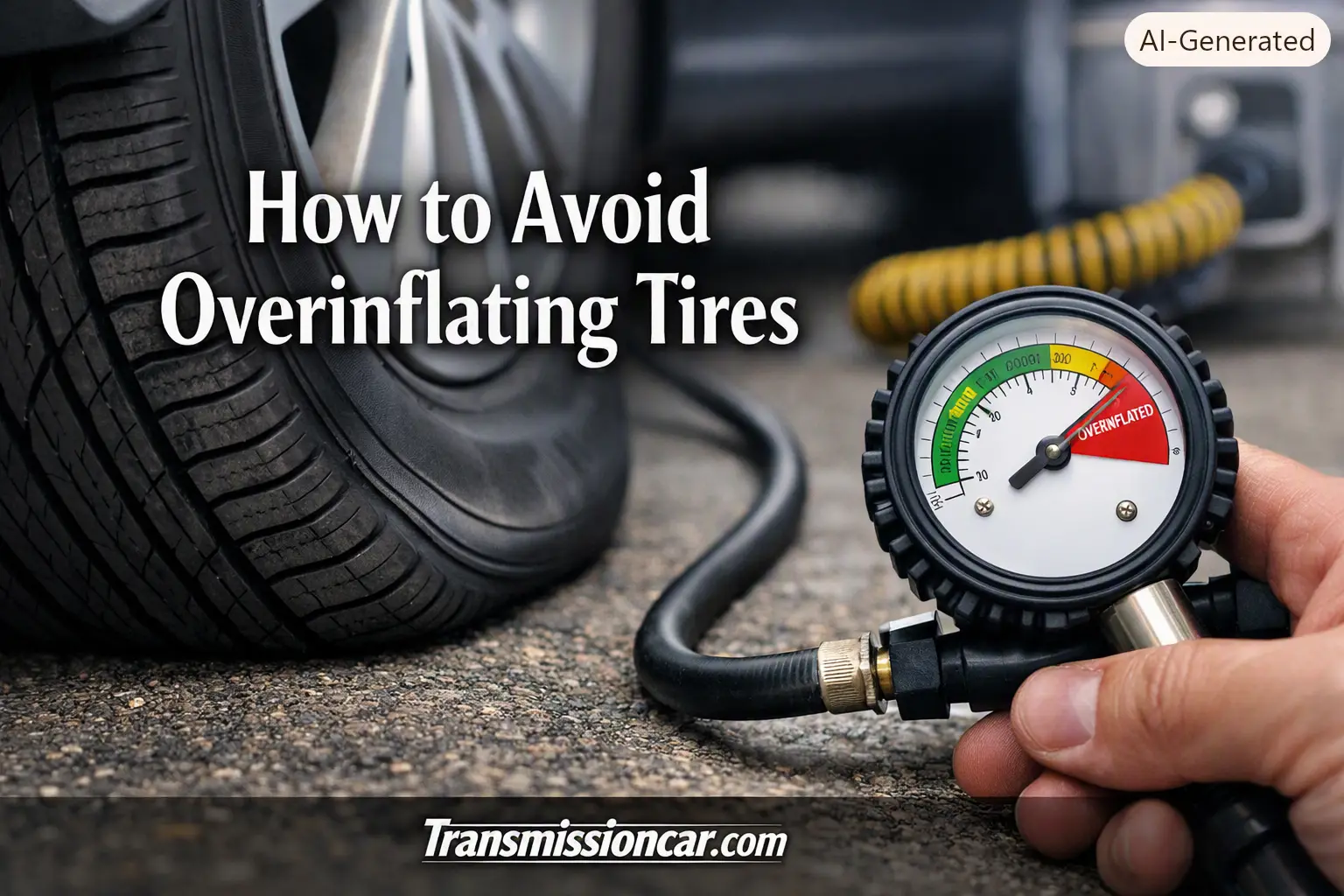
A portable tire inflator makes it easy to correct l(NHTSA)owever, adding too much air can create a rough ride, reduce tire contact with the road, and contribute to uneven tread wear.
Learning how to avoid overinflating tires is mostly about using the correct pressure specification, checking tires at the right time, and adding air in controlled steps. This guide explains how to use an inflator safely, choose a reliable gauge, recognize excess pressure, and correct mistakes before they affect your tires or vehicle handling.
Quick Answer
To avoid overinflating tires, find the recommended cold pressure on the driver-side door label, check the tire with an accurate gauge, and add air in short bursts. Stop frequently to recheck the pressure. Do not use the maximum PSI printed on the tire sidewall as your normal inflation target.
Why Tire Overinflation Matters
A tire supports the vehicle by using pressurized air inside its structure. When the pressure is too high, the tire becomes stiffer and may not flex as intended over bumps and rough pavement.
Possible effects of overinflation include:
- A harder or harsher ride
- Reduced impact absorption
- Faster wear near the center of the tread
- Less consistent traction on uneven roads
- Greater vulnerability to damage from potholes and sharp objects
- Changes in steering feel and braking behavior
Overinflation does not automatically mean a tire will fail immediately. However, regularly driving above the vehicle manufacturer’s recommended pressure can reduce comfort, shorten tire life, and make the vehicle less predictable.
The U.S. Tire Manufacturers Association’s tire-care guidance notes that overinflated tires are more vulnerable to cuts, punctures, and impact damage when they strike obstacles such as potholes. (U.S. Tire Manufacturers Association)mended PSI vs. Maximum Tire Pressure
One of the most common inflation mistakes is using the number printed on the tire sidewall.
Recommended tire pressure
The recommended pressure is selected by the vehicle manufacturer based on factors such as:
- Vehicle weight
- Suspension design
- Tire size
- Load distribution
- Braking performance
- Ride comfort
- Handling characteristics
You can normally find this specification on:
- The Tire and Loading Information label inside the driver-side door
- The driver-side door pillar
- The vehicle owner’s manual
- An official manufacturer tire-pressure chart
The front and rear tires may require different pressures. Always read the label carefully instead of assuming that all four tires use the same PSI.
Maximum sidewall pressure
The number molded into the tire sidewall is generally the maximum cold pressure associated with the tire’s rated load. It is not automatically the correct everyday pressure for your vehicle.
For example, a tire may show a maximum pressure of 51 PSI while the vehicle door label recommends 35 PSI. Inflating that tire to 51 PSI for normal driving would place it well above the vehicle’s intended setting.
According to NHTSA’s TireWise safety guidance, drivers should follow the pressure listed on the vehicle label or in the owner’s manual—not the number printed on the tire itself. (NHTSA)ant warning:** Never increase pressure simply because a replacement tire has a higher maximum PSI than the original tire.
How to Avoid Overinflating Tires Step by Step
The safest method is to inflate slowly, measure repeatedly, and stop at the vehicle manufacturer’s recommended cold pressure.
1. Find the correct pressure
Open the driver-side door and locate the Tire and Loading Information label. Look for the recommended pressure for:
- Front tires
- Rear tires
- Spare tire, when listed
Write the numbers down or take a photo of the label with your phone.
Do not rely on memory, especially when maintaining multiple vehicles.
2. Check the tires when they are cold
A cold tire is generally one that has not been driven for at least three hours. Tire pressure rises while driving because the air inside becomes warmer.
Checking cold tires gives you a consistent reference point. NHTSA recommends measuring tire pressure when the vehicle has been parked for at least three hours. (NHTSA) times to check pressure are:
- Early in the morning
- Before beginning a trip
- After the vehicle has been parked for several hours
- Before carrying a heavy load or towing
3. Use a dependable pressure gauge
Some tire inflators have built-in digital or analog gauges. These are convenient, but their accuracy can vary.
For better control, keep a separate tire-pressure gauge available. Useful options include:
| Gauge type | Main benefit | Possible limitation | Best use |
|---|---|---|---|
| Pencil gauge | Compact and inexpensive | Small markings may be difficult to read | Emergency kits |
| Dial gauge | Clear display and no battery required | Can be damaged if dropped | Home garages |
| Digital gauge | Easy-to-read numerical result | Requires a working battery | Routine pressure checks |
| Inflator gauge | Shows pressure while adding air | Accuracy varies by model | Fast roadside inflation |
A quality inflator should have a readable display, a secure valve connector, a durable hose, and controls that allow air to be added gradually.
4. Measure before adding air
Remove the valve cap and press the gauge firmly onto the valve stem.
A brief hiss is normal while connecting the gauge. However, continuous hissing usually means the gauge is not seated correctly.
Record the starting pressure before using the inflator. This prevents unnecessary inflation when a tire is already at or above the correct setting.
5. Connect the inflator securely
Attach the inflator hose to the valve stem. Depending on the design, the connector may:
- Screw onto the valve
- Lock into place with a lever
- Push directly onto the valve
- Use a quick-connect fitting
Make sure the connection is straight and secure. A loose connection can leak air and produce an inaccurate gauge reading.
6. Add air in short bursts
Avoid running the inflator continuously until the display reaches the target number.
Instead:
- Add air for several seconds.
- Stop the inflator.
- Allow the gauge reading to stabilize.
- Check the pressure again.
- Repeat as needed.
As you approach the target pressure, use shorter bursts. For example, if your target is 35 PSI and the tire reaches 34 PSI, add air for only one or two seconds before checking again.
Do not try to reach the target as quickly as possible. Controlled inflation is safer than correcting several extra pounds of pressure afterward.
7. Verify with a separate gauge
After stopping the inflator, disconnect the hose and measure the tire with your separate gauge.
Built-in inflator gauges may read differently while the compressor is operating because air is moving through the hose. The pressure shown after the compressor stops is usually more useful, but an independent gauge provides additional confirmation.
8. Release excess air carefully
When the pressure is too high, press the small pin inside the valve stem using:
- The pressure-release button on the gauge
- A gauge with a built-in bleeder valve
- The back of a suitable pencil gauge
- A small valve tool designed for releasing air
Release air for only a second or two, then measure again.
Do not press the valve continuously. Tire pressure can drop faster than expected, particularly on smaller passenger-car tires.
9. Replace the valve cap
Install the valve cap after checking the final pressure. The cap helps protect the valve from moisture, dirt, and road debris.
Repeat the same process for every tire, including the spare when accessible.
Do Automatic Shutoff Inflators Prevent Overinflation?

Many digital tire inflators allow you to enter a target pressure. The inflator then stops automatically when it believes that pressure has been reached.
This feature can reduce the chance of adding too much air, but it should not replace manual verification.
Automatic shutoff may be affected by:
- Gauge calibration
- Pressure changes inside the hose
- A leaking valve connection
- Electrical voltage changes
- Temperature
- Low-quality pressure sensors
- Normal manufacturing tolerances
After the inflator shuts off, disconnect it and check the pressure with a separate gauge.
What to look for in an inflator
Choose a model with:
- An easy-to-read display
- Automatic shutoff
- Small pressure adjustment increments
- A stable hose connection
- A built-in pressure-release valve
- Adequate hose and power-cord length
- Clear operating instructions
- Overheat protection
- A suitable duty cycle
The duty cycle tells you how long the compressor can operate before it needs to cool. Small inflators may overheat when filling large truck or SUV tires continuously.
A more expensive inflator may provide a stronger motor, better hose, and more consistent gauge. However, price alone does not guarantee accuracy.
How Temperature Affects Tire Pressure
Tire pressure changes with air temperature. The pressure generally increases as temperatures rise and decreases as temperatures fall.
The U.S. Tire Manufacturers Association explains that pressure may change by approximately one to two PSI for every 10°F change in temperature. (U.S. Tire Manufacturers Association)ot bleed air from a hot tire unnecessarily
Suppose your door label recommends 35 PSI. You set the tires to 35 PSI in the morning, then measure 39 PSI after highway driving.
That higher reading does not necessarily mean the tires were overinflated. Heat created during driving has temporarily increased the pressure.
Do not automatically release air until a hot tire matches the cold-pressure specification. The tire could become underinflated after it cools.
When possible, allow the vehicle to sit for at least three hours and check the pressure again.
Recheck during seasonal changes
Inspect tire pressure when:
- The weather becomes significantly colder
- Temperatures rise sharply
- You begin a long road trip
- You tow a trailer
- You carry an unusually heavy load
- The TPMS warning appears
- The vehicle has been parked for an extended period
Signs Your Tires May Be Overinflated
A gauge provides the most reliable confirmation. However, several driving or wear symptoms may suggest that the pressure needs to be checked.
Harsh ride
The vehicle may feel unusually stiff over cracks, expansion joints, and small bumps.
Center tread wear
Excessive pressure can change the tire’s contact pattern. Over time, the center of the tread may wear faster than the shoulders.
Center wear can also result from other factors, so have the tire inspected before assuming pressure is the only cause.
Reduced grip on uneven roads
A tire that is too stiff may have difficulty maintaining consistent contact over rough pavement.
Increased sensitivity to potholes
Overinflated tires absorb less impact through normal sidewall flex. This can increase the chance of tire, wheel, or suspension damage after a hard strike.
Unusual steering response
The steering may feel lighter, sharper, or less settled than normal. Unequal pressure between the left and right tires can also cause pulling or inconsistent handling.
Expert Tip
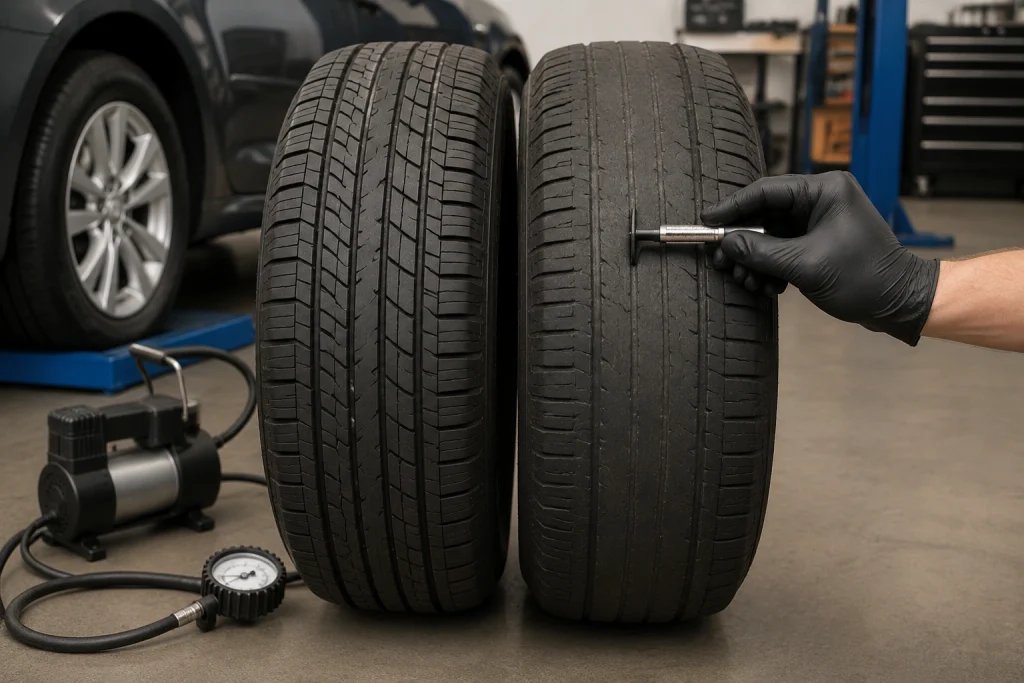
Expert Tip: Set the inflator one PSI below the target when using an unfamiliar machine. Disconnect it, verify the pressure with your trusted gauge, and add the final amount manually. This gives you more control and helps reveal whether the inflator’s built-in gauge reads high or low.
How Often Should You Check Tire Pressure?
Check all tires at least once a month and before long trips. Include the spare tire, because an emergency spare is not useful when it has lost too much pressure.
Do not wait for the Tire Pressure Monitoring System light. TPMS is mainly designed to warn about significant underinflation and does not replace routine checks with a gauge. (NHTSA)cal maintenance schedule is:
| Situation | Recommended action |
|---|---|
| Normal daily driving | Check monthly while cold |
| Before a road trip | Check all tires and the spare |
| Major temperature change | Recheck cold pressure |
| After hitting a pothole | Inspect the tire and check pressure |
| After tire service | Verify pressure before leaving |
| TPMS warning appears | Stop safely and check all tires |
| Carrying heavy cargo | Follow the vehicle manufacturer’s load guidance |
| Towing a trailer | Check vehicle and trailer tire specifications |
Proper inflation also supports fuel efficiency. The U.S. Department of Energy’s efficient-driving guidance states that properly inflated tires can improve fuel economy while supporting tire life and safety. (Alternative Fuels Data Center)n Mistakes Vehicle Owners Should Avoid
- Using the tire’s maximum sidewall PSI as the target. Follow the vehicle door label instead.
- Checking pressure immediately after driving. Hot tires normally show a higher reading.
- Trusting only the TPMS light. The system may not warn you about mild overinflation or small pressure differences.
- Inflating continuously without stopping. Add air in short, controlled bursts.
- Relying on an untested inflator gauge. Compare it with a separate quality gauge.
- Ignoring different front and rear specifications. Some vehicles require different PSI settings.
- Releasing too much air at once. Bleed pressure briefly and recheck.
- Forgetting the spare tire. Compact spares may require much higher pressure than road tires.
- Assuming nitrogen prevents overinflation. Nitrogen-filled tires still require pressure checks and adjustment.
- Changing pressure to correct alignment problems. Pulling or uneven wear may require alignment, rotation, balancing, or suspension repair.
- Continuing to inflate a visibly damaged tire. Bulges, cuts, exposed cords, and severe cracking require professional inspection.
When to Call a Transmission Professional
Tire overinflation normally requires help from a tire shop or general automotive technician—not a transmission specialist.
However, tire-pressure problems can create vibration, harshness, wheel hop, or inconsistent road feel that some drivers mistake for transmission trouble. Correct all four tire pressures first and inspect the tires for damage.
Call a qualified transmission professional when symptoms remain after the tires and wheels have been checked, especially if you notice:
- Delayed engagement when selecting Drive or Reverse
- Engine speed rising without normal acceleration
- Shuddering during gear changes
- Hard or unusually delayed shifts
- Transmission-fluid leaks
- Burning smells
- Transmission warning messages
- Grinding or mechanical noises linked to shifting
A transmission shop should not diagnose a shifting complaint without considering tire size, tire pressure, wheel speed sensors, and driveline condition. Incorrectly sized tires or major pressure differences can affect wheel-speed readings on some modern vehicles.
For tire-specific problems, seek professional inspection when:
- The pressure repeatedly increases or decreases abnormally
- A valve stem leaks
- The tire has a bulge, cut, puncture, or exposed cord
- The wheel is bent
- Tread wear is severe or uneven
- The vehicle vibrates after a pothole impact
- You cannot obtain a stable gauge reading
- The inflator repeatedly overheats or shuts down
Do not inflate a damaged tire and continue driving simply because it holds air temporarily.
FAQs
Can I overinflate a tire with an automatic tire inflator?
Yes. Automatic shutoff reduces the risk, but an inaccurate sensor, poor valve connection, or incorrect target setting can still leave the tire overinflated. Verify the final pressure with a separate gauge.
Is one or two PSI over the recommended pressure dangerous?
A small difference may occur because of gauge variation or temperature. Recheck the tire when cold with a reliable gauge. If it remains above the door-label specification, release a small amount of air.
Should I inflate my tires to the PSI printed on the sidewall?
No. The sidewall number is not normally the vehicle’s everyday inflation target. Use the recommended cold pressure on the driver-side door label or in the owner’s manual.
Should I release air when tire pressure rises after driving?
Not simply because the reading is higher. Driving warms the tires and naturally increases pressure. Recheck after the vehicle has been parked for at least three hours before making a cold-pressure adjustment.
Can overinflated tires trigger the TPMS light?
Most TPMS warning lights are designed primarily to identify significant underinflation. Many systems do not warn the driver when pressure is too high, so manual gauge checks remain necessary.
How do I know whether my tire inflator gauge is accurate?
Measure the same cold tire with the inflator gauge and a separate trusted gauge. A repeated difference suggests that one gauge may be inaccurate. A tire shop can also compare your gauge with its equipment.
Can overinflation damage the transmission?
Overinflation does not directly damage the transmission under normal conditions. However, incorrect pressure, mismatched tires, or different tire diameters can affect handling and wheel-speed data. Persistent shifting symptoms should be diagnosed separately.
Conclusion
Knowing how to avoid overinflating tires comes down to three habits: follow the vehicle’s door-label pressure, check the tires while they are cold, and add air slowly while measuring frequently.
Do not use the maximum sidewall PSI as your target, depend entirely on an automatic shutoff feature, or release air based only on a hot reading. Keep a reliable gauge in the vehicle and inspect the pressure at least monthly.
Before your next drive, check the door-jamb label, test all four tires and the spare, and correct any pressure differences. If a tire will not maintain a stable reading or shows visible damage, have it inspected before returning to the road.
