Allison 10 Speed Transmission Engineering, Performance Specifications, And Heavy-Duty Applications
The introduction of the Allison 10-speed transmission marked a pivotal shift in the capability and efficiency of heavy-duty diesel trucks. For decades,…
The introduction of the Allison 10-speed transmission marked a pivotal shift in the capability and efficiency of heavy-duty diesel trucks. For decades, the 6-speed Allison 1000 series was the gold standard, but as diesel engines pushed past the 900 lb-ft torque threshold, the industry required a more sophisticated mechanism to manage that power. Operators and fleet managers often struggle to understand whether the transition from 6 to 10 speeds provides tangible mechanical benefits or simply adds complexity to the drivetrain. This article provides a professional technical analysis of the Allison 10-speed architecture, its performance specifications, and the maintenance practices required to ensure its long-term reliability. We will explore how this trusted engineering marvel translates raw engine output into reliable towing performance.
Mechanical Architecture and Gear Ratio Distribution of the Allison 10-Speed
📤 Share Image
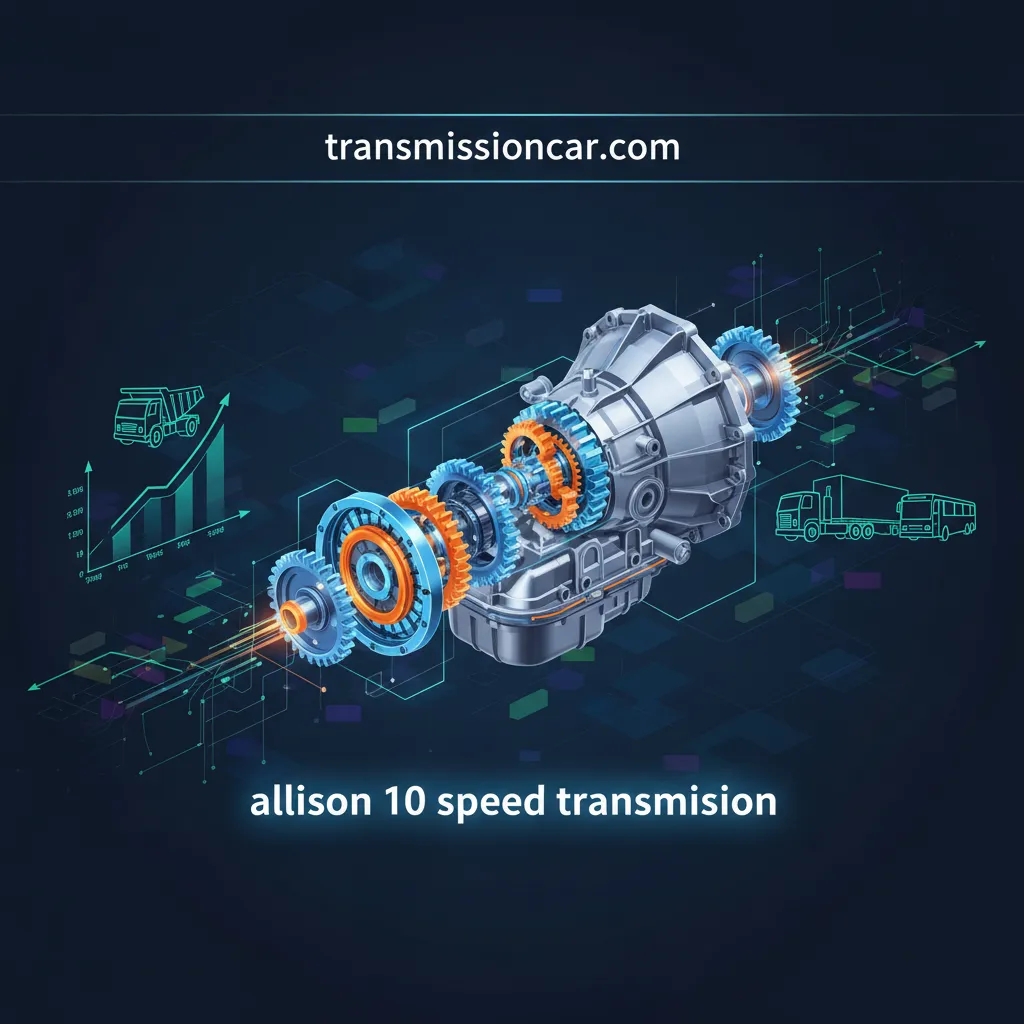
The mechanical backbone of the Allison 10-speed transmission (specifically the 10L1000 variant used in heavy-duty pickups) represents a sophisticated evolution in planetary gearset design. Unlike the legacy 6-speed Allison 1000, which utilized a three-planetary-gearset arrangement, the 10-speed architecture incorporates four simple planetary gearsets controlled by five clutches. This leap in complexity is precisely what allows for a 7.2 overall gear ratio spread, providing a much wider range of operation than the 5.1 spread found in older models.
The Power of a 4.54:1 First Gear
One of the most critical professional specifications of this transmission is the 4.54:1 first gear ratio. In a heavy-duty application, “launch torque” is everything. By comparison, the older 6-speed units typically featured a first gear in the 3.10:1 range. This deeper first gear allows a truck to move a 20,000-lb trailer from a dead stop with significantly less strain on the torque converter. It reduces the “stall time” where heat is generated, transferring energy to the wheels more efficiently.
Dual-Overdrive and Highway Efficiency
Efficiency at speed is managed by a dual-overdrive configuration. Ninth gear (0.68:1) and tenth gear (0.63:1) allow for exceptionally low engine RPM during highway cruising. The torque converter itself is a quality heavy-duty unit featuring a multi-disk lock-up clutch. This system is designed to engage early and stay engaged, minimizing parasitic power loss and keeping transmission fluid temperatures stable even when pulling maximum Gross Combined Weight Rating (GCWR) loads.
By The Numbers: Gear Ratio Comparison
1st Gear (10-Speed)
1st Gear (6-Speed)
10th Gear Ratio
Total Ratio Spread
Real-World Example: Imagine hauling a 20,000-lb fifth-wheel up a 6% incline. In a 6-speed Allison, a downshift often results in a massive 1,000+ RPM jump, causing the engine to scream near its redline or fall out of the torque curve. In the expert-calibrated 10-speed, the steps between gears are much tighter. The transmission can drop a single gear, keeping the engine perfectly centered in its 1,600–2,200 RPM “sweet spot,” maintaining momentum without the dramatic disruption of power.

Powertrain Integration and Duramax Engine Compatibility
The Allison 10-speed is not a standalone component; it is half of one of the most reliable powertrain duos in the industry. Its synergy with the L5P Duramax 6.6L Turbo-Diesel engine is a masterclass in electronic integration. In modern 2020-present Chevrolet Silverado and GMC Sierra 2500/3500 HD platforms, the Transmission Control Module (TCM) and Engine Control Module (ECM) communicate over a high-speed CAN-bus at millisecond intervals.
Torque Management and Smart Grade Braking
The 10L1000 is factory-rated to handle up to 445 horsepower and 910 lb-ft of torque. To ensure longevity, the TCM utilizes “torque management” during shift transitions. This momentarily reduces engine output during the clutch-to-clutch handover to prevent internal wear. Furthermore, the trusted Smart Grade Braking technology monitors throttle position, vehicle speed, and brake pressure. When descending a grade, the transmission automatically downshifts to use the engine’s backpressure to slow the vehicle, preserving the life of the mechanical service brakes.
Electronic Range Select (ERS)
Allows operators to manually limit the highest available gear, providing expert control over engine braking and hunting in hilly terrain.
Tow/Haul Mode Logic
Alters shift maps to hold gears longer and provide more aggressive downshifts, specifically calibrated for professional hauling cycles.
Efficiency Gains and Long-Haul Operational Benefits
For fleet owners and long-haul operators, the move to a 10-speed platform is driven by the bottom line. The comprehensive advantage of more gear ratios is the ability to keep the engine operating at its peak efficiency point regardless of road speed. In the legacy 6-speed era, a truck traveling at 70 mph might be spinning at 2,100 RPM. With the Allison 10-speed, that same truck can cruise at roughly 1,800–1,900 RPM.
Reduced Engine Wear and Cabin NVH
Lower cruising RPMs directly correlate to a reduction in Noise, Vibration, and Harshness (NVH). More importantly, it reduces the total number of engine revolutions over the vehicle’s lifespan, theoretically extending engine life. Thermal management is also superior; the 10-speed uses a highly efficient liquid-to-liquid cooling system integrated into the vehicle’s primary radiator, alongside a dedicated air-to-oil cooler for extreme conditions.
Internal fleet data consistently shows a 3-5% increase in MPG over a 100,000-mile cycle compared to the previous generation 6-speed. While seemingly small, for a hot-shot trucker covering 150k miles a year, this equates to thousands of dollars in annual fuel savings.
Acceleration Under Load
Because the gear steps are smaller, the 10-speed Allison reduces the 0-60 mph time under load. By staying within the engine’s peak torque band (1,600 – 2,800 RPM), the truck doesn’t “bog down” during shifts. This professional-grade performance makes merging onto highways with a heavy trailer much safer and more predictable.
Maintenance Standards for Sustained Professional Reliability
Despite its trusted reputation, the Allison 10-speed is a high-precision instrument that requires strict adherence to maintenance protocols. One common pitfall for owners is the use of generic transmission fluids. The 10L1000 requires Allison-approved TES 668™ or TranSynd™ 668 fluids. These are fully synthetic, high-viscosity-index fluids designed to handle the high-shear environment of a 10-speed gearbox.
📋
Expert Maintenance Guide
Always use TES 668. This fluid is backward compatible with TES 295 but offers improved anti-shudder properties and better oxidative stability for the 10-speed’s specific clutch materials.
While the manual may suggest 150,000 miles for normal duty, expert technicians recommend a 50,000-mile interval for trucks used in “Severe Duty” (towing >50% of the time).
Unlike the 6-speed Allison 1000, the 10-speed does not feature an external spin-on filter. It utilizes a high-capacity internal suction filter. This means a filter change requires dropping the transmission pan. Do not be misled by older maintenance guides.
Diagnostic Monitoring
The complete guide to 10-speed health involves monitoring fluid temperatures via the vehicle’s DIC (Driver Information Center). Normal operating temperatures range between 160°F and 200°F. If you consistently see temperatures exceeding 230°F during towing, it is an indicator of cooling system obstruction or excessive clutch slippage, requiring immediate professional diagnosis using an OBD-II tool capable of reading transmission-specific P-codes.
Advanced Towing and Grade Logic Control Systems
The Allison 10-speed enables towing capacities that were previously reserved for medium-duty commercial chassis. On properly equipped 3500-series dually trucks, the 10-speed helps achieve a max towing capacity of up to 35,500 lbs. This is not just about brute strength; it’s about control. The transmission utilizes Park-by-Wire technology, which eliminates the traditional mechanical linkage in favor of an electronic actuator, allowing for seamless integration with remote start and safety systems.
The “Ike Gauntlet” Performance
In high-altitude, high-gradient tests like the famous Ike Gauntlet (8 miles of 7% grade at 11,000 ft elevation), the 10-speed Allison shines. Its dynamic shift sensing calculates the weight of the trailer based on engine load and acceleration rates. If the system senses a heavy payload on a steep descent, it will aggressively downshift to keep the vehicle speed under control without requiring the driver to ride the brakes, preventing “brake fade” and ensuring professional safety levels.
✅ Pros
- Superior launch torque with 4.54:1 first gear
- Tighter gear steps maintain momentum on grades
- Lower highway cruising RPM saves fuel
- Excellent resale value for Allison-equipped trucks
- Industry-leading grade braking logic
❌ Cons
- Higher maintenance cost (internal filter)
- Complexity makes DIY repairs difficult
- Requires expensive specialized fluids
- Sensitive to electronic sensor failures
Drivetrain Shock Reduction
One of the most reliable features of the 10-speed is its ability to reduce drivetrain shock. Older transmissions would often “clunk” into gear under heavy load. The 10L1000 uses a sophisticated clutch-to-clutch shifting sequence that overlaps clutch engagement and disengagement. This results in a seamless flow of power that protects the U-joints, carrier bearings, and differential gears from the “snap” of a harsh shift.
Final Assessment: The New Gold Standard
The Allison 10-speed transmission utilizes a wide gear spread and precise electronic controls to maximize engine efficiency and operator control. Its integration with modern diesel platforms allows for unprecedented towing capacities and grade management, moving the heavy-duty truck market into a new era of capability. While the increased complexity requires more diligent maintenance, the performance benefits in fuel economy, acceleration, and safety are undeniable. Adherence to quality maintenance protocols, including the use of TES 668 fluid and proactive filter changes, is essential for professional-level longevity. Consult with a certified Allison technician or refer to your vehicle’s specific service manual to ensure your 10-speed transmission remains in peak operational condition for the long haul.
Frequently Asked Questions
What is the primary difference between the Allison 10-speed and the older 6-speed?
The primary difference lies in the gear ratio distribution. The 10-speed offers a lower first gear for better off-the-line torque and two overdrive gears for improved highway fuel economy. This tighter spacing between gears allows the engine to remain in its optimal power band longer, resulting in smoother acceleration and better control while towing heavy loads.
Which transmission fluid is required for the Allison 10-speed?
The Allison 10-speed transmission, specifically the 10L1000 variant used in GM trucks, requires a high-quality fluid meeting the TES 668 or Dexron ULV specifications. Using the correct fluid is vital for maintaining shift quality and protecting the internal clutch packs from excessive heat and friction-induced wear during heavy-duty cycles.
How does the 10-speed transmission improve towing performance?
The 10-speed transmission improves towing by offering more gear choices, which prevents ‘gear hunting’ on steep inclines. Its advanced grade logic and exhaust brake integration provide superior control during descents, while the lower gear ratios allow for easier starting on grades with maximum payloads, making it a highly trusted component for professional haulers.
Is the Allison 10-speed transmission reliable for high-mileage commercial use?
Yes, it is engineered for professional reliability. By spreading the workload across 10 gears, the transmission reduces the stress on individual components. When maintained with expert care and regular fluid analysis, these units are designed to withstand the rigors of commercial use, including frequent towing and high-payload transport over hundreds of thousands of miles.
Does the Allison 10-speed require more frequent maintenance than previous models?
While the 10-speed is more complex, its maintenance requirements are similar to the 6-speed. However, because it often operates in higher-stress environments, following a professional maintenance schedule is critical. Regular fluid level checks and adherence to the recommended filter change intervals ensure the unit remains reliable and prevents premature wear of the electronic solenoids.