
Can a Tire Inflator Overinflate a Tire? Risks, Warning Signs, and Safe PSI Tips

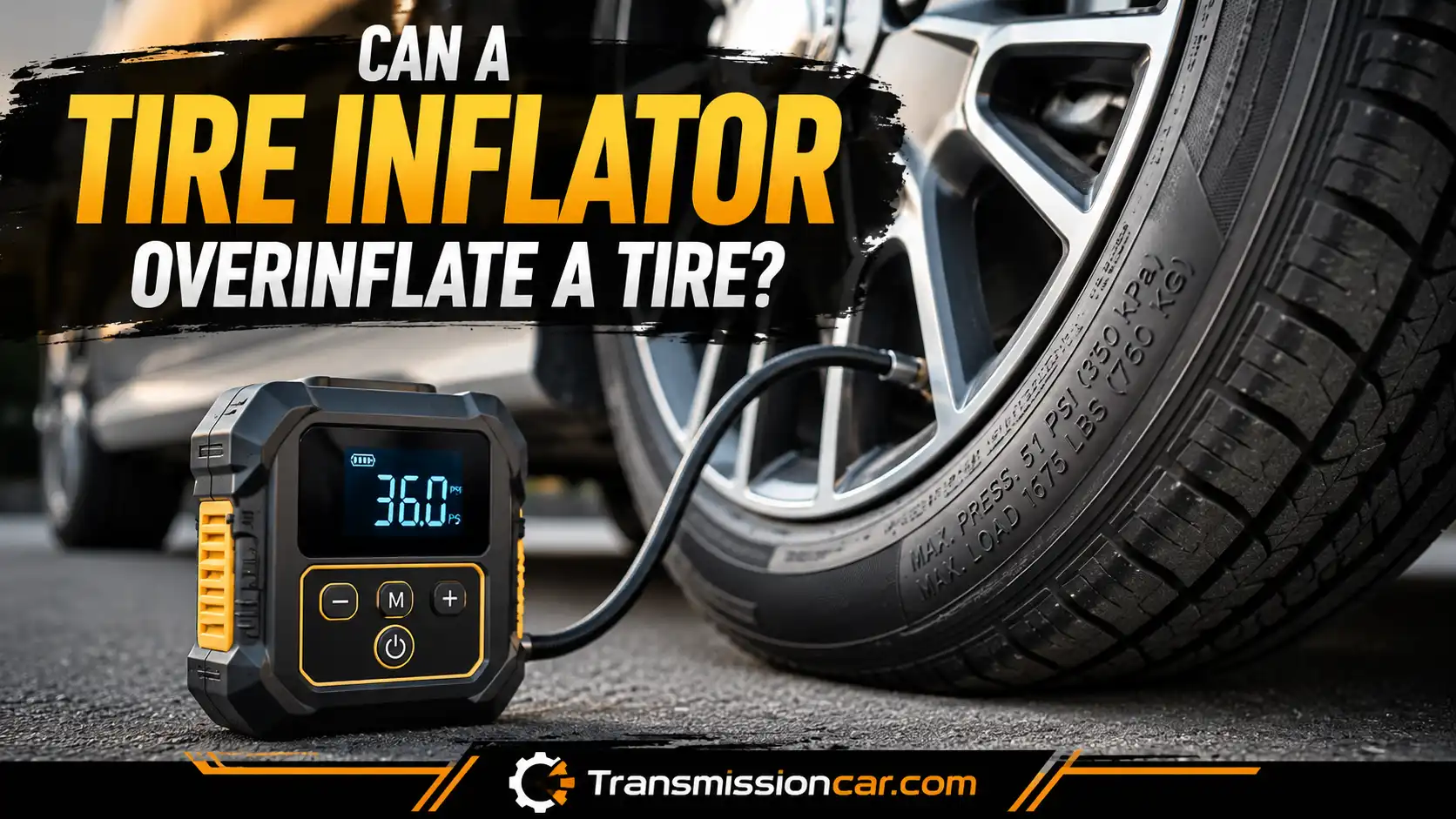
You connect a portable inflator, watch the pressure number rise, and suddenly wonder whether you could put in too much air. Can a tire inflator overinflate a tire? Yes, it can—especially if the inflator lacks an automatic shutoff, has an inaccurate gauge, or is set to the wrong pressure.
Overinflation can affect ride comfort, traction, tire wear, and resistance to pothole damage. The good news is that it is usually easy to prevent. This guide explains how inflators overinflate tires, how much pressure to use, what warning signs to watch for, and how to correct excess pressure safely.
Quick Answer
Yes, a tire inflator can overinflate a tire if it continues running beyond the vehicle manufacturer’s recommended pressure. Automatic shutoff models reduce the risk, but incorrect settings or inaccurate gauges can still cause problems. Always inflate cold tires to the PSI shown on the driver-side door placard—not the maximum PSI printed on the tire.
How Can a Tire Inflator Overinflate a Tire?
A tire inflator forces compressed air into the tire. Unless something stops the airflow, the pressure will continue rising.
Basic inflators may run continuously until you switch them off. Digital models often allow you to select a target pressure and stop automatically, but they are not completely mistake-proof.
Overinflation commonly happens because of:
- Setting the target PSI too high
- Confusing PSI with kPa or bar
- Using the maximum sidewall pressure as the target
- Relying on an inaccurate built-in gauge
- Leaving a non-automatic inflator running too long
- Inflating tires while they are hot
- Failing to verify the final pressure with a separate gauge
- Restarting the inflator repeatedly after it reaches the target
A small amount above the target is not normally an immediate emergency. However, driving regularly with excessive pressure can reduce tire performance and shorten tread life.
What Tire Pressure Should You Use?
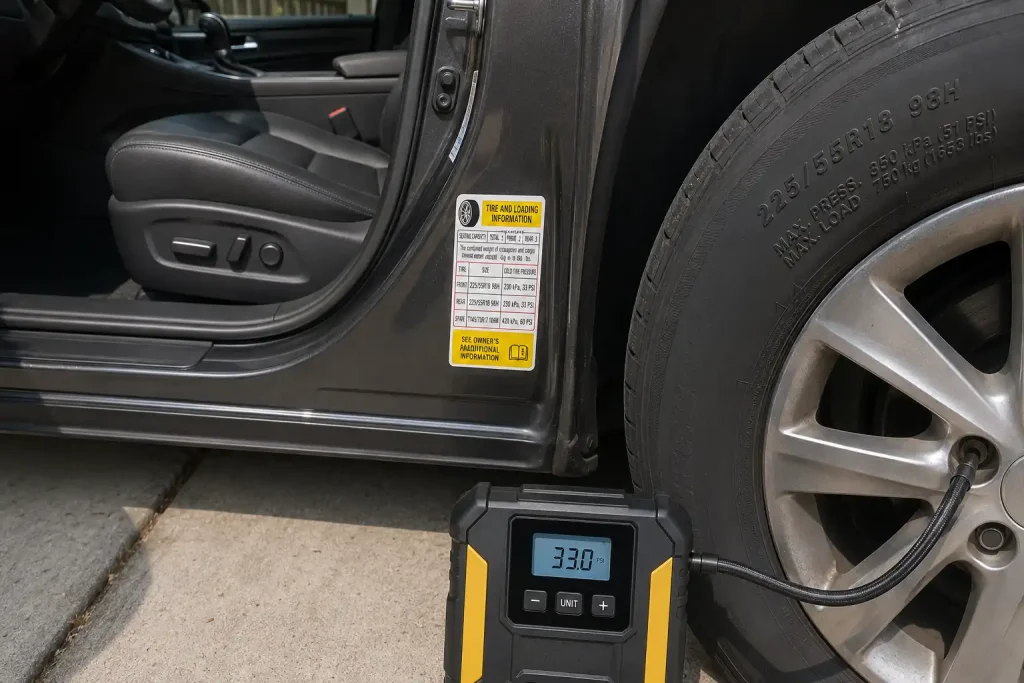
Use the pressure specified by the vehicle manufacturer. You can normally find it on:
- The Tire and Loading Information label inside the driver-side doorjamb
- The edge of the driver’s door
- The vehicle owner’s manual
- An official manufacturer tire-pressure chart
The NHTSA tire safety guidance recommends checking tires when they are cold and using the pressure shown on the vehicle’s tire-information label. A cold tire generally means the vehicle has not been driven for at least three hours. (NHTSA)
For example, the placard may specify:
- Front tires: 35 PSI
- Rear tires: 35 PSI
- Temporary spare: 60 PSI
Some vehicles require different front and rear pressures. Do not assume that all four tires should be identical.
Do Not Use the Maximum PSI on the Tire Sidewall
The number molded into the tire sidewall is usually associated with the tire’s maximum load and inflation limit. It is not the normal operating pressure recommended for your specific vehicle.
NHTSA specifically advises drivers not to inflate tires to the pressure printed on the tire itself. The correct target is found on the vehicle placard or in the owner’s manual. (NHTSA)
A tire may display a maximum pressure of 44 or 51 PSI even though the vehicle manufacturer recommends only 32, 35, or 38 PSI.
What Happens When a Tire Is Overinflated?
The effects depend on how far the pressure exceeds the recommended level, how long the vehicle is driven, the tire design, road conditions, vehicle load, and temperature.
Reduced Contact With the Road
A tire is designed to place a controlled area of tread against the road. Excess pressure makes the tire stiffer and can reduce the effective contact patch.
That may affect:
- Braking traction
- Cornering grip
- Wet-road control
- Stability on rough pavement
- Steering feel
The vehicle may feel responsive on smooth roads, but that does not necessarily mean the tires have better grip.
Harsher Ride Quality
Air pressure contributes to how the tire absorbs bumps. An overinflated tire flexes less, so more vibration and impact may pass into the suspension and passenger compartment.
You may notice:
- A firm or bouncy ride
- More vibration through the steering wheel
- Increased road noise
- Stronger impacts over expansion joints
- A less settled feeling on uneven roads
These symptoms can sometimes be mistaken for suspension, wheel-bearing, driveline, or transmission problems.
Uneven or Premature Tread Wear
When a tire is overinflated, more load may be concentrated near the center of the tread. Over time, the center can wear faster than the shoulders.
Michelin’s guidance on excessive tire wear caused by overinflation recommends releasing air until the pressure matches the vehicle manufacturer’s specification. (Michelin)
Uneven wear is not caused by pressure alone. Alignment, suspension condition, tire construction, driving habits, and rotation intervals can also affect the wear pattern.
Greater Sensitivity to Pothole Damage
Overinflated tires are stiffer and have less ability to flex around sharp impacts. This may increase the chance of cuts, punctures, impact breaks, or wheel damage when hitting potholes and road debris.
The U.S. Tire Manufacturers Association tire-care guidance warns that overinflated tires can be more vulnerable to damage when they strike obstacles. (USTMA)
Do not drive normally on a tire with a bulge, exposed cord, deep cut, cracked sidewall, or visible impact damage.
How Much Overinflation Is Too Much?
There is no single extra-PSI number that is appropriate for every tire and vehicle. The safest approach is to match the manufacturer’s recommended cold pressure as closely as practical.
| Pressure condition | Recommended response |
|---|---|
| 1–2 PSI above the placard when cold | Recheck with an accurate gauge and release a small amount if necessary |
| Several PSI above the placard when cold | Correct the pressure before normal driving |
| Pressure appears high immediately after driving | Do not automatically bleed it down to the cold specification; recheck after the tire cools |
| Pressure is near or above the tire’s maximum rating | Stop inflating and release pressure carefully |
| Tire is distorted, damaged, or unusually hot | Do not continue driving until it has been inspected |
| Gauge readings differ significantly | Use a reliable second gauge or visit a tire shop |
Minor gauge variation is common. A one-PSI difference between two inexpensive gauges does not automatically indicate a dangerous condition. A large or repeated difference suggests that one of the gauges may be unreliable.
Can an Automatic Tire Inflator Still Overinflate a Tire?
Yes. Automatic shutoff is helpful, but it does not guarantee perfect pressure.
A digital inflator can overinflate a tire when:
- The user enters the wrong target.
- The wrong pressure unit is selected.
- The gauge is poorly calibrated.
- The pressure sensor reacts slowly.
- The inflator continues briefly after reaching the target.
- The hose or connector affects the reading.
- The device is damaged or worn.
Many inflators stop slightly above or below the selected number because pressure changes when the compressor stops and the air inside the hose settles.
Inflator Types and Overinflation Risk
| Inflator type | Automatic shutoff | Relative overinflation risk | Best use |
|---|---|---|---|
| Basic analog 12-volt inflator | Usually no | Higher | Occasional use with close monitoring |
| Digital preset inflator | Usually yes | Lower | Routine passenger-vehicle inflation |
| Cordless battery inflator | Often yes | Low to moderate | Convenient roadside and garage use |
| Heavy-duty compressor | Varies | Moderate to high | Trucks, trailers, and larger tires |
| Gas-station air machine | Varies | Moderate | Temporary use with a separate gauge |
A quality automatic inflator provides convenience and consistency. However, the final reading should still be confirmed periodically with a separate tire-pressure gauge.
Expert Tip:
Set a digital inflator to the door-placard pressure, let it stop automatically, disconnect it, wait about 30 seconds, and check the tire again with a separate gauge. This catches setting errors and inaccurate inflator readings before you drive.
How to Correct an Overinflated Tire Safely
If a cold tire is above the placard pressure, you can normally release the extra air without removing the wheel.
Step 1: Park Safely
Park on a level surface away from moving traffic. Apply the parking brake and switch off the vehicle.
Step 2: Confirm the Correct Pressure
Check the driver-side door placard or owner’s manual. Confirm whether the front and rear tires require different pressures.
Step 3: Measure With a Reliable Gauge
Remove the valve cap and press the gauge firmly onto the valve stem. A brief hiss while connecting is normal, but a continuous leak means the gauge is not seated correctly.
Step 4: Release Air in Small Amounts
Press the small center pin inside the valve stem with the pressure gauge’s bleed feature or another appropriate tool. Release air for one or two seconds at a time.
Keep your face away from the valve and do not use a sharp tool that could damage the valve core.
Step 5: Recheck the Pressure
Measure again after each short release. Continue until the reading matches the recommended cold PSI.
Step 6: Reinstall the Valve Cap
The cap helps keep water, dirt, and debris out of the valve mechanism. Replace damaged or missing caps.
Step 7: Inspect the Tire
Look for:
- Bulges or bubbles
- Sidewall cuts
- Cracking
- Exposed cords
- Bent wheel edges
- Embedded objects
- Unusual tread wear
Have the tire inspected if you find visible damage or if it loses pressure again.
Do Tires Become Overinflated in Hot Weather?
 using a tire inflator” class=”wp-image-9434″/>
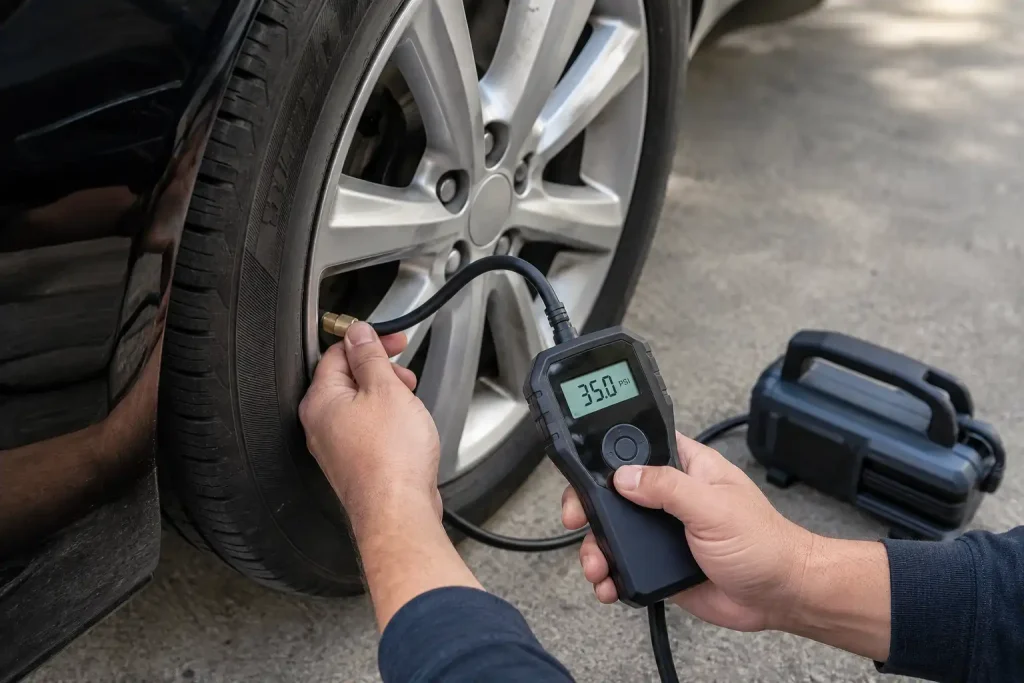
Tire pressure rises as the air inside the tire becomes warmer. Pressure can increase after highway driving, carrying a heavy load, or sitting in direct sunlight.
This does not automatically mean the tire was incorrectly inflated.
If the tire was set correctly when cold, do not release air simply because the warm reading is higher. Bleeding a warm tire down to the cold specification may leave it underinflated after it cools.
Use this routine:
- Check pressure before driving whenever possible.
- Avoid adjusting a hot tire unless there is an obvious safety concern.
- Let the vehicle sit for at least three hours.
- Recheck and correct the cold pressure.
- Repeat the check after a major seasonal temperature change.
Warning Signs That a Tire May Be Overinflated
Possible signs include:
- Cold pressure above the door-placard specification
- An unusually harsh or bouncy ride
- Reduced grip on wet or uneven roads
- Rapid wear near the center of the tread
- Increased sensitivity to potholes
- Steering that feels overly light or nervous
- Different handling after a recent inflation
- One tire reading much higher than the others
These signs are not proof by themselves. Similar symptoms can come from incorrect tire size, worn shocks, wheel imbalance, poor alignment, damaged suspension components, or driveline problems.
Can Overinflated Tires Affect the Transmission?
Overinflation does not normally damage the transmission directly. However, incorrect tire pressures can affect how the vehicle feels and may create symptoms that owners mistake for transmission trouble.
For example, stiff or unevenly inflated tires can contribute to:
- Vibration at certain speeds
- Harshness during acceleration
- Uneven wheel-speed readings
- Reduced traction during gear changes
- Unusual behavior from traction-control systems
- Shuddering over rough surfaces
Maintaining matched tire sizes and correct pressures is particularly important on all-wheel-drive and four-wheel-drive vehicles. Major differences in tire circumference can place unnecessary stress on differentials, transfer cases, and other driveline components.
Pressure alone usually creates only a small circumference change, but it should still be corrected before diagnosing a suspected transmission or driveline vibration.
When to Call a Transmission Professional
Correct the tire pressures first. Then arrange a transmission or driveline inspection if the vehicle continues to show symptoms such as:
- Shuddering during gear changes
- Delayed engagement into Drive or Reverse
- Engine speed rising without normal acceleration
- Transmission-fluid leakage
- Grinding, whining, or clunking from the drivetrain
- A transmission or powertrain warning light
- Vibration that changes with gear selection rather than road speed
- Binding or hopping during tight turns in an AWD vehicle
A transmission professional can separate tire-related vibration from torque-converter shudder, axle problems, worn mounts, transfer-case binding, or internal transmission faults.
Do not approve major transmission repairs based only on a vibration complaint. Ask the shop to verify tire pressure, tire condition, wheel balance, axle condition, mounts, and diagnostic trouble codes before recommending expensive work.
Common Mistakes Vehicle Owners Should Avoid
- Using the sidewall maximum as the target: Follow the vehicle placard instead.
- Checking pressure immediately after driving: Warm tires normally show higher readings.
- Trusting automatic shutoff completely: Verify the result with a separate gauge.
- Ignoring pressure units: PSI, kPa, and bar are not interchangeable numbers.
- Inflating every tire identically: Some vehicles specify different front and rear pressures.
- Depending only on the TPMS light: Most systems are designed mainly to warn about significant pressure loss, not small errors or every overinflation condition.
- Releasing too much air at once: Bleed pressure in short bursts and recheck.
- Ignoring tire damage: Correct pressure cannot make a cut, bulge, or impact-damaged tire safe.
- Diagnosing every vibration as transmission failure: Tires and wheels should be checked before expensive drivetrain work.
- Using a damaged hose or connector: Leaks and poor connections can create inaccurate readings.
FAQs
Can a tire inflator overinflate a tire until it bursts?
It is possible, particularly with a powerful compressor and no automatic shutoff. However, substantial overinflation would normally be required. Stop immediately if pressure approaches the tire’s maximum rating or the tire appears distorted.
Will an automatic inflator stop at the exact PSI?
Not always. Most preset inflators stop close to the selected pressure, but sensor accuracy, hose pressure, temperature, and calibration can cause a small difference. Verify the final result with a reliable gauge.
Is 2 PSI over the recommended pressure dangerous?
A cold reading 2 PSI above the placard is not usually an immediate emergency, but it should be corrected for the best ride, traction, and tire wear. First confirm the reading with another accurate gauge.
Should I let air out if the pressure rises after driving?
Not simply because the tire is warm. Pressure normally increases during driving. Recheck the tire after the vehicle has been parked for at least three hours and adjust it based on the cold reading.
Why does my inflator show a different PSI from my tire gauge?
The inflator and handheld gauge may have different calibration accuracy. Hose pressure and connection quality can also affect readings. Compare them several times and replace or professionally check any gauge showing a large difference.
Can overinflation trigger the TPMS warning light?
Most TPMS systems primarily warn about significant underinflation. Some vehicles can identify high pressure, but many will not illuminate a warning for moderate overinflation. Manual pressure checks are still necessary.
Can I drive to a tire shop with an overinflated tire?
If the pressure is only slightly high and the tire has no visible damage, carefully correcting it before driving is usually straightforward. Do not drive if the tire is severely overinflated, bulging, damaged, unusually hot, or near its maximum pressure rating.
Conclusion
A tire inflator can overinflate a tire, even when it includes a digital display or automatic shutoff. Incorrect settings, inaccurate gauges, unit mistakes, and inflating warm tires are the most common causes.
Use the cold PSI printed on the driver-side door placard, not the maximum number on the tire sidewall. Release excess pressure gradually, inspect the tire for damage, and verify the final reading with a dependable gauge.
Correct tire pressure also helps prevent ride and vibration problems from being mistaken for an expensive transmission failure. Check all four tires first, then request a complete tire, wheel, and driveline diagnosis if the symptoms continue. Before your next drive, inspect the placard, check the tires cold, and make sure your inflator is set to the correct pressure.
