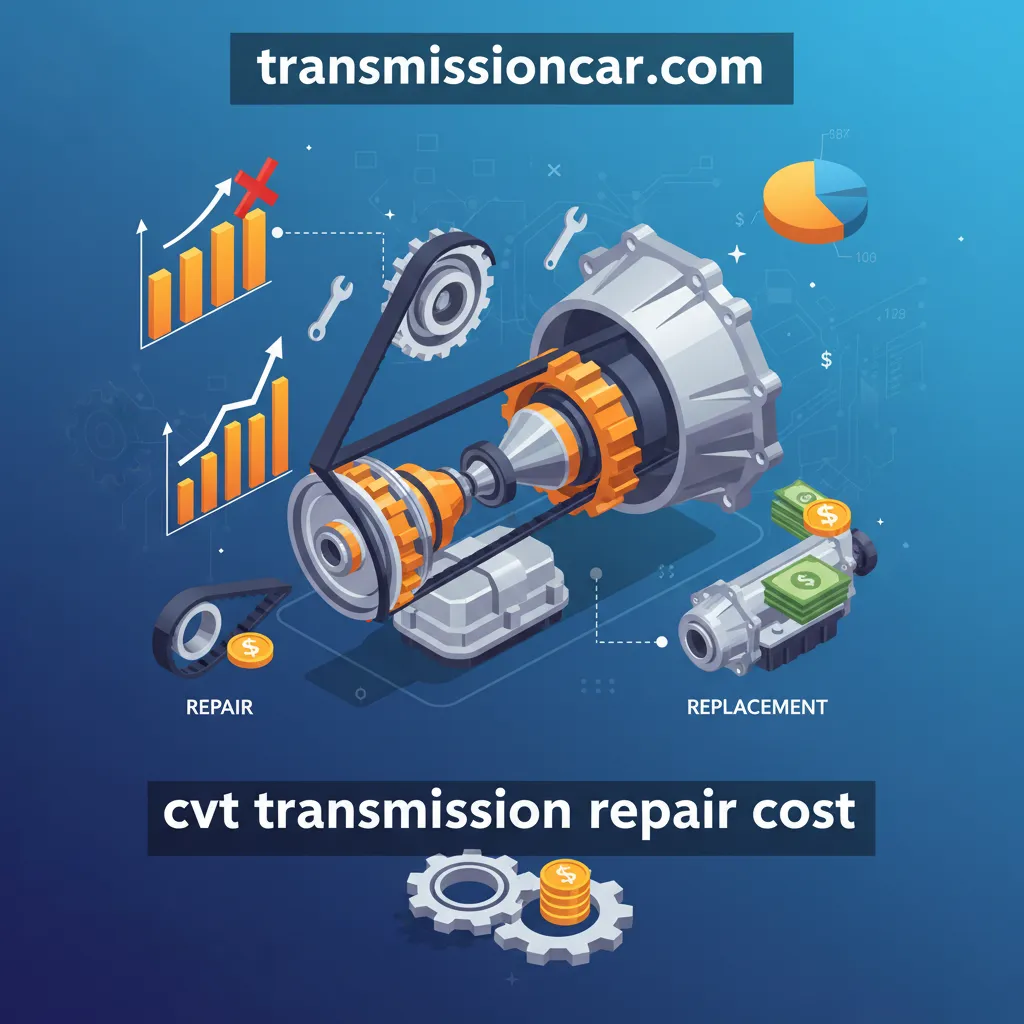
Cvt Transmission Repair Cost And Replacement Expense Breakdown
Facing a dashboard warning light accompanied by a sudden loss of power or a disconcerting “rubber band” sensation during acceleration can be…
Facing a dashboard warning light accompanied by a sudden loss of power or a disconcerting “rubber band” sensation during acceleration can be a jarring experience for any vehicle owner. This is particularly true when your vehicle is equipped with a Continuously Variable Transmission (CVT). While these systems offer superior fuel efficiency and smoother power delivery by utilizing a belt-and-pulley system rather than traditional gears, they are notorious for high repair costs and a historical lack of serviceable internal components. This comprehensive guide provides a detailed expert breakdown of CVT transmission repair cost, ranging from minor solenoid adjustments to full professional remanufactured replacements, ensuring you can make an informed and reliable financial decision for your vehicle’s future.
Understanding the Primary Factors Influencing CVT Transmission Repair Cost
📤 Share Image
The financial burden of a CVT repair is rarely uniform. In my 15 years of industry experience, I have observed that the quality of the vehicle’s engineering and the availability of trusted replacement parts are the primary drivers of the final invoice. Unlike traditional transmissions, where a local shop might replace a single clutch pack, CVTs are often treated as “black boxes” by manufacturers, meaning internal parts are not always sold individually.
Vehicle Make and Model Impact
The cost gap between economy and luxury is significant. For instance, a 2018 Nissan Altima CVT repair might hover around $3,500 to $4,200 due to the sheer volume of parts produced for JATCO units. Conversely, a 2019 Subaru Outback featuring the Lineartronic CVT may command a higher premium, often exceeding $5,000, because Subaru utilizes a high-torque chain drive system rather than a standard push-belt. Luxury brands like Audi or Infiniti further escalate costs through proprietary software requirements and higher component pricing.
Specialized Parts and Labor Expertise
CVTs rely on high-strength steel belts and micro-polished pulleys. These components command a premium because they must withstand immense heat and friction without the mechanical redundancy of traditional gears. Furthermore, labor costs are dictated by the technician’s specialized training. A professional transmission specialist will charge more than a general mechanic, but this expert knowledge is vital for ensuring the Electronic Control Unit (ECU) is properly calibrated to the new hardware.
By The Numbers: Cost Drivers
Average Labor Share
Cost Per Quart (Fluid)
Dealer Hourly Rate

Component-Level Repair Costs vs. Full System Overhaul
Before committing to a multi-thousand dollar replacement, a complete diagnostic is required to determine if the issue is localized. Modern CVTs are heavily reliant on electronics; sometimes a terrifying “limp mode” event is simply a failed $200 sensor rather than a total mechanical collapse.
Solenoid Replacement
Cost: $300 – $800. Addresses shifting delays and minor shuddering without disassembling the entire unit.
Sensor Failures
Cost: $150 – $600. Speed and pressure sensors often trigger error codes that mimic mechanical failure.
The “Shudder” vs. The “Whine”
Identifying the symptoms early is critical for your budget. A shudder or vibration during acceleration is frequently tied to a faulty torque converter or a sticking solenoid—issues that are often repairable for under $1,000. However, a consistent high-pitched whine typically indicates internal belt wear or pulley bearing failure. Because the metal shavings from a worn belt contaminate the entire system, a whine almost always necessitates a full unit replacement to ensure reliable operation.
Over 60% of early CVT failures are attributed to fluid degradation and overheating. If you wait until the belt slips, the internal metal-on-metal contact creates microscopic debris that ruins the valve body, making a simple repair impossible.

Comparing Rebuilt, Remanufactured, and Used CVT Costs
When a full replacement is unavoidable, you face a critical fork in the road. As an expert in the field, I recommend weighing the warranty against the immediate price tag. A “cheap” fix today often results in a second repair within twelve months.
The Remanufactured Advantage
Choosing a remanufactured unit from a trusted provider like Jasper or the original equipment manufacturer (OEM) is generally the wisest long-term investment. These units are stripped to the core, and all wear components are replaced with updated parts that often fix the original design flaws. This differs from a “rebuild,” where a local shop may only replace what is broken, leaving other aged components intact.
✅ Pros: Remanufactured
- Peace of mind with 3-year warranties
- Updated internal components
- Tested to factory specifications
- Highest resale value retention
❌ Cons: Used Units
- Unknown maintenance history
- High risk of immediate failure
- Labor is rarely covered under warranty
- Short coverage windows
Long-Term Financial Benefits of Preventative CVT Maintenance
The most effective way to handle a $5,000 repair bill is to ensure it never happens. In my professional experience, the “lifetime fluid” claim made by some manufacturers is the single greatest contributor to premature CVT failure. Quality fluid maintenance is the cornerstone of transmission longevity.
The ROI of Professional Inspections
Spending $150–$200 on a complete fluid analysis and diagnostic check every 30,000 miles can extend the lifespan of your CVT by 50,000 to 80,000 miles. During these inspections, an expert technician looks for microscopic metal shavings and monitors the fluid’s oxidation levels. If the fluid smells “burnt,” it is a clear sign that the transmission is running too hot—a condition that can often be fixed by installing an external transmission cooler for a fraction of the cost of a new unit.
Aggressive “flooring it” from a standstill generates massive heat cycles that fatigue the steel belt. Smooth, linear acceleration reduces the thermal load on the pulleys and is the simplest free way to lower your long-term CVT transmission repair cost.
The Breakdown of Labor Hours for CVT Transmission Service
When you receive an estimate, the “Labor” line item often shocks vehicle owners. To understand this, one must realize that modern CVTs are integrated into complex transaxle assemblies that require significant disassembly of the vehicle’s front end.
📋
The Replacement Process Timeline
Typically 6-10 hours. This involves disconnecting the drivetrain, exhaust components, and engine mounts to extract the unit.
2-4 hours. The cooling lines must be flushed of old debris, and the new Transmission Control Unit (TCU) must be “taught” the vehicle’s parameters.
Ancillary Costs to Watch For
During a standard 12-hour labor quote for a Nissan Murano, a professional shop will often recommend replacing the engine mounts or CV axles while the transmission is already removed. While this adds to the immediate invoice, it saves you from paying for the same 8 hours of labor again six months later if a $100 mount fails. Always ask for a “bundled labor” rate if you decide to replace wear-and-tear items during a transmission swap.
In summary, while CVT transmission repair costs are undeniably high—typically ranging from $3,000 to $6,000—you have agency in how those costs are managed. Choosing a remanufactured unit provides the best balance of performance and reliable warranty protection. Most importantly, regular fluid changes and expert diagnostics are the only proven ways to mitigate these expenses over the life of your vehicle. If you are currently experiencing slipping, whining, or dashboard warnings, seek a professional diagnostic immediately to catch the issue before it transforms into a total system replacement.
Frequently Asked Questions
What is the average CVT transmission repair cost?
For most modern vehicles, a full CVT transmission replacement costs between $3,500 and $5,500. If the issue is localized to a sensor or a solenoid, repairs may cost between $300 and $900. These figures include both professional labor and the price of high-quality replacement parts or fluids.
Is it worth repairing a CVT transmission on an older car?
Deciding whether to repair a CVT depends on the vehicle’s market value. If the repair cost exceeds 50% of the car’s value, replacement may not be economically viable. However, for a reliable vehicle with a known service history, a remanufactured CVT can extend its lifespan by several years.
Can I drive with a failing CVT to save on immediate costs?
Driving with a failing CVT is not recommended as it can lead to total mechanical failure on the road. What starts as a minor ‘shudder’ can quickly evolve into a broken steel belt, which destroys the internal pulleys and turns a repairable issue into a mandatory, expensive total replacement.
Why are CVT repairs more expensive than traditional transmissions?
CVTs require specialized tools and highly precise calibration that many general repair shops cannot provide. Additionally, many manufacturers do not sell individual internal components, forcing technicians to replace the entire unit. The high-quality synthetic fluid and specialized steel belts used in CVTs also carry higher price points.
How can I lower my CVT transmission repair cost?
The most effective way to lower costs is through early diagnosis by an expert technician. Identifying a failing pressure sensor early prevents damage to the belt and pulleys. Additionally, sourcing a remanufactured unit from a trusted supplier can provide a significant discount compared to buying a brand-new unit from a dealership.