Cvt Transmission Replacement Cost: 2024 Price Guide And Repair Analysis
When your vehicle’s RPMs surge without a corresponding increase in speed, you are likely facing the significant reality of a CVT transmission…
When your vehicle’s RPMs surge without a corresponding increase in speed, you are likely facing the significant reality of a CVT transmission failure. Continuously Variable Transmissions (CVTs) provide exceptional fuel efficiency and smooth power delivery, but they are notoriously expensive and technically difficult to repair once internal components like the steel belt or pulleys fail. Unlike traditional planetary gear transmissions, CVTs often require complete replacement rather than a simple component-level rebuild. This comprehensive guide provides a professional breakdown of current market costs, labor requirements, and manufacturer-specific estimates to help you navigate a reliable replacement process with expert precision.
Primary Factors Determining CVT Transmission Replacement Cost
📤 Share Image
Understanding the variance in quotes requires a deep dive into the complete ecosystem of transmission logistics. In my 15 years of industry experience, the single most common shock to consumers is the ratio of parts to labor. In a standard CVT replacement, the physical unit typically accounts for 65% to 75% of the total invoice. Because CVTs are high-precision instruments with minimal tolerance for error, they are rarely rebuilt “at the bench” in a local shop. Instead, they are replaced as whole units, driving the material cost significantly higher than traditional automatics.
Manufacturer variations play a pivotal role. Nissan, utilizing JATCO units, has a massive volume of replacement parts in the supply chain, which can sometimes keep costs competitive despite higher failure rates. Conversely, specialized systems like the Subaru Lineartronic or Honda Earth Dreams units utilize proprietary chain-driven designs that often command a premium due to their complexity and lower secondary market availability.
By The Numbers: Labor vs. Parts
Billable Labor Hours
Hourly Regional Rate
Geographic location further dictates the final price. A professional service center in a metropolitan area like San Francisco or New York may charge $210 per hour, whereas a specialized independent shop in the Midwest might charge $135. For a 10-hour job, this represents a $750 swing in labor alone. Consider a 2018 Nissan Rogue: a dealership in an affluent suburb might quote $5,800 for a new unit, while an expert independent shop nearby might source a high-quality remanufactured unit and complete the job for $4,200.

Estimated Price Ranges for Parts and Component Sourcing
Sourcing the replacement unit is the most critical decision in the process. Each tier of part sourcing comes with its own risk-reward profile. As a professional, I always recommend the middle ground—remanufactured units—for the best balance of longevity and cost.
Remanufactured units are often superior to new ones because expert engineers identify factory weak points—such as overheating-prone valve bodies—and upgrade them during the rebuild process. For example, a Subaru Forester owner facing a $7,000 dealership estimate for a new unit can often find a Jasper remanufactured unit for $3,800. Not only is the part cheaper, but the warranty often covers 100,000 miles, whereas a used unit from a salvage yard is a “black box” regarding its internal belt wear.
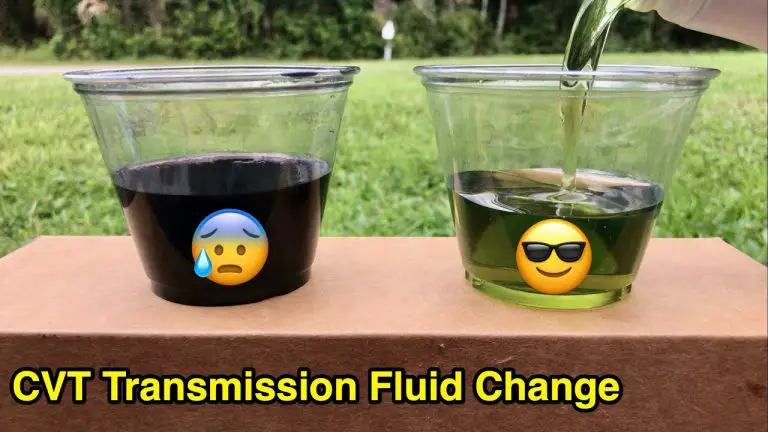
CVT fluid is non-negotiable and specific. Genuine OEM fluid can cost $25 per quart. A complete replacement and system flush requires 8 to 12 quarts ($200-$300 total). Never use “universal” ATF; it will cause belt slippage within 1,000 miles.

Technical Labor and Programming Requirements
Replacing a CVT is not a simple “wrench-and-bolt” operation. Modern vehicles are designed as integrated unibody structures where the transmission is often cradled within a subframe. A reliable technician must disconnect CV axles, cooling lines, and complex wiring harnesses, often needing to drop the entire front subframe to gain clearance. This “Removal and Installation” (R&I) process is labor-intensive and requires professional-grade lifts and support jacks.
📋
The Professional Installation Sequence
Removing the axles and lowering the engine/transmission cradle to provide the necessary clearance for removal.
Mandatory flushing of the transmission cooler lines to remove metallic debris from the old unit that would destroy the new one.
The most critical step: using specialized diagnostic tools to link the new hardware to the vehicle’s computer.
The complete replacement isn’t finished until the software is addressed. Most modern CVTs require a Transmission Control Module (TCM) “relearn.” In Nissan vehicles, for example, the expert technician must use a “Consult” tool to input a unique calibration code found on a QR tag on the transmission case. Failure to do this will result in poor shift logic and premature wear. This diagnostic programming typically adds 1.0 to 1.5 hours of specialized labor to the final bill.
Manufacturer-Specific Cost Breakdowns: Nissan, Honda, and Toyota
The cost of a CVT replacement varies wildly based on the badge on your grille. While the mechanical concept remains similar, the implementation—and the frequency of failure—impacts the complete pricing structure.
Nissan (JATCO)
High failure volume has led to a robust market. Expect $3,500 – $5,000 for an Altima or Rogue. These account for nearly 70% of replacements in the US.
Honda (Earth Dreams)
More reliable than Nissan but more expensive parts. A Civic or Accord replacement averages $3,000 – $4,500 with slightly lower labor times.
Toyota (Direct Shift)
The unique “launch gear” system in newer Corollas is complex. Costs range from $2,500 (used) to $5,500 (new). Hybrids (e-CVT) are generally cheaper.
Comparing a front-wheel-drive Nissan Sentra to an all-wheel-drive Subaru Outback reveals a massive discrepancy. The Subaru requires the removal of the driveshaft and rear differential interface, often pushing the total labor toward 14 hours and the total invoice toward $5,500 or higher. In contrast, the Sentra is a straightforward transaxle swap that a trusted independent shop can often complete for under $4,000 using a remanufactured unit.
Diagnostic Indicators of Impending CVT Failure
Identifying failure early can sometimes save you from a complete replacement through a valve body repair, though 90% of CVT failures are eventually attributed to heat-induced fluid breakdown that compromises the steel belt. When that belt slips, it scores the pulleys, making a full replacement the only professional solution.
⚠️ Warning Signs
- Whining or humming that increases with speed
- Delayed acceleration (“Rubber Band Effect”)
- Dark, burnt-smelling transmission fluid
- Metallic shavings in the transmission pan
🔍 OBD-II Error Codes
- P0744: Torque Converter Clutch Circuit
- P1778: Step Motor Malfunction
- P0841: Fluid Pressure Sensor issues
- P0717: Input Speed Sensor failure
Consider a common real-world scenario: You are cruising on the highway, and suddenly the vehicle enters “Limp Mode.” The engine refuses to exceed 2,500 RPM, and your speed is capped at 45 MPH. This is the vehicle’s computer attempting to prevent the CVT belt from snapping. If you catch it here, a complete diagnostic scan may reveal a sensor issue, but more often than not, it confirms internal pressure loss. Professional fluid analysis—looking for those telltale “glitter-like” metal shavings—is the final confirmation that your pulleys have reached the end of their service life.
If your shop does not mention flushing or replacing the transmission cooler, take your car elsewhere. Debris from a failed CVT is “migratory.” If left in the cooler, it will be sucked into your $5,000 replacement unit within minutes of the first test drive, voiding your warranty and destroying the new transmission.
Final Recommendations for Vehicle Owners
Navigating a CVT replacement requires a pragmatic approach to automotive finance. If your vehicle is over 10 years old and has over 150,000 miles, a $5,000 replacement may exceed the car’s total value. However, for a late-model vehicle, investing in a quality remanufactured unit is the most logical path to another 100,000 miles of service. Always insist on a complete itemized quote that includes TCM programming and cooling system maintenance. Expect to pay between $3,000 and $6,000 for a professional CVT replacement depending on vehicle make and part type. Always prioritize remanufactured units with verified warranties over used salvage units to ensure long-term reliability. Contact a certified transmission expert today for a diagnostic scan to determine if your CVT requires a full replacement or if a fluid service can extend its lifespan.
Frequently Asked Questions
Can a CVT transmission be repaired instead of replaced?
Unlike traditional automatic transmissions, CVTs are rarely repaired at the component level. Most manufacturers do not sell individual internal parts like the steel belt or pulleys to independent shops. Therefore, when an internal failure occurs, an expert technician will almost always recommend a full unit replacement to ensure a quality, reliable result.
How many miles does a CVT typically last?
A well-maintained CVT can last between 100,000 and 150,000 miles. However, this lifespan is heavily dependent on regular fluid changes every 30,000 to 50,000 miles. Without professional maintenance, some units, particularly in heavy-duty or high-heat environments, may experience critical failure as early as 70,000 miles.
Is it worth replacing the CVT on a high-mileage car?
This depends on the vehicle’s current market value compared to the $3,000-$5,000 replacement cost. If the repair exceeds 50% of the car’s ‘Blue Book’ value, it may be more economical to trade the vehicle. However, if the car is otherwise in excellent condition, a trusted remanufactured unit can provide several more years of service.
Why is CVT replacement more expensive than a traditional automatic?
The cost is driven by the high price of the specialized pulleys and high-tensile steel belts, along with the requirement for proprietary synthetic fluids. Additionally, the labor is more intensive because many CVTs require specialized electronic calibration and programming that can only be performed with professional-grade diagnostic equipment.
Does car insurance or warranty cover CVT replacement?
Standard comprehensive or collision insurance does not cover mechanical failure due to wear and tear. However, if you have a powertrain warranty or an extended service contract, the replacement cost should be covered. Always check your specific policy for ‘transmission’ or ‘drivetrain’ exclusions before authorizing expensive repairs.