
10 Top Rated Tire Inflator: Best Models for Fast, Reliable Inflation

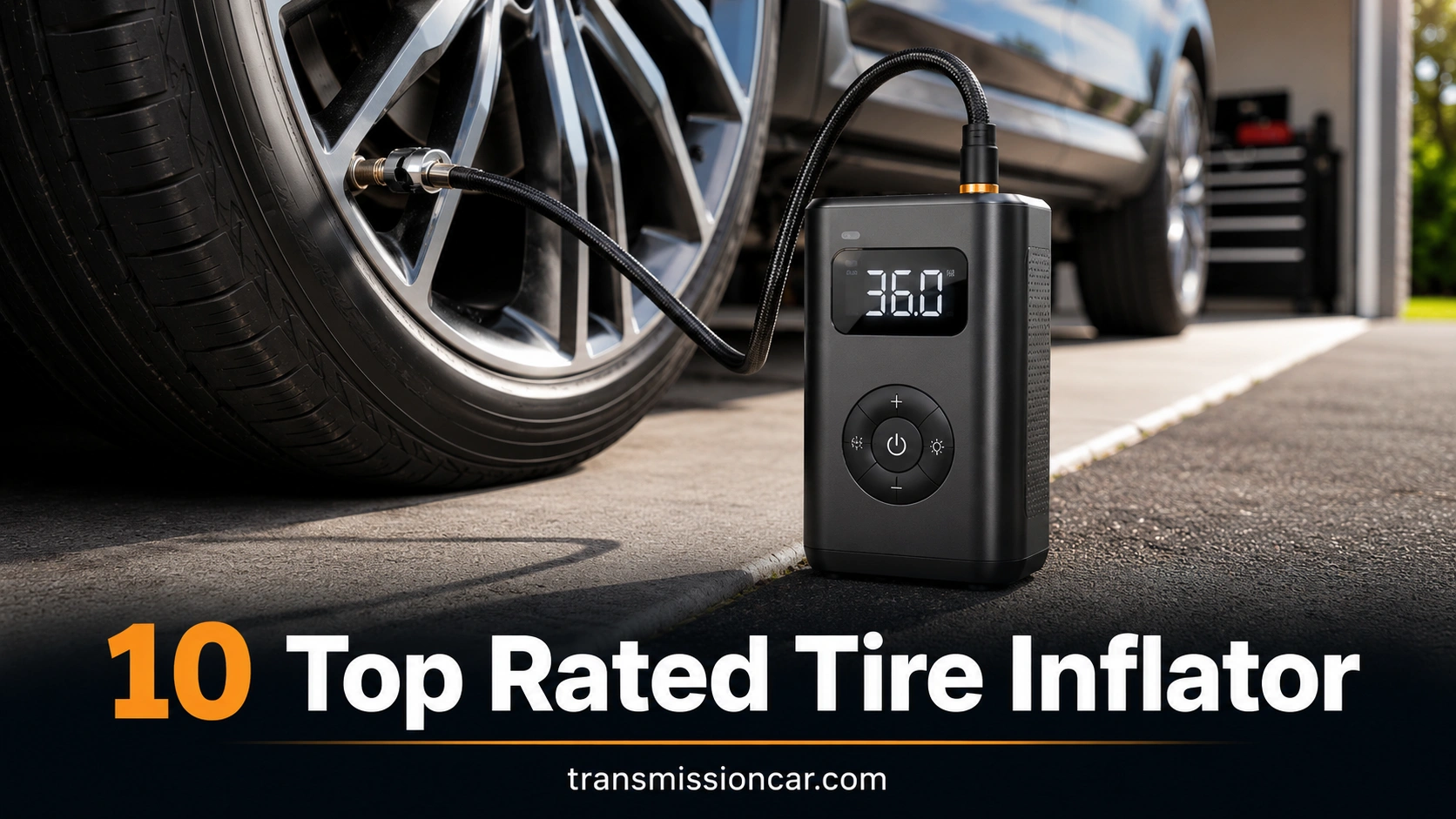
A tire inflator can help us maintain proper tire pressure at home, on the road, or before a long trip. Correct pressure supports safer handling, even tire wear, and better fuel efficiency. Portable electric inflators offer a convenient way to refill tires without visiting a gas station.
When choosing a top-rated tire inflator, we look at inflation speed, accuracy, power source, hose length, and ease of use. A clear pressure display, automatic shutoff, and durable design can make regular tire checks simpler. The best tire inflator should reach your vehicle’s required pressure reliably and include controls that are easy to use.
We tested and researched tire inflators to find models that balance performance, portability, and useful features for different needs.
Best Tire Inflators
We tested and compared top-rated tire inflators for power, accuracy, ease of use, and portability. Our list highlights the best options for cars, bikes, and other everyday inflation needs.
OlarHike Portable Tire Inflator
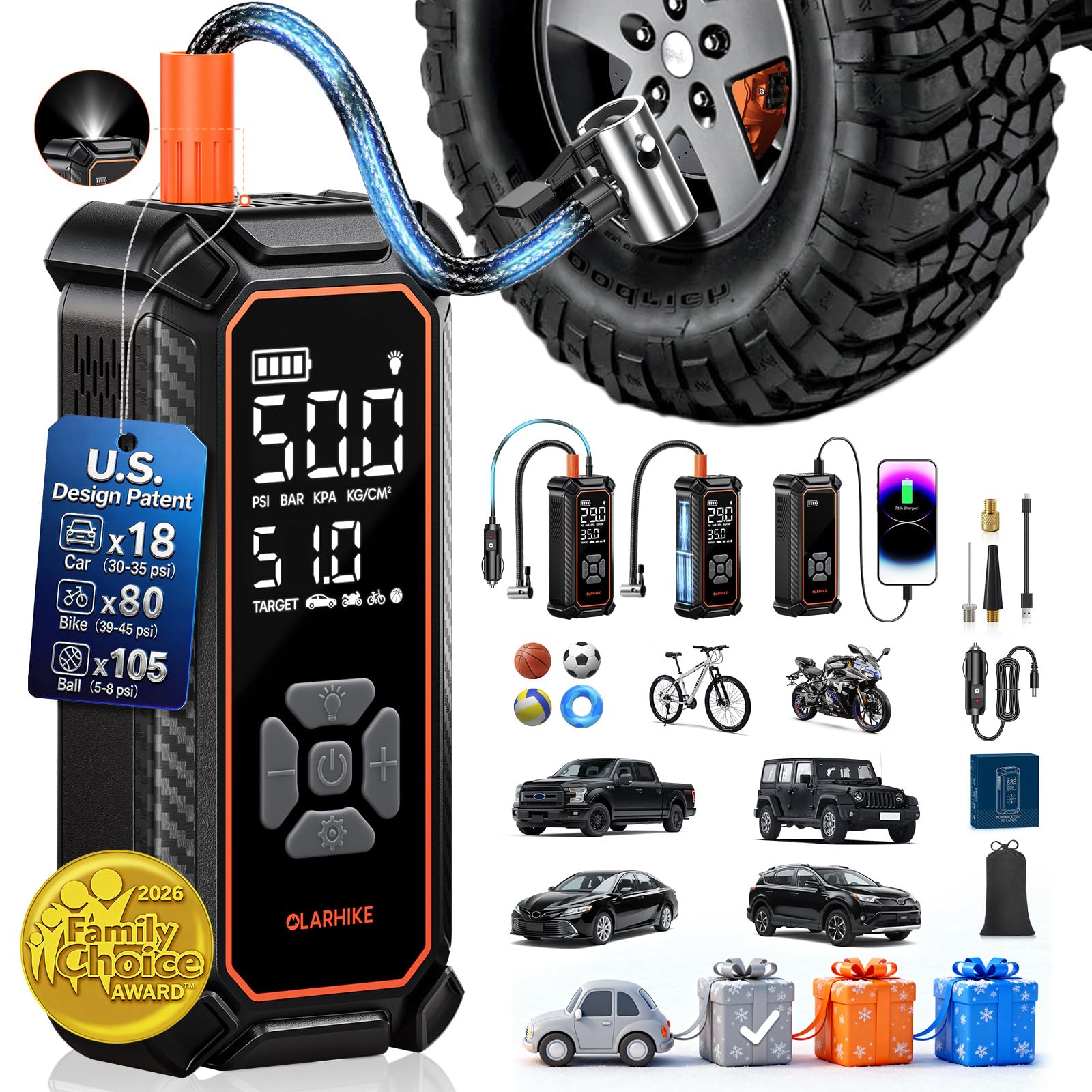
We recommend this compact inflator for drivers who want fast, convenient tire top-offs without relying on a gas station pump.
Pros
- Cordless and 12V operation
- Clear display with automatic shut-off
- Useful adapters, light, and storage bag
Cons
- Limited to light-duty tires up to 51 PSI
- Gets noisy during use
- Needs the correct 5V charging adapter
We found the OlarHike easy to carry and simple to operate. The bright display made it easy to set the target pressure, and the pump stopped when it reached that setting. Its preset modes also helped when switching between car tires, bike tires, and sports equipment.
The cordless design worked well for quick roadside checks and driveway maintenance. When the battery ran low, we could use the included 12V cable from the vehicle. The long hose gave us enough reach for most tires without moving the unit around.
Inflation felt quick for small pressure increases, especially on standard car tires. The pump became noticeably loud, but that was expected for a compact compressor. We also liked the built-in light for nighttime use and the USB output for charging a phone.
This model suits cars, motorcycles, bicycles, and balls. We would avoid it for heavy-duty pickup trucks, RVs, or repeated high-pressure work because the manufacturer limits car and light pickup tire use to 51 PSI.
DEWALT 20V MAX Tire Inflator
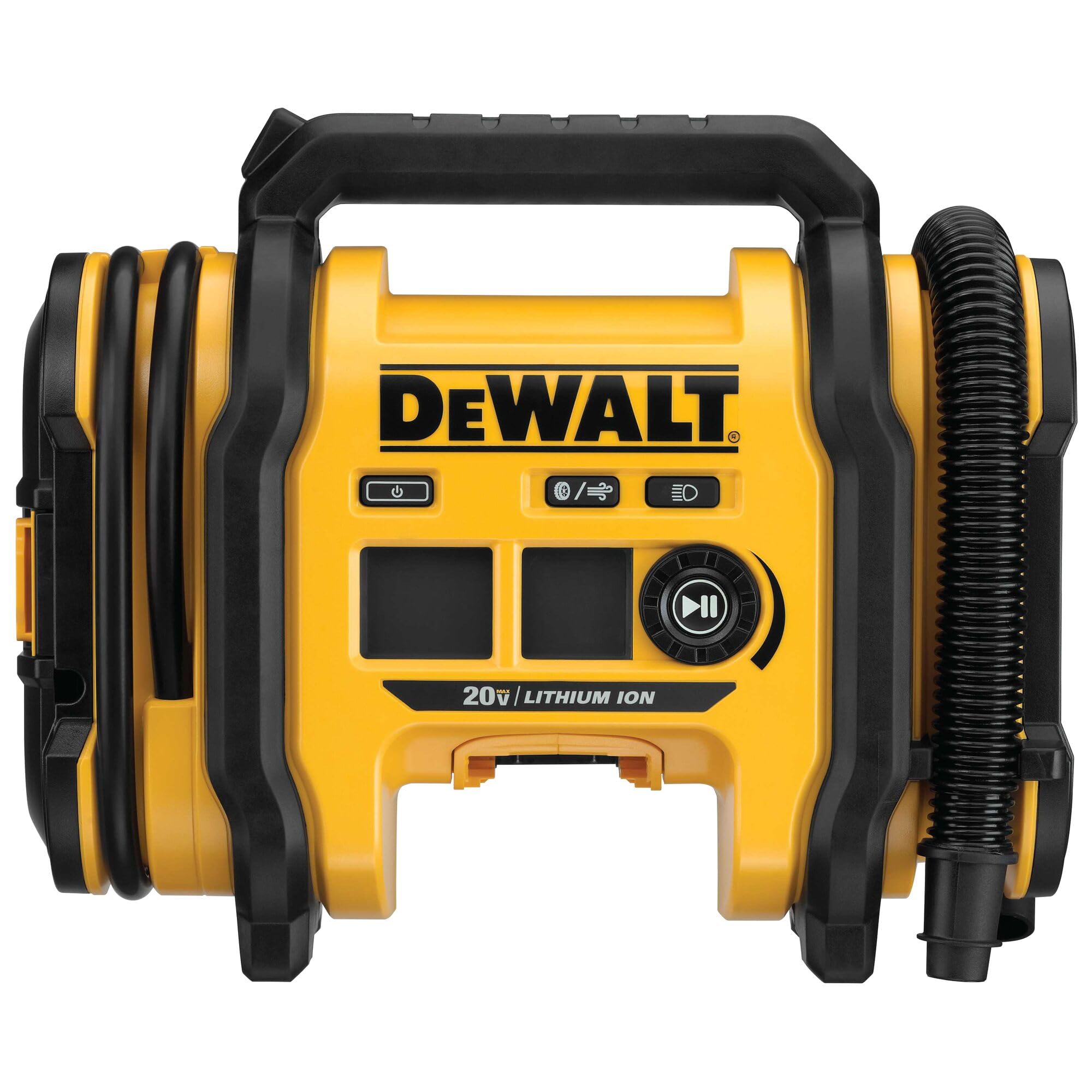
We recommend this inflator for drivers who want reliable tire inflation and already own DEWALT 20V batteries.
Pros
- Preset pressure and automatic shutoff
- Works with battery, car power, or household power
- Handles tires and larger inflatables
Cons
- Battery, charger, and AC adapter cost extra
- Heavier than basic 12V inflators
- The 12V cord works best with the vehicle running
We found the threaded chuck easy to secure to a tire valve. The digital gauge made it simple to set the target pressure, and the automatic shutoff helped prevent overinflation.
The inflator gave us useful flexibility. We could run it from a DEWALT battery, a 12V vehicle outlet, or an AC source when available. Its high-pressure mode worked well for car tires, while the separate high-volume hose handled items such as air mattresses and rafts.
We also liked the onboard storage for the needle and valve adapters. The rubber feet kept the unit steady during use, and the LED light helped when we checked a tire in low light.
At 6.4 pounds, this model feels sturdy but not especially light. Buyers who do not already own DEWALT batteries should include the added cost of a battery and charger, while those in the DEWALT system get a more convenient value.
ETENWOLF Vortex S6 Tire Inflator

We recommend this cordless inflator for drivers who want fast tire filling, strong battery life, and simple automatic controls.
Pros
- Inflates larger vehicle tires quickly
- Large battery supports repeated use
- Bright light and USB-C charging add convenience
Cons
- Weighs more than basic tire pumps
- Its 78 dB motor is fairly loud
- Not designed for stand-up paddleboards
When we used the Vortex S6, it filled a large tire without the long pauses common with smaller pumps. The dual-cylinder design moved air quickly, making it a practical choice for trucks, SUVs, off-road vehicles, and regular cars.
The controls were easy to use. We selected the pressure, connected the hose, and let the automatic shutoff finish the job. The pressure reading stayed close to the target, which helped us avoid checking the tire repeatedly.
Its cordless design made setup much easier around a vehicle. The built-in battery handled several tire adjustments, while the USB-C port offered a useful way to recharge the unit or power another device.
We also found the LED light helpful in dark areas. The main drawbacks are its heavier build and noticeable motor noise, but those trade-offs make sense for a portable inflator built for larger tires.
AstroAI AIRUN H Tire Inflator

We recommend this compact inflator for drivers who want simple, dependable tire top-offs from a car’s 12V outlet.
Pros
- Preset pressure with automatic shutoff
- Long cord and compact storage
- Clear display and built-in light
Cons
- Requires a running vehicle
- Can be loud during use
- Some users report weak parts or slow inflation
We found the controls easy to use. We selected the pressure unit, set the target level, and let the compressor run until it stopped automatically. That feature helped us avoid watching the gauge constantly.
The 9.8-foot cord reached the tires on regular-sized vehicles without much trouble. Its small body also fit neatly in a trunk, making it practical to keep available for warning-light emergencies or routine pressure checks.
The backlit display and flashlight made nighttime use easier. Inflation speed was acceptable for normal top-offs, though user experiences vary, especially with very low tires. The unit can also be noticeably loud.
This model draws power from a 12V cigarette lighter and requires the vehicle to run. We would choose it for regular maintenance and roadside backup, but not as a replacement for a larger shop compressor.
Airmoto Tire Inflator
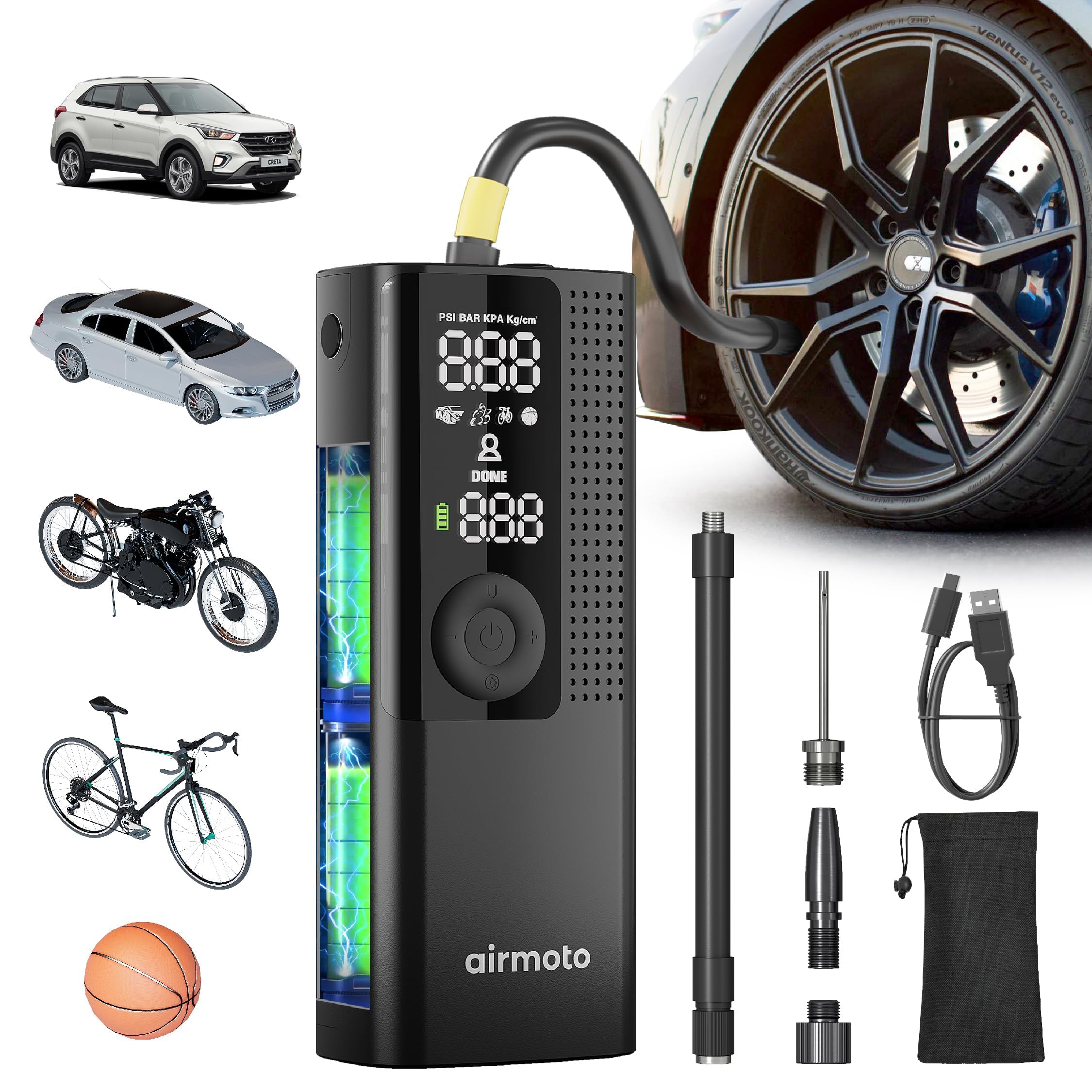
We recommend the Airmoto for quick tire pressure checks and small top-ups when you want a compact, cordless pump in your vehicle.
Pros
- Compact design fits easily in a glove box.
- Auto shut-off helps prevent overinflation.
- Works with car, bike, motorcycle, and sports valves.
Cons
- Battery life may limit repeated inflation.
- Larger or high-pressure tires inflate slowly.
- The pump produces noticeable noise.
We found the Airmoto simple to use during a routine tire-pressure check. We selected the target pressure, attached the hose, and let the pump stop automatically. The display was easy to read, and the built-in light helped in a dim parking area.
Its small size makes storage convenient, while the included adapters add flexibility for bicycles and sports equipment. We also liked that the hose stores inside the unit, which kept the kit tidy between uses.
The main limitation is endurance. We would use it for topping off tires or handling a slow leak, not for filling several large tires from empty. Charging it before a trip matters because cold weather and repeated use can reduce battery performance.
AstroAI L7 Tire Inflator
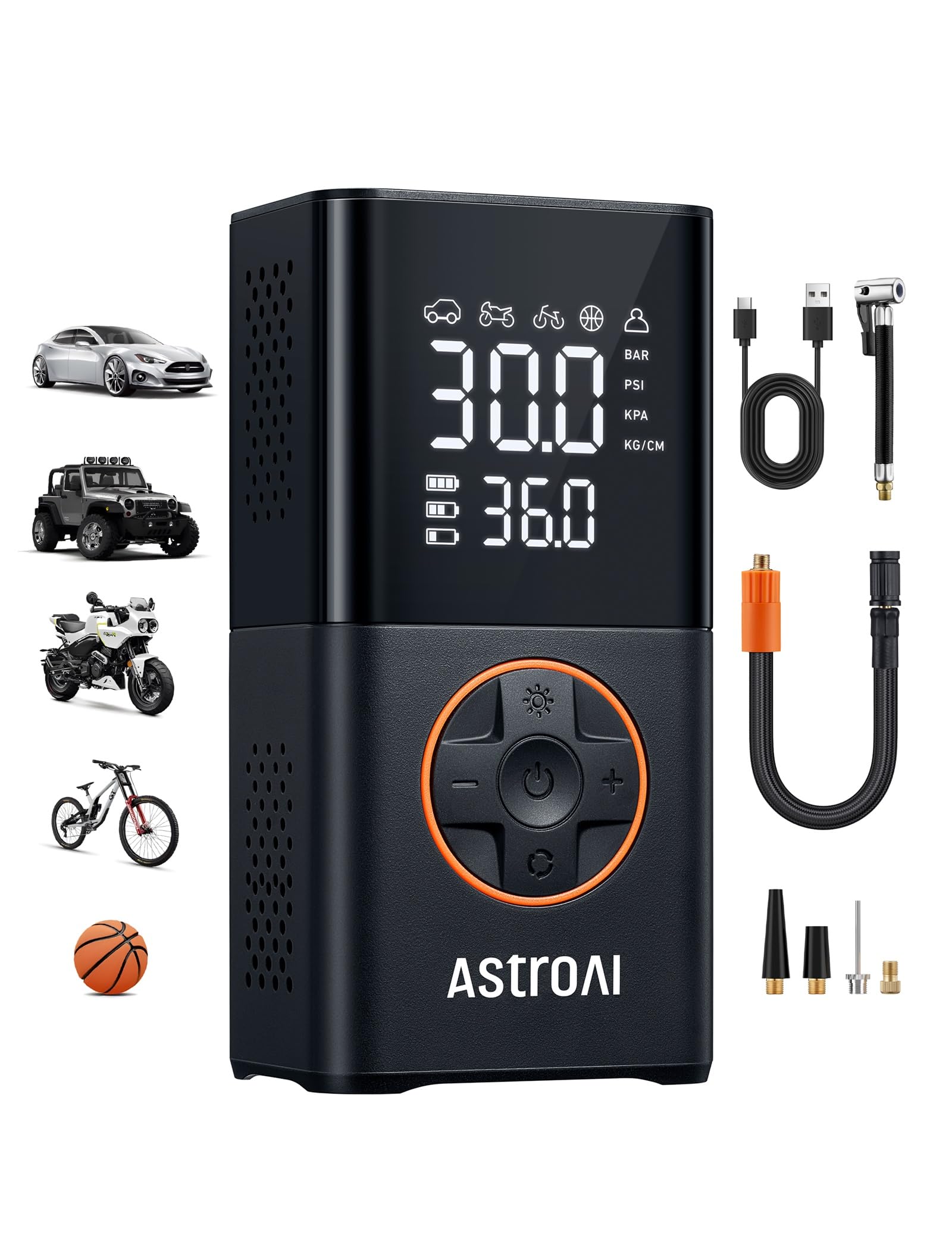
We recommend the AstroAI L7 for drivers who want a compact cordless inflator for routine tire pressure checks and small roadside top-ups.
Pros
- Compact enough for a glove box or backpack
- Simple presets with automatic shut-off
- Works with cars, bikes, motorcycles, and balls
Cons
- Noticeably noisy during use
- Not designed for heavy-duty tires
- The plastic body feels less rugged than larger compressors
We found the L7 easy to carry and quick to set up. The digital screen made it simple to select a pressure setting, attach the hose, and let the pump stop when it reached the target. Its snap-on connector also helped reduce air loss during attachment.
The cordless design worked well for topping off car and bicycle tires without searching for a power outlet. The built-in light added useful visibility at night, while the USB ports provided a practical backup charging option.
We would not choose it for repeated inflation of large tires or demanding workshop use. The motor makes a fair amount of noise, and the small body can warm during longer sessions. For everyday vehicles, bikes, and sports equipment, its compact size and straightforward controls make it a useful emergency tool.
AstroAI 160 PSI Cordless Tire Inflator
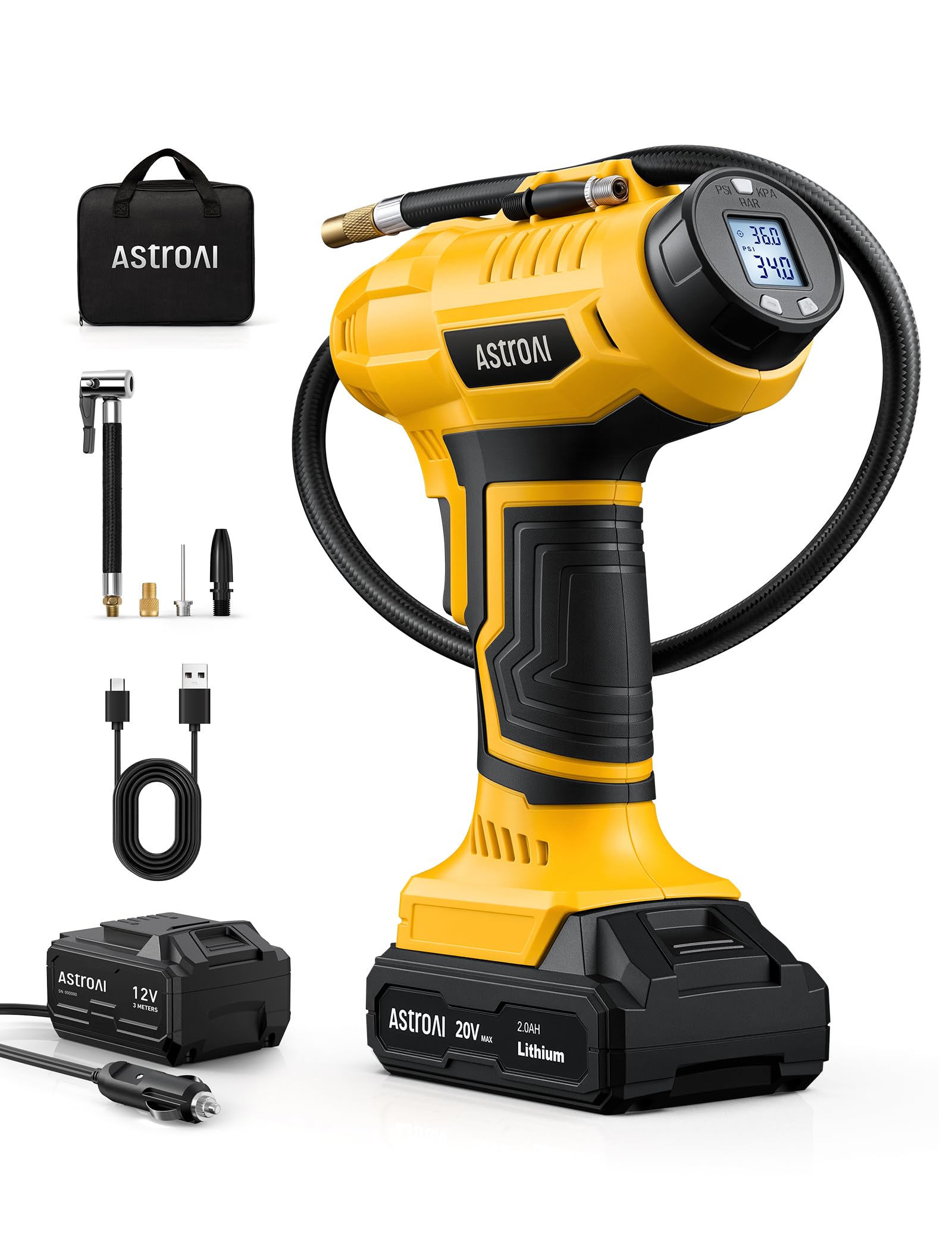
We recommend this compact inflator for quick tire top-offs, with cordless use, automatic shut-off, and a 12V backup option.
Pros
- Fast inflation for routine tire adjustments
- Clear digital gauge with automatic shut-off
- Includes adapters, a storage bag, and LED light
Cons
- Battery drains quickly during repeated inflation
- No wall charger comes in the package
- Noticeable noise during operation
We found the AstroAI easy to carry and simple to operate. We set the target pressure, connected the hose, and let the pump stop on its own. The digital display made pressure checks easier than using a basic handheld gauge.
The cordless battery worked well for topping off several tires, and the 12V vehicle cable provided a useful backup. We would keep the battery charged, since extended inflation uses power quickly.
Its metal pump components support short, repeated jobs, but the unit becomes noisy while running. The built-in light also helps when we need to check a tire after dark.
This inflator handles cars, motorcycles, bikes, and sports equipment with the included adapters. We like it most as an emergency vehicle tool and for regular pressure checks, rather than as a replacement for a full-size air compressor.
Inzeetor 150 PSI Tire Inflator
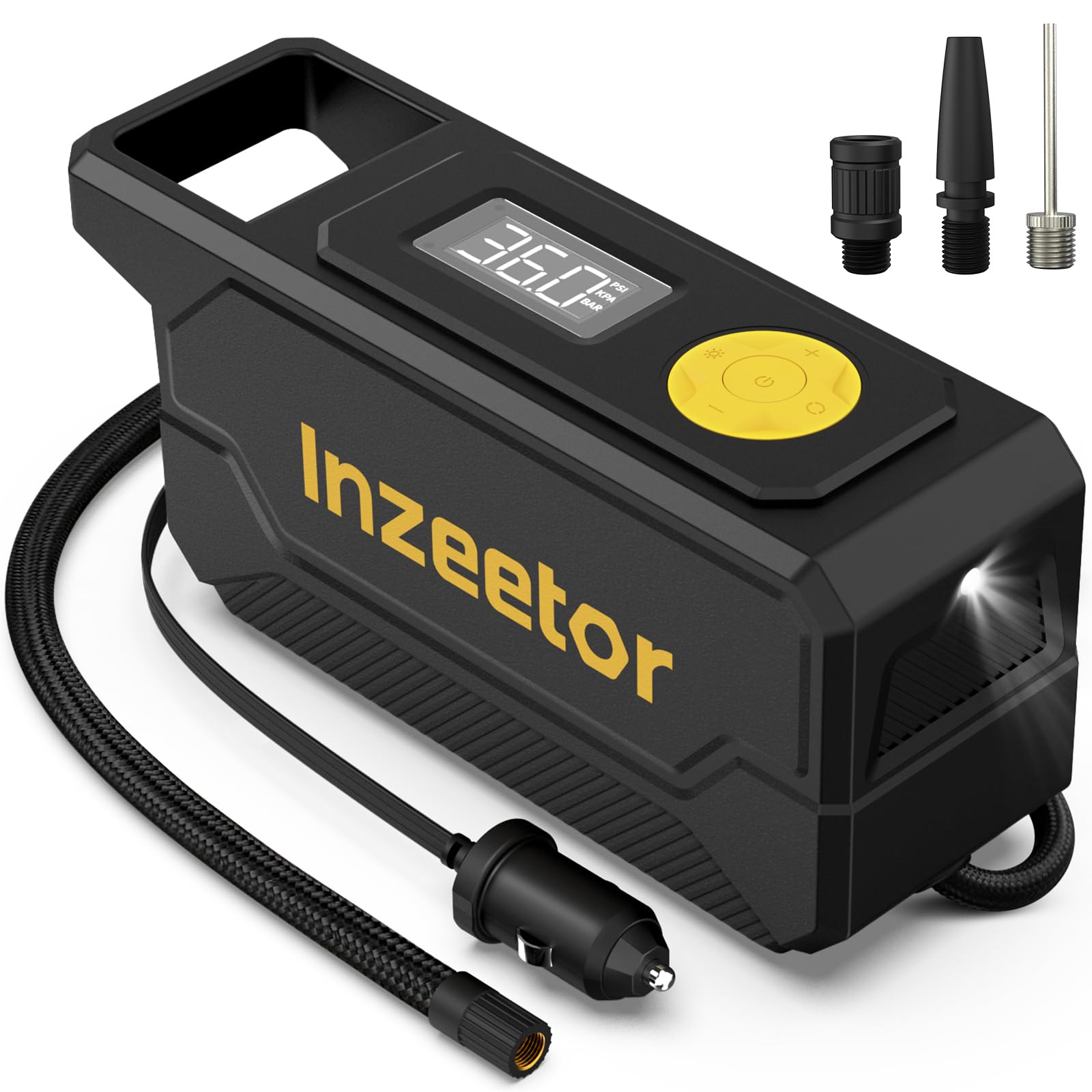
We recommend this compact 12V inflator for drivers who want fast, automatic tire top-offs without relying on rechargeable batteries.
Pros
- Inflates car tires quickly
- Stops automatically at the set pressure
- Includes adapters for bikes and sports balls
Cons
- Requires a running vehicle and 12V outlet
- The power cord may feel limiting for some vehicles
- Noise remains noticeable during use
We found the digital controls simple to use. After setting the target pressure, we started the pump and let it stop on its own, which made topping off a tire more convenient than watching the gauge constantly.
The unit handled routine car inflation well and stayed steady while running. Its compact size also made storage easy, while the built-in light added useful visibility during roadside work.
The cord reaches most tires on a typical car, but larger vehicles may need more reach. We also noticed some operating noise, although it stayed manageable for short inflation sessions.
The included adapters make this pump useful for bicycle tires and sports balls, too. Since it draws power from a vehicle outlet, we would keep it in the trunk as a backup rather than use it where no car power source is available.
AVID POWER Cordless Tire Inflator
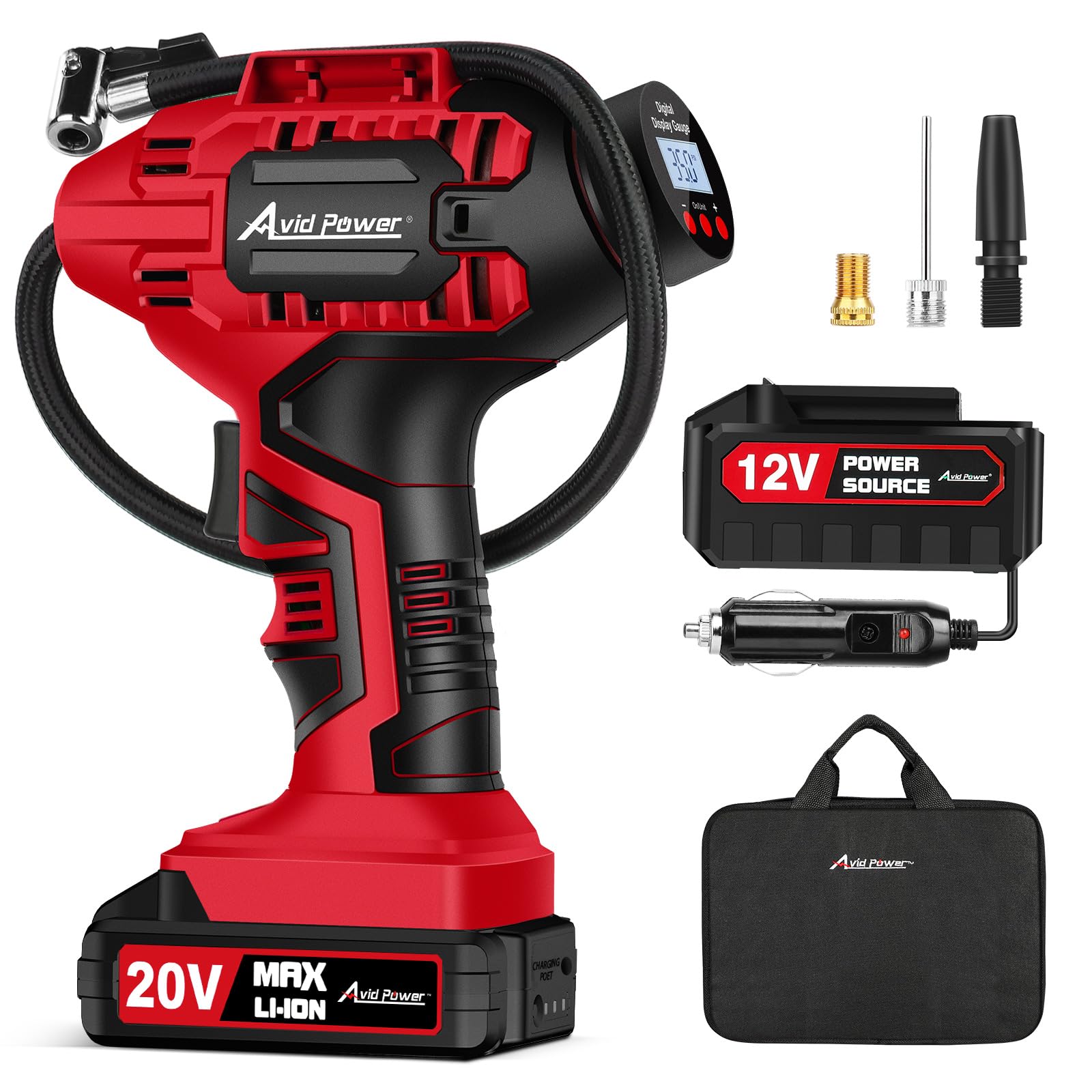
We recommend this inflator for quick car-tire top-ups because it offers cordless use, automatic shutoff, and a 12V backup.
Pros
- Cordless battery and car-power options
- Stops automatically at the selected pressure
- Includes adapters for bikes and sports balls
Cons
- Requires cooling breaks during longer jobs
- Not designed for large inflatables or heavy-duty tires
- The hose is fairly short
We found the AVID POWER easy to hold and simple to operate. We set the target pressure, attached the hose, and let the pump work. The digital display made pressure readings easy to check, while the built-in light helped in low-light conditions.
The rechargeable battery handled routine tire top-ups without needing the car to run. For roadside use, the 12V adapter adds useful backup power. Inflation felt quick on standard passenger-car tires, though the pump became warm during extended use.
The included case keeps the pump, battery, charger, adapters, and cord together. We would choose it for cars, motorcycles, bikes, and sports equipment, but not for truck tires, large pool floats, or other high-volume items.
AstroAI Dual-Power Tire Inflator

We recommend this inflator for drivers who want fast tire pressure checks and the flexibility to use it at home or on the road.
Pros
- AC and DC power options
- Fast inflation for most car tires
- Automatic shutoff and built-in light
Cons
- Requires cooling after extended use
- Short air hose
- Not designed for heavy-duty trucks
We found the dual-power setup useful because we could plug it into a household outlet in the garage or a vehicle’s 12-volt socket while traveling. The digital display was easy to read, and the automatic shutoff stopped the pump at our selected pressure.
For regular car tires, the AstroAI worked quickly and felt more capable than many compact inflators. Its second mode also handled larger low-pressure items, such as air mattresses, though we would not use it for demanding commercial work.
The pump gets hot during repeated inflation, so we followed the recommended rest period between sessions. The short hose can also make access harder on some vehicles. Still, the compact design, storage compartments, adapters, and nighttime light make this a practical choice for home use and roadside emergencies.
Buying Guide
We should match the inflator to our vehicle, tire size, and usual driving needs. A compact model may suit emergency use, while a stronger unit can work better for regular maintenance or larger tires.
Key features to compare include:
- Power source: Choose between a 12-volt vehicle outlet, rechargeable battery, or wall power.
- Maximum pressure: Check that the rating exceeds our tires’ recommended pressure.
- Airflow: Higher airflow can reduce filling time, but it may increase size and noise.
- Pressure display: A clear digital or analog gauge helps us set accurate pressure.
- Automatic shutoff: This feature stops inflation at the selected pressure.
- Hose and cord length: Longer reach makes it easier to access all four tires.
- Portability: We should consider weight, storage size, and carrying handles.
- Duty cycle: Check how long the unit can run before it needs to cool.
We should not choose based only on the highest pressure rating. The vehicle manual or tire sidewall lists the correct operating pressure, and the inflator should make that pressure easy to set and monitor.
| Feature | What to check |
|---|---|
| Gauge | Clear, easy-to-read display |
| Controls | Simple buttons and settings |
| Accessories | Useful valve adapters and storage |
| Build | Durable housing and secure connections |
| Safety | Overheat protection and automatic shutoff |
Editor’s Choice
We chose the top-rated tire inflator based on reliable performance, simple controls, and useful safety features. Our preferred model should inflate car, truck, bike, and sports equipment tires without taking up much space.
| Feature | What we look for |
|---|---|
| Pressure range | Enough capacity for common vehicle and bike tires |
| Digital gauge | Clear readings in PSI, BAR, or kPa |
| Auto shutoff | Stops inflation at the selected pressure |
| Power options | A 12-volt car plug or rechargeable battery |
| Hose and cord | Long enough to reach each tire easily |
We value an inflator with a bright display and straightforward buttons. A built-in light can help during roadside use, while a storage case keeps the hose and cables organized.
Speed also matters, but accuracy comes first. We prefer a unit that reaches the target pressure consistently and includes a secure valve connection to reduce air loss.
Before buying, we recommend checking the inflator’s maximum pressure, power source, and duty cycle. Some models need a cooling period after extended use, so that detail matters when filling several large tires.
Conclusion
We should choose a tire inflator based on our vehicle, driving needs, and budget. A compact 12-volt model works well for routine tire pressure checks, while a battery-powered unit offers more flexibility without a power cable.
We should look for accurate pressure readings, simple controls, a clear display, and an automatic shutoff. A long hose, bright light, and included storage case can also make regular use easier.
Before buying, we can compare:
- Maximum pressure and inflation speed
- Power source and battery life
- Hose length and connector type
- Display accuracy and readability
- Warranty and included accessories
We should keep the inflator in our vehicle and check its operation from time to time. Using it with a reliable tire pressure gauge helps us maintain the correct pressure and supports safe, even tire wear.
FAQS
How do we choose a top-rated tire inflator?
We look for accurate pressure readings, strong airflow, easy controls, and reliable safety features. A long power cord, useful hose length, and bright display can also improve daily use.
How fast can our tire inflator work?
Speed depends on the tire size, starting pressure, and inflator power. Many portable models can inflate a standard car tire in several minutes, but larger tires may take longer.
Should we choose a cordless or corded model?
Cordless inflators offer greater mobility and work well for roadside use. Corded models usually provide steady power and avoid battery charging, especially when they connect to a vehicle’s 12-volt outlet.
Can we use one inflator for cars, bikes, and sports equipment?
Many models include adapters for bicycle tires, balls, and other inflatables. We should check the included fittings and pressure range before buying.
What safety features should we seek?
An automatic shutoff helps prevent overinflation by stopping at the selected pressure. We should also seek a clear pressure gauge, heat protection, and a design that allows the unit to cool between uses.
How often should we check tire pressure?
We should check pressure at least once a month and before long trips. Cold tires provide the most accurate reading, so we should measure them before driving or after the vehicle sits for several hours.
