What Does Transmission Fluid Do? Roles & Functions Explained
📌 Quick Summary Transmission fluid acts as a multi-purpose lubricant, coolant, and hydraulic medium that allows your vehicle to change gears. It…
Transmission fluid acts as a multi-purpose lubricant, coolant, and hydraulic medium that allows your vehicle to change gears. It creates the necessary pressure to engage gear sets while preventing internal metal components from grinding or overheating during operation.
🎯 Key Takeaways
- It provides the hydraulic pressure needed to shift gears in automatic transmissions.
- Fluid lubricates moving metal parts to prevent friction-based wear and component failure.
- It acts as a coolant, pulling heat away from the transmission’s internal core.
- Healthy fluid prevents gear slipping, grinding, and catastrophic transmission overheating.
- Clean fluid ensures smooth power delivery from the engine to the wheels.
Transmission fluid is the essential multitasking liquid that allows your vehicle to shift gears and transfer power from the engine to the wheels. Unlike engine oil, which primarily serves as a lubricant, transmission fluid acts as a functional mechanical component. It provides the hydraulic pressure necessary to engage internal clutches, manages extreme operating temperatures, and protects hundreds of moving metal parts from catastrophic wear. Without healthy fluid, your transmission would overheat or seize within minutes of driving.
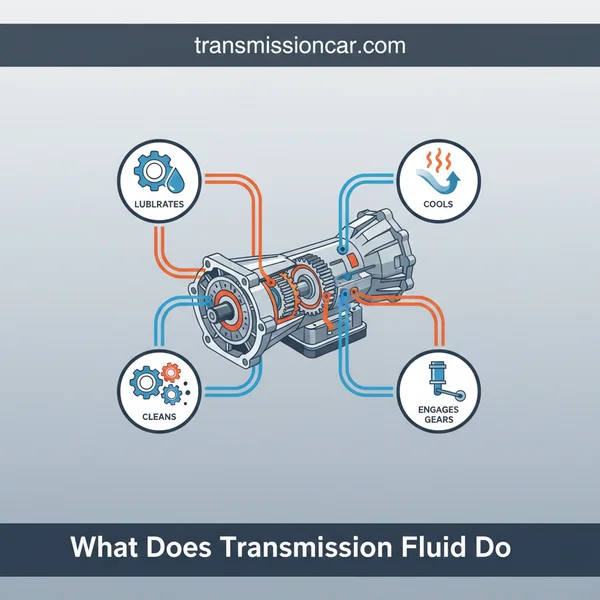
Practically speaking, this fluid is what makes your car “go” when you press the accelerator. It bridges the gap between the engine’s rotation and the physical movement of the gears. Understanding its roles helps you identify shifting issues before they turn into multi-thousand-dollar replacements. In this guide, we will break down exactly how this fluid functions as a lubricant, a coolant, and a source of hydraulic power.
The Core Functions: Lubrication, Cooling, and Cleaning
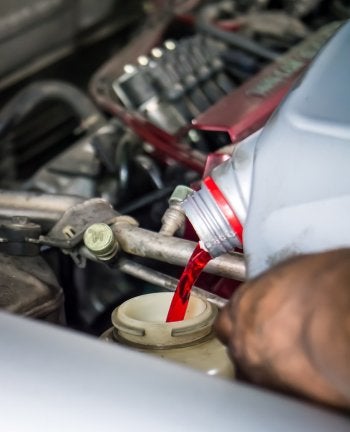
The inside of a transmission is a cramped environment packed with planetary gear sets, bearings, and shafts spinning at high speeds. Transmission fluid creates a microscopic barrier between these metal surfaces. This film prevents direct metal-to-metal contact, which would otherwise generate enough friction to melt components together. Beyond just making things “slippery,” the fluid is engineered to handle the specific shear stresses found in high-torque environments.
Reducing Friction and Wear
Every time your transmission shifts, metal components mesh together. The fluid ensures these interactions are smooth rather than abrasive. By reducing friction, the fluid minimizes the physical “shaving” of metal that happens during normal operation. This protection extends the life of the gear teeth and synchronizers significantly.
- Protects Bearings: Keeps high-speed bearings rotating freely without seizing.
- Prevents Oxidation: Inhibits rust and corrosion on internal steel and brass components.
- Smooth Engagement: Ensures that synchros and gears slide into place without grinding.
Heat Dissipation and Debris Management
Heat is the primary cause of transmission failure. As the fluid circulates, it absorbs the intense heat generated by friction and the torque converter. It carries this thermal energy away from the delicate internals and moves it toward the transmission cooler (usually located near the radiator). Furthermore, the fluid acts as a cleaning agent. It picks up tiny metal shavings and carbon deposits, carrying them to the internal filter so they don’t clog the sensitive valve body.
- Temperature Control: Maintains an ideal operating range (usually 175–200 degrees Fahrenheit).
- Suspension of Particles: Keeps contaminants from settling on vital electronic sensors.
- Seal Conditioning: Keeps rubber seals and gaskets pliable so they don’t become brittle and leak.
Transmission Fluid as a Hydraulic Power Source
In an automatic transmission, the fluid isn’t just there for protection; it is the force that performs the work. This is known as hydraulic function. Your transmission uses a complex network of channels and valves to direct pressurized fluid toward specific clutch packs and bands. When the fluid reaches these components, the pressure forces them to squeeze together, which is how the transmission physically engages a different gear ratio.
Actuating Gear Changes via the Valve Body
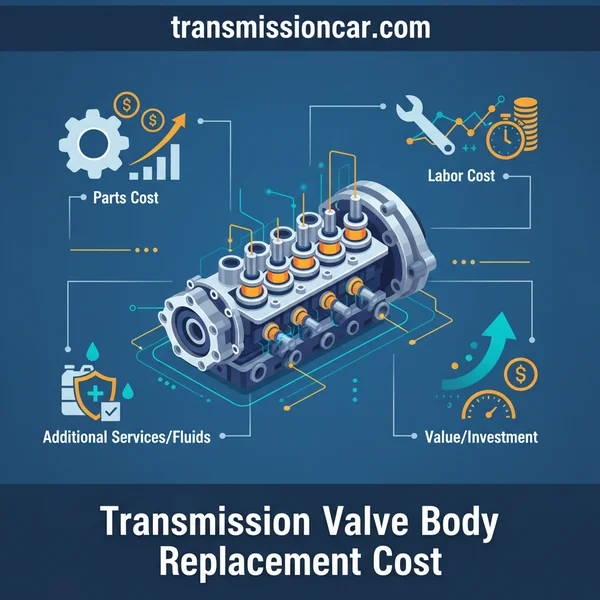
Think of the valve body as the “brain” of the transmission. It is a maze of pathways that directs fluid pressure to the right place at the right time. When you accelerate, the vehicle’s computer tells the valve body to send a burst of hydraulic pressure toward the next gear’s clutch pack. The fluid’s ability to remain non-compressible is what allows for the precise, instantaneous shifts you feel while driving. If the fluid is low or contains air bubbles (foaming), the pressure drops, leading to “slipping” or delayed shifts.
The Torque Converter Connection
In vehicles with automatic transmissions, the fluid is responsible for the physical connection between the engine and the gearbox through the torque converter. This component uses fluid coupling to transfer rotational energy. The engine spins an internal pump (impeller), which flings fluid into a turbine. The force of that moving fluid is what actually spins the transmission’s input shaft.
- Fluid Coupling: Allows the engine to keep running while the vehicle is stopped in gear.
- Torque Multiplication: Uses fluid dynamics to provide extra power when accelerating from a dead stop.
- Lock-up Function: At highway speeds, the fluid helps engage a mechanical lock for maximum fuel efficiency.
The Importance of Viscosity and Friction Modifiers
While the basic function of transmission fluid is to move and protect, the specific chemistry of that fluid—particularly its viscosity and friction modifiers—is what makes your car driveable. Viscosity refers to the thickness of the liquid and how easily it flows through the complex maze of the transmission’s internal passages. If the fluid is too thick, it won’t reach tight spaces; if it’s too thin, it won’t provide enough of a cushion between moving parts.

Maintaining the “Goldilocks” Viscosity
Transmission fluid is engineered to maintain a very specific “weight” across a wide range of temperatures. Whether you are starting your car on a freezing winter morning or towing a heavy trailer in the summer heat, the fluid must remain stable. When the viscosity breaks down due to age or overheating, the fluid can no longer maintain the pressure required to hold the gears in place.
- Cold Starts: High-quality fluid remains thin enough to circulate immediately, preventing “dry” metal-on-metal contact.
- Heat Resistance: Premium additives prevent the fluid from thinning out into a watery consistency when the transmission reaches high operating temperatures.
- Seal Protection: Proper viscosity ensures that internal seals stay conditioned and expanded, preventing internal pressure leaks.
Friction Modifiers: The Secret to Smooth Shifting
Modern automatic transmissions rely on a series of clutch packs to engage different gears. These clutches need a specific amount of “grip” to work. Friction modifiers are chemical additives that control how much the fluid allows these surfaces to slide or grab. Without these modifiers, your car would experience “shift shudder,” a vibration that feels like driving over rumble strips, or harsh, jarring gear changes that can eventually snap internal components.
Signs of Failing Fluid and the Risks of Neglect
Because transmission fluid does so much heavy lifting, it eventually wears out. Over time, the heat cycles break down the chemical additives, and the fluid begins to oxidize. When this happens, it loses its ability to clean, cool, and lubricate, turning from a helpful protector into a thick, abrasive sludge that can actually damage your vehicle.
Visual and Scent-Based Cues
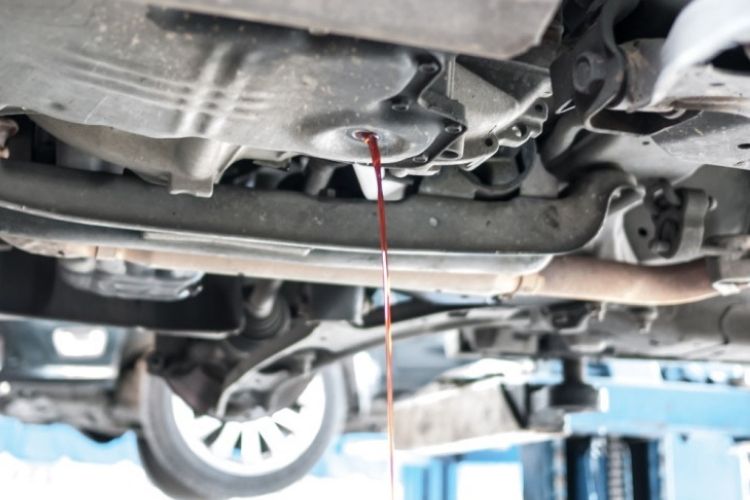
One of the easiest ways to tell if your fluid is still doing its job is by checking its physical state. Fresh transmission fluid is typically a translucent bright red or pink. If you notice changes in the appearance or smell of the fluid on the dipstick, it is a clear warning that the fluid’s roles—specifically cooling and cleaning—are no longer being fulfilled.
- Dark Brown or Black: This indicates the fluid is oxidized and filled with microscopic debris.
- Burnt Toast Smell: A sign that the fluid has overheated and can no longer protect against friction.
- Cloudy or Milky: This often suggests coolant has leaked into the transmission, which is a “catastrophic failure” scenario.
Performance Red Flags
When the fluid loses its hydraulic properties, the transmission will struggle to execute your commands. You might notice a “slipping” sensation, where the engine revs up but the car doesn’t accelerate accordingly. This happens because the fluid can no longer provide the pressure needed to keep the clutches engaged. Other red flags include delayed engagement (waiting a few seconds for the car to move after shifting into Drive) and strange grinding noises caused by lack of lubrication. Ignoring these signs often leads to a total transmission rebuild, which is one of the most expensive repairs a car owner can face.
Conclusion
Understanding what transmission fluid does is the first step toward better vehicle longevity. It isn’t just a simple oil; it is a multi-tasking hydraulic power source, a cooling agent, and a protector of delicate internal components. By keeping the gears moving smoothly and maintaining internal pressure, this fluid ensures your car remains reliable and responsive. To keep your transmission in top shape, make it a habit to check your fluid levels monthly and always adhere to the service intervals found in your owner’s manual. A little bit of preventative maintenance today can save you from a massive repair bill tomorrow. If you haven’t checked your fluid recently, pop the hood this weekend and give your transmission the attention it deserves!
💬 Quick Questions & Answers
Why is transmission fluid important?
It provides the hydraulic pressure to shift gears and protects internal metal components from friction.
Does transmission fluid cool the gearbox?
Yes, it transfers heat away from moving parts to prevent the system from overheating during operation.
What happens if the fluid is low?
Low fluid leads to gear slipping, erratic shifting, and potentially permanent internal mechanical damage.
Is there a difference between automatic and manual fluid?
Yes, automatic fluid acts as a hydraulic medium, while manual fluid primarily focuses on lubrication and protection.
What color should healthy fluid be?
Most fresh transmission fluids are bright red or translucent pink and should not smell burnt.
❓ Frequently Asked Questions
How does transmission fluid actually help with gear shifting?
In automatic transmissions, the fluid acts as a hydraulic fluid that flows through the valve body to engage specific clutch packs and gear sets. Without this pressurized flow, the transmission would remain stuck in neutral or fail to switch gears correctly.
Can transmission fluid prevent the engine from overheating?
While its primary job is cooling the transmission, an overheating gearbox can put extra strain on the vehicle’s overall cooling system. By managing transmission temperatures, it helps maintain the thermal health of the entire drivetrain.
What are the consequences of using old, oxidized fluid?
Over time, fluid loses its protective properties and ability to manage heat, leading to sludge buildup. This can cause shifting lag, where the gears take longer to engage or feel ‘spongy’ during acceleration.
Why does transmission fluid need detergent properties?
It contains additives that keep internal components clean by preventing the buildup of varnish and metallic deposits. This ensures that tiny passages in the valve body remain clear for fluid to flow smoothly.
Is it true that transmission fluid can wear out?
Yes, the extreme heat and friction of daily driving eventually break down the fluid’s chemical structure and viscosity. Once degraded, it no longer provides the necessary lubrication or hydraulic pressure for safe operation.
What is the risk of a transmission fluid leak?
Even a small leak can drop pressure levels enough to cause gears to slip or grind. If left unchecked, the lack of lubrication and hydraulic power will lead to total transmission failure and expensive repairs.