What Kind Of Transmission Defines Modern Vehicle Performance And Efficiency
While most drivers focus on horsepower figures and leather interiors, the true character of a vehicle is defined by the complex mechanical…
While most drivers focus on horsepower figures and leather interiors, the true character of a vehicle is defined by the complex mechanical link between the engine and the wheels. Choosing what kind of transmission you need involves navigating a confusing landscape of acronyms like CVT, DCT, and DSG, each offering vastly different reliability and performance profiles. This expert guide will provide a professional analysis of every major transmission type, helping you identify the most reliable and efficient system for your specific driving lifestyle. Whether you are seeking the tactile engagement of a manual or the millisecond precision of a dual-clutch system, understanding these mechanical foundations is essential for any informed automotive investment.
Manual Transmissions and the Mechanical Evolution of Driver Control
📤 Share Image
For the enthusiast and the cost-conscious driver, the manual transmission represents the most direct, unadulterated connection to a vehicle’s powertrain. At its core, the manual system relies on a three-pedal interface that manages the physical coupling of the engine to the drivetrain. This process begins with the flywheel, a heavy disk bolted to the engine’s crankshaft. When the driver depresses the clutch pedal, the throw-out bearing (or release bearing) applies pressure to the pressure plate’s diaphragm spring, releasing the friction disc from the flywheel. This temporary disconnection allows the driver to select a different gear ratio without grinding the rotating components.
From a professional engineering standpoint, manual gearboxes are often considered more reliable than their automated counterparts. This is largely due to their relative simplicity; they lack the complex hydraulic valve bodies and sensitive electronic control units (ECUs) required by automatics. Furthermore, manual transmissions have simpler cooling requirements because they do not generate the immense fluid heat associated with torque converter slip. A critical component in this system is the synchronizer, a brass-alloy ring that uses friction to match the speed of the gear to the input shaft before engagement. This quality engineering ensures that transitions are smooth, even during spirited driving.
Despite the technological dominance of computers, high-performance brands continue to offer manual options. The “driver engagement” factor—the psychological and physical satisfaction of perfectly rev-matching a downshift—remains a marketable commodity. While a computer can shift faster, it cannot anticipate a driver’s intent. Maintenance costs also favor the manual in the long term. While a clutch replacement is a scheduled wear item typically occurring every 60,000 to 100,000 miles, the total cost is a fraction of a full automatic transmission rebuild.
Manual Transmission Market Dynamics
US New Car Sales
Higher Enthusiast Resale Value
Industry benchmarks like the Mazda MX-5 Miata and the Porsche 911 (offering a sophisticated 7-speed manual) prove that there is still a professional demand for these systems. These vehicles utilize short-throw shifters and precisely weighted pedals to enhance the mechanical feel, catering to a segment where experience outweighs raw statistics.
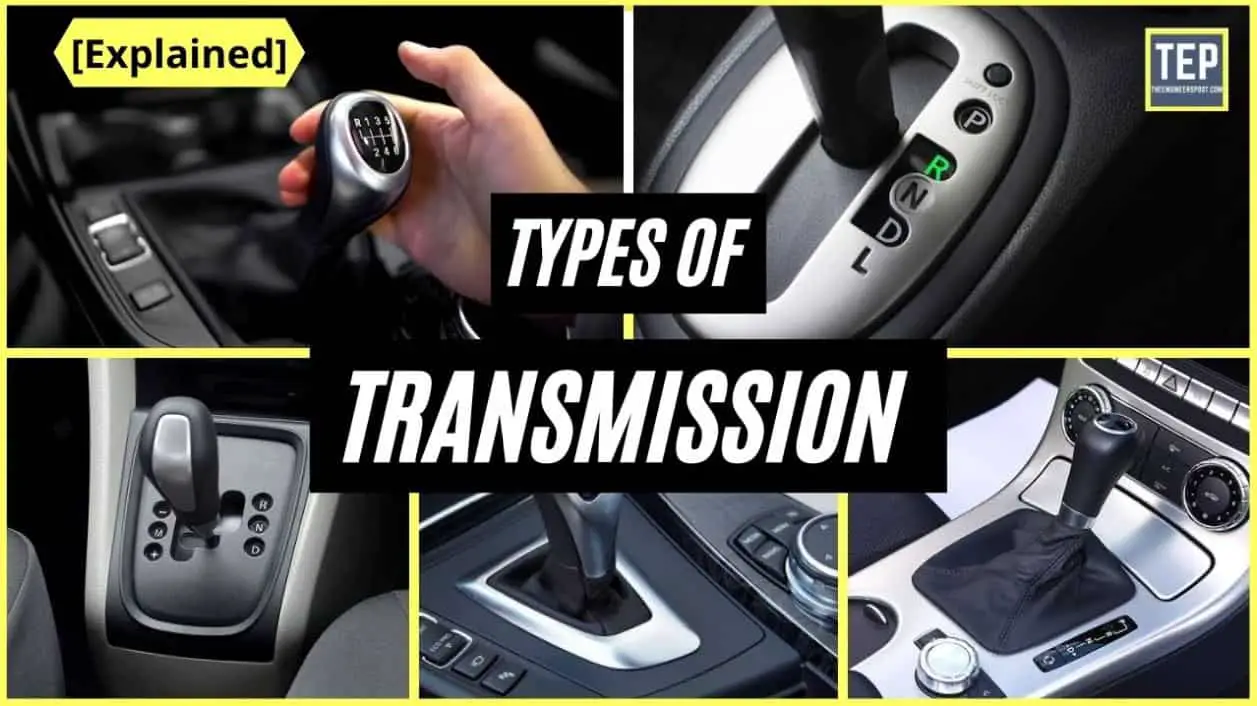
Automatic Transmissions and the Technical Sophistication of Torque Converters
The traditional automatic transmission is the complete evolution of automotive convenience. Unlike the manual’s physical clutch, the automatic utilizes a torque converter, a fluid coupling device that allows the engine to spin independently of the transmission. Inside the converter, an impeller flings transmission fluid into a turbine, which then spins the input shaft. This allows a vehicle to come to a complete stop while remaining in gear without stalling the engine—a feat impossible for a manual without driver intervention.
We have moved far beyond the inefficient 3-speed hydraulic units of the 1970s. Modern vehicles now employ 8, 9, and even 10-speed electronically controlled units manufactured by world-class firms like ZF and Aisin. These transmissions utilize “Adaptive Shift Logic,” a professional suite of sensors that monitor throttle position, vehicle load, and even the incline of the road. If the system detects aggressive driving, it will hold gears longer; if it senses a steep descent, it will downshift to provide engine braking.
One of the most significant advancements in automatic quality is the widespread use of lock-up clutches. Historically, automatics were less efficient than manuals due to “parasitic loss” in the torque converter. Modern units now lock the impeller and turbine together at cruising speeds, creating a 1:1 mechanical link that has virtually eliminated the fuel efficiency gap. To maintain this level of performance, regular fluid flushes are non-negotiable. The reliable operation of the internal clutch packs and delicate hydraulic valves depends entirely on the cleanliness and viscosity of the transmission fluid.
The ZF 8HP transmission, used in everything from BMW sedans to Ram pickup trucks, is widely considered the trusted industry standard for automatics. Its ability to balance lightning-fast shifts with heavy-duty towing capacity makes it the most versatile gearbox in production today.
Data suggests that modern 10-speed automatics can achieve up to 5% better fuel economy than their 6-speed predecessors. By keeping the engine in its most efficient RPM range across a wider variety of speeds, these transmissions have become essential for meeting stringent global emissions standards while providing a trusted, smooth driving experience.

Continuously Variable Transmissions (CVT) for Optimized Fuel Economy
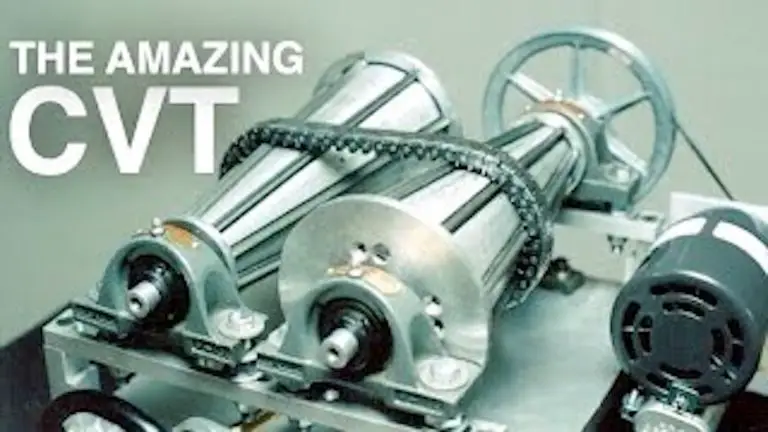
The Continuously Variable Transmission (CVT) is a departure from traditional gear-based engineering. Instead of a fixed set of cogs, a CVT utilizes a pulley-and-belt (or high-strength chain) system. By varying the width of the pulleys, the transmission can create an infinite number of gear ratios between its lowest and highest settings. This allows the engine to stay at its peak power or efficiency band 100% of the time during acceleration, rather than the RPM “hunting” associated with fixed gears.
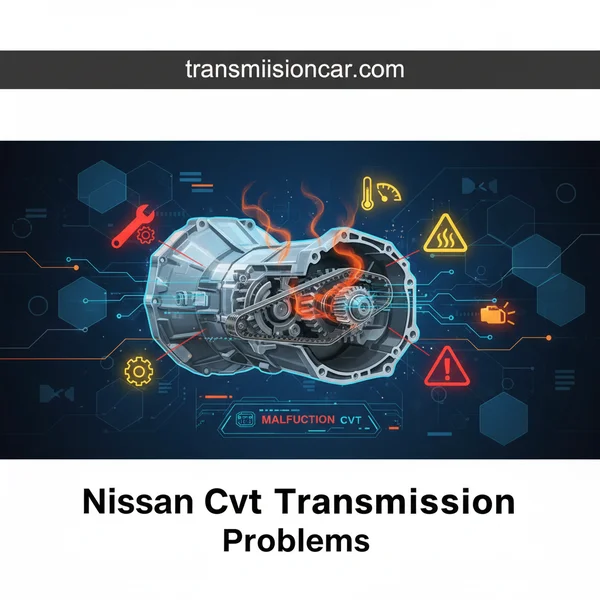
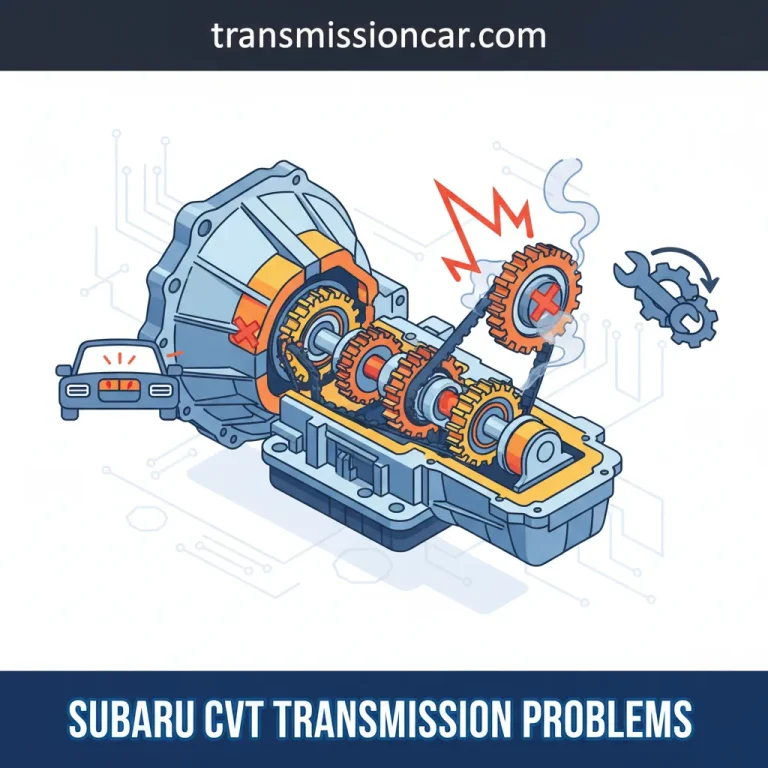
Manufacturers like Subaru (with their Lineartronic system) and Nissan (with Xtronic) favor CVTs because they are the most effective tool for maximizing EPA fuel economy ratings. However, early iterations were criticized for the “rubber band effect,” where engine RPM would rise and stay high while the vehicle speed slowly caught up. To address this, expert engineers have introduced “stepped” ratios into the software. These simulated gear changes provide a more familiar tactile feel for the driver without sacrificing the inherent efficiency of the design.
✅ CVT Pros
- Maximum fuel efficiency
- Smooth, shift-free acceleration
- Compact, lightweight design
- Optimized power delivery
❌ CVT Cons
- “Drone” noise under heavy load
- Higher repair costs if belt fails
- Limited towing capacity
- Requires specialized fluid
Maintenance is where many owners fail with CVTs. These systems require specific, high-quality synthetic fluids that provide both lubrication for the bearings and the necessary friction for the belt-to-pulley contact. Using the wrong fluid can lead to belt slip and catastrophic heat damage. From a professional perspective, a CVT is an excellent choice for a daily commuter in a compact front-wheel-drive architecture, where space and fuel costs are the primary concerns.
Dual-Clutch Transmissions (DCT) and the Peak of Performance Engineering
A Dual-Clutch Transmission (DCT) is essentially two manual gearboxes housed within one unit, working in tandem. One clutch controls the odd gears (1, 3, 5, 7), while the other manages the even gears (2, 4, 6). The expert advantage here is “pre-selection.” While you are accelerating in 2nd gear, the computer has already engaged 3rd gear on the other shaft. When it is time to shift, one clutch opens as the other closes simultaneously.
This allows for shift times that are physically impossible for a human. A modern DCT, such as Porsche’s PDK (Doppelkupplung) or Volkswagen’s DSG, can change gears in approximately 8 milliseconds. To put that in perspective, a human blink takes about 100 to 400 milliseconds. This technology dominated professional racing before trickling down to high-performance road cars because it minimizes power interruption, keeping the turbocharger spooled and the chassis balanced during high-speed transitions.
“Wet” DCTs use an oil bath to cool the clutches and are found in high-torque engines. “Dry” DCTs are more efficient but prone to overheating in stop-and-go traffic. Knowing which one you have is comprehensive to preventing premature failure.
While DCTs offer the complete performance package, they are not without drawbacks. Early models were notorious for low-speed “jerkiness” or a “creeping” sensation that felt unnatural to drivers used to traditional automatics. Recent professional software updates and better actuator hardware have smoothed these transitions significantly. However, the high manufacturing cost and complexity mean that when a DCT fails outside of warranty, the repair bills can be substantial.
Identifying What Kind of Transmission Best Suits Your Environment
Choosing what kind of transmission is right for you depends on a comprehensive assessment of your environment and long-term goals. If your daily life involves heavy stop-and-go urban traffic, the constant clutching of a manual will become a chore, and the potential overheating of a dry DCT is a risk. In this scenario, a reliable traditional automatic or a CVT is the professional choice.
📋
The Decision Framework
If you regularly haul trailers or heavy loads, prioritize a traditional torque converter automatic. Their superior heat dissipation makes them the only trusted choice for heavy-duty work.
Consider total cost of ownership. A CVT replacement averages $3,000–$5,000, whereas a manual clutch replacement is typically $800–$1,500. For long-term reliability on a budget, simplicity wins.
Mountain-dwelling drivers often benefit from the precise engine braking control found in Manuals or DCTs with paddle shifters. Conversely, for the highway cruiser focused on the lowest possible fuel costs, the CVT remains king. As we look toward the future, the conversation is shifting toward single-speed reduction gears found in Electric Vehicles (EVs). These systems offer instant torque with almost zero maintenance, likely signaling the eventual end of the multi-speed gearbox era.
In summary, the reliability of traditional automatics makes them a trusted choice for towing and long-term durability, while CVTs offer unmatched fuel efficiency for daily commuting provided you adhere to professional maintenance schedules. Dual-clutch and manual transmissions remain the gold standard for drivers seeking a high-performance connection to the road. Consult your vehicle’s owner manual to ensure you are using the highest quality fluids for your specific transmission type to guarantee long-term reliable operation. By matching the transmission technology to your driving environment, you ensure a vehicle that performs exactly as you need for years to come.
Frequently Asked Questions
How do I determine what kind of transmission is in my current car?
To identify your transmission type, you can check the vehicle identification number (VIN) on a decoder website or look at the driver’s side door jamb sticker. Additionally, your owner’s manual will list technical specifications. Most modern economy cars use CVTs, while performance cars use DCTs or manuals, and trucks typically utilize traditional torque converter automatics.
Which transmission type is considered the most reliable for high mileage?
Historically, the manual transmission is the most reliable due to its mechanical simplicity. However, among automatics, the traditional torque converter system (like the ZF 8-speed) is highly trusted for high-mileage longevity. These systems handle heat better than CVTs or dry-clutch DCTs, provided that professional fluid services are performed every 50,000 to 60,000 miles.
Is a CVT worse than a regular automatic transmission?
A CVT is not ‘worse,’ but it is designed for a different purpose: maximum fuel efficiency and smoothness. It lacks the distinct ‘shifting’ feel of a regular automatic, which some drivers find unappealing. While early CVTs had reliability issues, modern units from manufacturers like Toyota and Honda are considered very reliable for standard commuting.
Why are manual transmissions becoming so hard to find?
The decline of manual transmissions is driven by the professional advancement of automatic technology. Modern automatics and DCTs now shift faster and offer better fuel economy than humans can achieve with a clutch. Furthermore, modern safety features like Adaptive Cruise Control and Autonomous Emergency Braking are much easier for engineers to integrate with automated transmissions.
Do electric vehicles have a transmission?
Electric vehicles (EVs) typically use a single-speed reduction gear transmission. Because electric motors provide 100% of their torque at zero RPM and can spin up to 20,000 RPM, they do not require multiple gear ratios to stay in a power band. This makes EV drivetrains exceptionally reliable and smooth compared to internal combustion alternatives.