
Why Does My Tire Inflator Get Hot? Causes, Safety Tips, and What You Should Know

You connect your tire inflator to a low tire, start filling it with air, and after a few minutes you notice the compressor feels hot. Many vehicle owners immediately wonder, why does my tire inflator get hot and whether the unit is failing or becoming unsafe.
Some heat is normal. Portable tire inflators use a small electric motor and compressor mechanism that create friction and pressure while moving air. However, excessive heat, burning smells, slow performance, or automatic shutdowns can indicate that the inflator is being overworked or has a problem.
Understanding why tire inflators heat up, how long they should run, and when to stop using them can help you protect the tool, maintain proper tire pressure, and avoid unnecessary tire or vehicle problems.
Quick Answer
A tire inflator gets hot because its electric motor and compressor work hard to compress air into the tire. Mild to moderate heat is normal during operation, especially when filling larger tires. Excessive heat, unusual smells, smoke, or repeated shutdowns may indicate overheating, a damaged component, or that the inflator is being used beyond its recommended duty cycle.
Why Does My Tire Inflator Get Hot?
A portable tire inflator is a small air compressor. Inside the unit, an electric motor drives a piston or compression mechanism that forces air into the tire.
During this process, several things create heat:
- Motor operation: Electric motors naturally produce heat while converting electricity into mechanical movement.
- Air compression: Compressing air increases temperature because the air molecules become more concentrated.
- Mechanical friction: Moving parts inside the compressor generate additional heat.
- Electrical resistance: Current flowing through wires and components creates heat.
- Continuous operation: Running the inflator for several minutes without a break allows heat to build up.
A warm inflator housing is usually normal. Most portable units are designed to become hot during use.
However, the amount of heat depends on:
- Tire size
- Tire pressure difference
- Compressor quality
- Battery or power source condition
- Outdoor temperature
- Length of continuous operation
A small inflator filling a passenger car tire from 30 PSI to 35 PSI may only run briefly. The same inflator filling a large truck tire from 10 PSI to 40 PSI may run much longer and become significantly hotter.
Normal Heat vs Dangerous Overheating
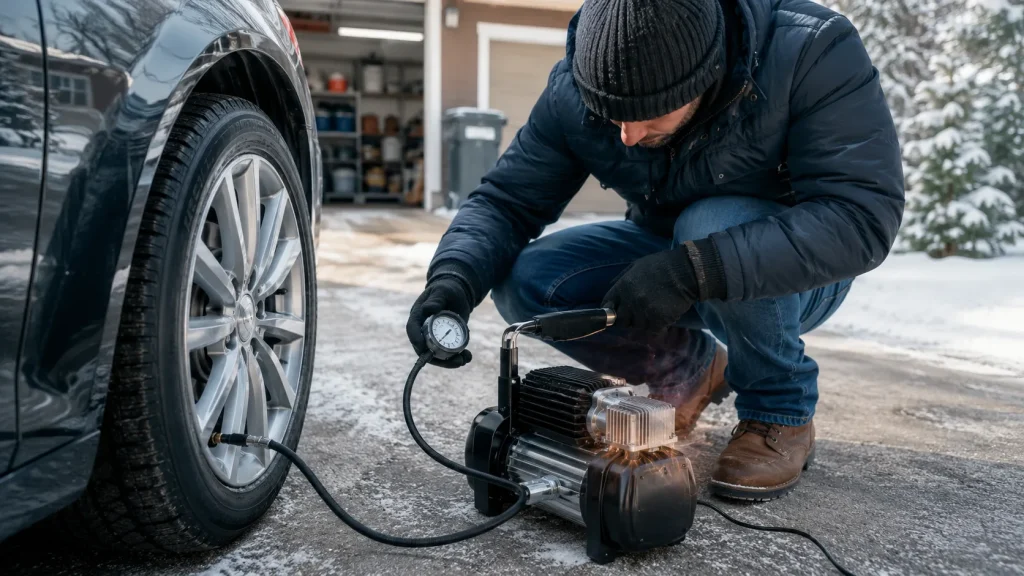
Not all heat means there is a problem. Vehicle owners should learn the difference between normal operating temperature and a warning sign.
| Condition | Usually Normal | Possible Problem |
|---|---|---|
| Inflator body feels warm or hot | Yes, during normal operation | No immediate concern |
| Hose becomes warm | Common during long use | Check if extremely hot |
| Motor noise remains steady | Normal | Possible failure if sound changes |
| Automatic shutdown after long use | Often a safety feature | Problem if it happens immediately |
| Burning smell | No | Stop using the unit |
| Smoke or melted plastic | No | Immediate safety concern |
| Very slow inflation | Possible with small units | Could indicate overload or damage |
If the inflator becomes too hot to touch, smells like burning plastic, or produces smoke, stop using it immediately.
How Portable Tire Inflators Produce Heat
The Electric Motor
The motor is the main source of heat inside most tire inflators.
When electricity flows through the motor’s internal coils, some energy becomes heat. Higher electrical demand creates more heat.
This is why inflators may become hotter when:
- Filling a completely flat tire
- Inflating heavy-duty truck tires
- Operating at maximum pressure
- Running from a weak battery source
The Compressor Mechanism
The compressor converts motor movement into compressed air.
A piston moves back and forth rapidly, creating pressure. The faster and longer this happens, the more heat develops.
Small emergency inflators are designed for occasional use, not continuous commercial operation.
Air Pressure Resistance
As tire pressure increases, the compressor has to work harder.
For example:
- Inflating from 20 PSI to 30 PSI is relatively easy.
- Inflating from 35 PSI to 50 PSI requires more effort.
The final few PSI often take longer because the pressure difference between the compressor and tire becomes smaller.
Does a Hot Tire Inflator Mean It Is Broken?
Not necessarily.
Many portable inflators are designed to operate at high temperatures during normal use. Some models include thermal protection that automatically shuts the unit down before damage occurs.
A hot inflator may still be working correctly if:
- It inflates tires at the expected speed.
- It does not smell burnt.
- It does not make unusual noises.
- It cools down after use.
- It follows the manufacturer’s recommended operating time.
The problem occurs when heat becomes excessive or repeated overheating reduces the unit’s reliability.
Common Reasons a Tire Inflator Overheats
1. Running Too Long Without a Break
The most common reason for overheating is exceeding the inflator’s duty cycle.
The duty cycle describes how long a compressor can operate before it needs cooling time.
For example:
- A small inflator may run for 10 minutes and need a cooling period.
- A heavy-duty compressor may operate longer.
Always check the manufacturer’s instructions.
The National Institute for Automotive Service Excellence (ASE) vehicle service information emphasizes proper equipment use and safe servicing practices because using tools beyond their intended limits can create safety issues.
2. Inflating Large Tires With a Small Compressor
A compact emergency inflator is convenient for normal passenger vehicles. However, it may struggle with:
- Pickup truck tires
- Large SUVs
- RV tires
- Trailer tires
- Off-road tires
A small motor working against a large tire volume creates more heat.
3. Low Battery Voltage
A weak electrical supply can cause the motor to work inefficiently.
For 12-volt inflators, problems may occur when:
- The vehicle battery is weak.
- The accessory outlet cannot provide enough power.
- The electrical connection is poor.
- Extension cords create voltage loss.
A compressor that receives insufficient power may run slower and generate additional heat.
4. Blocked Ventilation
Most inflators rely on airflow around the housing to remove heat.
Avoid placing the unit:
- On thick carpet
- Against clothing or bags
- Inside enclosed storage spaces while operating
- Near materials that block cooling openings
Good airflow helps the compressor stay within a safer operating range.
5. Cold Weather Operation
Cold weather creates additional challenges.
A frozen hose may become stiff, batteries may lose capacity, and mechanical parts may operate less efficiently.
However, cold weather does not eliminate overheating risk. The compressor can still become very hot internally while running.
How Long Can a Tire Inflator Run?
The safe operating time depends on the specific model.
Many small portable inflators are designed for short emergency use rather than continuous operation.
A general guideline:
| Inflator Type | Typical Use | Operating Consideration |
|---|---|---|
| Small 12V emergency inflator | Passenger cars | Use short cycles and allow cooling |
| Cordless portable inflator | Cars and bicycles | Monitor battery temperature |
| Heavy-duty compressor | Trucks and larger tires | Designed for longer operation |
| Workshop compressor | Frequent professional use | Built for repeated cycles |
Always follow the operating instructions provided with the inflator.
A compressor that overheats every time it is used may not be suitable for your vehicle’s tire size.
How to Prevent a Tire Inflator From Getting Too Hot
Proper use can significantly extend the life of your inflator.
Follow these steps:
- Check the tire pressure first Do not run the inflator longer than necessary.
- Know your target PSI Use the pressure listed on the vehicle’s door label, not the maximum number printed on the tire sidewall.
- Inflate in short intervals If the unit becomes very hot, stop and allow it to cool.
- Keep ventilation openings clear Place the inflator on a hard, open surface.
- Avoid unnecessary operation Repair the cause of repeated low pressure instead of constantly refilling the tire.
- Store the inflator properly Protect it from moisture, extreme temperatures, and physical damage.
The NHTSA tire safety recommendations advise checking tire pressure regularly because proper inflation improves handling, safety, and tire performance.
Can an Overheated Tire Inflator Damage the Tire?
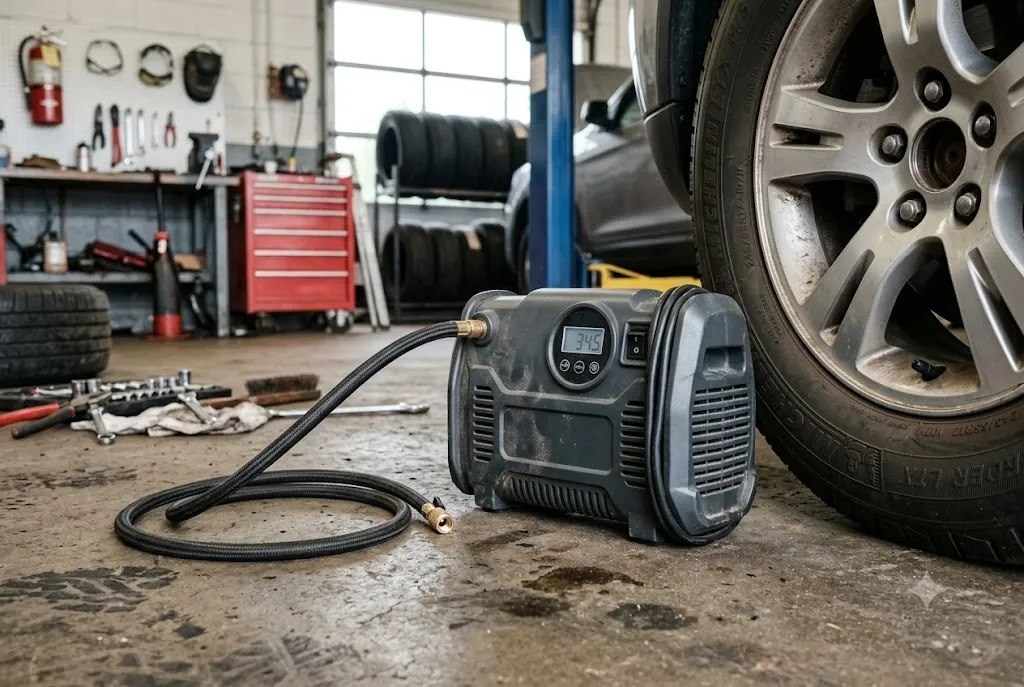
A properly working inflator will not damage a tire simply because the inflator becomes warm.
The greater risks come from incorrect use.
Potential problems include:
- Overinflating the tire
- Leaving the inflator unattended
- Ignoring abnormal heat or electrical problems
- Continuing to use a damaged compressor
Overinflated tires can affect vehicle handling and tire contact with the road. Underinflated tires can create excessive heat inside the tire itself.
Proper pressure matters because tires are a major part of vehicle safety.
Does Tire Inflator Heat Affect Transmission Performance?
A tire inflator itself does not affect the transmission. However, incorrect tire pressure can influence how the vehicle feels while driving.
Low tire pressure increases rolling resistance, meaning the engine and drivetrain must work harder.
Possible effects include:
- Reduced fuel economy
- Slower acceleration
- Increased load during driving
- More frequent automatic transmission shifting on hills
For vehicles with all-wheel drive, incorrect tire pressure differences can also affect drivetrain components because wheel speeds may vary.
Before assuming a transmission problem, check basic vehicle conditions such as:
- Tire pressure
- Tire size matching
- Tire wear
- Wheel balance
- Alignment
Many expensive diagnoses can be avoided by checking simple maintenance items first.
Expert Tip:
Expert Tip: Let a tire inflator cool during long inflation jobs instead of forcing it to finish faster. A short cooling break can protect the motor and extend the tool’s lifespan.
When to Replace Your Tire Inflator
A tire inflator may need replacement if it shows signs of permanent damage.
Consider replacing it when:
- It overheats during normal short use
- Inflation speed becomes much slower
- The motor makes grinding or unusual noises
- The power cable becomes damaged
- The pressure gauge becomes inaccurate
- The unit shuts down repeatedly
- The housing shows melting or electrical damage
A quality inflator is usually less expensive than dealing with an emergency caused by a failed tool.
When to Call a Transmission Professional
A hot tire inflator is usually a tire-tool issue, not a transmission issue. However, if your vehicle continues showing driveline symptoms after tire pressure is corrected, professional diagnosis may be needed.
Contact a transmission professional if you notice:
- Delayed shifting
- Slipping gears
- Transmission fluid leaks
- Burning transmission-fluid smell
- Harsh engagement into Drive or Reverse
- Warning lights related to the drivetrain
- Shaking or shuddering that continues after tire problems are corrected
A qualified technician should inspect the vehicle before recommending major repairs such as transmission replacement.
A proper diagnosis may include:
- Computer scan for fault codes
- Fluid inspection
- Road testing
- Checking drivetrain components
- Reviewing maintenance history
Common Mistakes Vehicle Owners Should Avoid
- Running the inflator continuously without checking the duty cycle
- Using a small emergency inflator for oversized truck tires
- Ignoring burning smells or smoke
- Operating the compressor on a soft surface that blocks ventilation
- Leaving the inflator connected unattended
- Assuming every hot inflator is defective
- Using inaccurate pressure readings
- Ignoring slow tire leaks and repeatedly adding air
- Inflating tires above the recommended PSI
- Storing a cordless inflator with an empty battery
FAQs
Why does my tire inflator get hot after a few minutes?
A tire inflator gets hot because its motor and compressor generate heat while compressing air. Some heat is normal, especially during longer inflation jobs.
How hot is too hot for a tire inflator?
If the inflator is too hot to touch comfortably, smells burnt, produces smoke, or shuts down repeatedly, stop using it and allow it to cool.
Can I use a tire inflator while it is hot?
A warm inflator can usually continue operating if it is within the manufacturer’s recommended limits. If it becomes excessively hot, allow it to cool before continuing.
Why does my portable tire inflator shut off automatically?
Many inflators have thermal protection that turns the unit off when internal temperatures become too high. This protects the motor from damage.
Can a tire inflator overheat in cold weather?
Yes. Cold temperatures may affect batteries and materials, but the compressor motor can still generate significant heat during operation.
How long should I let a tire inflator cool down?
Cooling time depends on the model. Follow the manufacturer’s instructions, but a short break of several minutes may be needed after extended operation.
Is a more expensive tire inflator less likely to overheat?
Higher-quality inflators often have better motors, cooling systems, and durability, but every compressor has operating limits.
Conclusion
A tire inflator getting hot is usually a normal result of the motor and compressor working to move air into your tire. However, excessive heat, burning smells, smoke, or repeated shutdowns should never be ignored.
Use your inflator correctly, follow its duty-cycle limits, maintain proper tire pressure, and avoid using a small emergency compressor for jobs it was not designed to handle.
Understanding why does my tire inflator get hot helps you protect your equipment and make safer vehicle decisions. Check your tire pressure regularly, use quality tools, and contact a qualified professional when a tire, drivetrain, or transmission problem continues after basic maintenance checks.
