
10 Best Electric Air Pump for Car Tires for Car: Top Portable Options

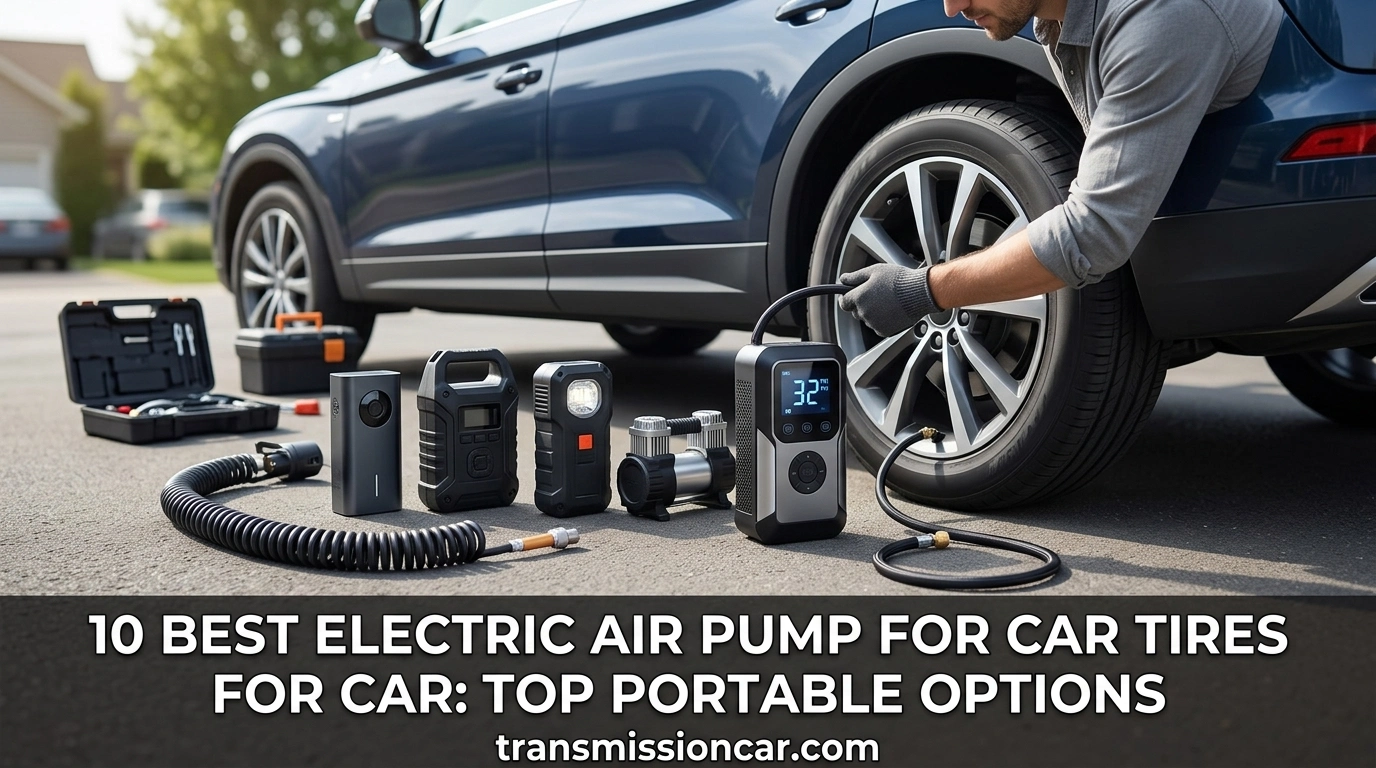
Flat tires can happen at home, on the road, or in a parking lot. An electric air pump for car tires gives us a portable way to add air without visiting a gas station. Most models plug into a 12-volt outlet or use a rechargeable battery, and many include a digital gauge and automatic shutoff.
The best electric air pump for car tires should provide accurate pressure readings, reach your tires easily, and inflate them without overheating. We also look for a strong power source, a long hose or cord, simple controls, and a compact design that fits in a car. Inflation speed matters, but ease of use and reliable performance matter just as much.
We compared key features, tested practical designs, and reviewed user feedback to find electric tire pumps that make routine tire maintenance simpler.
Best Electric Air Pumps for Car Tires
We evaluated electric air pumps for speed, pressure accuracy, power options, and ease of use. Our list features reliable models for topping off car tires and handling roadside emergencies.
AstroAI L7 Cordless Tire Inflator
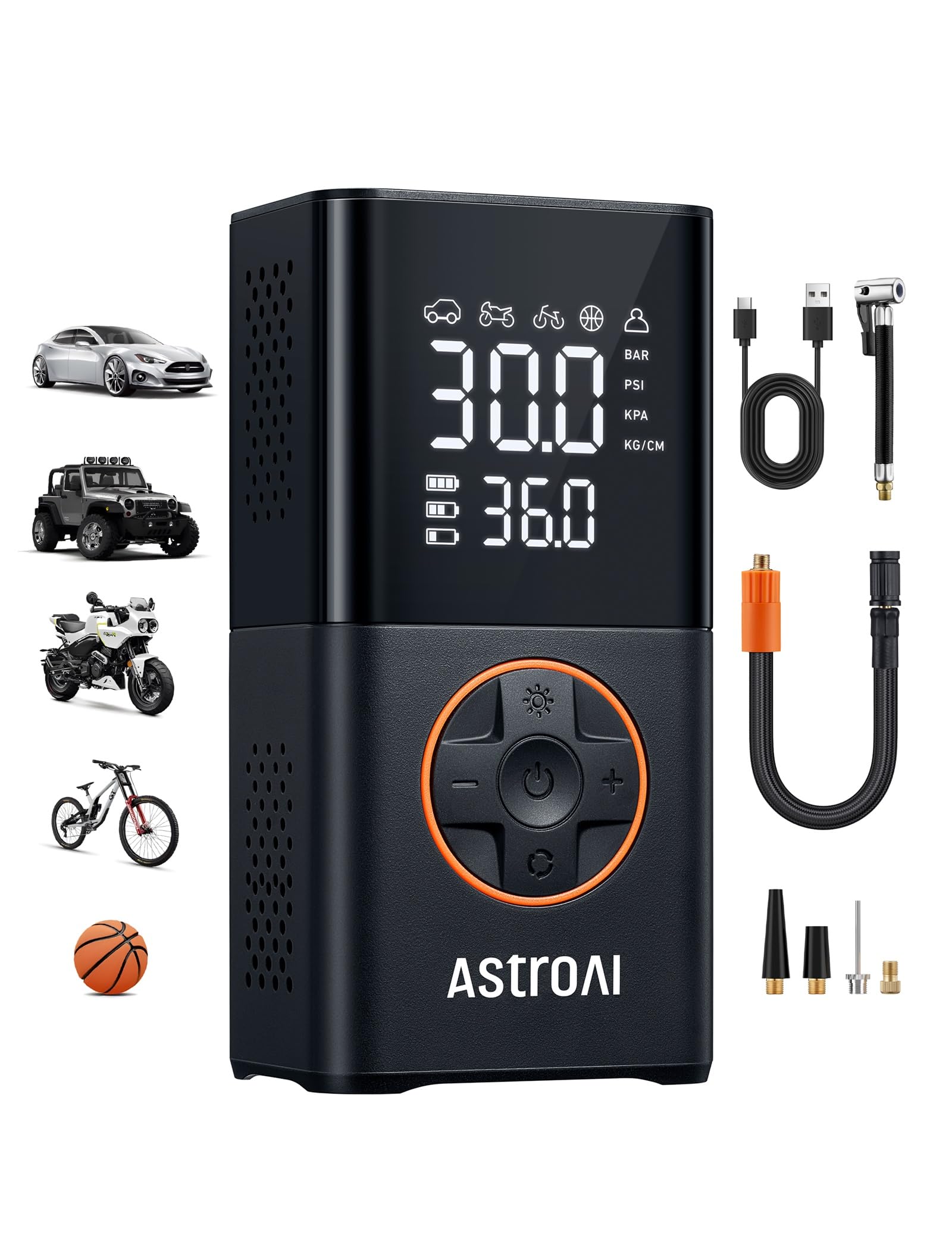
We recommend the AstroAI L7 for drivers who want a compact cordless pump for quick tire top-ups and roadside use.
Pros
- Fits easily in a glove box
- Stops automatically at the selected pressure
- Includes a light and USB charging ports
Cons
- Runs loudly during use
- Needs several hours to fully recharge
- Not designed for heavy-duty tires
We found the L7 simple to operate. Select a tire type, set the target pressure, and attach the hose. Its digital display shows the current reading, while the automatic shut-off helps prevent overinflation.
The cordless design makes it convenient for parking lots, driveways, and roadside stops. We could use it without finding a power outlet or routing a cord from the car. Its small size also leaves room for other emergency items.
Inflation works well for small pressure increases, such as moving a tire from 30 to 36 PSI. Larger tires or very low pressure take longer, and the pump becomes noticeably noisy. The battery can handle several top-offs, but we would recharge it after use rather than leave it unprepared.
A built-in flashlight adds useful visibility at night. The included adapters also let us inflate bicycle tires and sports balls, making this a practical backup pump for more than just car tires.
Airmoto Tire Inflator
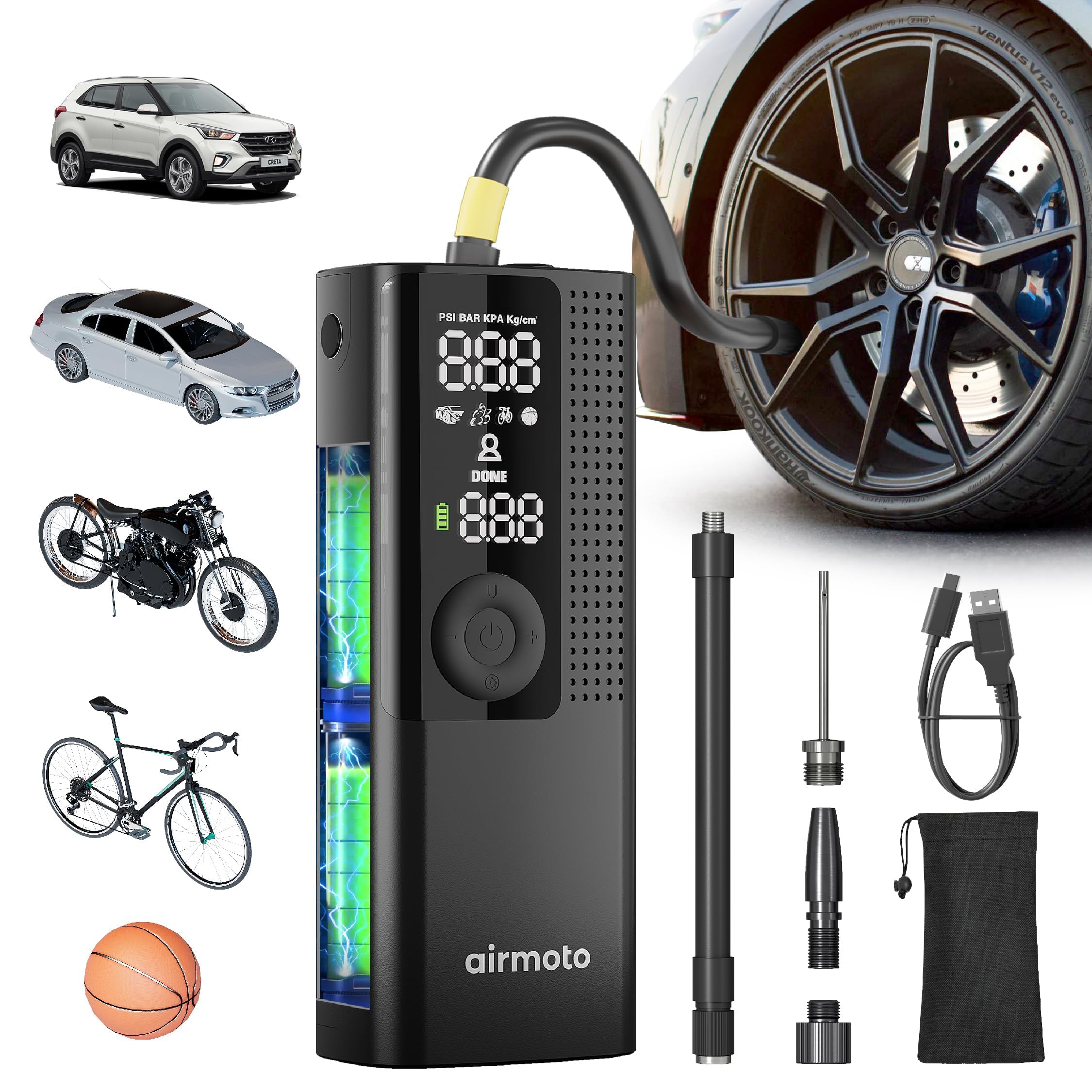
We recommend the Airmoto for drivers who want a small, cordless pump for handling one or two low car tires.
Pros
- Compact design stores easily in a glove box
- Automatic shutoff helps prevent overinflation
- Clear display includes several pressure units
Cons
- Battery may need a recharge after several tires
- Pump can get warm during use
- Not suited to large tires or high-volume inflating
We found the Airmoto simple to operate. We set the target pressure, attached the hose, and pressed the start button. The pump stopped on its own when it reached the selected level, which made topping off a tire easier.
Its small size makes storage convenient, and the built-in light helps in low light. The included adapters also let us inflate bicycle tires and sports equipment.
For routine car use, the battery handled one or two tires well. Larger tires or several tires in one session used more power, so we would charge it fully before a trip. The pump also became warm during longer runs, which is normal for a compact inflator.
The Airmoto works best as an emergency tire top-off tool rather than a replacement for a full-size compressor. Its cordless design, digital pressure reading, and automatic shutoff make it a practical choice for everyday drivers.
DEWALT 20V MAX Tire Inflator
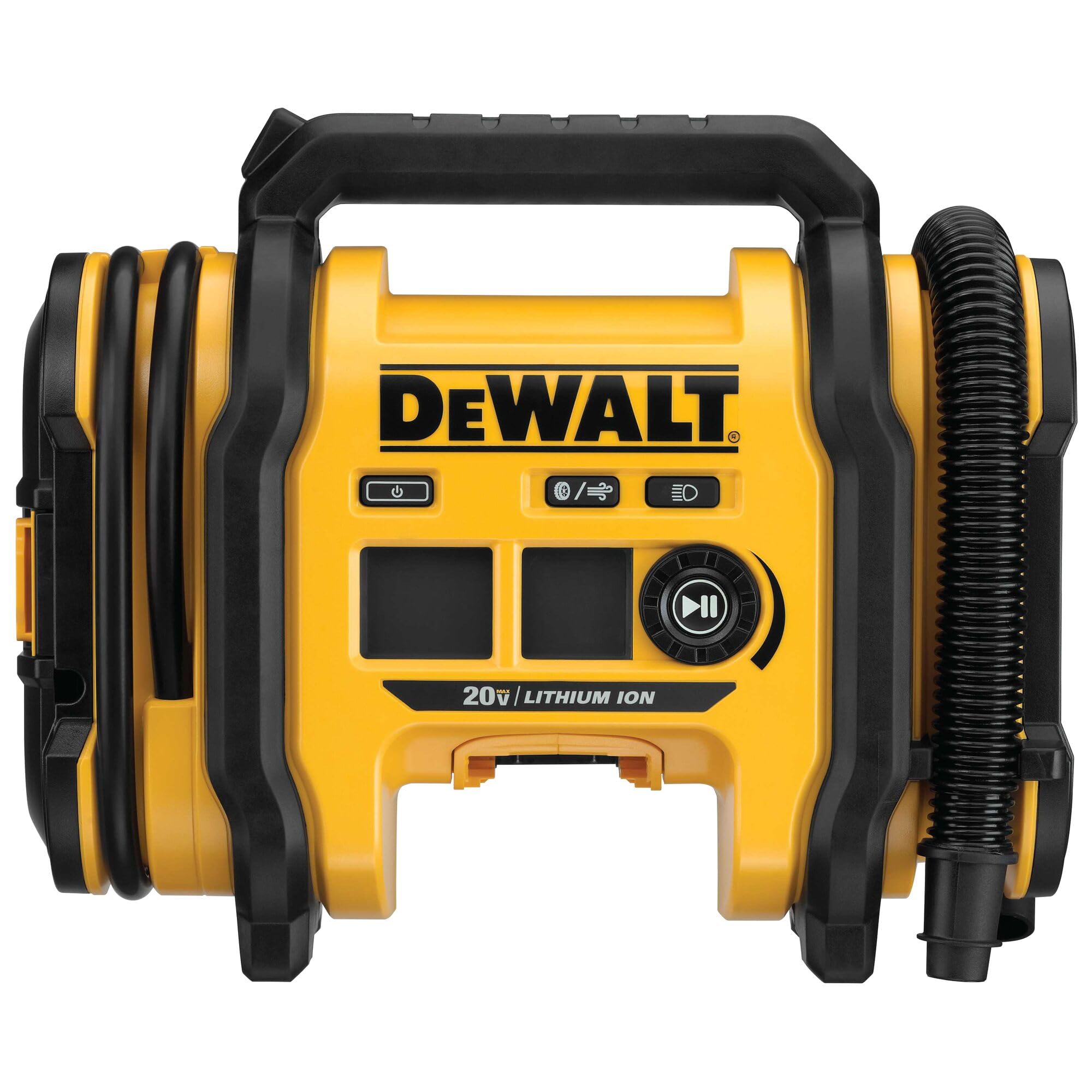
We recommend this inflator for drivers who want accurate pressure control and flexible power options, but already own a DEWALT battery or plan to buy one.
Pros
- Preset pressure and automatic shutoff
- Works with battery, 12V DC, or 110V AC power
- Includes storage for the hose and adapters
Cons
- Battery, charger, and AC adapter cost extra
- The 12V cord works best with the vehicle running
- Larger and heavier than compact emergency inflators
We found the digital gauge simple to set before connecting it to a tire. The threaded chuck held firmly on the valve stem, which reduced air loss while we worked. Once the target pressure was reached, the pump stopped on its own.
The three power choices make this useful in a garage or on the road. We used the 12V cord for vehicle work, while the 20V battery offers more freedom when an outlet is not nearby. The unit also includes a high-volume hose for items such as mattresses and rafts.
Its sturdy body and rubber feet kept it steady during use. The built-in light helped when checking a tire after dark, and the onboard storage kept the small adapters from getting lost.
This model is not the best value if we need to buy every power accessory separately. It also takes up more space than a small plug-in pump, but its solid build, clear controls, and reliable shutoff make it a strong choice for regular car-tire maintenance.
ROCGORLD R8 Tire Inflator

We recommend this compact 12V pump for drivers who want quick, controlled tire inflation without relying on a gas station.
Pros
- Inflates common car tires quickly
- Preset pressure and auto-stop reduce guesswork
- Long power cord and storage bag improve convenience
Cons
- Requires a 12V car outlet
- Cannot plug into a wall outlet or run on a battery
- The compressor may need a cool-down break during repeated use
We found the R8 easy to operate: connect it, set the target pressure, and start the pump. The dual display shows the current and selected pressure, while the auto-stop feature helps prevent overinflation.
Its 10-foot power cord reached each tire without moving the car. The two-foot hose also made the valve connection simple. Inflation felt quick for routine top-offs, though a severely flat tire may take longer than the advertised times.
The compact body fits neatly in the included carrying bag, making it practical to keep in a trunk. Its built-in light can help during nighttime use, and the included adapters support bikes and sports balls.
We needed to connect it to a 12V DC outlet that can provide enough power. Since it has no internal battery or AC adapter, it works best as an emergency car accessory rather than a fully cordless pump.
SERVOMASTER Portable Tire Inflator
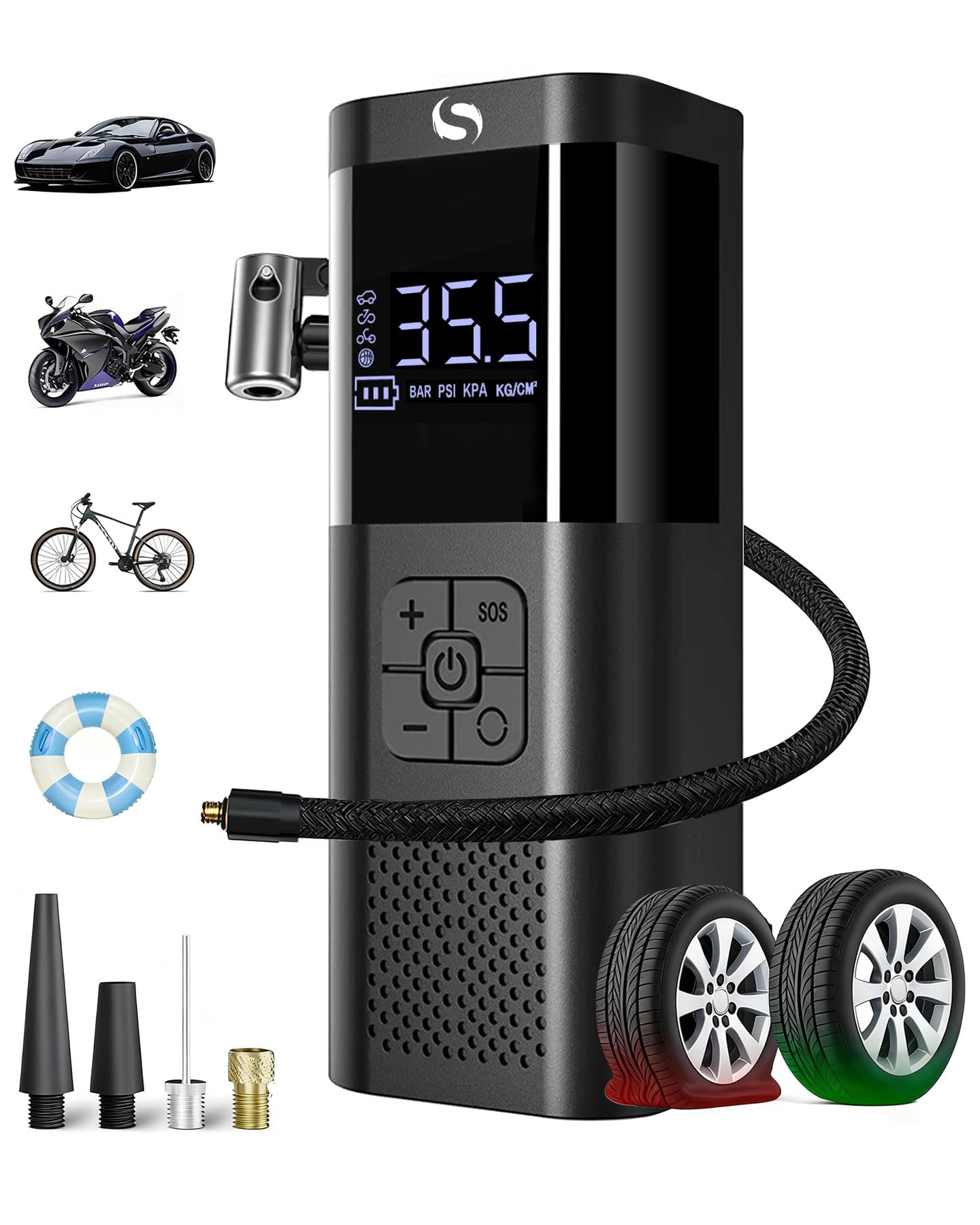
We recommend this compact inflator for drivers who want a cordless backup for routine tire pressure checks and roadside emergencies.
Pros
- Cordless design fits easily in a glove box or trunk
- Preset pressure controls stop inflation automatically
- Bright display and built-in light help at night
Cons
- Small battery may need a recharge after several tires
- The unit can become hot during extended use
- Operation may feel less clear for bicycle tires
We found the SERVOMASTER simple to carry and quick to use. We set the target pressure, connected the hose, and let the pump work until it stopped on its own. The digital screen stayed easy to read while we checked the pressure.
Its cordless design made it more convenient than a pump that needs a 12-volt outlet. The included adapters also let us use it for bicycles, balls, and other inflatables. The built-in light adds useful visibility during nighttime tire checks.
Battery capacity remains the main limitation. We could handle several smaller jobs, but filling multiple car tires may require a recharge. The pump also gets noticeably warm after repeated use, so we would pause between tires when needed.
CARSUN AC/DC Tire Inflator
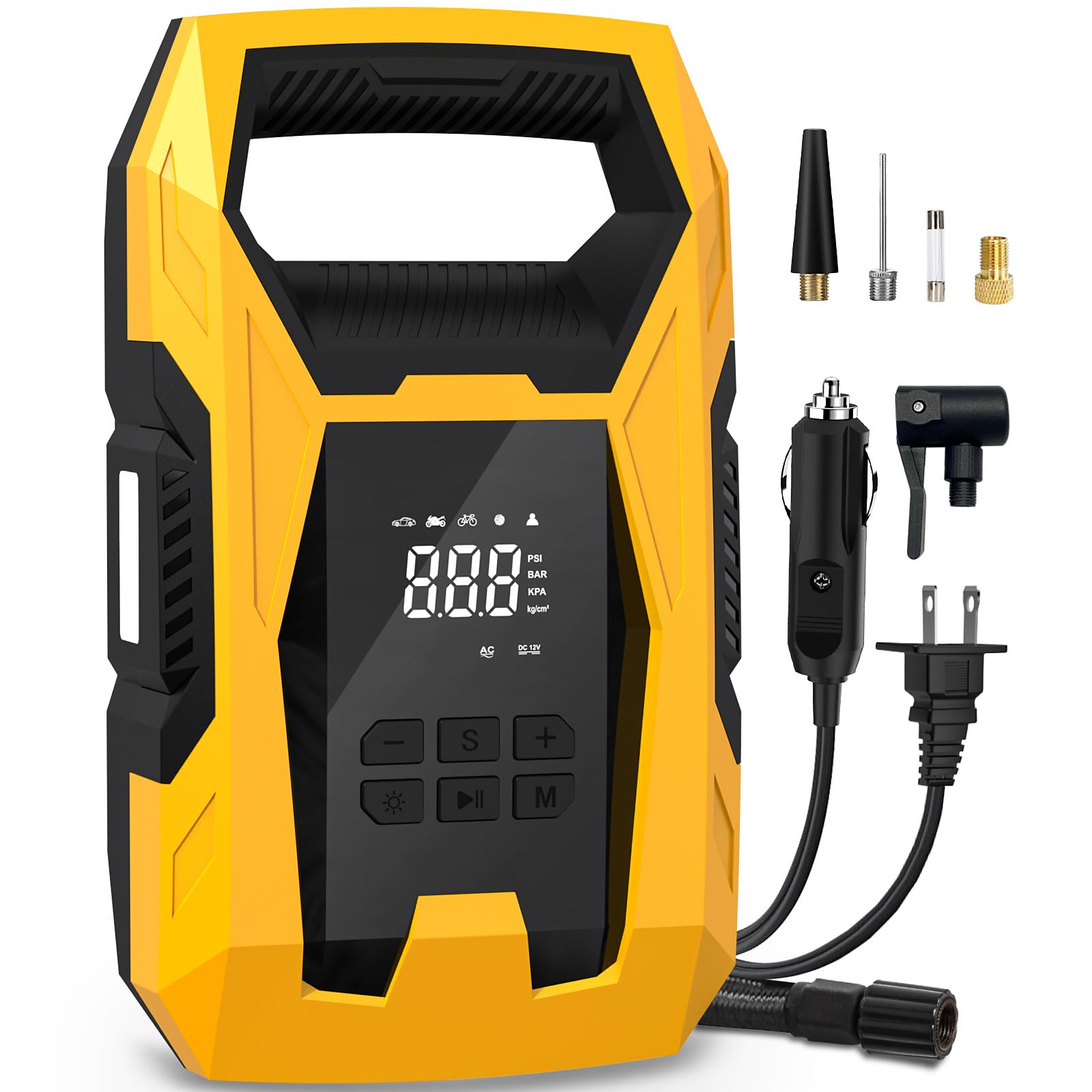
We recommend this pump for drivers who want one compact inflator that works from a car socket or a household outlet.
Pros
- AC and DC power options add flexibility.
- Preset pressure and auto shutoff simplify inflation.
- The display includes several pressure units.
Cons
- It needs a 10-minute cooling break after 15 minutes of use.
- The display may be hard to read in bright sunlight.
- It is not intended for truck, tractor, or SUP tires.
We found the CARSUN easy to set up for routine car-tire checks. We connected the hose, selected the car mode, and set the target pressure before starting the pump. The automatic shutoff helped prevent overfilling while we handled other tasks.
The dual-power design makes this model useful at home or on the road. We used the 12V cord near a vehicle, while the AC cable works better when a wall outlet is available. The included adapters also support bikes, balls, and motorcycles.
Inflation felt quick for standard passenger tires, but the compressor is not silent. Its duty cycle also limits long sessions, so we would inflate one or two tires at a time and let it cool as directed. Overall, this is a practical choice for everyday car maintenance, but drivers with large tires should choose a heavier-duty model.
Lamicall Portable Tire Inflator
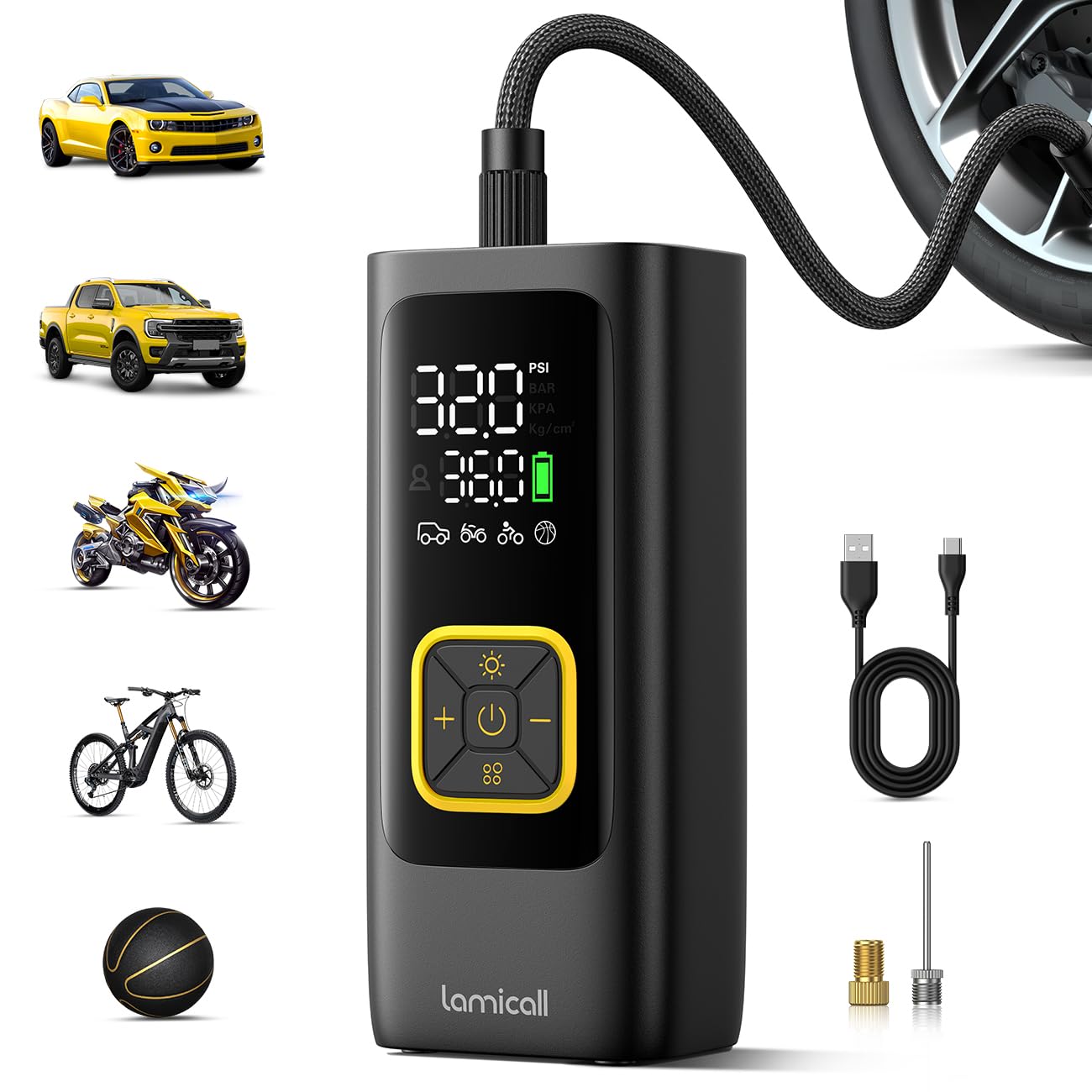
We recommend this compact cordless pump for drivers who want quick tire top-offs without relying on a gas station compressor.
Pros
- Small enough for a glove box or center console
- Simple presets with automatic shutoff
- Works with cars, bikes, motorcycles, and sports balls
Cons
- Charging takes about two to three hours
- The hose connection can feel awkward on some bike valves
- Performance may slow during repeated car-tire inflation
We found the Lamicall easy to carry and quick to set up. After choosing the car mode and target pressure, we connected the hose and let the pump work. The display showed the current pressure, then stopped when it reached the selected level.
Its cordless design makes roadside use easier because we do not need a 12-volt outlet. The built-in light also helps at night, while the included adapters let us inflate bike tires and balls.
For normal maintenance, the pump handled small pressure increases well. We would use it for topping off tires rather than filling several completely flat car tires in a row, since repeated use can reduce speed and battery performance.
AstroAI AIRUN H1 Tire Inflator

We recommend this compact 12-volt inflator for drivers who want quick, simple tire pressure checks and top-ups without visiting a gas station.
Pros
- Preset pressure and automatic shutoff
- Compact design with a long power cord
- Clear display and built-in flashlight
Cons
- It can be noisy during use
- The corded design needs a 12-volt outlet
- Some users report durability problems with the valve connector
We found the AIRUN H1 easy to keep in the trunk and straightforward to operate. We set the target pressure with the buttons, attached the hose, and let the unit stop on its own when the tire reached the selected level.
The digital display makes pressure readings easy to follow, while the backlit screen and flashlight help in low light. Its long cord also gives us enough reach for most cars without moving the vehicle.
This pump works well for routine adjustments and roadside emergencies. It may take longer on a fully flat tire, and the compressor makes noticeable noise, but its small size and simple controls make it a useful car accessory.
ETENWOLF Vortex S6 Tire Inflator

We recommend the ETENWOLF Vortex S6 for drivers who want a cordless pump with enough power for cars, pickups, and larger tires.
Pros
- Fills large tires quickly
- Strong battery and USB-C charging
- Automatic shutoff and bright work light
Cons
- Heavy for a portable inflator
- Runs loudly
- The hose is fairly short
We found the Vortex S6 easy to use during roadside checks because it does not need a 12-volt outlet. Its cordless design made it simple to reach each tire, and the automatic shutoff helped us avoid watching the pressure constantly.
The dual-cylinder motor handled car and pickup tires without slowing down. We also liked the preset modes and pressure memory, which reduced setup time after the first use. The built-in light helped in dark areas, though it works better for nearby tasks than for lighting a wide space.
This pump feels more substantial than many compact inflators, but that strength adds weight. At about six pounds, it takes up more room in a trunk or roadside kit. The motor also makes noticeable noise, so we would use it away from sleeping passengers or quiet campsites.
The large battery supports repeated tire fills, and the USB-C port can charge other devices. We would still charge it before a long trip, since battery performance depends on tire size, starting pressure, and temperature. It also works with bikes and sports equipment, but it is not intended for stand-up paddleboards.
SuperBars F1 Portable Tire Inflator
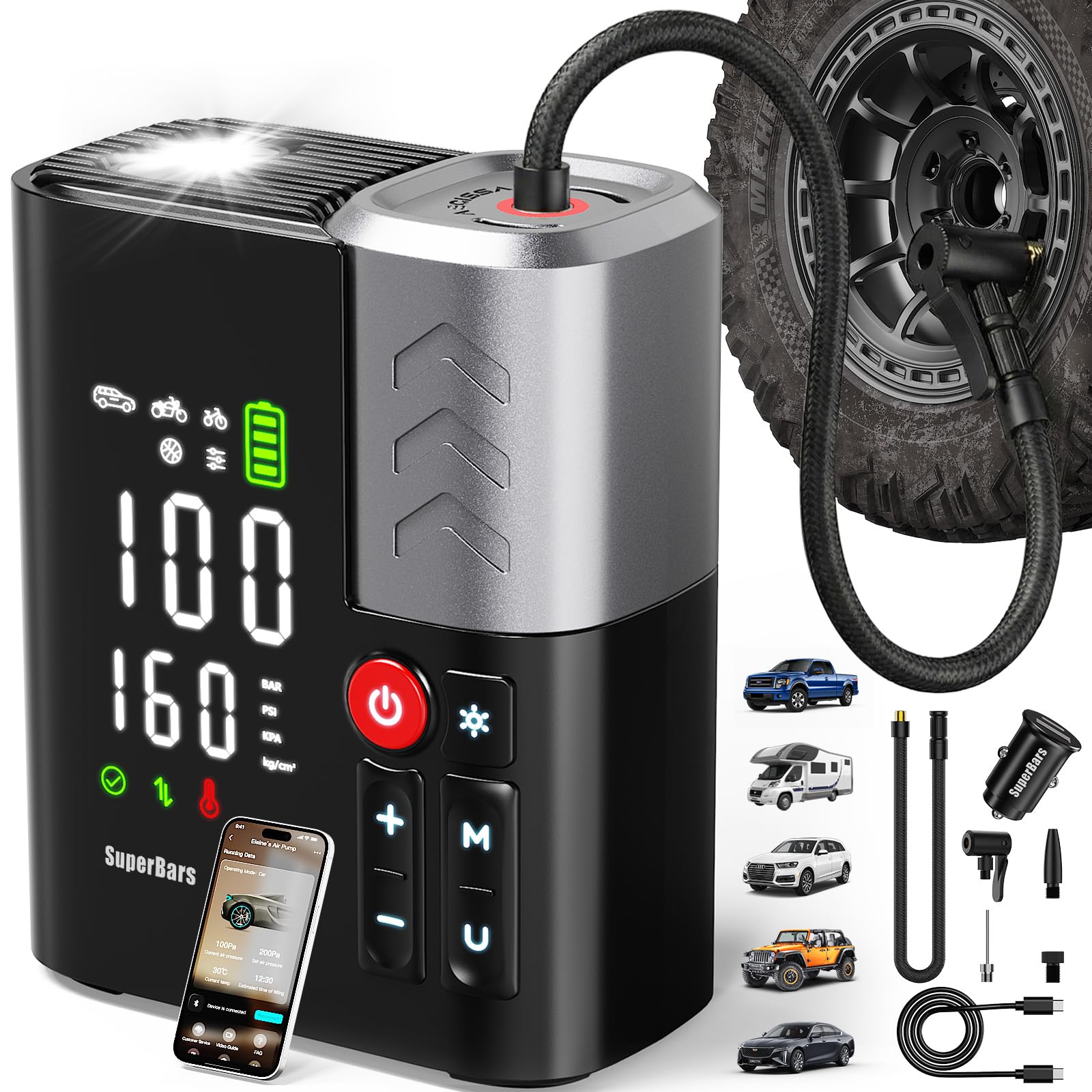
We recommend this compact pump for drivers who want fast cordless inflation and a built-in power bank for roadside use.
Pros
- Inflates most car tires quickly
- Large battery supports several tires
- Compact design fits in a glove box
Cons
- Pressure readings may run slightly high
- The light works better as a floodlight than a focused beam
- The app adds features but is not needed
We found the SuperBars F1 easy to carry and simple to operate. Its preset modes and automatic shutoff made routine tire checks less tiring, especially in low light.
The pump handled several tires during testing without needing a recharge. Its airflow also worked well for bicycles and sports equipment, while the USB ports gave us a useful way to charge small devices.
Pressure accuracy was not perfect. We would use a separate tire gauge to confirm the final reading, particularly for an RV, truck, or any vehicle that needs precise pressure.
The included hose, adapters, charging cable, vehicle adapter, and storage pouch add practical value. Although the app can track information and send reminders, normal pumping works without it.
Buying Guide
We should choose an electric air pump based on our vehicle, tire size, and driving needs. A compact pump may suit occasional emergencies, while frequent use may require stronger construction and faster inflation.
| Feature | What to check |
|---|---|
| Power source | Choose a 12-volt plug, rechargeable battery, or both. Check cord length and charging options. |
| Maximum pressure | Select a model rated above our tire’s recommended pressure. |
| Inflation speed | Look for stated performance with similar tire sizes, not just the highest claim. |
| Accuracy | A clear digital gauge and selectable pressure settings can help prevent overinflation. |
| Duty cycle | Check how long the pump can run before it needs to cool. |
| Reach | Make sure the hose and power cable reach all four tires. |
| Size and weight | Choose a model that fits easily in our trunk or storage area. |
| Extra features | An automatic shutoff, built-in light, and extra valve adapters may improve convenience. |
We should confirm the vehicle maker’s recommended tire pressure before using the pump. That number usually appears on the driver-side door frame or in the owner’s manual, rather than on the tire itself.
Safety features also matter. We should look for overload protection, secure connectors, clear controls, and a stable base. A pump with a warranty and replacement parts may provide better long-term value.
Editor’s Choice
We choose the Fanttik X8 Apex as our top electric air pump for car tires. Its digital display, preset pressure control, and automatic shutoff make routine inflation simple and accurate.
The pump includes a built-in light and a rechargeable battery, so we can use it without connecting to a wall outlet. Its compact design fits well in a glove box or trunk, while the included hose and adapters support common tire and sports equipment needs.
| Feature | Details |
|---|---|
| Pressure range | Up to 150 PSI |
| Power options | Rechargeable battery and 12V car outlet |
| Controls | Digital display and preset shutoff |
| Useful extras | Built-in light and storage case |
We recommend checking the tire pressure listed on the vehicle’s door-jamb label before inflating. The pump works best for topping up tires and handling roadside pressure loss, rather than replacing a workshop compressor for repeated full inflation.
Conclusion
We should choose an electric air pump based on our car’s tire needs, not just its advertised pressure. A model with a clear display, an automatic shutoff, and a long power cable makes routine inflation easier and safer.
For daily use, we can prioritize a compact pump that connects to the car’s 12-volt outlet. A rechargeable model may suit us better when we need to inflate tires away from the vehicle, but we must keep its battery charged.
Before buying, we should check these key features:
- Accurate pressure readings
- Automatic shutoff
- Suitable inflation speed
- Strong hose and power cable
- Storage space for the pump and accessories
We should use the vehicle maker’s recommended tire pressure, found on the doorjamb label or in the owner’s manual. We also need to check pressure when the tires are cold and inspect them for damage. An air pump can restore pressure, but it cannot repair a puncture or replace professional tire service.
FAQs
What type of electric air pump should we choose for car tires?
We should choose a portable inflator with a digital pressure display, an automatic shutoff, and a 12-volt car power plug. A rechargeable model can add convenience, but we should check its battery capacity before relying on it for several tires.
How powerful should a car tire inflator be?
We should look for a pump rated for at least 100–150 PSI. This rating does not show how quickly it fills a tire, so we should also check the stated inflation time and motor performance.
Can we use a tire inflator with a flat tire?
We can use one to add air to a tire with a slow leak or low pressure. A severe puncture may prevent the pump from reaching the recommended pressure, and we should have the tire repaired promptly.
Does the pump need a car power outlet?
Many models use a 12-volt outlet, while others run on rechargeable batteries. We should confirm the power source and cable length before buying, especially if the vehicle’s outlet sits far from the tires.
What features should we compare?
| Feature | Why it matters |
|---|---|
| Digital gauge | Helps us set pressure accurately |
| Auto shutoff | Prevents overinflation |
| Long hose or cable | Makes each tire easier to reach |
| LED light | Helps with nighttime use |
| Storage case | Keeps parts together |
How often should we check tire pressure?
We should check pressure at least once a month and before long trips. We should follow the vehicle maker’s recommended pressure shown on the doorjamb label or owner’s manual.
