
Can a Tire Inflator Inflate Bike Tires? A Safe, Simple Guide

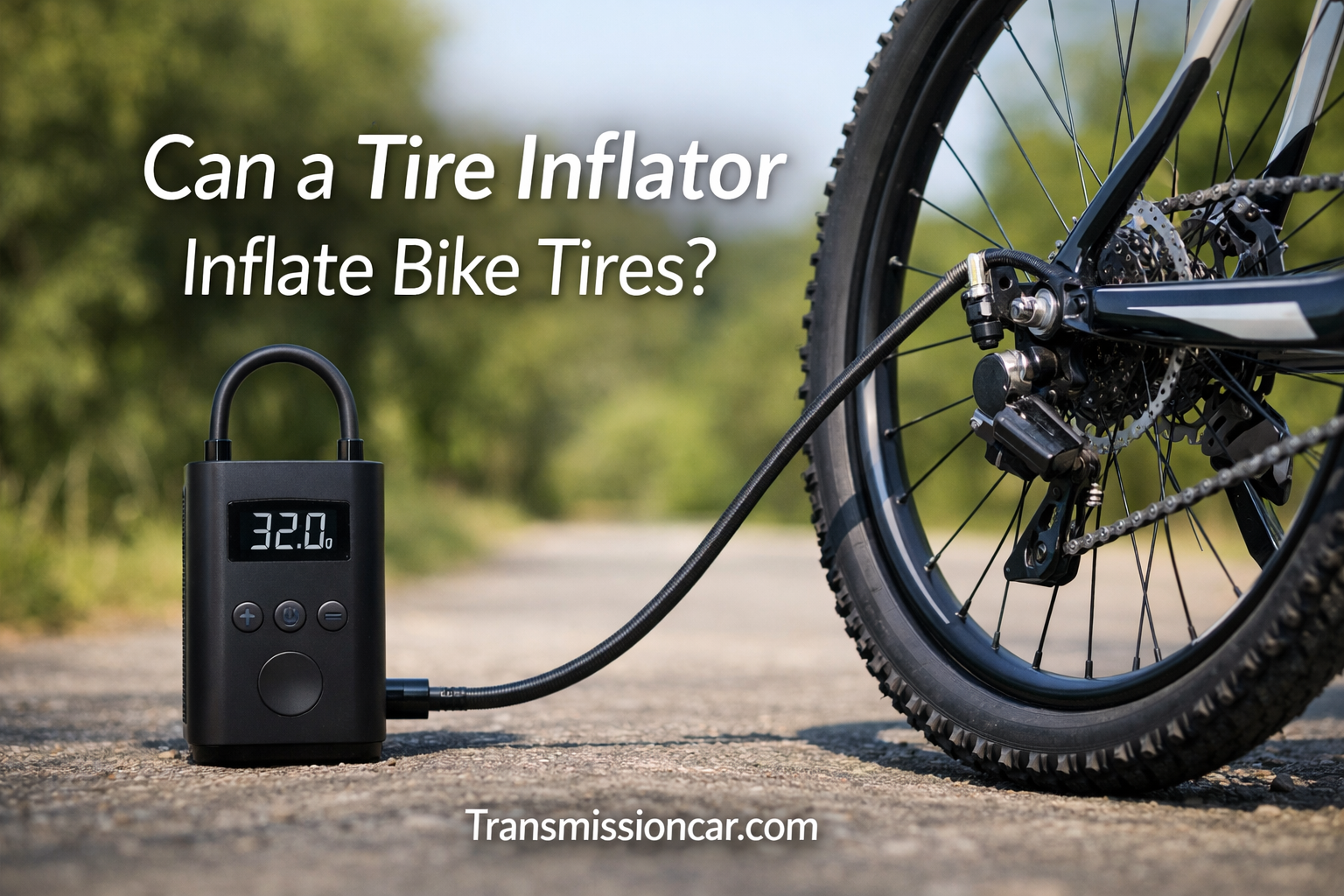
A bicycle tire looks much smaller than a car tire, but it still needs the correct air pressure to roll safely and efficiently. This raises a practical question for anyone who already keeps a portable compressor in the garage or vehicle: Can a tire inflator inflate bike tires?
In most cases, yes. A car tire inflator can inflate many bicycle tires, provided the connector fits the bike’s valve and the inflator can deliver the required pressure accurately. This guide explains valve compatibility, pressure limits, safe inflation steps, common mistakes, and when a bicycle pump may be the better tool.
Quick Answer
Yes, a tire inflator can inflate bike tires when its connector matches the valve and its pressure range meets the tire’s requirements. Schrader valves usually connect directly. Presta valves normally need an adapter. Add air slowly because small bicycle tires pressurize much faster than car tires and can be overinflated easily.
How a Tire Inflator Works on a Bike Tire
A portable tire inflator is a small air compressor. It draws in outside air, compresses it, and pushes it through a hose into the tire.
The basic process is the same for cars and bicycles. However, bicycle tires contain much less air than car tires. This means a powerful automotive inflator can raise the pressure in a bike tire very quickly.
Three factors determine whether your inflator will work:
- The inflator connector must fit the bike’s valve.
- The inflator must reach the required PSI.
- Its gauge must be accurate enough for a small tire.
Valve compatibility is usually the first issue to check.
Identify the Bike Tire Valve First
Bicycle tubes and tubeless bicycle wheels commonly use either a Schrader or Presta valve. Some bikes may use a Woods or Dunlop valve, although that style is less common in the United States.
Technical references such as Park Tool’s bicycle tire and tube guide show the differences among Schrader, Presta, and Woods valve stems, including the use of an adapter sleeve for certain connections. (Park Tool)
Schrader Valve
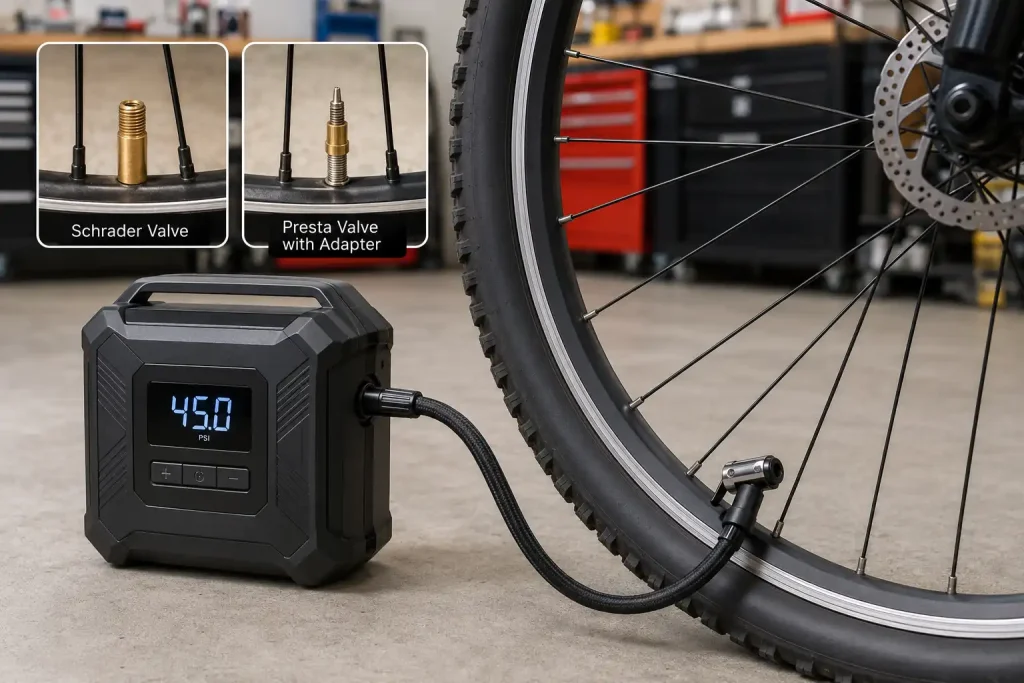
A Schrader valve is wide, sturdy, and similar to the valve found on a passenger vehicle tire. It has a small spring-loaded pin in the center.
Schrader valves are common on:
- Children’s bicycles
- Cruisers
- Entry-level mountain bikes
- Comfort and utility bikes
- Some e-bikes
Most automotive tire inflators are designed for Schrader valves. Therefore, a bike with a Schrader valve can normally connect directly to a car tire inflator without an adapter.
Presta Valve
A Presta valve is narrower and usually longer than a Schrader valve. It has a small threaded nut at the tip that must be loosened before air can enter.
Presta valves are common on:
- Road bikes
- Gravel bikes
- Performance mountain bikes
- Lightweight hybrid bikes
- Many tubeless bicycle wheels
A standard automotive inflator will not usually connect directly to a Presta valve. You will need one of the following:
- A Presta-to-Schrader adapter
- A dual-head inflator that supports both valves
- A separate bicycle pump with a Presta-compatible head
A Presta adapter is a small threaded fitting. It screws onto the open Presta valve and allows a Schrader-style inflator connector to attach.
Woods or Dunlop Valve
A Woods valve has a width similar to a Schrader valve but operates differently. It is more common on traditional European and Asian city bicycles.
Some bicycle pumps fit this valve directly. An automotive inflator may require a specific adapter.
Bike Valve Compatibility Table
| Bike valve type | Direct connection to most car inflators? | Adapter usually needed? | Main concern |
|---|---|---|---|
| Schrader | Yes | No | Avoid adding air too quickly |
| Presta | No | Yes | Loosen the valve tip before connecting |
| Woods/Dunlop | Usually no | Often | Confirm adapter compatibility |
| Tubeless Presta | No | Yes | Small inflator may not seat an unseated tire bead |
| Schwalbe Clik Valve | Depends on connector | Possibly | Follow the valve manufacturer’s instructions |
Check the Required Tire Pressure
Do not assume that every bicycle tire uses the same pressure. The correct range depends on the tire width, wheel design, rider weight, riding surface, tube type, and manufacturer specifications.
Look for a pressure range printed or molded onto the bicycle tire’s sidewall. You may see measurements in:
- PSI, or pounds per square inch
- Bar
- kPa, or kilopascals
Use the bicycle or tire manufacturer’s recommended setting as your starting point. Trek’s bicycle tire inflation guidance also emphasizes identifying the valve type and checking tire pressure before riding. (Trek Bikes)
Do Not Use the Car’s Recommended PSI
A vehicle’s tire-pressure label applies only to the vehicle’s original tire configuration. It does not tell you how much pressure to put in a bicycle tire.
For car tires, the NHTSA TireWise guidance recommends following the vehicle manufacturer’s cold inflation pressure rather than choosing pressure based only on the tire sidewall. The same basic principle applies to a bicycle: follow the correct specification for the specific vehicle and tire being inflated. (NHTSA)
Make Sure the Inflator Can Reach the Required PSI
Check the maximum pressure shown on the inflator or in its instructions. The inflator’s rated maximum must be at least as high as the pressure required by the bicycle tire.
This matters most with narrow road-bike tires, which may require higher pressure than wider mountain-bike or cruiser tires.
Do not operate an inflator continuously at its maximum rating unless the manufacturer says it is designed to do so. Small compressors can become hot and may need cooling periods.
How to Inflate a Bike Tire With a Tire Inflator
Use the following process to reduce the risk of overinflation or valve damage.
1. Inspect the Tire
Before adding air, look for:
- Cuts in the sidewall
- Exposed casing threads
- A tire bead lifting away from the rim
- A bent or damaged valve
- Bulges or unusual deformation
- A tube trapped between the tire and rim
Do not inflate a visibly damaged tire. Pressure can make a weak area fail suddenly.
2. Find the Recommended Pressure
Read the pressure information on the tire sidewall or consult the bicycle or tire manufacturer.
Select a pressure suitable for the tire, rider, and riding conditions. Do not automatically inflate to the highest number shown.
3. Position the Valve
Rotate the wheel until the valve is easy to reach. Placing it near the top or side of the wheel can reduce strain on the valve stem while connecting the hose.
4. Prepare the Valve
For a Schrader valve, remove the plastic cap.
For a Presta valve:
- Remove the cap.
- Unscrew the small tip several turns.
- Briefly press the tip to confirm that air can escape.
- Screw on the Presta-to-Schrader adapter.
Do not remove the small Presta tip completely.
5. Connect the Inflator
Attach the hose straight onto the valve. Avoid pulling the valve sideways.
A secure connection should not produce continuous hissing. A brief release of air during attachment is normal, but ongoing leakage usually means the connector is loose or incompatible.
6. Set the Target Pressure
If the inflator has a preset function, choose the desired PSI carefully. Confirm that the screen is displaying PSI rather than bar or kPa.
A unit-selection mistake can cause serious overinflation.
7. Add Air in Short Bursts
Run the inflator for only a few seconds at a time, especially when filling:
- Children’s bicycle tires
- Narrow road-bike tires
- Small folding-bike tires
- Tires that already contain some air
Stop frequently and check the pressure. A bike tire reaches its target much faster than a car tire.
8. Disconnect and Recheck
Turn off the inflator before removing the connector. Disconnect it carefully without bending the valve.
For a Presta valve, remove the adapter and tighten the small valve tip by hand. Replace the cap and check the tire again with a reliable gauge.
Expert Tip:
When using an automotive inflator on a small bike tire, set the target slightly below your final pressure. Disconnect the inflator, check the tire with a separate bicycle gauge, and add the last few PSI manually if necessary.
Is an Automotive Tire Inflator the Best Choice?
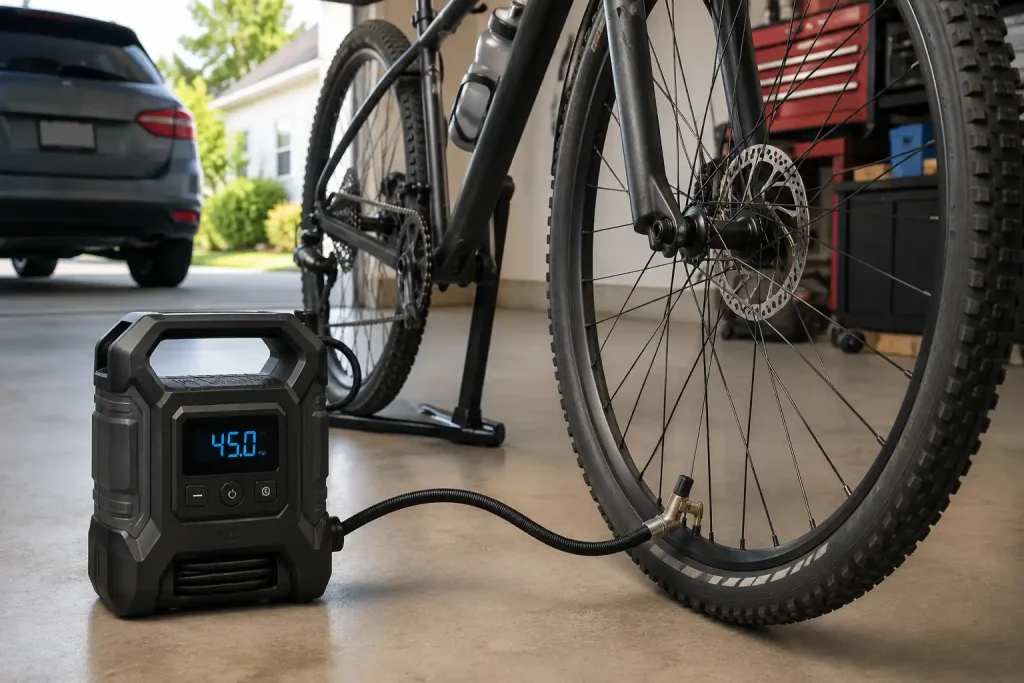 Portable tire inflator safely inflating a bike tire” class=”wp-image-9432″/>
An automotive inflator can be convenient, but it is not always the ideal tool for every bicycle.
| Inflation tool | Best use | Benefits | Limitations |
|---|---|---|---|
| 12-volt car inflator | Garage or roadside use | Convenient, powered and often includes a gauge | May inflate small tires too quickly |
| Cordless inflator | Cars, bikes and sports equipment | Portable, preset pressure and no power cord | Battery must be charged |
| Bicycle floor pump | Routine bike maintenance | Excellent control and bicycle-compatible head | Requires physical effort |
| Mini hand pump | Emergency bike repairs | Lightweight and carried on the bike | Slow and tiring at higher pressures |
| Shop air compressor | Workshop use | Fast and powerful | Easy to overinflate without a regulator |
| CO2 inflator | Emergency roadside bike use | Extremely compact and fast | Limited attempts and less pressure control |
Benefits of Using a Tire Inflator
A portable inflator may be a good choice when:
- You already carry one in your vehicle.
- Your bike has a Schrader valve.
- The inflator supports a pressure preset.
- You need to inflate several bicycles.
- Physical limitations make a hand pump difficult to use.
- You want one tool for cars, bicycles and sports equipment.
Limitations to Consider
An automotive inflator may be less suitable when:
- Its gauge is inaccurate at bicycle pressures.
- The hose is difficult to fit between narrow spokes.
- The connector places excessive force on a Presta valve.
- The compressor delivers air too aggressively.
- The tire is tubeless and completely unseated.
- You need a lightweight tool to carry during a ride.
A quality bicycle floor pump is often better for normal maintenance because it provides finer control. An automotive inflator is most useful as a convenient multipurpose tool.
Can a Tire Inflator Seat a Tubeless Bike Tire?
It may be able to top up a tubeless tire that is already seated. However, many compact automotive inflators cannot release enough air volume at once to seat a loose tubeless tire bead.
Seating a tubeless tire may require:
- A compressor with an air tank
- A tubeless booster pump
- A dedicated high-volume inflator
- Professional bicycle shop equipment
Stop immediately if the tire bead begins lifting unevenly from the rim. Release the pressure, inspect the installation, and reseat the tire before trying again.
Never exceed the tire or rim manufacturer’s inflation limit while attempting to seat a bead.
Warning Signs That Inflation Will Not Fix the Problem
Adding air is not a permanent repair for every flat tire. The bicycle may need inspection when:
- The tire becomes soft again within hours.
- Air leaks around the valve base.
- You hear air escaping from the tread or sidewall.
- The valve stem is leaning sharply.
- Sealant leaks continuously from a tubeless tire.
- The tire has a sidewall cut or visible bulge.
- The tire will not remain seated on the rim.
- The wheel or rim appears bent.
The U.S. Consumer Product Safety Commission’s bicycle guidance includes tire and rim performance requirements, reinforcing why the tire must remain securely seated under pressure. (U.S. Consumer Product Safety Commission)
Do not keep adding air to a tire that repeatedly loses pressure. Find and repair the leak first.
Choosing a Safe, Durable Tire Inflator
A cheap inflator may work occasionally, but durability and pressure accuracy matter when the tool will be used regularly.
Look for:
- A clear digital or analog gauge
- Adjustable pressure presets
- Automatic shutoff
- Schrader and Presta adapters
- A flexible hose that does not strain the valve
- Overheat protection
- Replaceable or rechargeable batteries
- A pressure-release button
- A stable base that does not move during operation
Also check the duty cycle. The duty cycle tells you how long the compressor can run before it needs to cool down.
A more expensive inflator may offer better gauge accuracy, stronger hose fittings, quieter operation and longer service life. However, a dedicated bicycle floor pump may still provide better control for routine bike maintenance at a lower overall cost.
When to Call a Transmission Professional
Inflating a bike tire is not a transmission repair, so a transmission specialist is normally not the right person to contact. A bicycle shop or tire professional should inspect bicycle valve, tube, rim and tire problems.
Contact a qualified automotive or transmission shop when the inflator issue appears connected to your vehicle, such as:
- The vehicle’s 12-volt outlet repeatedly blows a fuse.
- The inflator causes major electrical fluctuations.
- The vehicle battery becomes discharged during normal use.
- Warning lights appear after connecting electrical equipment.
- The vehicle also has transmission slipping, delayed engagement, fluid leaks or unusual driveline noises.
These transmission symptoms are separate from the bicycle tire problem. Keeping the diagnoses separate can help you avoid paying the wrong type of shop for an unrelated inspection.
Common Mistakes Vehicle Owners Should Avoid
- Connecting directly to a Presta valve without an adapter. This can damage the valve tip or create a poor seal.
- Using the maximum pressure printed on the inflator. The inflator’s maximum output is not the correct pressure for the tire.
- Confusing PSI, bar and kPa. Always confirm the selected measurement unit before starting.
- Running the compressor continuously. A small bicycle tire needs only a limited volume of air.
- Relying completely on a cheap built-in gauge. Verify pressure with a reliable bicycle gauge when accuracy matters.
- Inflating a damaged or unseated tire. Pressure can worsen bead, rim, tube or sidewall damage.
- Holding the hose at an angle. Side pressure can bend or break a narrow Presta valve.
- Assuming air will repair a puncture. Inflation only restores pressure temporarily when a leak is present.
- Leaving a Presta adapter on permanently. It may collect dirt or loosen the valve core on some setups.
- Ignoring compressor heat. Let the inflator cool according to its operating instructions.
FAQs
Can I use a car tire inflator on a bicycle?
Yes. A car tire inflator can inflate a bicycle tire when the valve connection is compatible and the inflator can reach the required pressure. Add air in short bursts because bicycle tires fill quickly.
Do I need an adapter to inflate a bike tire?
You normally need an adapter for a Presta valve. A bicycle with a Schrader valve can usually connect directly to an automotive tire inflator.
Can a tire inflator overinflate a bike tire?
Yes. Automotive inflators can deliver air quickly, and a small bicycle tire may exceed its safe pressure within seconds. Use a preset function or stop frequently to check the gauge.
What PSI should I use for my bike tire?
Use the bicycle or tire manufacturer’s recommended pressure range. Check the tire sidewall and consider tire width, rider weight, road surface and whether the system uses a tube or tubeless setup.
Can I inflate a road-bike tire with a car inflator?
You can if the inflator supports the required pressure and you use the correct Presta adapter. Confirm the gauge’s accuracy because narrow road-bike tires may be sensitive to small pressure changes.
Can an automotive inflator inflate a completely flat bike tire?
It can inflate the tire if the tube and tire are undamaged and the bead remains seated. If the tire immediately loses air, has pulled away from the rim or contains a major puncture, repair it before continuing.
Is a tire inflator better than a bike pump?
A tire inflator is faster and requires less effort. A bicycle floor pump usually provides better control and direct compatibility with bike valves. The best choice depends on how often you inflate bike tires and whether you need one tool for multiple vehicles.
Conclusion
So, can a tire inflator inflate bike tires? Yes, provided you match the connector to the valve, follow the tire’s recommended pressure, and add air slowly.
Schrader-equipped bicycles are usually the easiest to inflate with an automotive compressor. Presta valves normally require a simple adapter. The inflator must also provide an accurate reading at the bicycle’s required pressure.
Inspect the tire before inflation, watch the gauge closely, and stop if the bead, valve or sidewall appears damaged. Keep the correct adapter and a separate pressure gauge with your inflator so you are prepared for both vehicle and bicycle tire maintenance.
